A New Homeowner Ordered a Mountain of Wood Chips to Create a Small Native Garden, Then Changed Plans and Decided to Bury the Entire Backyard Lawn
Moving into a new home often comes with a long list of projects, from unpacking boxes to figuring out which plants belong in the garden. One homeowner had a pretty clear idea of what to do with the backyard: remove a portion of the grass and replace it with a native garden. The plan sounded manageable, leaving plenty of room to work at a comfortable pace. Then an enormous delivery of wood chips arrived, and suddenly, that modest little project didn’t seem nearly ambitious enough.
The homeowner had arranged a ChipDrop delivery on September 30, roughly two weeks after moving into the property. While the goal was to create a more wildlife-friendly outdoor space, the sheer volume of mulch presented a new challenge. Instead of carefully converting one section of the lawn, the homeowner began wondering whether the entire backyard should become a garden. What started as a simple landscaping idea was turning into a full-scale lawn-removal mission.
The Wood-Chip Pile Was Bigger Than Expected
Wood chips are useful for suppressing grass, retaining moisture, and covering bare soil, but a large delivery can make even an experienced gardener pause. The homeowner admitted that seeing the pile prompted an immediate question: what was going to happen to all of it? There was no way to ignore the mountain sitting there, especially when moving it would require a considerable amount of work. The mulch had effectively become the project’s new boss.
Rather than letting the intimidating pile dictate a smaller plan, the homeowner decided to go in the opposite direction. The original idea of transforming just part of the backyard into a native garden quickly expanded to include the entire lawn. That meant more ground to cover, more opportunities for native plants, and considerably less grass to mow in the future. It was a bold decision, but the pile of wood chips was already there, waiting to be put to work.
Suddenly, the Neighbors Wanted Answers
The homeowner soon discovered that a huge mulch delivery was an excellent way to get acquainted with the neighborhood. People kept stopping by to ask the same question: what exactly was happening with all those wood chips? Even a young child being pushed in a stroller stopped to ask about the project. Apparently, a mountain of mulch was far more interesting than an ordinary front-yard conversation.
Each encounter turned into an opportunity to explain why replacing a traditional lawn could be worthwhile. The homeowner would launch into a short explanation of the benefits, from supporting local wildlife to reducing the need for constant lawn maintenance. What might have seemed like an unusual landscaping decision from the street became a chance to share a different vision for suburban gardens. Before long, the homeowner was giving little impromptu gardening talks without ever intending to become the neighborhood’s mulch expert.
Not Everyone Was Convinced About Ditching the Lawn
The reactions from the neighborhood were mixed, which is hardly surprising when someone decides to replace a conventional lawn with a much less familiar landscape. The mail carrier and the neighbors directly behind the property were enthusiastic about the idea of going lawn-free. Others appeared less convinced, offering expressions that practically translated to, “Good luck with that.” It was clear that the garden would need to make its case over time.
Still, the homeowner seemed willing to let the results do the talking. Native gardens can look quite different from the evenly trimmed grass many suburban residents are used to seeing, especially during the early stages of establishment. There would be bare-looking patches, layers of wood chips, and plenty of work before the transformation became obvious. Rather than worrying too much about the skeptics, the homeowner focused on getting the project underway.
The Wildlife Was Already Showing Up
One of the most encouraging discoveries came while the homeowner was busy spreading the mulch. The property had already attracted sightings of bald eagles, woodpeckers, hawks, vultures, and blue jays, along with moths and bees. It was an impressive collection of wildlife to encounter while working in an ordinary suburban backyard. The garden hadn’t even reached its final form, yet the outdoor space was already offering plenty of reasons to pay attention to nature.
These sightings helped illustrate why the homeowner was excited about replacing the lawn in the first place. A landscape designed with native plants can provide food and habitat for a range of local wildlife, although results depend on the plants chosen and the surrounding environment. Reducing the area devoted to regularly mowed grass could also create room for flowering plants, shrubs, and other useful vegetation. The unexpected surprise was that the project wasn’t just changing the yard; it was changing how the homeowner experienced the space.
One Experienced Gardener Had a Surprisingly Massive Mulch Story
A response from a person with years of lawn-free gardening experience offered a glimpse of how far a project like this could go. Gardening in Zone 6b in Idaho, the person explained that the journey had started about 14 years earlier after growing tired of mowing grass and trimming ornamental shrubs. The solution involved building raised vegetable beds across roughly 2,000 square feet and covering the remaining grassy areas with wood chips. That first major transformation required an astonishing 130 cubic yards of chips.
The experienced gardener didn’t stop there, either. Over the years, additional deliveries were needed to replenish the paths and keep the surface level as the wood decomposed and settled. One later delivery added another 100 cubic yards, illustrating just how much material a large garden can consume over time. For the Indiana homeowner staring at a fresh pile, the story suggested that an ambitious lawn-free garden could become a long-term project rather than a one-season experiment.
The Secret Wasn’t Ordering Mulch Once and Forgetting About It
The experienced gardener explained that wood chips gradually settle as they break down, meaning an initially deep layer becomes shallower over time. In some parts of the yard, the original layer ranged from approximately four to 16 inches because the ground wasn’t level. Maintaining the paths and filling low spots therefore became an ongoing task rather than a one-time chore. A garden may look finished after the first delivery, but decomposition keeps changing the landscape beneath your feet.
Instead of relying entirely on scheduled deliveries, the gardener often watched for tree crews working nearby. If a load looked suitable, the gardener would ask whether the crew needed a place to dump it and offer the yard as a convenient destination. The arrangement could save the tree company a disposal fee while providing the gardener with more chips. Depending on the size of the load, spreading the material could take anywhere from four hours to a couple of days, so free mulch still came with a substantial investment of labor.
A Sloping Yard Didn’t Have to Ruin the Raised-Bed Plan
The Indiana homeowner had another practical concern: the backyard wasn’t level, and raised beds had seemed difficult to build on uneven ground. The experienced gardener offered a clever solution that made the idea seem much more achievable. Rather than forcing the entire yard into a perfectly flat shape, the gardener used a laser level to establish a consistent height for the raised-bed frames. Wood chips then filled the surrounding areas to bring the surface closer to the tops of the beds.
This approach created a more unified appearance without requiring every part of the property to have exactly the same natural elevation. It also allowed the wooden beds to remain functional on uneven ground. Another person suggested thinking in terms of terraced raised beds, with the ground shaped to follow the contours of the property. For homeowners who have avoided raised beds because their yards slope, these ideas offer a useful reminder that uneven ground calls for a different design, not necessarily the abandonment of the project.
The Right Mulch Depth Could Make or Break the Transformation
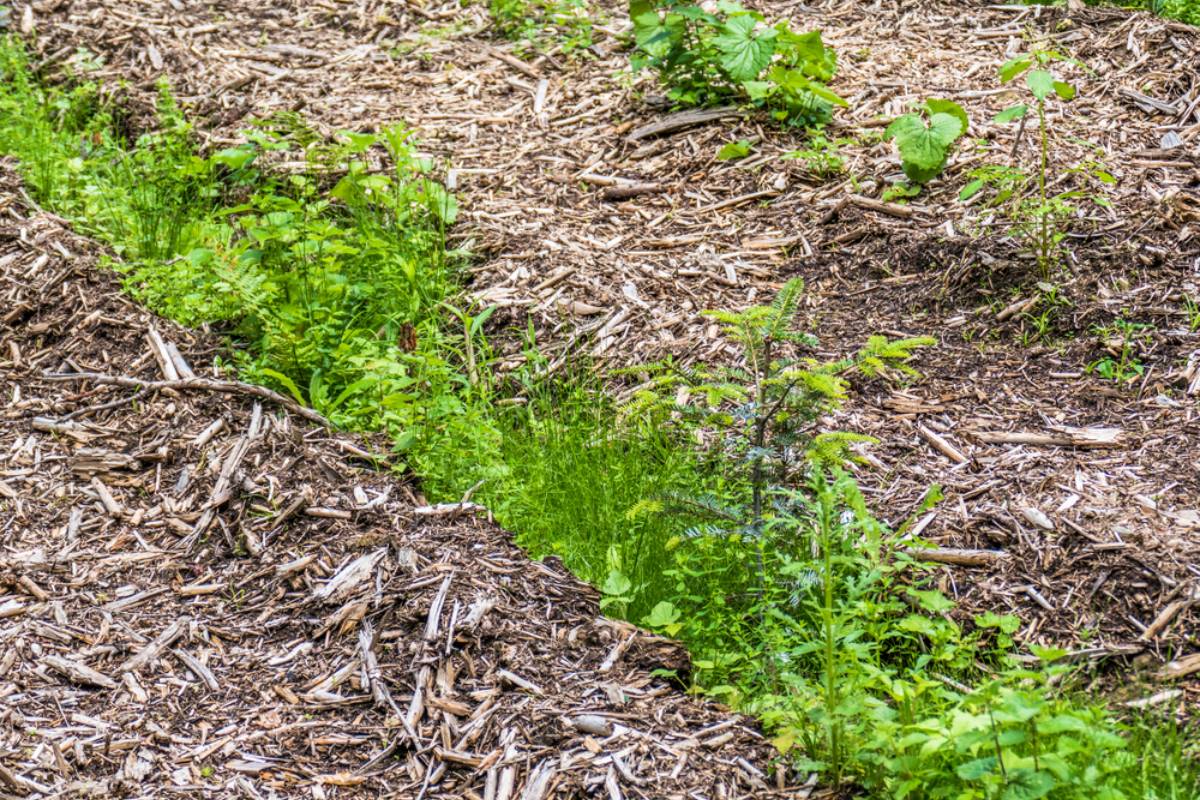
One of the most important pieces of advice concerned how deeply to cover the existing grass. A response from a person who had transformed a front yard explained that a layer of roughly 12 inches of wood chips had successfully smothered the grass underneath. The gardener had initially used cardboard in some sections while trying to eliminate unwanted hostas, but found no noticeable difference between those sections and areas covered directly with chips. The experience encouraged the Indiana homeowner to think bigger about the amount of material needed.
Another person recommended going even deeper when the primary goal was to suppress grass, suggesting a foot or more because the chips would eventually settle. However, the necessary depth can vary with the grass, weeds, soil conditions, and intended planting method. Thick wood-chip layers are useful for covering unwanted vegetation, but they should not automatically be treated as a ready-made planting medium for every kind of plant. Planning ahead for where seeds and young plants will go can save considerable frustration later.
Cardboard Became Part of the Lawn-Removal Strategy
The homeowner intended to use multiple layers of cardboard and contractor paper beneath the mulch. Unfortunately, there wasn’t enough cardboard available to cover the entire backyard, so some sections would need to be reinforced after the existing pile had been moved. That meant the transformation would probably happen in stages rather than all at once. With a project this large, even collecting enough ordinary packing material became part of the gardening plan.
A response from a person offered another practical source of cardboard: bicycle shops and auto body shops often have large boxes available. Solar-panel packaging was suggested as another particularly useful option because those boxes can provide broad sheets of cardboard. Reusing clean cardboard can be a convenient way to cover a lawn before adding wood chips, provided tape, plastic, and other unwanted packaging materials are removed. For the homeowner, the hunt for cardboard had become the next small mission in a much larger backyard makeover.
Weeds Could Still Appear, but They Weren’t the End of the World
Naturally, several people wanted to know what happened when unwanted plants appeared among the chips. The experienced gardener explained that established plants generally weren’t emerging from beneath the thick mulch layer in that garden. However, seeds could blow in from surrounding areas and sprout on the surface, where their roots remained relatively loose. Those small seedlings could often be removed easily with a rake before they became established.
Squirrels introduced another minor complication by burying acorns, which occasionally produced young trees in the mulched areas. Fortunately, those seedlings were also easy to pull while still small. This offered a realistic picture of a low-lawn landscape: fewer problems with the vegetation underneath the mulch, but no magical escape from weeding altogether. Keeping an eye on new growth would be much easier than letting unwanted plants mature and spread throughout the garden.
One Unusual Planter Stole Some of the Attention
The experienced gardener’s garden also featured a quirky planter that caught someone’s attention. Rather than being made from an expensive decorative container, it was an unconventional object repurposed to hold soil. One person admired the creative addition, prompting the gardener to share a simple philosophy: practically anything capable of holding soil can become a planter. It was a cheerful reminder that a garden doesn’t need matching containers or a large landscaping budget to develop character.
Unfortunately, the improvised planter eventually met an all-too-familiar fate. The plastic had become brittle after prolonged exposure to sunlight and finally broke, bringing its days as a planter to an end. The gardener joked about the loss, but the little story carried a practical lesson for anyone repurposing household objects outdoors. Materials that survive indoors may deteriorate quickly in direct sunlight, so it pays to consider durability before turning an unusual container into a permanent garden feature.
The Wood Chips Could Transform More Than Just the Backyard
Another interesting idea emerged when someone wondered whether the leftover chips could be used for hugelkultur, a gardening technique that incorporates woody material into raised beds or mounds. The suggestion prompted a useful distinction between large logs and smaller wood chips. Because chips have much more exposed surface area, they behave differently as they decompose and can affect nitrogen availability around plants. A response from a person therefore cautioned against assuming that a pile of fresh chips would work exactly like buried logs.
For the Indiana homeowner, the main priority remained covering the lawn and creating space for a native garden. The extra material could still be valuable for paths, mulched planting areas, or other appropriate uses around the yard. However, fresh wood chips are generally better suited to surface mulching than to being mixed heavily into the soil around actively growing plants, where decomposition can temporarily affect nitrogen availability. With so much material available, choosing the right job for each portion of the pile would matter just as much as spreading it.
The Skeptical Neighbors Might Eventually Become Fans
Perhaps the most encouraging story came from another gardener who had faced similar reactions from nearby homeowners. At first, the neighbor across the street responded to the unusual landscape with a polite but skeptical observation that it was certainly interesting. After seeing the garden develop, however, the neighbor began complimenting the front yard and eventually enjoyed sitting on the porch to see what was new. The transformation had changed the way the garden was perceived without the gardener needing to win an argument.
The gardener also shared that a thick layer of chips had been used to cover the grass about three years earlier, helping create the foundation for the developing landscape. The homeowner in Indiana hoped for a similar change of heart from those who were still unsure about the project. In gardening, the results often take longer to appear than the initial mess takes to create. A yard covered in chips may attract puzzled looks today, but colorful flowers and varied plant heights could tell a very different story a year or two later.
A Giant Mulch Delivery Became the Beginning of Something Bigger
By the end of the conversation, the Indiana homeowner had received far more than answers about what to do with a mountain of wood chips. The delivery had encouraged a change in plans, introduced the homeowner to neighbors, and opened up new possibilities for building raised beds on uneven ground. It had even provided a glimpse of what a mature, mulch-based garden could look like after years of experimentation and maintenance. The project was becoming as much about learning and community as it was about removing grass.
The biggest takeaway was that transforming a backyard doesn’t always require a perfectly designed plan from the beginning. A homeowner can start with one small section, discover that the available materials make a bigger project possible, and gradually adapt as new ideas emerge. Thick mulch, thoughtful bed placement, regular checks for seedlings, and a little resourcefulness can all help make a lawn-free garden more manageable. And if curious neighbors keep appearing to ask what all that mulch is for, there may be no better answer than inviting them to watch the garden grow.