Gardener Says She’s Been Hand-Pollinating Her Squash Every Morning Since the Bees Disappeared From Her Yard, Now Neighbors Want to Know What She’s Doing Differently
The gardener first noticed something was wrong when her squash plants flowered heavily but produced almost no fruit. The vines were healthy, spreading across the raised beds with large yellow blossoms opening every morning. Normally, bees would be everywhere at that time, moving from flower to flower without notice. But the yard felt unusually quiet, almost empty of insect activity. That silence is what pushed her to start paying closer attention.
The first morning without bee activity
She stood by the garden early one morning expecting the usual buzzing around the squash blossoms. Instead, there was only still air and open flowers with no movement around them. Even the nearby wildflowers had fewer visitors than usual. She checked other parts of the yard and found the same pattern. It felt like something had suddenly shifted without warning.
Squash flowers bloom without setting fruit
As days passed, more blossoms appeared but they simply wilted after opening. The vines continued growing but showed almost no developing squash. She tried adjusting watering and fertilizer, thinking it was a nutrient issue. Nothing changed the outcome. The plants looked alive but unproductive.
A neighbor mentions fewer bees across the block
While talking over the fence, a neighbor mentioned he had also seen fewer bees around his apple tree. He joked that maybe someone had sprayed something in the area. That comment stayed with her longer than expected. She began walking around the neighborhood and noticed quieter gardens everywhere. The issue did not seem limited to her yard anymore.
First attempt at manual pollination
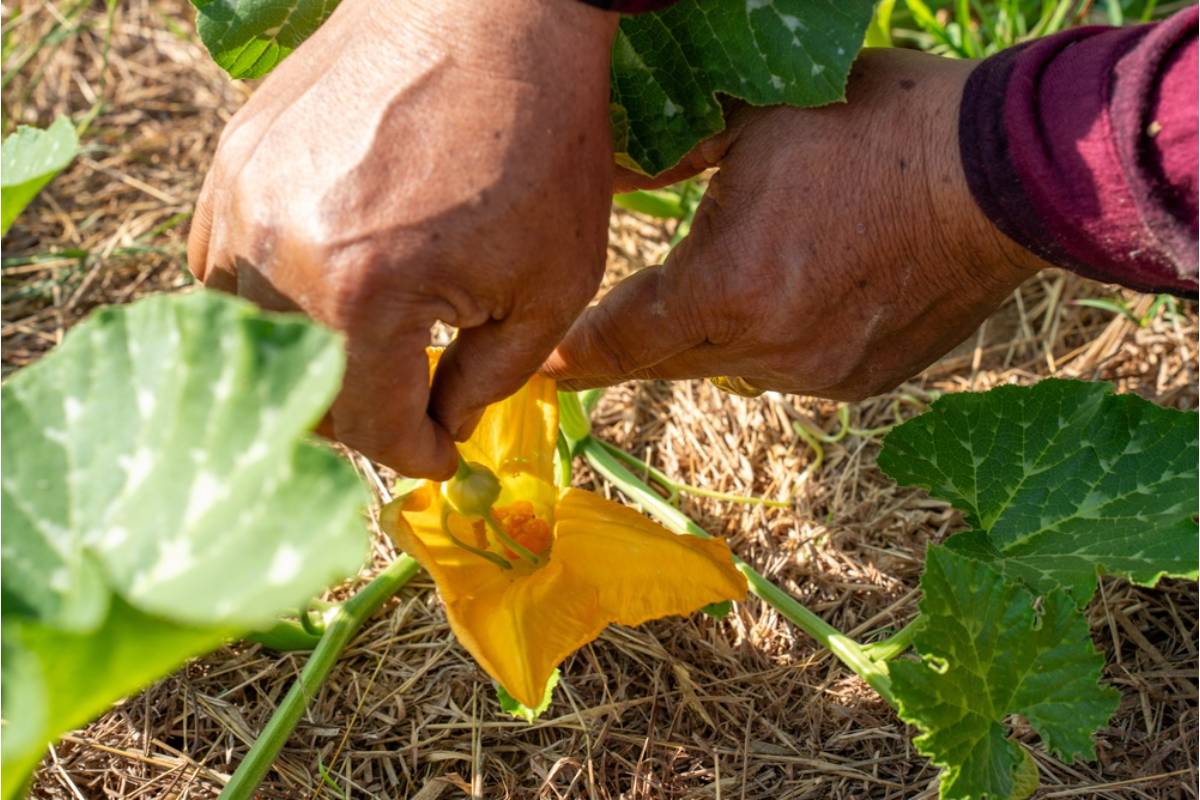
After researching squash reproduction, she decided to try hand pollination using a small brush. Early one morning, she carefully transferred pollen from male flowers to female ones. It felt slow and uncertain at first, almost unnatural. She was not sure if she was doing it correctly. But she repeated the process daily to give it a chance.
Early signs of success appear
Within a week, small swollen bases began forming under some flowers. These were the first signs of successful fruit development in weeks. She checked them every morning with cautious optimism. Not every attempt worked, but enough did to encourage her. The plants were finally responding again.
Neighbors start noticing her morning routine
People walking their dogs began seeing her in the garden early each day doing the same careful movements. Some thought she was just tending plants in a routine way. One neighbor asked what she was doing so consistently at the flowers. She explained the pollination issue briefly but did not go into detail. The conversation sparked curiosity more than understanding.
Increased interest from nearby gardeners
A few neighbors started mentioning similar problems in their own gardens. One said his cucumbers were flowering but not producing properly. Another asked if she had changed anything in her soil. She shared what she was doing with hand pollination, but emphasized it was time consuming. Still, interest in her method began to spread.
A local gardening group gets involved
Someone from a local community gardening group heard about her situation and visited to observe. They took notes and asked detailed questions about timing and technique. The group suggested environmental factors might be affecting pollinator activity. They mentioned changes in pesticide use or habitat disruption as possible causes. The conversation turned from personal gardening into a broader concern.
First full squash harvest after intervention
After several weeks of hand pollination, the plants finally produced a small but steady crop. The squash were uneven in size but clearly healthy. She harvested them carefully, comparing them to previous failed attempts. The difference was obvious compared to earlier empty vines. It confirmed that the manual method was working.
Neighbors begin copying the technique
A few nearby gardeners started trying the same hand pollination method after seeing her results. Some asked for guidance on identifying male and female flowers. Others compared notes on timing and success rates. The practice slowly spread beyond her yard. What began as a private solution was becoming a shared response.
Possible cause of bee decline discussed
People in the neighborhood began speculating more seriously about why bees had declined. Some pointed to recent landscaping treatments in the area. Others blamed weather changes or loss of nearby wild plants. No single cause was confirmed, but concern continued growing. The absence of bees was now a community topic.
A return of scattered pollinators
Later in the season, a few bees and butterflies began reappearing in nearby gardens. It was not a full return but noticeable compared to earlier weeks. The gardener reduced hand pollination slightly but continued monitoring closely. The plants seemed to benefit from both natural and manual help. The balance slowly shifted again.
A quieter, more careful gardening routine remains
Even after fruit production stabilized, she kept the habit of checking flowers each morning. Some neighbors still relied on hand pollination while others waited for natural pollinators to return. The garden never returned completely to how it was before. It had become more deliberate and attentive. The experience changed how the whole neighborhood viewed something as simple as bees in a backyard.