Homeowner Questions Why a Neighbor’s Tree Crew Started Cutting Branches Over His Roof Without Warning, Then a Debate Over Basic Courtesy Turned Into a Bigger Fight About Family Safety and Property Lines
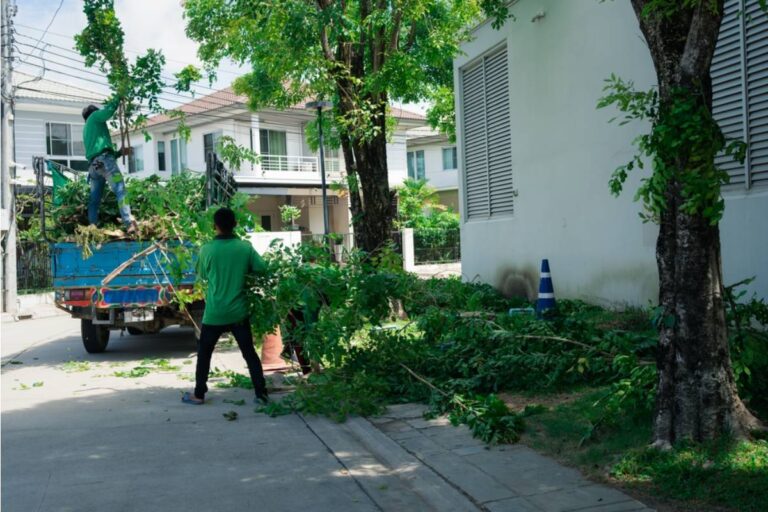
A person shared his story after raising a question that many homeowners might not consider until a chainsaw starts roaring outside their windows. His neighbor had hired a professional tree company to remove a large tree, but portions of the tree extended over his property, including the roof, fence, and other trees. What bothered him was not necessarily the decision to remove the tree, but the apparent lack of advance communication. He wondered whether expecting a warning before the work began was reasonable or whether he was asking too much of his neighbor.
For someone who takes pride in maintaining a garden and keeping a property safe, the situation was easy to understand. Tree removal is not exactly the same as mowing a lawn or trimming a few stray branches along a fence. Large limbs can hang over valuable landscaping, roofs, outdoor furniture, and places where families spend their time. Suddenly, an ordinary weekday can turn into a noisy operation happening just beyond the back door.
The Tree Was Next Door, but Its Branches Had Other Plans
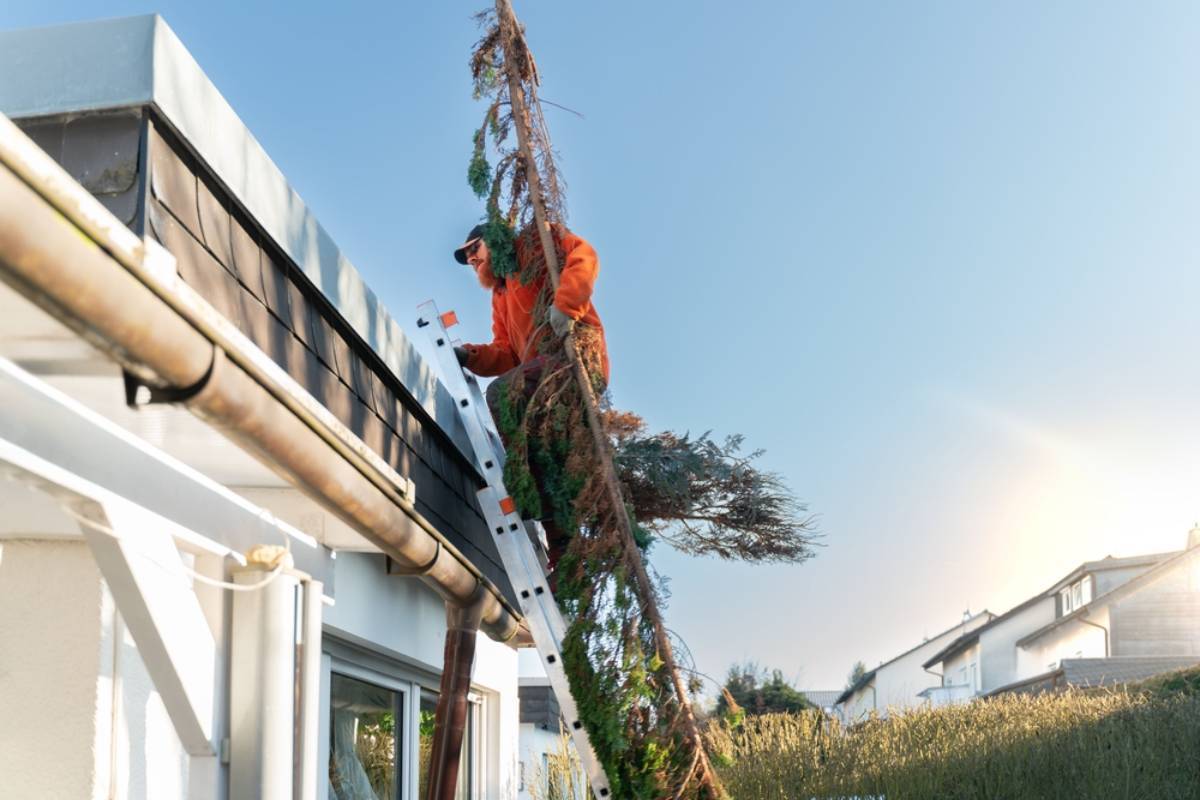
The central complication was that the tree did not neatly respect the invisible boundary separating the two properties. Parts of it reached over the homeowner’s fence and roof, leaving him wondering what might happen when the crew began cutting. Even if the tree belonged entirely to the neighbor, the branches created a situation that could affect someone else’s home and garden. That distinction became the heart of the entire discussion.
Homeowners regularly share more than a boundary line with the people next door. They may share shade, overhanging branches, roots beneath flower beds, and trees whose canopies stretch across both yards. Most of the time, these arrangements are perfectly manageable, especially when everyone communicates. But when a mature tree needs to come down, those familiar branches can suddenly become a complicated logistical problem.
All He Wanted Was a Little Advance Notice
The homeowner wanted to know whether his neighbor or the tree company should have contacted him before the work started. A quick conversation could have explained what the crew planned to remove, whether branches would pass over his roof, and whether any part of his property might be needed. It might also have given him time to move outdoor furniture, protect delicate plants, and plan around the noise. To him, this sounded less like a demand for special treatment and more like ordinary neighborhood courtesy.
A warning would not necessarily have stopped the work or changed the contractor’s plans. It would simply have allowed the people living nearby to understand what was about to happen. Someone working in the garden might choose to spend the morning indoors, while a homeowner with pets could secure them before machinery arrived. Sometimes, a few minutes of conversation can prevent hours of frustration.
The First Response Backed Him Up on Basic Courtesy
One response from a person supported the idea that giving neighbors a heads-up was simply proper etiquette. It was a brief opinion, but it captured what many people expect when a major landscaping project is about to affect the area around their home. A neighbor does not necessarily need to request permission for every activity on their own property to show consideration. A little warning can make a disruptive job feel much less intrusive.
That expectation becomes especially understandable when the work involves a large tree rather than a minor garden project. A hedge trimmer running for fifteen minutes is one thing, while a crew dismantling a mature tree above nearby structures is quite another. The equipment, noise, falling branches, and movement of heavy timber can make the entire area feel like a construction site. Knowing what is happening beforehand can make an enormous difference to the people next door.
Then Someone Asked About the Crew’s Cutting Plan
Another response from a person took a more technical approach, suggesting that the homeowner ask the tree company about its hoisting and swinging plan. When heavy sections of a tree must be lifted or moved across a property, the direction of travel matters just as much as the cutting itself. If a planned operation involves swinging a large section over someone’s roof, permission and appropriate coordination may become important. The advice was essentially to ask informed questions rather than assume the crew’s plan would never affect the neighboring home.
For anyone unfamiliar with professional tree work, those details can sound surprisingly complicated. A large branch may need to be lowered with ropes, while another section might be lifted by machinery and moved into a designated landing area. The best approach depends on the tree, surrounding obstacles, available equipment, and the crew’s assessment of the site. That is precisely why a quick explanation before work begins can help neighbors understand what is happening above their garden.
Not Everyone Believed the Crew Needed to Ask
The discussion quickly became more divided when another person pointed out that the contractor might not need the neighbor’s permission if the entire operation stayed within the client’s property. If the crew could safely dismantle the tree using ropes and keep its equipment and debris on the customer’s side, there might be no reason to enter the adjoining yard. From this perspective, the contractor had been hired to complete a job, not to negotiate every detail with the surrounding neighborhood. The responsibility for being neighborly, this person argued, rested primarily with the homeowner who ordered the work.
That viewpoint raised a distinction that is easy to overlook during a frustrating situation. Wanting advance notice is not automatically the same as having a legal right to demand it, and courtesy is not always a formal requirement. Local ordinances, property boundaries, and the actual work being performed can all affect what is permitted. A neighbor might reasonably expect a warning without necessarily being entitled to control how another person’s tree is removed.
The Real Question Was What Happened Above the Roof
The homeowner pushed back with a practical concern: how could a contractor establish a safe exclusion zone beneath overhead work if the people occupying the affected property had never been informed? An exclusion zone is an area that people should keep clear while a hazardous operation is underway. When falling or suspended tree sections could affect space beyond the customer’s property, knowing where that danger zone extends becomes especially important. The homeowner did not believe he should have to discover the risks by watching branches move above his roof.
Someone else questioned whether the homeowner intended to stand underneath the tree while the crew worked. The exchange highlighted how differently people can interpret the same concern. One person saw an avoidable safety problem involving a home and family, while another viewed it as a straightforward job being carried out on someone else’s property. Yet a person does not need to plan to stand beneath a branch to want to know whether a major operation is taking place overhead.
A Roof Makes It Hard to Judge What Is Happening
The homeowner made a pointed observation when someone suggested that he could simply avoid the area beneath the tree. He could not see what was happening above his house through the roof, so he had no reliable way to know which rooms or outdoor spaces might be affected at a particular moment. A branch being cut on the far side of a thick canopy could be almost impossible to assess from the ground. Waiting until something looked dangerous was not the sort of safety plan he had in mind.
This is where the argument moved beyond gardening etiquette and into the realities of living in an occupied home. Families may be cooking, working, playing, or caring for young children while tree crews carry out complicated work nearby. A person cannot make sensible arrangements without knowing that the work is happening and having some idea of its scope. Even a simple advance message could help someone decide whether to use the garden, keep windows closed, or remain away from a particular part of the house.
Toddlers, Dogs, and Garden Furniture Entered the Picture
The homeowner later explained why advance notice mattered to him personally. With a toddler and dogs at home, he could have made arrangements to keep everyone away from affected areas before the crew arrived. He could also have cleared the yard, considered parking arrangements, and planned around any possible need for property access. In his view, the decision about what made his family feel safe should not be left entirely to an outside contractor working above his property.
Anyone who has tried to supervise a young child while handling an unexpected household disruption can understand the frustration. Add curious pets, falling leaves, unfamiliar machinery, and the possibility of debris landing near a prized flower bed, and an ordinary morning can quickly become stressful. Gardening itself often involves planning around weather, watering schedules, and the needs of different plants. A major tree removal introduces another layer of unpredictability, especially when the neighboring household receives no warning.
One Arborist Shared a Story About a Very Different Neighbor
A response from a person with experience in landscape design described a situation involving their mother’s property and a neighboring home’s large Ficus nitida trees. The yards met near the end of a cul-de-sac, and the trees could not be trimmed properly without accessing the mother’s front yard. The neighbor had hired an arborist company that had recently worked on the mother’s own backyard, apparently assuming that access would not be a problem. But the person explaining the situation was their mother’s court-appointed conservator and needed to protect her property and interests.
The conservator told the crew supervisor that entry would not be permitted without signed liability releases, proof of insurance, and documentation of the company’s contractor’s license. The supervisor was reportedly frustrated and had to wait until an office employee arrived to provide the paperwork. The conservator explained that the same kind of documentation had been requested when the company worked on the mother’s property, so there was no reason to handle this job differently. Eventually, the documents arrived by email, and the neighbor accepted the explanation.
The Paperwork Was Provided, but the Relationship Had Changed
Although the neighbor understood the conservator’s position, the experience had a lasting consequence for the arborist company. The conservator had previously referred a considerable amount of work to the business but decided not to use it again because of the supervisor’s reaction. What could have been a straightforward conversation about access and documentation instead became an uncomfortable encounter. The trees could still be trimmed, but the company’s relationship with a former source of referrals had been damaged.
The story illustrated how quickly a landscaping project can become about trust rather than branches alone. When a contractor needs access to another person’s property, it is reasonable for the property owner or authorized representative to ask relevant questions before agreeing. Insurance, liability, scheduling, and the boundaries of the work may all matter, depending on the circumstances. A professional explanation can turn a potentially awkward request into a routine part of doing business.
Even Tree Workers Prefer a Cooperative Neighborhood
A person who worked as a laborer in the tree care industry offered another perspective. They explained that they generally preferred the salesperson arranging the project to contact nearby residents before the crew arrived, particularly when the job was large. That initial communication could help establish expectations and reduce the chance of an argument once the workers were on site. The worker was also happy to answer reasonable questions and explain the operation to neighbors from a safe distance.
This response revealed that advance communication can benefit the crew as well as the surrounding household. Workers have a demanding job that requires them to concentrate on equipment, cutting techniques, and the movement of heavy tree sections. They do not need an unexpected dispute about access or safety while the operation is already underway. Clear expectations make it easier for everyone to understand where they can go, what should remain undisturbed, and who needs to be contacted if a concern arises.
One Neighbor Explained How Easy Communication Could Be
Another response from a person described a more considerate approach to arranging professional tree work. They said they had asked neighboring property owners for permission whenever access was needed and explained that they intended to hire an International Society of Arboriculture certified arborist. Once the work date was set, they planned to notify their neighbors and make sure the timing did not clash with expected visitors or other arrangements. The goal was not complicated: protect both properties, respect everyone’s time, and avoid creating unnecessary tension.
That approach also recognized that neighborhood relationships often matter long after the branches have been removed. A neighbor who feels respected may be more willing to cooperate when a future project requires access or when an unexpected problem arises. People might eventually need help moving a heavy planter, reaching a fence, or arranging maintenance along a shared boundary. A little consideration today can make those conversations much easier tomorrow.
Courtesy and Legal Permission Were Not Quite the Same Thing
As the discussion continued, one important distinction emerged: there is a difference between what seems considerate and what the law actually requires. A neighbor may have good reasons to provide notice, particularly when a large tree has branches extending above a nearby roof or occupied area. However, whether formal notice, consent, or access permission is required can depend on local rules and the exact work being carried out. The safest assumption is not that every neighboring resident must approve the job, but that any possible impact on their property should be assessed carefully.
The same principle applies to homeowners who want access to another person’s yard for pruning, cleanup, or equipment placement. A contractor should not simply assume that a fence can be crossed or that a neighboring driveway can be used because doing so would make the job easier. Property access and liability should be discussed in advance, and any concerns about hazardous overhead operations should be addressed with the contractor. When there is genuine uncertainty about legal responsibilities, local authorities or qualified legal professionals can provide guidance suited to the location.
In the End, a Five-Minute Conversation Could Have Changed Everything
The original question was not really about whether a neighbor had the right to remove a tree from their own property. It was about whether a major operation affecting the space above another home should begin without a word to the people living there. The responses showed that people disagreed about the contractor’s obligations, but many still recognized the value of a simple warning. A brief explanation could have helped the household prepare, given the crew a chance to address concerns, and avoided turning a routine job into a neighborhood debate.
For gardeners, the lesson extends well beyond tree removal. Before arranging major pruning, taking down a large tree, or bringing heavy equipment into a yard, it is worth considering how the work could affect neighboring homes, fences, plants, and outdoor spaces. Giving nearby residents advance notice may not always be a legal requirement, but it can be an easy way to prevent misunderstandings and preserve goodwill. Sometimes, the most important part of a successful landscaping project happens before the first branch is cut.