Homeowner Says a Free Yard Cleanup Left His Favorite Tree Covered in Mistletoe, Then He Started Wondering Who Should Pay to Save It
A person shared his story about a tree in his front garden that suddenly became the center of an unexpected neighborhood problem. He and his spouse live in a desert neighborhood without an HOA, where most of their yard is covered with decorative rock, a few hedges, and a garden bed with a mature tree. What looked like an ordinary cleanup last year eventually turned into a mystery involving aggressive pruning, strange growth, and a potentially expensive tree removal.
The trouble began when a neighbor offered to have her gardening crew clean up the homeowner’s front yard for free. The homeowner initially declined, but eventually agreed after the neighbor insisted. At the time, it seemed like an easy favor that would leave the garden looking tidier, but the consequences did not become obvious until months later.
The Free Garden Cleanup Seemed Like a Lucky Break
The neighbor managed several rental properties and had a gardening crew that maintained her properties as part of their professional relationships. She offered to have the same crew clean up the homeowner’s front yard at no cost. Since the yard only needed occasional weeding and trimming, the offer sounded harmless enough.
The homeowner admitted that he sometimes fell behind on yard work because both he and his spouse worked and had hobbies outside the house. Their desert landscaping was fairly simple, with rocks covering most of the front yard and only a few planted areas needing regular attention. With nothing to pay and the promise of a cleaner garden, he eventually gave the crew permission to work.
Then the Tree Got a Serious Haircut
The gardeners did more than pull weeds from the rocks. They also trimmed the tree in the garden bed, and the homeowner’s spouse immediately disliked how aggressively it had been cut back. The homeowner was less worried and even thought the tree probably should have received a heavier pruning job years earlier.
At the time, nobody expected the trimming to become important later. The tree appeared healthy enough after the crew left, and the whole event seemed like a minor landscaping favor that was quickly forgotten. Unfortunately, the strange part of the story had only just begun.
Summer Arrived and Something About the Tree Looked Wrong
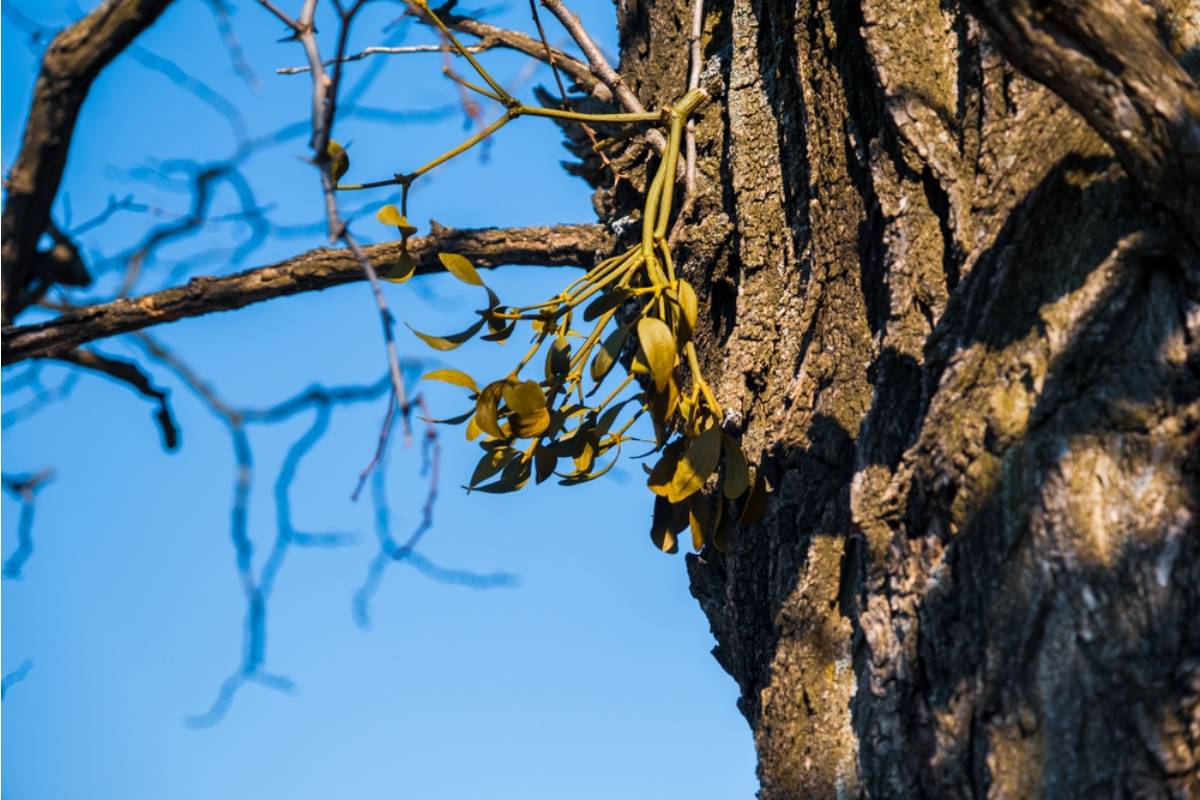
Months passed, and the tree eventually entered the full summer growing season. Instead of seeing the familiar leaves and branches, the homeowner began noticing unusual mossy-looking growth scattered throughout the upper branches. The tree no longer had the appearance he remembered from previous years.
The change bothered him enough that he took a photograph and searched for an explanation. The result he found identified the growth as a possible mistletoe infestation, which suddenly made the situation much more serious. What had started with free weed removal and pruning now looked like a potential disease or parasite problem.
His Spouse Had Already Seen the Warning Signs
There was an uncomfortable twist waiting in the homeowner’s story. He admitted that his spouse had tried to warn him about the strange growth months earlier, but he brushed off the concern at the time. By the time he started taking the problem seriously, the unusual growth had spread across much of the upper part of the tree.
That realization changed the way he looked at the entire situation. The pruning that once seemed harmless now stood out because it happened before the infestation became obvious. He began wondering whether the timing was just coincidence or whether the gardening work somehow played a role.
Then the Gardening Tools Became Part of the Mystery
The homeowner could not prove what caused the infestation, but he had a theory. He wondered whether the gardening crew could have transferred something from another tree if their tools were not cleaned or sterilized between jobs. Since the same crew worked on multiple properties, the possibility kept nagging at him.
Still, suspicion was one thing and evidence was another. He knew the tree had been healthy for years before the pruning, but he also recognized that the timing alone did not establish a cause. That left him facing the awkward question of whether it was fair to involve the neighbor financially.
The Neighbor Had Provided the Service for Free
Another part of the problem was the unusual arrangement itself. The neighbor had not hired the crew specifically to treat or diagnose the homeowner’s tree, and the homeowner had not paid anything for the work. The entire cleanup was presented as a favor that could make the front garden look better.
Now the homeowner was considering asking that same neighbor to help cover the cost of an arborist. That felt uncomfortable because there was no written agreement promising responsibility for future problems. The free service that once looked generous was suddenly sitting at the center of a possible dispute.
An Arborist Became the Next Step
Before deciding whether anyone should pay for treatment, the homeowner was considering calling an arborist to inspect the tree. That would give him a professional assessment instead of relying on an online image search and his own observations. More importantly, an arborist could potentially determine how serious the infestation was and what options existed.
The stakes were not small because the homeowner feared the tree might eventually need to be removed. A mature front-yard tree can become a major landscaping expense when treatment fails or structural problems develop. The simple act of inviting someone to weed the yard had now led to a decision involving the future of a prominent garden tree.
But Who Would Actually Pay for Treatment?
The homeowner wanted to know whether asking the neighbor to split the arborist bill would be unreasonable. He was not asking the neighbor to automatically pay for everything, but he was considering some form of shared cost because her gardening crew had worked on the tree before the problem appeared. The unanswered question was how much responsibility could reasonably be connected to that timing.
One response from a person focused on the homeowner’s own admission that he could not prove the crew caused the infestation. That response suggested the lack of evidence was the key issue. Without proof connecting the pruning to the mistletoe, asking the neighbor to pay could quickly become an uncomfortable conversation.
The Tree Was Healthy Before the Cleanup
The homeowner emphasized that the tree had been doing well since before he and his spouse purchased the property. There had been no obvious infestation during all that time, which made the sudden change especially suspicious to him. The timing between the pruning and the appearance of the problem was what made him wonder whether there was a connection.
But gardens rarely provide the kind of neat evidence people want when something goes wrong. Plants respond to weather, stress, pruning, pests, disease, and countless environmental factors, sometimes in ways that are difficult to trace after the fact. The homeowner therefore had a strong suspicion but no clear way to turn that suspicion into a claim.
The Desert Garden Had Always Been Easy to Manage
Compared with many larger landscapes, the homeowner’s front yard was relatively simple. Most of it consisted of decorative rock, with only a couple of hedges near the windows and one garden bed containing the tree. Weeds occasionally pushed through the rocks, but the overall maintenance burden was not enormous.
That simplicity made the sudden tree problem stand out even more. There had been no complicated orchard, enormous lawn, or collection of delicate plants demanding specialized care. Instead, one mature tree had quietly become the garden’s biggest concern after what had originally been a routine cleanup.
A Bigger Problem Could Be Hiding in the Branches
The visible growth was already concerning, but the homeowner had another reason to take the situation seriously. If the mistletoe-like growth continued spreading, the health and appearance of the tree could deteriorate further. That meant the problem could become harder and more expensive to address the longer it remained untreated.
An arborist could help determine whether treatment was practical or whether removal might ultimately be necessary. That distinction matters because saving a mature tree and removing one entirely are two very different gardening projects. For the homeowner, the next inspection could determine whether this story ended with careful treatment or a chainsaw.
The Neighbor Might Still Be Part of the Solution
Even without proof of fault, the homeowner was considering approaching the neighbor about the situation. The neighbor was the one who offered the gardening crew in the first place, so there was at least a personal connection between the cleanup and the current concern. Whether that connection justified sharing expenses was much less certain.
A calm conversation could potentially clear up details about who performed the pruning and what kind of work was done. It might also reveal whether the crew routinely cleans tools between properties or whether anyone had noticed similar issues elsewhere. Sometimes a little information can explain a garden mystery before it turns into a full-blown neighborhood dispute.
The Real Question Was Bigger Than the Arborist Bill
At first glance, the homeowner’s question was about money. Should the neighbor pay half of an arborist visit, contribute to treatment, or pay nothing at all? But underneath that was a more difficult issue about responsibility and proof.
The homeowner had accepted a free favor, enjoyed the cleaner yard, and only later discovered a serious problem with the tree. A response from a person pointed out that the homeowner’s inability to prove the gardening crew caused the infestation was likely to make any financial request difficult. That left the homeowner with a choice between acting on suspicion or simply paying for an expert evaluation himself.
The Tree That Needed a Simple Trim Became the Garden’s Biggest Mystery
What began as a neighborly offer to clean up a modest desert garden ended with a mature tree covered in suspicious growth. The homeowner now has to determine whether the tree can be treated, whether the pruning was connected to the problem, and whether the neighbor should be involved in the cost. None of those questions has an obvious answer yet.
For now, the most important chapter may be the arborist’s inspection, because a professional assessment could reveal what is actually happening inside those branches. Until then, the homeowner has one uncomfortable fact hanging over the garden: the tree was healthy before the free cleanup, and something changed afterward. Whether that was coincidence or the missing clue in the entire mystery remains the question no one can answer just by looking at the leaves.