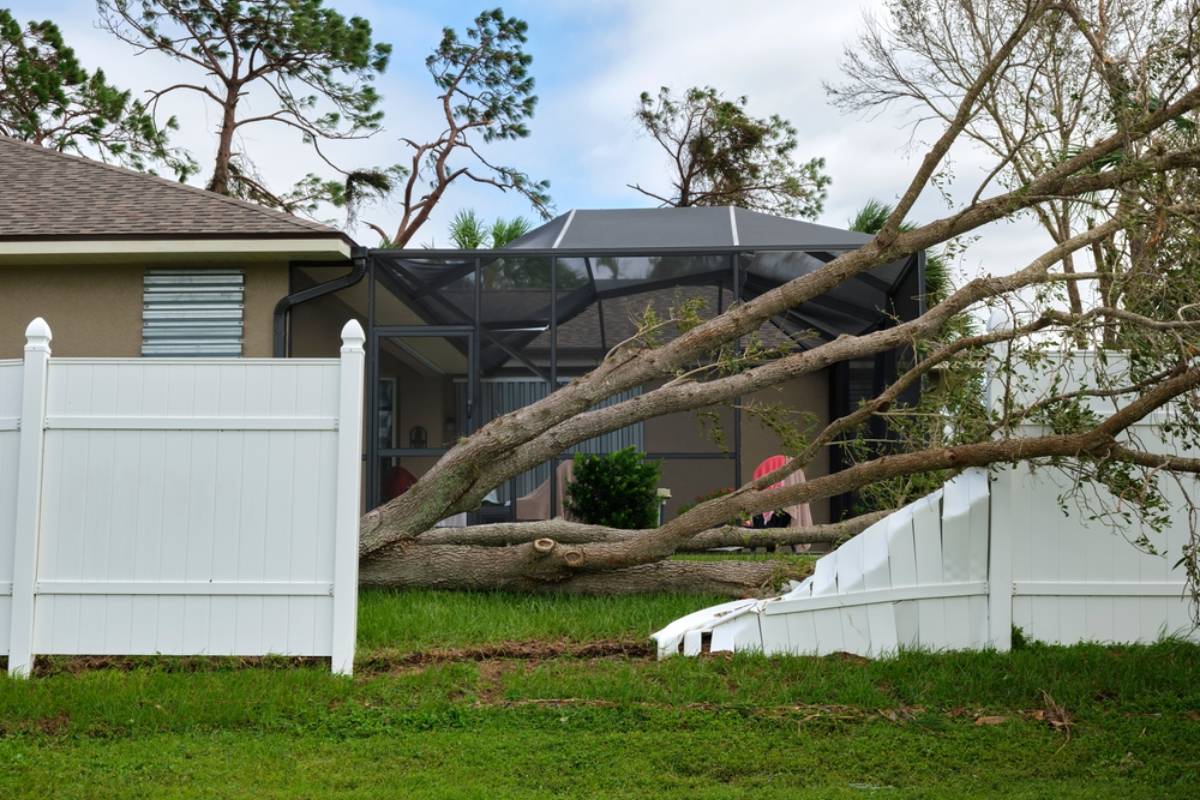
Homeowner Says a Neighbor’s Tree Crashed Through the Fence and Onto the Garage Overnight, Then Discovered That Owning the Fallen Tree Was the Least of Their Problems
A person shared his story after waking up to a sight no homeowner wants to discover: a neighbor’s tree had fallen overnight, smashing into the fence and landing on the garage. What should have been an ordinary morning quickly turned into a stressful puzzle involving property damage, tree ownership, and the question of who would pay for the mess. The fallen tree was impossible to ignore, and neither was the damage left behind.
For anyone who spends time maintaining a yard, a large tree can be both a beautiful feature and a potential source of trouble. Trees provide shade, shelter wildlife, and make outdoor spaces feel more inviting, but a falling trunk can undo years of careful landscaping in seconds. In this case, the biggest challenge was not simply removing the branches but figuring out where responsibility began and ended.
The Neighbor’s Tree Suddenly Became Everyone’s Problem
The tree had stood on the neighbor’s property, but its unexpected fall brought the consequences across the boundary. The fence and garage now needed attention, turning a problem that once belonged to one yard into a headache for the homeowner next door. Suddenly, the location of the trunk mattered far less than the damage it had caused.
Situations like this can become awkward even between neighbors who usually get along. One person may feel that the tree owner should cover everything, while another may believe the storm or weather was responsible. When a mature tree comes down, assumptions can grow almost as quickly as the arguments, especially when repair bills enter the picture.
The Garage Took the Hit Nobody Wanted
A damaged fence is frustrating, but a tree landing on a garage raises the stakes considerably. Garages can contain tools, garden equipment, bicycles, lawn mowers, and other expensive belongings that are difficult to replace. Even when the structure appears to have survived the impact, the roof and supporting materials may need a closer inspection.
For gardeners, the garage often doubles as a storage space for everything from pruning shears to bags of compost and spare pots. A heavy trunk landing on the structure can threaten far more than its exterior appearance. Before anyone starts celebrating that the building is still standing, a proper assessment can help reveal damage that is not obvious from the ground.
The Fence Was Caught in the Middle
Fences are often the first things to suffer when a neighboring tree falls across a property line. Panels can crack, posts can loosen, and entire sections may be pushed out of alignment by the weight of the trunk. Even a fence that looks repairable may need substantial work if its foundations have shifted.
The frustrating part is that fences already create plenty of neighborhood disagreements without a fallen tree joining the conversation. Homeowners may disagree about who installed the fence, who maintains it, and which side of the boundary it occupies. Add a massive fallen tree to the equation, and a simple repair can become a surprisingly complicated discussion.
The First Big Question Was Who Should Pay
The homeowner wanted advice on determining who was responsible for the damage. It is tempting to assume that whoever owns a tree must automatically pay whenever it falls onto someone else’s property, but the situation can be more complicated. Depending on the location and circumstances, insurance coverage and evidence of negligence may matter more than the tree’s original address.
A response from a person explained that homeowners insurance is often the first place to turn when a tree falls unexpectedly. Other responses emphasized that the tree owner’s responsibility may change if the tree was already dangerous and the owner knew, or reasonably should have known, about the risk. That distinction became central to the discussion because the cause of the fall could determine what happened next.
A Storm Can Change the Entire Story
When a healthy tree falls during severe weather, the incident may be treated differently from a collapse involving a neglected or visibly dangerous tree. Strong winds, saturated soil, and storms can bring down even substantial trees without clear evidence that the owner did anything wrong. In such cases, the damaged homeowner’s own insurance may be the starting point for repairs.
That does not mean every fallen tree automatically qualifies as an unavoidable natural event. A tree that has been decaying for years, leaning dangerously, or showing obvious signs of structural failure may raise different questions. The important detail is what could reasonably have been known before the tree came down, rather than simply who owned the trunk.