Homeowner Says He Planned to Remove a Yard Full of Trees of Heaven After Buying a New House, Then Realized One Tree Might Be Growing Across the Property Line
A person shared his story after buying a house and discovering that the property came with far more trees than he had expected. The biggest problem was a collection of trees of heaven scattered around the yard, and he was determined to remove them before they could spread even farther. What looked like a simple cleanup project quickly turned into a question about fences, property lines, and an extremely stubborn invasive plant.
He had already decided that the trees had to go, especially because they were producing suckers in places he did not want them. The timing, however, was terrible because he could not get a land survey completed before he needed to begin treatment. With only fences available as visible boundaries, he started wondering whether the fence lines could safely be treated as the limits of his responsibility.
The Fence Looked Like the Obvious Boundary
The homeowner explained that the properties were separated by fences, and there were no convenient gates or openings connecting the two sides. From his perspective, the arrangement made the fence look like a giant green arrow pointing directly at where his property ended. There were several trees of heaven involved, but he estimated that only one out of four might possibly be sitting on the neighboring land.
That one uncertain tree became the center of the entire problem. He had already contacted the other property owner to discuss the situation, but there had been no response yet. Unfortunately, he needed to perform his planned hack-and-squirt treatment that same week, so waiting indefinitely was not exactly an attractive option.
One Tree Created a Very Big Problem
The homeowner was not simply wondering who technically owned a tree. He was worried about what could happen if the treatment crossed an invisible legal boundary by mistake. Even though the tree was part of an invasive species, he did not want his first major project at the new house to become a neighborhood dispute.
A response from a person pointed out the danger of relying on assumptions. Fences can make a property line look obvious, but appearances are not always legally accurate. The advice was simple in theory: assuming might be easy, but dealing with the consequences could be considerably harder.
The Neighbor’s Side Was Hard to Reach
There was another reason the homeowner felt tempted to use the fence as his guide. The neighboring area was not easily accessible from his own yard because there were no gates or convenient paths between the properties. That made checking every tree from the other side much more difficult.
He also hoped the other owner would eventually allow him onto the property so he could inspect for suckers after the treatment. Trees of heaven are notorious for sending up new growth, which meant killing the visible trees might only be the opening act. The homeowner knew that leaving hidden suckers unchecked could simply turn the entire problem into a sequel.
The Trees Had Already Become a Personal Enemy
At this point, the homeowner’s relationship with the trees of heaven had become surprisingly emotional. They were no longer just unwanted trees in a new yard; they had become the first obstacle standing between him and a clean garden. Every new sucker seemed like another reminder that the property had inherited a problem he never asked for.
A response from a person joked that the invasive trees were hardly the sort of plants anyone would be heartbroken to lose. Another response took an even more casual attitude and suggested that, personally, anything inside the fence would be treated as fair game. Those reactions made the homeowner’s situation sound much simpler than it actually was.
The Invasive Species Argument Changed the Mood
Several responses focused on one major detail: trees of heaven are invasive and generally considered undesirable. That made people feel much more sympathetic toward someone trying to eliminate them rather than preserve them. Still, sympathy from strangers was not the same thing as permission from a property owner.
The homeowner seemed to understand that distinction better than most. He was not asking whether the trees deserved to live; he was trying to figure out how far he could go without accidentally damaging someone else’s property. The difference between those two questions was about to become very important.
He Decided to Get Professional Help
Instead of simply charging into the yard with herbicide, the homeowner had already taken a more careful approach. He brought in an arborist to inspect the situation and discuss how the trees and suckers should be handled. That gave him a much better understanding of what he was actually dealing with.
He also contacted the local Natural Resources Conservation Service to discuss his planned treatment. Getting guidance from people familiar with invasive vegetation helped remove some of the uncertainty surrounding the actual gardening work. The project was still complicated by the property-line question, but at least the treatment itself was no longer based on guesswork.
The Arborist Had Seen the Problem Before
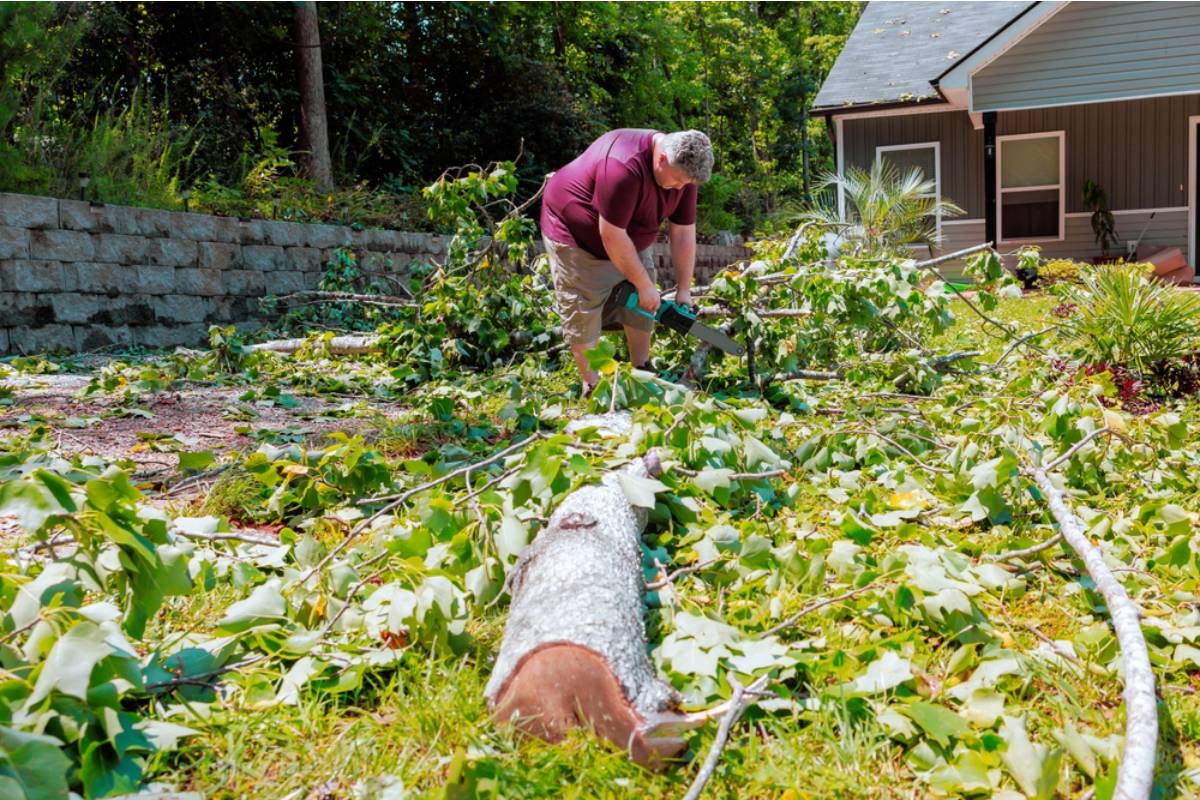
The arborist’s involvement reassured the homeowner that the trees could not simply be handled like ordinary backyard shade trees. Trees of heaven can spread aggressively, and cutting them without properly addressing regrowth can sometimes create an even bigger headache. That meant the homeowner needed a strategy rather than just a chainsaw.
The visit also gave him an opportunity to think about what would happen after the initial treatment. Killing the main trees was only part of the process, because suckers could continue appearing afterward. His plan therefore had to include monitoring the ground around the trees rather than assuming the job was finished on the first day.
The Property Line Was Still the Wild Card
Even with professional advice about the treatment, the invisible property line remained unresolved. The homeowner could see the fence, but he could not prove that every inch of land on his side actually belonged to him. That one distinction mattered most for the tree that might have been growing on the neighboring property.
A response from a person offered the most blunt version of the dilemma: if the tree was inside the fence, they would personally treat it as their responsibility. The homeowner now had several people essentially giving him the same practical suggestion, but none of them could turn a fence into an official survey.
Waiting for the Neighbor Became the Hardest Part
The homeowner had already reached out to the neighboring owner, which showed that he was trying to solve the problem cooperatively. Unfortunately, silence is difficult to plan around when an invasive plant is already spreading. Every day of waiting felt like another opportunity for suckers to appear in places that would be harder to control later.
He also had a very specific goal beyond simply removing the trees. He wanted permission to enter the neighboring side, inspect for new growth, and make sure the problem did not quietly move back into his yard. That request could have turned a messy gardening problem into a useful long-term partnership between neighbors.
The Comment Section Offered a Bold Strategy
A response from a person essentially argued that there was little reason to panic over accidentally killing an invasive tree. Another person suggested taking the risk and dealing with any disagreement afterward, reasoning that few neighbors would become angry about losing a tree that causes so many problems.
That advice may have sounded reassuring, but the homeowner had already demonstrated that he was taking the situation more seriously. He had consulted professionals and contacted the other property owner instead of simply assuming everything was fine. The gardening problem might have been straightforward, but the ownership question demanded more caution.
The Fence Finally Became His Working Boundary
After weighing the advice, the homeowner explained that the treatment would focus on the trees within his fenced area. He had an arborist involved and had also received confirmation from the local conservation office that his planned approach was sufficient. With those pieces in place, he appeared ready to move forward rather than let uncertainty stop the entire project.
Still, he was careful to acknowledge that the work did not end with the treatment. He planned to watch the area for new suckers and continue monitoring the trees afterward. That small detail revealed that he understood the real battle was not simply removing trunks but preventing the invasive plants from returning.
The Hidden Problem Was What Came After
Once the visible trees were dealt with, the homeowner knew the ground itself could become the next battlefield. A tree of heaven can seem finished while new shoots appear farther away from the original trunk. For someone who had just purchased a new home, that meant the garden could require weeks or months of observation before he could declare victory.
The twist was that the biggest threat was not necessarily the tree that might have been across the fence. It was the possibility of thinking the problem was solved too early. The homeowner was preparing for a gardening project that would require patience, repeated inspections, and a willingness to deal with whatever popped up next.
The New Homeowner Turned a Mess Into a Mission
What began as a simple plan to clear unwanted trees had become a careful operation involving fences, neighbors, professionals, and constant monitoring. The homeowner could have ignored the uncertainty and rushed ahead, but instead he gathered advice and tried to respect the neighboring property at the same time. That made the project feel less like random yard work and more like a long-term campaign against an especially determined invader.
In the end, the trees of heaven had not just given him a messy yard; they had given him his first real gardening mystery at the new house. He still had to watch for suckers, keep an eye on the fence line, and hope his neighbor eventually responded. And somewhere beneath the soil, there were almost certainly a few new shoots waiting to make sure he did not become overconfident.