Homeowner Says Her Neighbor Let a Giant Rosebush Take Over Their Shared Passage, Then Got Furious When She Finally Pruned It Herself
A 28-year-old homeowner lived next door to a man whose rosebush had spent nearly two decades growing without much interference. The bush produced plenty of beautiful flowers, but its impressive size came with a serious downside because it had gradually sprawled across the narrow space between the two homes. What once might have been an attractive garden feature had become a thorny obstacle that was increasingly difficult to ignore.
The passage between the houses was roughly 16 feet wide, with the property line running directly through the middle. There was no fence separating the yards, so both homeowners used the space to reach their backyards. The arrangement had worked for years, but the rosebush was slowly turning that shared passage into something resembling a botanical obstacle course.
Seventeen Years Without a Trim
The neighbor had lived in his home for 17 years, and according to the homeowner, the rosebush had barely received any serious pruning during that time. It had grown enormous, with thick branches reaching outward and downward instead of being trained onto a trellis. Some sections were reportedly covered in dead wood and thorns, making the bush much less charming up close than it appeared from a distance.
If the rosebush could have stood upright, the homeowner estimated that it might have reached around 15 feet tall. Instead, it drooped across the ground and consumed much of the neighbor’s side of the passage. The sheer size wasn’t necessarily the homeowner’s problem, but its growing reach eventually became impossible for her to ignore.
The Path to the Backyard Became a Problem
The rosebush wasn’t simply sitting quietly in the neighbor’s yard. Its branches stretched toward the homeowner’s side until they touched a bench she had placed near the property line. Anyone trying to walk toward the backyards had to push the bush aside, squeeze around it, risk getting scratched by thorns, or move the bench.
The homeowner had tolerated the arrangement for some time because she figured the neighbor had a right to enjoy his roses. If he wanted to allow the plant to become enormous on his side, she was prepared to accept that decision as long as it remained his problem. But once the bush began interfering with the practical use of the passage, patience started wearing thin.
The Bench Created Its Own Complication
The homeowner’s bench had been placed on her side of the property line, close to where the rosebush was expanding. She apparently considered the bench perfectly reasonable because she wasn’t blocking the neighbor’s side of the passage. In her view, if the neighbor wanted to leave a giant plant occupying his half, she could use her own half however she pleased.
There was also an awkward irony in the arrangement. The neighbor apparently moved the bench when he needed to get around the rosebush and reach his backyard. That meant he was sometimes stepping onto the homeowner’s side and moving something that belonged to her, while objecting to her involvement with the plant on his side.
The Thorny Obstacle Kept Growing
The homeowner described having to physically push the rosebush out of the way to get through. That wasn’t merely inconvenient because the plant was covered in thorns that could catch clothing or scratch anyone attempting to pass. The situation was especially frustrating because the bush wasn’t a temporary obstruction that had appeared overnight.
It had been growing for years, and the neighbor had apparently chosen not to address it. From the homeowner’s perspective, there was a simple solution available that would have made the passage easier for everyone. The rosebush needed to be pruned, and eventually she decided that if nobody else was going to do it, she would.
Then She Took Matters Into Her Own Hands
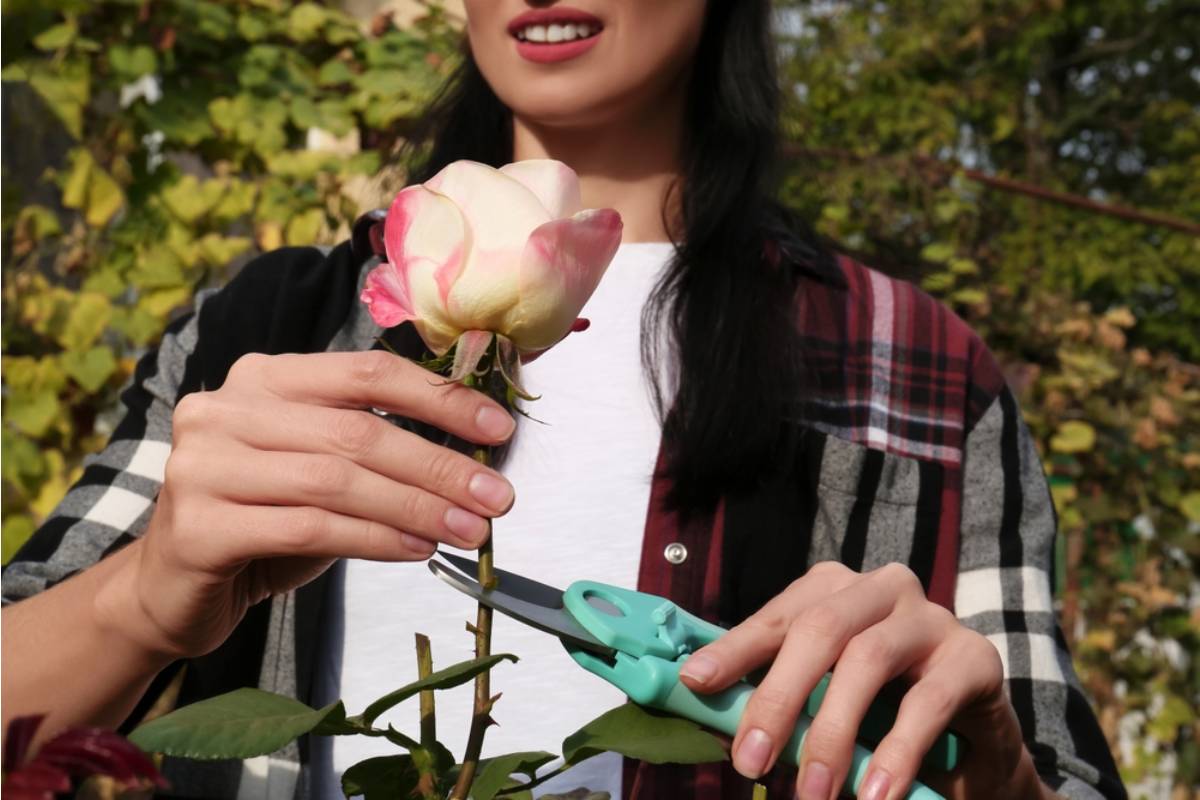
Rather than waiting for the neighbor to tackle the problem, the homeowner pruned the rosebush herself. She didn’t merely remove a couple of stray branches that had crossed the property line. According to her account, she cut the bush back substantially so that it no longer blocked a large portion of the passage.
The result looked dramatically different to her. The walkway was suddenly open enough for people to move through without wrestling with a wall of thorny branches. She believed she had solved a problem that had been bothering both households for years, and she apparently expected the neighbor to appreciate the improvement.
The Neighbor Was Not Grateful
Instead of thanking her for the unexpected landscaping work, the neighbor reacted with anger. He told her that he didn’t appreciate her entering his property and cutting his roses. He was also unhappy because the branches and other trimmings had been left on the ground after the pruning.
The homeowner was stunned by the response. She believed the neighbor should have been grateful that someone had finally dealt with the overgrown plant, especially because it interfered with access to both backyards. Instead, what she considered a helpful gardening project was being treated as an unwanted invasion.
Her Three Arguments Were Ready
The homeowner had several reasons why she believed the neighbor’s complaint didn’t hold up. First, she pointed out that both people used the passage to reach their respective backyards. Second, she argued that the neighbor should have maintained his own rosebush and that she had effectively done him a favor by cutting it back.
Her third argument involved the bench. She noted that the neighbor had moved the bench when the rosebush prevented him from reaching his backyard, which meant he was already crossing onto her side of the property. In her mind, that made his outrage about her crossing onto his side seem somewhat hypocritical.
The Property Line Changed Everything
The story became much more complicated once people focused on exactly where the pruning had happened. The homeowner’s account initially left some uncertainty about whether she had only cut branches that extended onto her property or had also entered the neighbor’s side to cut the bush itself. That distinction became the central issue in nearly every response from people considering the dispute.
If she had only trimmed branches hanging over her own property, her position would have been much stronger. But if she had deliberately crossed the property line and removed several feet of the rosebush growing on the neighbor’s land, she had gone beyond simply maintaining her own space. The missing detail transformed the situation from a gardening disagreement into a question of boundaries.
A Response From a Person Asked the Question That Mattered
A response from a person focused on the most important missing information: where exactly had the pruning taken place? The person explained that trimming growth extending onto the homeowner’s property could be very different from walking onto the neighbor’s land and cutting the plant there. Without knowing that detail, it was difficult to determine who had crossed the line first.
Another response from a person raised the same concern in a slightly different way. The person wanted to know whether the homeowner had trimmed only the part of the bush on her side or had cut the entire plant. Suddenly, the beautiful roses themselves were almost beside the point because the real battle was about an invisible line between two properties.
Then the Missing Detail Came Out
Eventually, a response from a person pointed out that the homeowner had apparently acknowledged trimming roughly four feet of the rosebush on the neighbor’s side. That detail changed the tone of the discussion immediately. What had initially sounded like someone responsibly cutting back branches that had invaded her yard now looked much more like someone taking control of a plant that belonged to someone else.
The homeowner had also left the cuttings behind, which added another problem. Even if the pruning had improved the shared passage, the neighbor was now expected to deal with the debris. The person who had decided to perform the unsolicited landscaping project had essentially handed the property owner a cleanup job afterward.
The Cleanup Became a Second Dispute
Several responses focused specifically on the discarded branches. One response from a person argued that starting a job without finishing it was rude, especially when the person who owned the property had never requested the work. Cutting a plant and leaving a pile of thorny debris behind meant the homeowner had created a new inconvenience while trying to eliminate an old one.
That criticism struck at one of the weakest parts of the homeowner’s argument. She believed the neighbor should clean up because he had failed to prune the plant himself, but the neighbor had never agreed to the pruning project. From his perspective, someone had entered his property, altered his plant, and then left the resulting mess for him to handle.
Not Everyone Let the Neighbor Off the Hook
The responses weren’t entirely sympathetic to the rose owner, either. Several people believed he had allowed the plant to become so large that it was interfering with the homeowner’s property and access. His habit of moving the homeowner’s bench and crossing onto her side to reach his own backyard was also viewed as a serious problem.
One response from a person described the situation as something close to a shared failure. The neighbor was criticized for neglecting the rosebush and repeatedly crossing onto the homeowner’s property, while the homeowner was criticized for entering his property and modifying his plant without permission. The result was less a clear victory for one side and more a picture of two neighbors who had gradually stopped respecting the invisible boundary between them.
Some People Thought the Bush Wasn’t the Real Villain
Other responses took a different approach and questioned why the homeowner hadn’t simply spoken with her neighbor before touching the rosebush. If the plant was genuinely becoming dangerous or preventing reasonable access, a conversation could have given the neighbor an opportunity to address it himself. Instead, the homeowner made the decision unilaterally and only dealt with the disagreement after the pruning was already finished.
That distinction mattered because the neighbor might have had completely different plans for the plant. He may have liked its wild appearance, wanted it to remain large, or simply disliked aggressive pruning. Even if his gardening habits were frustrating, the homeowner couldn’t automatically assume that her preferred appearance for his rosebush was the correct one.
The Homeowner’s Idea of Help Wasn’t Shared
The homeowner appeared to view the pruning as a generous act. In her telling, she had solved a problem that the neighbor had ignored for years and made the passage safer and easier to use. She seemed genuinely confused that the neighbor wasn’t delighted by the result.
But a response from a person pointed out that people don’t necessarily want their plants altered simply because someone else thinks the plant looks better that way. The neighbor may have been negligent about pruning, or he may simply have preferred a giant, unruly rosebush. Either way, being an unwanted gardener can be just as intrusive as being an unwanted handyman.
The Shared Space Made Everything Worse
The lack of a fence was another major ingredient in the conflict. Because there was no physical barrier, the two properties gradually became intertwined, with branches crossing boundaries, people walking through each other’s areas, and the bench sitting near the dividing line. The absence of a fence may have made the space feel communal even though ownership was still divided.
A response from a person summarized the situation with the familiar idea that good fences make good neighbors. The problem wasn’t necessarily that either homeowner had an unreasonable property arrangement. It was that the lack of a clear physical separation allowed both people to behave as though the boundary could be ignored whenever convenient.
The Bench Was More Important Than It First Appeared
The bench seemed like a minor detail, but it revealed the double standard that had developed between the neighbors. The homeowner viewed it as something legitimately placed on her side of the property, while the neighbor apparently treated it as an obstacle he could move when his rosebush made the normal route difficult. That behavior gave the homeowner a reason to feel that she was being held to a standard the neighbor wasn’t following.
At the same time, the bench didn’t give her permission to alter his plant. Two wrongs didn’t automatically create a shared gardening agreement. If the neighbor was crossing the line by moving her bench, the better solution would have been to address that behavior directly rather than using it as justification for crossing the line herself.
The Roses Had Become a Boundary Battle
What began as a gardening problem had gradually turned into a property dispute. The rosebush represented the neighbor’s failure to maintain his space, while the bench represented the homeowner’s claim to hers. Every branch that crossed the invisible line made the disagreement more personal.
Neither side seemed interested in stepping back and acknowledging how the situation had escalated. The homeowner believed she was fixing an obvious problem, while the neighbor believed she had violated his property. The more each person focused on being right, the less room there was for either one to recognize the part they had played.
A Response From a Person Offered a Simple Solution
A response from a person suggested that the homeowner should simply maintain her own side of the property and let the neighbor decide what happened on his. If branches crossed into her space, she could deal with those branches without touching the rest of the plant. That approach would have kept her actions within a boundary that was much easier to defend.
Another response from a person suggested getting the property line clearly established if there was any uncertainty. That might sound excessive for a rosebush, but the conflict showed how quickly a small gardening issue could become a serious neighbor dispute. Knowing exactly where one yard ended and the other began would eliminate much of the ambiguity that had fueled the argument.
The Biggest Mistake Happened Before the Pruning
The homeowner’s biggest mistake may not have been the actual cutting. It may have been failing to have a conversation before taking action. She had lived beside this person long enough to know that the rosebush was important enough to him that he had allowed it to grow for 17 years.
A simple conversation could have revealed whether he was willing to prune it, train it, remove dead sections, or find another solution. Instead, the homeowner made the decision for him. Once the shears came out, the disagreement was no longer about whether the bush was inconvenient but about who had the authority to decide what happened to it.
The Neighbor Had His Own Share of the Problem
Even the responses that blamed the homeowner acknowledged that the neighbor wasn’t exactly behaving like an ideal property owner. Allowing a giant thorn-covered plant to interfere with access and then moving someone else’s bench to get around it was hardly a recipe for peaceful relations. His refusal to maintain the bush had created the original frustration.
If he had kept the rosebush properly trained and trimmed, the conflict might never have happened. He could have prevented branches from reaching the bench and kept a clear route through the passage. Instead, years of neglect created a situation in which the homeowner eventually felt justified in taking matters into her own hands.
The Twist Was That Her Good Deed Became the Offense
The homeowner had apparently expected the story to have a satisfying ending. She saw an overgrown rosebush, cut it back, opened the passage, and believed she had improved the neighborhood. Instead, the neighbor’s anger transformed her gardening project into the very conflict she had been trying to eliminate.
That was the twist that made the situation so messy. The homeowner hadn’t been trying to damage the rosebush or deliberately start a feud, but her attempt to solve someone else’s problem created a new one. The neighbor, meanwhile, had spent years ignoring the plant until its condition contributed to a dispute over property and personal boundaries.
The Roses Exposed What the Neighbors Had Avoided
The disagreement ultimately revealed that the two homeowners had been relying on informal rules instead of clearly communicating with each other. The neighbor crossed onto the homeowner’s side to move her bench, while the homeowner crossed onto his side to prune his rosebush. Each action made the next one easier to justify.
That kind of arrangement can work until something goes wrong. Once one person decides that the other has violated an unwritten rule, every previous incident becomes evidence in the argument. The rosebush wasn’t just blocking a walkway anymore; it had become a symbol of years of small boundary violations that neither neighbor had properly addressed.
In the End, Nobody Was the Perfect Gardener
The strongest responses generally agreed that the homeowner had gone too far if she really did cut four feet of the bush on the neighbor’s property. They also made it clear that leaving the trimmings behind was difficult to defend, especially since the neighbor had not asked for the work. At the same time, many people believed the neighbor needed to take responsibility for keeping his rosebush from invading the neighboring space and interfering with access.
The entire dispute could probably have been avoided with a conversation, a properly maintained rosebush, or a physical fence between the properties. Instead, one homeowner reached for pruning shears, another reached for an argument, and a peaceful passage became a battleground. In the end, the giant rosebush wasn’t just growing across a property line, it was growing directly into a relationship that had never established where one person’s responsibility ended and the other’s began.