Homeowner Says Her Neighbor Planted a Row of Trees Directly Along the Property Line, Then Got Furious Whenever Anyone Came Near Them
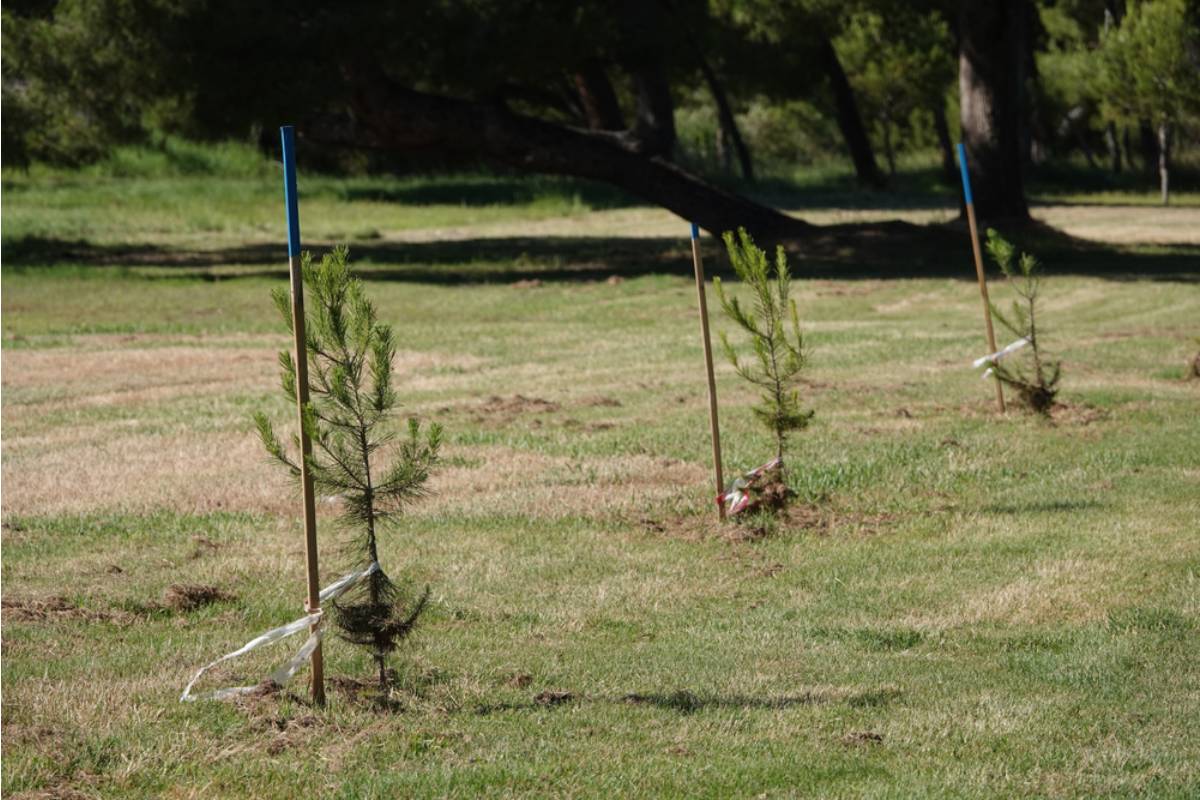
A person shared his story after discovering that his neighbor had planted a row of young trees directly along the property line. From a distance, the trees looked like an innocent attempt at creating privacy, but the placement immediately caused concern. Several appeared to be planted so close to the boundary that parts of their future growth could easily become a problem.
The situation was especially uncomfortable because the neighbors already had a tense relationship. According to the homeowner, the neighbor had previously become upset whenever anyone came close to the trees. What looked like a simple row of greenery was therefore starting to feel more like a very carefully positioned garden boundary.
The Neighbor Was Extremely Protective
The homeowner said the neighbor was unusually particular whenever anyone approached the newly planted trees. At one point, he allegedly harassed the homeowner’s mother while she was simply going about her business and even contacted police. That made the homeowner wonder why someone would plant trees so close to another person’s property if he was so determined to keep everyone away from them.
It was a fair question from a gardening perspective. Trees are not static decorations that stay exactly where they were planted, and their branches and roots can eventually spread far beyond their original position. Planting them inches from a property boundary can create problems years before the homeowner who planted them realizes how large they will become.
The Property Line Became the Main Mystery
The homeowner was not completely certain exactly where the legal property line sat. There was a wooden stake or marker visible near the trees, but several responses from people pointed out that such a marker does not necessarily establish a legal boundary. That meant assumptions about where the neighbor’s land ended could potentially make the entire disagreement even more complicated.
One of the strongest pieces of advice was to get a professional survey. Knowing the exact boundary would make it much easier to determine whether any of the trees were planted on the homeowner’s side or merely very close to it. It could also prevent an even bigger dispute later when the trees grew larger and their branches began reaching across the garden.
The Trees Were Supposed to Become a Living Fence
Looking at the row, it was easy to understand the neighbor’s apparent goal. The trees seemed intended to become a dense natural screen between the properties. A living privacy fence can be attractive, but unlike a wooden fence, it changes every year and can eventually consume far more space than expected.
That is where the homeowner’s concerns began to make sense. A row of small trees may look harmless when freshly planted, but mature evergreens can become enormous. What appeared to be a narrow strip of greenery could eventually turn into a wall of branches, roots, shade, and maintenance obligations.
Then People Identified the Trees
Several responses from people quickly identified the plants as arborvitae. That sparked an entirely different conversation because arborvitae have a reputation for being somewhat finicky when they are planted incorrectly. Their survival can depend heavily on spacing, watering, climate, variety, and proper establishment.
Suddenly, the neighbor’s carefully planned privacy screen had acquired another possible weakness. People began joking that the trees might solve the dispute themselves by simply failing to thrive. It was a humorous prediction, but there was enough gardening experience in the responses to make the possibility sound surprisingly believable.
The Arborvitae Were Packed Together
One of the first horticultural observations was that the trees appeared to be planted quite close to one another. That can become an issue as arborvitae mature because they need adequate room for healthy growth and airflow. Planting a dense row may produce quick privacy, but overcrowding can create stress and maintenance headaches later.
A person with gardening experience explained that arborvitae sometimes get their reputation for dying easily because certain varieties are poorly suited to their environment. Improper planting, insufficient watering, and overly tight spacing can make the situation worse. In other words, the neighbor may have unintentionally built a privacy screen that requires far more attention than it appears to need.
The Climate Added Another Twist
The discussion became even more interesting when people brought up climate. Some varieties of arborvitae reportedly struggle in hot and humid conditions, while others can do perfectly well when the correct variety is planted and maintained properly. That meant nobody could confidently predict what would happen without knowing exactly which arborvitae had been planted.
The homeowner did not need to become a professional arborist to appreciate the irony. The neighbor had created a living border specifically to control the boundary, yet the plants themselves could eventually become unpredictable. The row might thrive, struggle, spread, or develop gaps, and every possibility would create a different garden problem.
Then Came the Property-Protection Advice
Several responses from people recommended dealing with the uncertainty before the trees became larger. A survey was again suggested, followed by clearly marking the boundary. Once the homeowner knew exactly where his property began, he could decide what garden features or fencing could legally be placed there.
That advice had a practical advantage beyond the current trees. Neighbor disputes often become much harder when everyone relies on memory, old stakes, or visual guesses. A professional survey would provide a clear reference point before either side made another landscaping decision.
The Fence Idea Became Very Popular
One of the simplest responses was also one of the most repeated: build a fence. A proper fence would establish a physical separation between the two properties and make it much harder for future disagreements to arise over where one garden ended and the other began.
The idea became especially appealing because the homeowner already seemed tired of dealing with confrontational behavior. Instead of debating every branch and shrub individually, a fence could provide a clear visual boundary. The garden would still have its plants, but the property line would no longer depend on everyone’s interpretation.
Then Came the Threat of the Straight Cut
Another person suggested an unusually effective gardening solution. If the trees remained on the neighbor’s property but their branches extended across the boundary, the homeowner might potentially be able to trim the growth back to his side, subject to local law.
That created a wonderfully awkward image. The entire row could eventually develop into perfectly shaped trees on one side and a dramatically flat vertical wall on the other. One response joked that the result would resemble miniature model trees from a toy train set, which was probably not the privacy-screen aesthetic the neighbor had originally imagined.
The Neighbor Could End Up Blaming Someone Anyway
There was also a humorous prediction that if the arborvitae died, the neighbor would probably blame the homeowner. That would add another layer to an already strange relationship, especially given the neighbor’s apparent sensitivity about anyone approaching the trees.
A response from a person described having a similarly difficult neighbor who blamed normal aging and weathering of a fence on deliberate interference. That story suggested that the real problem might not be the plants themselves but the level of suspicion surrounding them. When two neighbors already distrust each other, even ordinary gardening problems can look suspicious.
Deer Entered the Story
Then someone introduced an unexpected gardening villain: deer. In areas where deer heavily browse arborvitae, a row of young trees can become an all-you-can-eat buffet if it is not properly protected. Several responses joked that the local wildlife might eventually resolve the dispute without either homeowner lifting a finger.
Other people explained that they had watched deer repeatedly damage arborvitae by eating the lower portions. The result could be a bizarre row of plants with a perfectly clear line where the animals had trimmed everything within reach. For a neighbor hoping to create an impressive green wall, that would be an especially unfortunate outcome.
The Electrical Pole Raised Bigger Questions
The trees were not only close to the property line. The homeowner also mentioned that they had been planted near an electrical pole. That immediately caused people to suggest contacting the local utility company rather than relying solely on ordinary code enforcement.
A response from a person with utility experience explained that vegetation near electrical infrastructure can become a separate concern from a property dispute. Even when young trees look harmless, their eventual height and proximity to lines can create maintenance or safety issues. Suddenly, the row of arborvitae had moved from a neighborhood annoyance into a potential infrastructure question.
The Neighbor’s Own Privacy Screen Could Become the Problem
Ironically, the trees intended to separate the properties could eventually become the source of the biggest disagreement. If they grow across the boundary, the homeowner may have to deal with overhanging branches, roots, shade, trimming, and access issues. A privacy screen is only peaceful when both neighbors agree about where it belongs.
The homeowner’s frustration therefore came from more than the appearance of the trees. He already had a history of being challenged whenever someone approached them, yet the trees were placed right beside the shared boundary. The closer they were to the line, the harder it would become to avoid one another in the future.
The Garden Had a Secret Weapon
The funniest twist was that nobody could agree on whether the homeowner would eventually have to fight the trees at all. Some people thought a fence was the obvious solution, while others believed the arborvitae might simply fail because they were too tightly packed or poorly suited to the conditions. A few responses were convinced that wildlife would eventually get involved and solve the problem naturally.
For now, the homeowner seemed to be facing a waiting game. He could establish the exact property line, investigate the utility concerns, and prepare his own garden accordingly while the young trees slowly developed. What began as a simple row of greenery had turned into a full neighborhood drama involving property boundaries, police calls, landscaping strategy, wildlife, utility lines, and the possibility that the trees themselves might become the unexpected final twist.
What Started as a Privacy Hedge Became a Boundary War
In the beginning, the neighbor appeared to be planting nothing more dramatic than a row of small trees. But the closer they were placed to the property line, the more complicated their future became. A plant that looks harmless at two feet tall can behave very differently once it grows into a mature hedge.
The homeowner’s real lesson may be that garden boundaries are worth treating seriously from the beginning. A clear survey, thoughtful planting distance, and sensible landscaping plan can prevent years of arguments later. And in this case, the greatest mystery may not be whether the neighbor was right or wrong, but whether those carefully planted arborvitae will ever become the giant green wall he envisioned.