Homeowner Says Her Neighbor Sprayed Her Wildflower Garden, Then Called the City to Complain About the “Weeds” She Had Carefully Planted
A person shared her story about owning a home in Arizona and turning her yard into something far more useful than a standard suburban lawn. Instead of covering everything with decorative rock or thirsty grass, she began growing wildflowers, vegetables, and plants designed to help pollinators. She was even planning a small pond and hoped to create hiding places where quail could feel safe.
The project was personal because she actually used the yard instead of treating it like decoration. Every plant had a purpose, whether it was producing food, supporting wildlife, or adding some life to an otherwise dry landscape. She was proud of creating a green little oasis in a neighborhood where most yards looked very different.
Then There Was Dipshit Dan
The trouble came from a neighbor she decided to call Dipshit Dan. He did not even live directly beside her house in the usual sense because their streets connected around a ninety-degree bend. Even so, the layout meant that his property shared the wall at the back of her yard.
At first, she had no reason to think they would become enemies. She had actually made an effort to introduce herself after moving in and apparently expected the usual polite relationship between homeowners. Unfortunately, his behavior began changing that expectation much faster than either of them probably anticipated.
The Rainspout Crossed the Line
A few months after she moved in, Dan began constructing something on his property. During the project, she discovered that he had directed a rainspout from the structure straight over the wall and onto her land. Instead of draining on his side, the water was effectively being sent into her backyard.
She decided to handle it politely and left him a note asking him to correct the problem. She admitted that speaking face-to-face might have produced a much less friendly response, so the written message seemed like the calmer option. At that point, she still hoped the issue would be fixed and forgotten.
The Wildflower Garden Became His Next Target
The homeowner’s yard was not an abandoned patch of weeds. She was deliberately cultivating wildflowers and building a pollinator-safe space in a region where water conservation mattered. She also had vegetables growing and had plans for even more wildlife-friendly features.
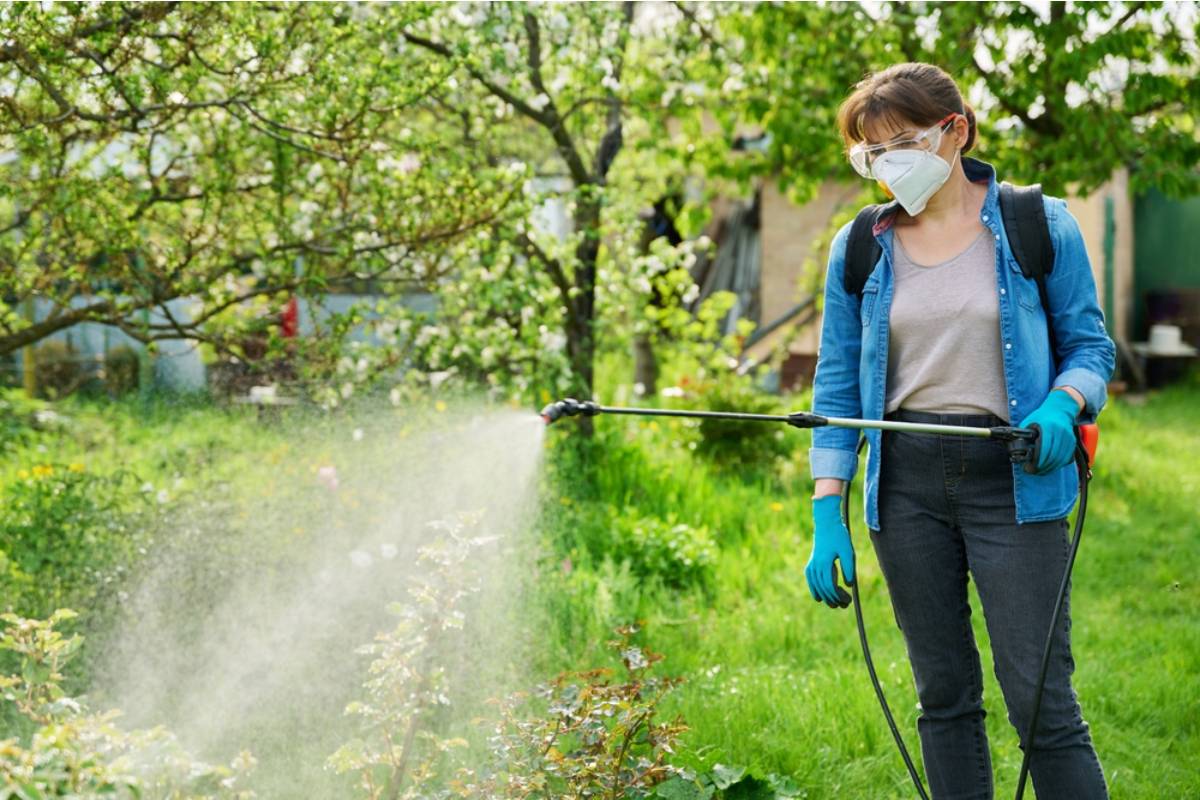
Then she noticed something alarming on her doorbell camera. Dan appeared to be standing in her front yard spraying weed killer. The plants he was treating were not unwanted weeds at all, but flowers she had intentionally planted.
The Camera Caught Everything
Seeing someone spraying chemicals on her plants would have been upsetting under any circumstances. The fact that the plants were part of a carefully designed habitat made the incident even more infuriating. She had spent time creating a yard for pollinators, only to discover that someone else was apparently deciding what belonged there.
The homeowner wasted little time confronting him. She marched over to his house and made it clear that spraying chemicals in her yard was not acceptable. Whatever Dan thought about her landscaping choices, the property belonged to her.
Her Yard Did Not Look Neglected
Dan’s apparent concern became even stranger when the city entered the story. He reportedly complained about her property being a source of blight because of supposed weeds. The homeowner was stunned because her yard was green, watered, maintained, and actively being cultivated.
There was no neglected lawn sitting under piles of rubbish. There were flowers, vegetables, wildlife-friendly plants, and a homeowner who clearly cared about the condition of her property. The complaint therefore felt less like genuine concern about the neighborhood and more like an attempt to pressure her into maintaining the yard according to someone else’s preferences.
There Was No HOA to Blame
One thing that made the homeowner particularly angry was that the neighborhood did not have a homeowners association. She had intentionally chosen a property without one because she did not want an organization telling her what she could plant or how her yard should look. Dan therefore had even less reason to act as though he were the neighborhood landscaping authority.
Without an HOA dictating uniform appearances, homeowners had more freedom to make their yards personal. Her wildflower garden was not designed to resemble everyone else’s property, and that was precisely the point. She wanted a living landscape instead of another sea of rocks and ornamental desert landscaping.
The Flowers Became “Weeds”
The most ridiculous part was the language surrounding the complaint. Plants that she had deliberately purchased, planted, watered, and maintained could apparently be reduced to the label of “weeds” simply because they did not fit Dan’s preferred appearance. The difference between a weed and a wanted plant suddenly depended entirely on whose yard it was growing in.
A response from a person noted that the homeowner might be better off documenting everything carefully and considering professional advice if the chemical spraying caused actual damage. Another response simply said that the neighbor sounded unreasonable and encouraged her to stand her ground. The common theme was that her garden deserved to be treated as her property rather than someone else’s landscaping project.
The Fence Line Got Extra Attention
After receiving the city complaints, the homeowner decided to make sure there was no easy excuse for another dispute. She carefully kept the vegetation along the fence line under control so Dan could not point toward growth there and claim that the entire border was being neglected. It was frustrating to spend extra effort trimming plants because someone else had complained.
Yet there was something almost humorous about the situation. She was already maintaining a thriving garden, but now one particular strip needed to be kept especially tidy because a neighbor seemed determined to inspect it. The fence had gone from being a simple boundary to an imaginary courtroom where every leaf apparently had evidence attached to it.
Dan Was Not Done Calling the City
The homeowner then discovered that the city complaint was not a one-time misunderstanding. Dan had apparently called authorities more than once about alleged blight issues. That meant she was now dealing with someone who was not simply expressing a personal opinion but repeatedly trying to involve outside officials.
The irony was difficult to ignore. Dan’s earlier rainspout had crossed onto her property, yet he was now portraying her garden as the neighborhood problem. She had already tried being polite, but every new incident made that approach feel increasingly difficult.
The Garden Had a Bigger Purpose
What Dan apparently did not understand was that the yard was part of a larger ecological project. The homeowner was trying to provide food and habitat for insects and birds while growing fresh vegetables for herself. In a dry Arizona landscape, replacing a conventional lawn with carefully selected plants can completely change how a property functions.
She was not simply allowing random weeds to take over. She was deliberately choosing what grew there and planning the next stages of the garden. The proposed pond and quail shelters showed that the project was only getting started.
A Pesticide Complaint Could Have Lasting Consequences
The chemical spraying raised an entirely different concern from the city’s landscaping complaint. Weed killer near food crops and pollinator plants can potentially create consequences beyond simply making a few leaves brown. The homeowner therefore had good reason to document the incident rather than treating it like an ordinary disagreement about appearances.
A response from a person suggested speaking with an attorney because proven chemical damage and the drainage issue could potentially become property-damage matters. Another person encouraged her to report the behavior rather than allowing it to become a repeated pattern. Regardless of what action she ultimately took, the important thing was preserving evidence.
Then Came the Wildest Part
After all the previous incidents, Dan still seemed convinced that her garden was the problem. He had objected to plants in her yard, sprayed chemicals there, and contacted the city about supposed blight. Yet nothing about her description suggested a neglected or abandoned property.
That contrast made the situation almost surreal. The homeowner was spending her own money and time turning dry ground into a living garden, while the neighbor seemed determined to eliminate anything that did not match his idea of a proper yard. The more she cultivated, the more he appeared to object.
The Responses Took Different Sides
A response from a person recommended pursuing the matter more formally if there was evidence of damage. Another simply encouraged the homeowner to endure the neighbor’s behavior and keep documenting incidents. There was even someone who misunderstood the homeowner’s point about HOAs and thought she was somehow unhappy that the neighborhood lacked one.
The homeowner clarified that the absence of an HOA was exactly why Dan’s behavior seemed so absurd to her. She had specifically avoided buying into a community where an association could impose landscaping rules. Now a single neighbor appeared to be trying to recreate that experience by unofficially policing her garden himself.
The Backyard Was Becoming a Wildlife Haven
Despite everything, the homeowner was not giving up on the project. She intended to continue growing plants that supported pollinators and producing vegetables in her own garden. The future pond and quail shelters represented an even bigger transformation.
That determination was perhaps the best part of the story. Dan could complain about the appearance, but he could not erase the homeowner’s reason for gardening. Every new flower and vegetable plant became a small reminder that she had the right to make her own yard useful and beautiful.
The Real Boundary Was Ownership
The dispute ultimately had very little to do with whether one person liked wildflowers. The homeowner was not demanding that Dan adopt her landscaping style, nor was she spraying anything in his yard. She simply wanted the same basic freedom for her property that he expected for his.
A person shared her story because she was exhausted by having someone else repeatedly interfere with her garden. The responses reinforced a simple idea: document what happens, keep the property maintained, and use appropriate channels when an actual boundary is crossed. A disagreement over flowers should never require one homeowner to surrender control of her own yard.
The Biggest Twist Was the “Weeds”
The funniest part of the whole situation was that the alleged weeds were exactly the plants the homeowner wanted growing there. The yard Dan apparently considered a problem was actually the result of a deliberate effort to create a healthier and more useful landscape. What one person saw as weeds, another person had carefully selected as flowers, vegetables, and habitat.
In the end, Dan could call the city, complain about appearances, and act like the unofficial neighborhood garden inspector. But the homeowner still had the final say over what she planted on her property, and her wildflower garden was clearly not going anywhere. The only thing that truly needed removing was the idea that a neighbor gets to decide which plants someone else is allowed to love.