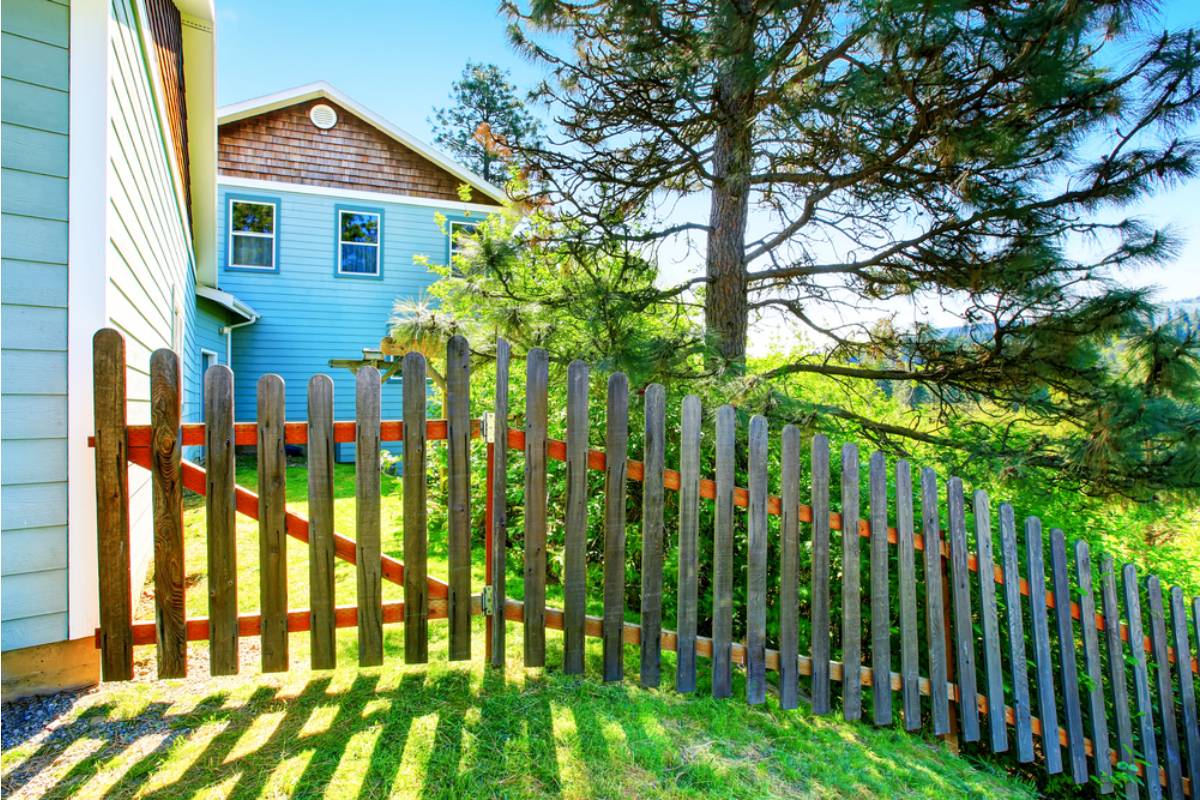
Homeowner Says Her Neighbor Tore Apart Two Fence Panels and Dropped Them Into Her Garden, Then a Seven-Year Boundary Dispute Took an Unexpected Turn
A person shared her story about feeling completely overwhelmed by an escalating dispute with a neighbor. The two properties shared a dividing fence, and what might normally have been an ordinary boundary had gradually become a source of repeated tension. The latest incident left two fence panels broken in half and dumped inside her garden, making her wonder how much longer she could live with the situation.
For the homeowner, the problem wasn’t just the damaged fence. She already found confrontation extremely difficult and said that the ongoing conflict was making an already stressful home life even harder to manage. Her garden was supposed to be somewhere she could retreat, yet she had reached the point where she was constantly wondering what might happen next.
The Fence Had Been Causing Trouble for a While
The homeowner explained that her neighbor had repeatedly damaged or removed small sections of the shared fence over time. The latest incident was far more dramatic because two entire panels had been taken out and snapped vertically in half. Instead of removing the broken material properly, the neighbor allegedly walked into the homeowner’s garden and left the panels there.
That final detail was what made the situation feel particularly invasive. A broken fence was one problem, but entering someone else’s property and leaving damaged pieces behind created an entirely different level of tension. The garden had effectively become part of the dispute whether the homeowner wanted it to or not.
She Wasn’t Comfortable Confronting Her
A person shared that she struggled significantly with confrontation and that the situation could leave her anxious and overwhelmed. She explained that she was already dealing with personal difficulties and that the neighbor dispute was becoming another major source of stress. Because of that, the usual advice to simply knock on the neighbor’s door and demand an explanation wasn’t realistic for her.
She wasn’t trying to avoid the problem altogether. Instead, she wanted to find a way to protect herself and her property without creating an even larger confrontation. That distinction became important as responses began suggesting methods that relied more on documentation and outside help than direct arguments.
The Driveway Dispute Had Come First
The fence wasn’t the first serious clash between the two homeowners. A few weeks earlier, the neighbors had argued because the other woman had blocked the homeowner’s car in the driveway. The homeowner pointed out that the driveway had a dropped kerb, making the incident particularly frustrating.
That disagreement appeared to have deepened the existing tension. Instead of one isolated problem, there were now multiple incidents involving access and property boundaries. By the time the fence panels were broken, the homeowner was no longer dealing with a single annoying event but a developing pattern that she felt unable to control.
Then the Broken Panels Appeared in the Garden
The homeowner returned to the problem from a practical perspective. She wasn’t sure who officially owned the fence or who was responsible for maintaining it, especially because it was a dividing fence between the two properties. Before replacing anything, she wanted to understand the legal position.
That uncertainty made immediate repairs risky. Spending money on new panels without first establishing responsibility could leave her paying for damage she hadn’t caused. Several people encouraged her to pause, photograph everything, and determine exactly where the boundary sat before doing anything more.
Cameras Became the First Popular Solution
One of the most repeated suggestions was a security camera aimed toward the fence and garden. A response from a person said cameras would provide evidence and might also make the neighbor reconsider future behavior. The suggestion appealed because it didn’t require the homeowner to stand outside and argue with anyone.
Other people made the same recommendation in slightly different ways. A camera would create a record of damage, trespassing, and repeated incidents that could be much more useful than trying to explain everything from memory. For someone already overwhelmed by confrontation, having objective evidence offered a sense of control.
Then Someone Suggested Checking the Boundary
Another response from a person said the homeowner should have the property surveyed to establish whether the fence sat on her land, on the neighbor’s land, or directly along the boundary. That detail could determine who had the right to alter or replace different sections. It could also remove some of the uncertainty surrounding the neighbor’s behavior.
The idea of having clear boundary markers appealed to the people responding because it transformed an emotional argument into something measurable. Instead of repeatedly asking who was right, the homeowner could establish exactly where her property ended. That information could then guide the placement of any future fencing or garden barriers.
A Temporary Garden Barrier Was Suggested
One response from a person suggested using string as a temporary boundary once the property line had been confirmed. The idea sounded simple, but it would visually establish a clear separation while preventing the homeowner from rushing into an expensive replacement fence. A temporary barrier could also help create a record that the homeowner was actively protecting her property without escalating the dispute.
Another suggestion involved posting clear no-entry or no-trespassing notices. The practical thinking behind these ideas was that the homeowner needed visible boundaries while the larger issue was being sorted out. Her garden should not remain an open extension of the neighbor’s side of the dispute.
The Police Question Quickly Appeared
Several responses urged the homeowner to contact the police because damaging fence panels and entering someone else’s property could potentially cross into criminal territory. People also pointed out that the previous driveway incident should be documented because the dispute appeared to be escalating rather than resolving. The police report wasn’t necessarily presented as the entire solution, but as part of building a formal record.
The homeowner had already expressed reluctance about confrontation, so involving authorities offered a different route. Rather than repeatedly explaining the situation face-to-face, she could provide photographs, dates, and documented incidents. That approach fit much better with her stated goal of protecting herself while keeping direct conflict to a minimum.
Documentation Suddenly Became the Main Weapon
The strongest practical advice was to document everything. People suggested photographs of the damaged panels, written records of each incident, and notes describing when the neighbor entered the garden or blocked the driveway. The more complete the record, the easier it would be to explain the situation to police, insurance providers, legal advisers, or anyone else who became involved.
One response from a person advised her not to repair the fence immediately. Instead, she was encouraged to determine who owned it, who was responsible for maintenance, and whether the damage should be handled through insurance or another route. The garden itself had now become evidence, and preserving that evidence was more important than making the fence look tidy straight away.
The Homeowner Didn’t Want Revenge
The homeowner made a point of saying she wasn’t looking for an argument or revenge. She simply wanted to live in her own house without constantly wondering whether another part of her property would be damaged. That distinction won sympathy from several people who emphasized that protecting personal peace was a completely reasonable goal.
A response from a person who had experienced similar problems encouraged her to focus on practical steps instead of emotional reactions. Cameras, records, professional advice, and calm communication could slowly build a protective layer around the situation. The idea was to make every future incident easier to handle without requiring the homeowner to become more confrontational herself.
Someone Shared a Much More Personal Warning
One response from a person said they were also neurodivergent and had struggled with mental health issues while dealing with difficult neighbors. That person admitted that they had handled their own situation poorly in the past and had ended up in an extremely serious personal crisis. Their message was less about the legal mechanics and more about reminding the homeowner that the conflict would eventually pass.
The advice resonated because it acknowledged something the other responses sometimes overlooked. A property dispute can become emotionally exhausting even when the physical damage seems relatively small. The homeowner wasn’t just replacing wood panels; she was trying to preserve her sense of safety at the place where she expected to feel most secure.
A Lawyer Became the Next Escalation
A few responses suggested speaking with a solicitor or using a home-insurance legal helpline. One person particularly recommended having a formal letter sent to the neighbor rather than continuing personal arguments. The idea was that future communication could be routed through someone better equipped to handle an escalating dispute.
That suggestion also raised the possibility of seeking compensation for repeated damage. If the homeowner had spent money repairing the fence several times, the accumulated cost could become significant. A formal approach could therefore address not just the latest broken panels but the pattern that had developed over time.
The Garden Could Become a Protective Buffer
While the dispute was largely about property boundaries, the garden itself offered another potential solution. Some responses suggested sturdier fencing, metal barriers, or other physical structures that would be harder to damage. The homeowner didn’t necessarily need to turn the garden into a fortress, but a more robust boundary could eventually make repeated interference more difficult.
Plants could potentially play a role too, although the immediate issue required something more reliable than waiting for a hedge to mature. A layered garden boundary could eventually provide privacy and visual separation, especially if the homeowner planned to remain in the property for years. The damaged fence had inadvertently exposed a larger garden-design problem that could eventually be solved permanently.
Then the Possible Sale Changed Everything
The homeowner mentioned that she might eventually sell the property. That made the documentation even more important because a long-running dispute could become relevant during the sale process. She wanted to make sure she was handling everything properly rather than discovering later that important information had never been recorded.
One response from a person specifically warned that neighbor disputes can raise disclosure questions during a property transaction. That meant selling the house wasn’t necessarily a clean escape unless the homeowner first understood her obligations. The dispute that had started with fence panels had now reached the point where it could potentially follow the property into a future sale.
The Neighbor Was No Longer Just a Nuisance
By this point, the situation looked very different from a simple disagreement over a garden fence. The homeowner was dealing with repeated property damage, alleged trespassing, a blocked driveway, and a growing fear about what might happen next. Even if each individual incident seemed manageable, the pattern created a cumulative sense of insecurity.
Several responses emphasized that the neighbor’s behavior should be handled as a property and safety issue rather than as a personality clash. That shift was important because it gave the homeowner permission to stop trying to understand or change the other woman. The goal was simply to establish boundaries and respond consistently whenever those boundaries were crossed.
The Best Advice Was Also the Least Dramatic
Despite the flood of suggestions, the most practical plan was surprisingly straightforward. Photograph the damage, preserve the broken panels, install appropriate cameras, determine the actual boundary, keep a written incident log, and seek professional advice before making major repairs. None of those steps required a heated confrontation.
That approach also gave the homeowner something she desperately needed: a process. Instead of waking up each day wondering what the neighbor might do next, she could focus on a series of concrete actions that gradually strengthened her position. Her anxiety might not disappear overnight, but the uncertainty could begin to shrink.
The Broken Fence Became the Turning Point
For a long time, the homeowner had been trying to avoid confrontation because she feared making the relationship worse. Ironically, the neighbor’s decision to remove and break two panels may have pushed the situation into territory where passive avoidance no longer made sense. There was now physical damage, evidence, and a clear reason to seek outside guidance.
The broken panels lying in the garden became a symbol of how far the conflict had gone. What had once been an uncomfortable relationship between two neighboring households was now a documented property dispute. Instead of confronting the neighbor directly, the homeowner could finally let photographs, records, cameras, and professional advice speak for her.
The Twist Was That She Didn’t Need to Fight Back
The homeowner had initially wondered what she could do without becoming part of the confrontation herself. The responses revealed that she didn’t need to win an argument or devise some dramatic response. She needed to make her boundaries visible, document every incident, establish ownership and responsibility, and let appropriate authorities or professionals handle the parts that had moved beyond ordinary neighbor disagreements.
In the end, the most empowering lesson was that protecting a peaceful home doesn’t always require becoming louder than the person disrupting it. The homeowner’s garden could remain a place of safety even if the fence itself had temporarily become the center of a dispute. By replacing uncertainty with evidence and a clear plan, she could begin taking back control without ever stepping into the shouting match she had spent so long trying to avoid.