Homeowner Says Her Neighbor’s Dogs Kept Attacking the Fence, Then He Removed Two Panels Without Warning and Took Over Her Yard
A person shared his story about living in an older Pacific Northwest neighborhood where the homes have relatively generous yards and the properties are separated by fences. For years, the arrangement had worked well enough, even though one neighbor’s two large dogs repeatedly charged at the fence whenever they saw the family’s medium-sized dog.
What began as a fence-maintenance problem eventually became a much bigger issue involving open access between the yards, construction materials on someone else’s property, an attempted truck maneuver across a front lawn, and repeated concerns about the neighbor using fire dangerously close to other homes. The latest fence repair was supposed to solve at least one problem, but instead it created an entirely new one.
The Fence Was Never Really the Problem
The person explained that the neighborhood was built in the 1970s, with each property having roughly a quarter to a third of an acre. Their own back fence had been built by the household, while the fences along either side belonged to the neighboring properties.
According to the homeowner, local rules placed responsibility for maintaining a fence on the person who built or owned it. That distinction became important because the neighboring family’s dogs had been repeatedly damaging their section of the fence.
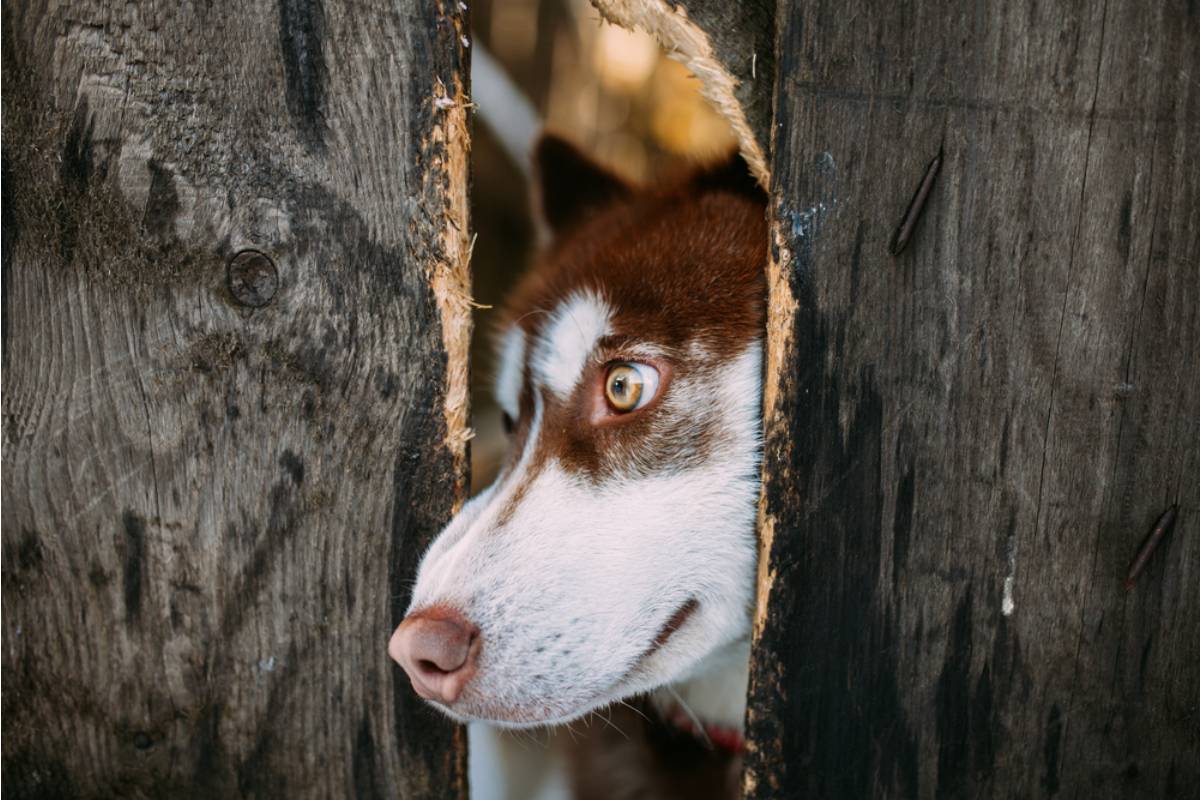
The neighbor had two large dogs that reportedly charged toward the family’s dog whenever they were outside. The dogs would growl, run toward the fence and slam into it, sometimes repeatedly until one of their owners intervened. Over time, the impact allegedly weakened several fence panels and caused sections to begin leaning toward the homeowner’s yard. The homeowner’s partner repeatedly reinforced the damaged side simply to keep the dogs separated.
The Dogs Made Every Fence Problem Worse
The family wasn’t merely worried about an ugly or aging fence. Their concern was that the neighbor’s dogs might eventually break through and attack their own dog. According to the person who shared the story, the behavior happened so frequently that letting their dog into the yard became a source of stress. Every time the neighbor’s dogs came outside, there was the possibility that the already-damaged barrier could give way.
The partner had reportedly repaired and reinforced the fence for years. Eventually, he began asking the neighbor whether he intended to repair the damaged sections, specifically pointing out the safety concerns involving the dogs. The answers were apparently vague and dismissive, with promises that the work would happen eventually. At one point, the partner even offered to replace the entire fence himself because he had built their own fence and deck by hand.
Then the Neighbor Finally Picked Up His Tools
After years of waiting, the neighbor suddenly began working on the fence. The homeowner and her partner heard loud banging and what sounded like sawing coming from outside. They quickly realized what was happening and kept their dog indoors while the repairs were underway. Given the history with the two large dogs, they didn’t want to take any chances while sections of the barrier were being removed.
Later, they went outside to inspect the work and discovered that the neighbor had replaced some of the damaged panels. The new panels apparently didn’t match the existing fence, and the homeowner noticed that the finished side faced the neighbor rather than her yard. She wasn’t particularly concerned about the appearance, however, because at least the dogs were separated again.
The Next Morning Brought a Surprise
The temporary relief didn’t last. The following morning, the homeowner discovered that two additional fence panels had been completely removed. Their yard was now wide open to the neighboring property, creating direct access between the dogs’ spaces. She said she had no warning that the fence would be opened up and only discovered the situation when she went to let her own dog outside.
That meant the household could no longer simply open the back door and allow their dog into their own yard. Instead, the dog had to be taken outside on a leash while the fence remained incomplete.
The homeowner’s frustration wasn’t necessarily about the neighbor repairing his own fence. It was about the fact that he had apparently removed a barrier between two homes with dogs without bothering to tell the people next door.
One Simple Conversation Could Have Changed Everything
The homeowner repeatedly returned to the same point: a warning would have been enough. If the neighbor had simply said he was going to remove several panels and leave the yard open for a while, the family could have made arrangements. They could have kept their dog indoors or supervised every trip outside. Instead, the homeowner said they found out only by accident.
She also pointed out that the lack of warning could have caused problems even without the dogs. If the family had invited people over and planned to sit outside, they would suddenly have discovered that their yard was no longer enclosed. From her perspective, communicating before doing work that directly affects a neighboring property wasn’t a complicated favor. It was basic courtesy.
Then His Supplies Started Appearing in Their Yard
The fence wasn’t the only boundary that apparently became blurry. The homeowner said the neighbor began placing tools, boards and other materials from the fence project near their sheds, effectively using part of their yard as a staging area.
This apparently happened without permission or any prior conversation. The homeowner viewed it as another example of the same pattern: decisions were being made first, while everyone else was expected to deal with the consequences afterward.
Things escalated further when the neighbor allegedly attempted to back his pickup truck onto their front lawn. According to the homeowner, he tried maneuvering around their parked cars and driving across their grass so he could unload supplies near the fence. Her partner went outside and told him that he couldn’t use their property that way.
The Truck Incident Pushed Things Further
Rather than simply moving the truck and discussing the issue, the homeowner said the neighbor continued focusing on his fence project. From her perspective, it was almost as though the objection had never been made.
The problem wasn’t just that a truck had briefly crossed onto the property. It was the assumption that someone could use another person’s lawn as a convenient work area without asking.
The homeowner found the entire situation especially insulting because the neighbor’s fence supposedly ran the entire length of the boundary. In her view, there was no reason for him to drive over her grass when he could have worked from his own side. The fence project had already disrupted access to the yard, and now the work materials and vehicle were allegedly spilling onto the property as well.
The Fence Was Only One Part of the Problem
The story took an even more serious turn when the homeowner described the neighbor’s use of a flamethrower-style torch for yard maintenance. According to her account, he regularly used it to burn weeds and brush along the fence line. She said this wasn’t an isolated incident but part of an ongoing pattern that had made her increasingly nervous.
One previous incident apparently involved a hornet nest inside a large opening at the base of a fir tree. The neighbor reportedly used the torch to burn the nest, causing flames to travel into the tree while burning hornets flew upward. The homeowner said the activity continued for roughly three hours before smoke eventually became too much and the neighbor switched to a garden hose.
Then the Tree Caught Fire
For the homeowner, watching the tree-burning incident was terrifying because the neighborhood backs up to wooded areas. Large evergreen trees were apparently common around the properties, making the potential consequences of an uncontrolled fire especially serious. She said the household spent hours worrying that the flames could spread and eventually require emergency intervention.
The concern didn’t end with that incident. The homeowner later claimed the neighbor had started fires involving a fence and grass between the properties. She also alleged that he once offered to help an elderly neighbor clean up an area and ended up burning two of that person’s fence panels. Instead of replacing them properly, he reportedly pieced together the damaged sections with spare wood.
The Burn Restrictions Made It Even More Alarming
The homeowner emphasized that the Pacific Northwest area regularly deals with dangerous wildfire conditions during summer. According to her account, the area was under a burn restriction at the time, making the repeated use of fire particularly concerning. She said the neighbor appeared unconcerned about the restrictions despite the potential consequences of using open flames around fences, grass and trees.
One incident allegedly left a blackened section near a water meter and hydrant. The homeowner said the area was part of property belonging to the city or water company rather than either homeowner. When workers arrived to inspect the water meter, they reportedly noticed the scorched area and asked the homeowner what had happened.
The Water Department Finally Saw the Damage
The homeowner’s partner reportedly explained what had happened and directed the water representative toward the neighbor who had allegedly been using the torch. For the family, this was potentially different from simply making another complaint. Someone from the organization responsible for the affected area had now apparently seen the damage firsthand.
The homeowner hoped that this could finally bring some official attention to the situation. She said the fire-related behavior had already been reported by her household and other neighbors. If authorities had now observed evidence of the damage themselves, she hoped the neighbor might finally face consequences.
Other People Wanted Stronger Action
A response from a person suggested documenting everything with photographs and dates, especially because the situation involved multiple issues rather than one isolated dispute.
They recommended keeping communication calm and factual while preserving evidence in case the city, fire department, animal control or another authority eventually became involved. The homeowner said this was already happening, with photos from outdoor cameras and images taken on their phones.
Another response from a person was much more direct and questioned why the homeowner hadn’t contacted the fire department during the previous incidents. The person pointed out the potential danger of a fire spreading from one property to another, especially in an area known for serious wildfires. The homeowner responded that the fires had in fact been reported and expressed frustration that people seemed to assume otherwise.
Some People Thought the Fence Solution Was Obvious
Several responses from people focused on a simpler solution: build another fence entirely on the homeowner’s own property. One person argued that creating a separate barrier would eliminate the dependency on the neighbor’s fence and prevent his dogs from being able to reach theirs. Another person made essentially the same suggestion, saying the homeowner’s partner already knew how to build fences and could construct one for their own yard.
The homeowner didn’t appear particularly interested in arguing over who owned the fence or which side should look finished. She repeatedly emphasized that the fence itself wasn’t her main complaint. What bothered her was the lack of communication, the alleged trespassing with tools and vehicles, and the repeated safety concerns surrounding the dogs and fires.
The “Ugly Side” Became a Minor Detail
The replacement panels apparently faced the wrong direction according to the homeowner’s understanding of local expectations. The finished side was reportedly facing the neighbor while the less attractive side faced her yard. Some responses pointed out that the fence owner may have control over which side is visible, while the homeowner maintained that local rules in her county required the finished side to face outward.
Interestingly, this disagreement was one of the least important parts of the story. The homeowner openly admitted that the appearance of the replacement panels wasn’t really her concern. If the fence had simply been repaired safely and the neighbor had communicated before removing additional panels, she likely would have accepted the mismatched appearance without much fuss.
The Real Battle Was About Boundaries
The homeowner said she and her partner had lived in the neighborhood for seven years and owned their property. They weren’t newcomers who had just arrived and immediately started complaining about an established resident. In her view, the neighbor seemed to act as though living there for roughly four decades gave him special authority over everyone around him.
That perceived attitude was what frustrated the homeowner most. She didn’t expect the neighbor to ask permission before repairing his own fence, but she did expect him to communicate before removing a barrier between two homes with dogs. She also expected him to keep his equipment, vehicles and construction materials on his own property rather than treating the neighboring yard as an extension of his workspace.
The No-HOA Decision Suddenly Felt Different
One reason the couple had chosen the neighborhood was precisely because there was no homeowners association. They appreciated the affordability and the absence of HOA rules controlling how residents used their properties. At the time, that freedom had apparently seemed like an advantage rather than a potential problem.
Now, the homeowner admitted that part of her regretted not having some kind of neighborhood authority to handle the situation. Without an HOA, she couldn’t simply contact a property manager or association board about the neighbor’s conduct. Instead, she was left relying on property boundaries, local regulations and government agencies when behavior crossed into areas those authorities could address.
The Fence Repair Created a New Problem
By the end of the story, the neighbor had apparently gone back inside without finishing the fence. The family’s yard remained partially open, leaving them to keep their dog on a leash whenever she needed to go outside. What was supposed to be the long-awaited repair had therefore created another temporary headache.
Yet the homeowner’s frustration wasn’t really about waiting another few hours or even another day for construction to finish. The fence had become a symbol of the larger relationship between the two households. Every missing panel, pile of lumber and unexpected vehicle maneuver reinforced her belief that the neighbor simply acted first and expected everyone else to adjust.
One Neighbor Wanted a Fence, the Other Wanted Common Sense
The responses revealed an interesting divide. Some people believed the homeowner was focusing too heavily on a fence that didn’t belong to her and should simply build her own barrier. Others understood why she was angry, especially given the dogs, construction materials, alleged trespassing and fire incidents. The most sympathetic responses emphasized that communication could have prevented much of the immediate frustration.
Ultimately, the homeowner wasn’t asking the neighbor to stop repairing his property or redesign his yard around her preferences. She wanted a basic warning before a fence disappeared, expected him to keep his equipment on his own land, and wanted dangerous fire use handled responsibly.
Whether those expectations are enough to restore peace between the two households remains unclear, but one thing seems certain: the missing fence was never really the biggest problem.