Homeowner Says His Neighbor Planted an Eight-Foot Hedge and Twelve-Foot Trees to Ruin His Golf Course View, Then the HOA Refused to Enforce Its Own Landscaping Rules
A person shared his story about a home overlooking a golf course in Arizona, where the sweeping views were a major part of the property’s appeal. The neighborhood had carefully designed boundaries between homes, with staggered walls that offered privacy without completely blocking the scenery. For homeowners who paid extra for a view lot, those open sightlines were part of what made the neighborhood special. Unfortunately, one neighbor’s gardening decisions turned that peaceful arrangement into a surprisingly thorny dispute.
The Neighborly Disagreement That Started It All
According to the homeowner, the trouble began when a neighboring resident wanted approval for a pergola. The homeowner did not sign off on the proposed structure, and he believed the landscaping that followed was retaliation for that decision. Suddenly, what should have been an ordinary disagreement between neighbors appeared to spill into the garden. Instead of exchanging a few uncomfortable words over the fence, the two households found themselves caught in a battle involving trees, hedges, and neighborhood regulations.
When a Hedge Became Much More Than a Hedge
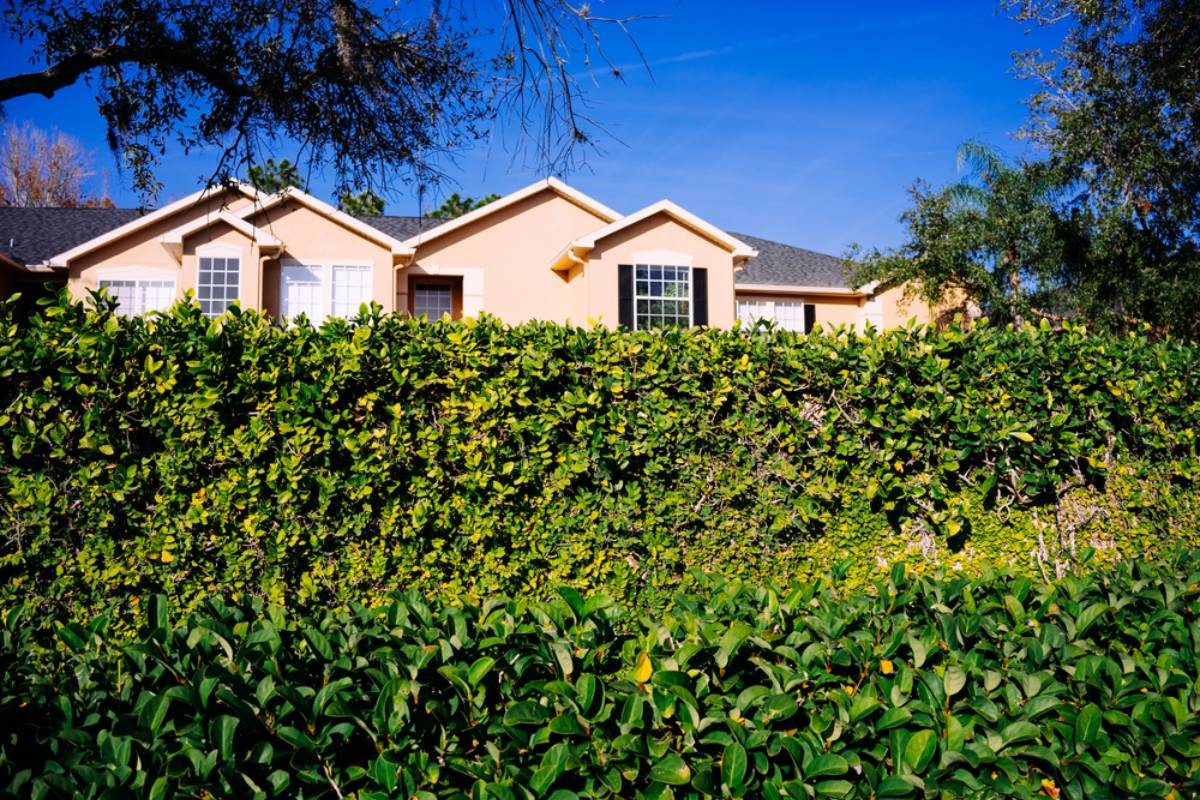
The neighbor planted a hedge that eventually reached approximately eight feet tall, stretching across the boundary between the properties. A tree nearby reportedly grew to around twelve feet, adding another leafy obstacle to the homeowner’s once-open view. These were not little shrubs that could be overlooked while mowing the lawn or watering flower beds. From the homeowner’s perspective, the new greenery was turning his prized golf course panorama into a wall of leaves.
The Neighborhood Walls Had Been Designed Differently
The community already had a distinctive system of staggered walls, ranging from approximately four to six feet tall. Their arrangement provided some separation between properties while allowing residents to preserve views across the neighborhood. The homeowner argued that the landscaping restrictions treated hedges much like walls, meaning the new planting should face similar limitations. With that interpretation in mind, he believed the neighbor had gone beyond what the community rules allowed.
The Rules Seemed to Be on His Side
The homeowner pointed to neighborhood covenants stating that landscaping should not materially obstruct the view from an adjoining property. The documents also reportedly required authorization for certain wall modifications exceeding twelve inches, involving both the neighboring owner and the architectural review committee. He believed these provisions offered a clear way to challenge the new hedge and trees. However, as anyone who has ever tangled with a homeowners association knows, finding a rule in writing and getting someone to enforce it can be two very different gardening projects.
The Architectural Committee Finally Stepped In
The architectural review committee eventually issued a violation letter addressing several concerns involving the property. Its findings reportedly included trees obstructing neighboring views, the height of the palm tree, drainage problems, patio construction, and landscaping that had not received the required approval. The committee also addressed the hedge, explaining that it could remain if maintained at six feet or below and if the drainage concerns were corrected. For a moment, it seemed that the community’s landscaping rules might finally settle the dispute.
The Letter Revealed an Even Bigger Garden Problem
The violation notice went beyond the original complaint about the hedge and identified several other issues around the property. The committee questioned the patio’s approval status, raised concerns about water flowing toward neighboring land, and required an application for newly planted citrus trees. It also called for the pistache tree and palm to be trimmed or removed to prevent them from interfering with neighboring views. What began as a dispute over a few plants had become a much larger examination of the property’s entire outdoor space.
The Neighbor’s Alleged Admission Changed the Story
One particularly important detail emerged when the homeowner reported that the neighbor had admitted to the architectural review committee that the planting was intended to block the view. If accurate, that admission gave the dispute a more personal dimension than an ordinary disagreement about plant height. A hedge can grow too tall by accident, and a tree can gradually outgrow its space without anyone noticing. Deliberately planting greenery to obstruct another person’s view, however, raises an entirely different question about where landscaping ends and retaliation begins.
Then the Homeowners Association Backed Away
Despite the architectural committee’s findings, the homeowner said the executive board eventually told him he was on his own. He wanted to know why the association was not pursuing the violations and whether he could take matters into his own hands. The board reportedly described the explanation as privileged information, leaving him without the detailed answer he wanted. That response only deepened his frustration because the organization responsible for enforcing community standards appeared unwilling to explain its position.
Could He Simply Cut the Hedge Down?
With the hedge towering above the staggered walls, the homeowner considered whether he could trim it back to the twelve-inch level mentioned in the restrictions. It was an understandable question for someone who believed the planting violated the neighborhood’s rules and had already received official attention. However, a restriction against blocking views does not automatically grant a neighbor permission to cut vegetation growing on someone else’s property. A pair of pruning shears might solve a gardening problem, but it could also create a much more expensive legal one.
A Response From a Person Offered a Crucial Warning
A response from a person explained that the homeowner needed to distinguish between the right to enforce a covenant and the right to alter another person’s property. Even if the rules allowed individual homeowners to pursue violations, that did not necessarily authorize them to remove or severely trim a neighbor’s plants themselves. The response suggested that enforcing the restrictions might require legal action or a court order. In other words, the tempting shortcut through the hedge could turn into a legal maze that was considerably harder to prune.
The Fine Print Could Decide Everything
Another response from a person emphasized that the exact wording of the community documents mattered more than assumptions about what the rules were intended to accomplish. Important details included whether hedges were explicitly subject to the same restrictions as walls, how plant height was measured, and who had authority to enforce the covenants. The distinction between natural ground level and finished ground level could also affect the interpretation of height limits. Even when the situation appeared obvious from the patio, the paperwork could determine whether the homeowner had a strong case.
The HOA’s Earlier Findings Added Another Twist
The homeowner later described spending considerable time documenting the dispute and consulting legal professionals. He claimed the architectural committee had sent violation letters before the board rescinded them following discussions with its attorney. He also alleged that the conflict stemmed from a personal vendetta involving a previous board member and that some relevant records had been withheld from him. Those claims were the homeowner’s account of the dispute, but they illustrated why the disagreement had become so much more complicated than a simple argument over a tall hedge.
The Real Cost of a View Lot Became Clear
The homeowner’s frustration was tied to more than the greenery itself because he said the property had been purchased and marketed as a golf course view lot. Paying a premium for a scenic setting makes it especially upsetting when that view is suddenly obstructed by landscaping next door. Yet the dispute also demonstrated how difficult it can be to protect a view when property boundaries, planting rights, and community covenants overlap. Even an attractive garden can become a source of conflict when neighbors disagree about what the rules permit.
A Garden Dispute With No Easy Shortcut
The story ultimately left the homeowner facing a difficult choice between accepting the HOA’s position and continuing to pursue enforcement through formal channels. Removing the hedge himself could expose him to a separate dispute, while taking legal action could mean additional expense and uncertainty. The strongest next step would be to rely on the precise covenant language, the committee’s written findings, and qualified legal advice rather than acting on frustration alone. What began with a pergola disagreement and a row of fast-growing plants had grown into a reminder that, in some neighborhoods, the most complicated thing in the garden is not the landscaping at all, but the people arguing over it.