Homeowner Says His Neighbors Accused His Vegetable Garden of Stealing Their Pollinators, Then a Fallen Green Pepper Turned Years of Awkward Backyard Tension Into a Full-Blown Neighborhood Feud
A homeowner thought he had found the perfect place to raise his young family, tucked away in a secluded cul-de-sac with only a handful of houses and plenty of undeveloped land nearby. The neighborhood was quiet, and most residents seemed happy to keep to themselves while tending their homes and gardens. With two young children, a wife, and dogs to care for, he had little interest in neighborhood drama. Unfortunately, one set of neighbors seemed determined to turn ordinary backyard life into an ongoing investigation.
The trouble began to grow after a family with three children moved away, leaving the couple who lived nearby looking for someone new to focus their attention on. The homeowner and his wife had never been particularly close to these neighbors, aside from occasional conversations about sports while doing yard work. Yet the departure of the other family appeared to change the dynamic in the neighborhood. Suddenly, the couple next door seemed to believe that a casual acquaintance should become something much more personal.
When Friendly Neighbors Start Acting Like Family
At first, the homeowner described the relationship as relatively ordinary, with occasional conversations and the usual greetings exchanged between people living close together. However, the neighbors began sending frequent messages about how his family ran their household and even complained about their dogs barking when they were outside. What might have been a simple conversation about neighborhood etiquette quickly became a pattern of unsolicited opinions. The homeowner felt as though he was being managed by people who had never been invited to take charge.
The situation became particularly uncomfortable because the neighbors seemed to expect a level of closeness that had never existed. Instead of allowing the relationship to develop naturally, they appeared to treat the family as though they were already part of their inner circle. The homeowner did not want a feud, but he also did not want strangers dictating how he should live. In a place where everyone had originally valued privacy, that sudden change felt like an unwelcome weed spreading through an otherwise peaceful garden.
The Backyard Became a Front-Row Seat to Family Life
A backyard is supposed to be a place where homeowners can relax, plant vegetables, and enjoy the outdoors without feeling like they are on display. For this family, however, the neighboring couple could see into their windows from their own yard. According to the homeowner, they would stare into the house and sometimes yell for his children to come to the window and say hello. What should have been an innocent family space began to feel uncomfortably exposed.
The homeowner also reported that several trail cameras were pointed toward his property and home, adding another layer of unease. Even simple activities, such as walking around the house in comfortable clothes or spending time outside, no longer felt entirely private. He did not describe any single incident as the entire problem, but rather a collection of behaviors that made him increasingly uncomfortable. Like a garden that looks perfectly fine from the street but has something wrong beneath the soil, the neighborhood’s peaceful appearance was hiding a growing problem.
A New Baby Arrived, but the Neighbors Expected an Invitation
The tension reached a new level when the homeowner’s wife gave birth to their daughter in February. She had undergone a C-section, and the family had barely been home from the hospital for a day when the neighboring couple arrived at their front door wanting to come inside. The parents were still adjusting to life with a newborn, and even the baby’s grandparents had not yet met her. The homeowner decided that this was not the right moment for an unexpected visit and turned the neighbors away.
For most people, that would have been an understandable boundary to respect, especially when a new mother was recovering from surgery. Instead, the homeowner said the neighbors responded with nasty messages accusing the family of being ungrateful. They reportedly insisted that they had a right to be welcomed into the home, despite the lack of a close relationship. What should have been a quiet period of recovery became another source of stress, leaving the homeowner wondering why his family’s private milestones had become someone else’s grievance.
The Vegetable Garden Somehow Became Part of the Dispute
Gardening had been one of the homeowner’s ordinary backyard activities, but even that was not free from criticism. He said the neighboring couple had complained that his garden was stealing pollinating insects from their own garden. The accusation struck him as particularly strange because pollinators such as bees naturally move between flowers and plants throughout an area. Rather than treating the gardens as separate spaces that could benefit from the same visiting insects, the neighbors appeared to view the situation as another reason to criticize his family.
The irony was difficult to miss because the neighbor reportedly grew around 200 sunflowers every year, attracting plenty of bees and other pollinators to the area. A response from a person pointed out the absurdity of suggesting that one household’s garden could somehow claim ownership over insects moving naturally through the neighborhood. For gardeners, attracting pollinators is usually a goal, not a territorial contest. Yet in this backyard feud, even the bees seemed to have been dragged into a disagreement that had little to do with plants and everything to do with boundaries.
The Fence Line Became Another Battleground
As the homeowner tried to enjoy his property, he also encountered arguments about the fence separating the neighboring yards. He explained that his family wanted to make some changes to their fence, but the neighbors came outside to object because they believed the changes would obstruct their access to their own fence line. What should have been a straightforward home improvement project turned into another uncomfortable confrontation. The homeowner felt that the couple had become far too comfortable telling other people what they could do on their own property.
Fence disputes can become surprisingly complicated because property boundaries, access rights, and local regulations do matter. However, the homeowner’s frustration was not simply about a disagreement over construction. It was the repeated feeling that every decision involving his yard needed to pass through the neighbors’ approval process. For someone who wanted to spend time gardening and raising children, the idea that even a fence could trigger another argument was exhausting.
The Neighbors Seemed to Have an Opinion About Everything
The homeowner’s account suggested that the couple’s complaints were not limited to major changes around the house. They also sent messages about his dogs, commented on household arrangements, and expressed opinions about what the family should or should not grow. Over time, the number of complaints made each new interaction feel like the beginning of another dispute. Instead of enjoying a quiet evening outdoors, the homeowner found himself anticipating what might become the next neighborhood controversy.
The couple had lived in the neighborhood for approximately 23 years and were among its earliest residents, according to the homeowner. That history may have made them feel deeply invested in the community, but the homeowner did not believe it gave them authority over everyone else’s choices. Longtime residents can certainly contribute valuable knowledge about an area, yet being there first does not automatically make someone the neighborhood manager. In this case, the homeowner felt that the difference between being involved and being intrusive had disappeared.
A New Family Moved In and Got the Same Treatment
The situation became even more revealing when another resident moved into the home previously occupied by the family that had left. The homeowner said the new arrival told him that the neighboring couple immediately launched into a barrage of questions. That detail suggested that the unwanted attention was not necessarily unique to his household. If a newcomer was also being interrogated, the pattern might have been less about one particular disagreement and more about how the couple approached people living nearby.
For the homeowner, this offered a little perspective on a situation that had begun to feel personal. He had wondered whether the couple was angry because he refused to let them become unofficial grandparents to his children, but the experience of another neighbor hinted at a broader habit of excessive involvement. The neighborhood had only seven occupied houses, making every uncomfortable interaction feel difficult to escape. In a small community, one household’s insistence on knowing everything can quickly become everyone’s problem.
Then a Green Pepper Landed in the Wrong Yard
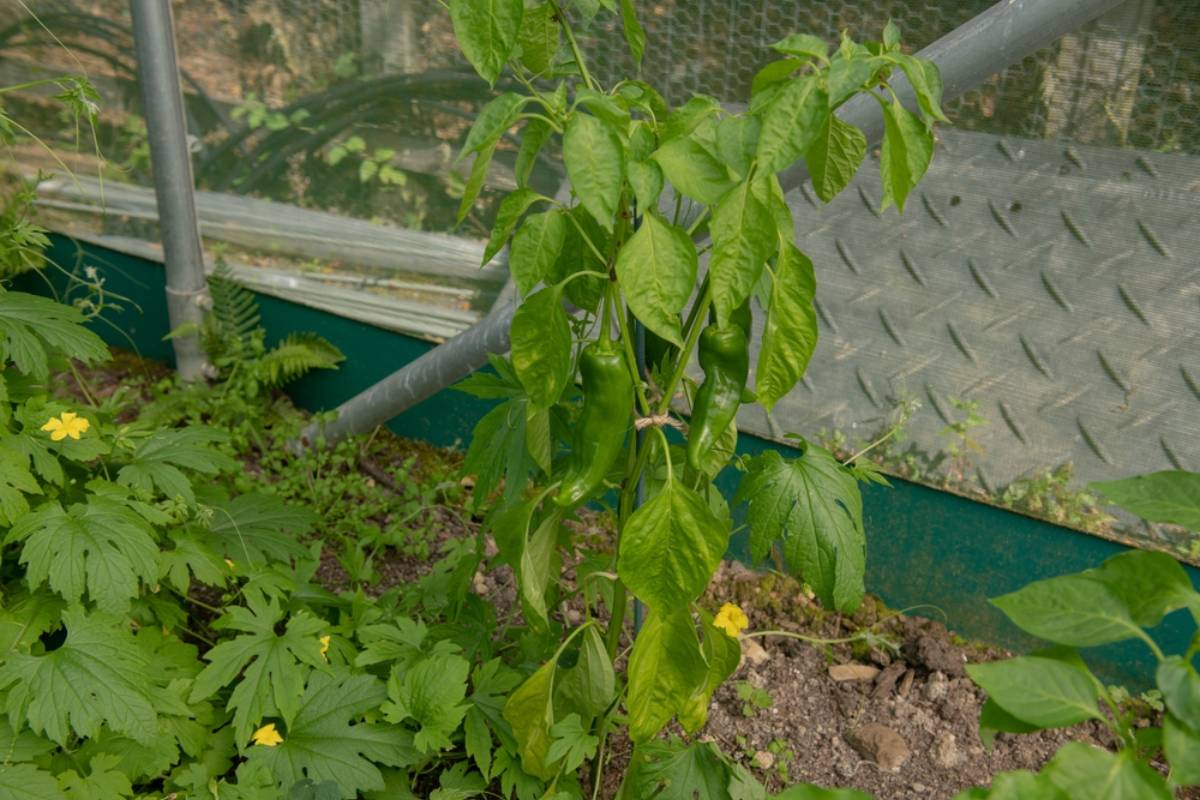
The latest argument began during an ordinary gardening session when the homeowner’s wife tossed some green peppers over the fence into the field behind the two properties. One of the peppers accidentally landed in the neighbor’s backyard, where the couple had a puppy. The homeowner realized that an unfamiliar piece of food in a yard where a puppy played could cause concern, so he contacted the neighbor’s husband to explain what had happened. From his perspective, he was trying to prevent a misunderstanding before it became a problem.
Unfortunately, the message did not reach the neighbor’s wife before she discovered the pepper. She subsequently contacted the homeowner with a message implying that his family had tried to poison her dog with a bad green pepper from their garden. The homeowner was stunned by the accusation, especially because he said he had already informed her husband. What began as an accidental gardening mishap suddenly carried a much more serious implication about his family’s intentions.
An Accidental Pepper Turned Into an Accusation of Poisoning
The neighbor’s wife reportedly explained that someone had once thrown poisoned steaks into her yard, although she had caught them before her dog could eat them. That past experience may have influenced how she interpreted the unexpected pepper, but the homeowner felt the accusation was completely unfair. He said he would never deliberately try to harm the couple’s puppy. The fact that he had already alerted her husband made the suggestion even more offensive to him.
When the homeowner explained that he had contacted her husband, the issue apparently shifted to the fact that he had not informed her directly. Rather than ending the misunderstanding once the explanation was given, the exchange became another argument over who had been told what and when. The homeowner responded with a sarcastic apology, blaming the failure to pass along the message on her husband. By then, the green pepper had become much more than a stray vegetable; it had turned into the latest symbol of a relationship that seemed unable to survive even an innocent accident.
The Homeowner Started Wondering Whether the Conflict Was Personal
Looking back over the previous incidents, the homeowner began to suspect that the neighbors’ attitude had changed after he refused their request to visit his newborn daughter. He wondered whether they felt rejected and were now looking for reasons to criticize his family. The theory made emotional sense to him because the complaints appeared to intensify after that uncomfortable encounter. Still, he acknowledged that he could not prove their motives, leaving him stuck between his suspicions and the practical reality of living beside them.
The couple’s behavior had become difficult to separate from the everyday routines of the home. Dogs barking outside, plants growing in the garden, fence improvements, and even the arrival of a baby had all become potential sources of tension. When ordinary activities repeatedly trigger arguments, it becomes harder to enjoy the very property that was supposed to provide comfort and stability. For this homeowner, the biggest problem was no longer any single complaint but the feeling that his family could never simply be left alone.
One Neighbor Wanted to Fight Back, While His Wife Wanted Peace
After months of frustration, the homeowner admitted that he wanted to go scorched earth on the neighbors. He was angry about the accusations, the unwanted attention, and the repeated attempts to influence what happened on his property. His wife, however, wanted him to remain calm and keep the peace. Their disagreement created a second dilemma inside the household, because they had different ideas about how to respond to a situation that was affecting both of them.
The temptation to retaliate is understandable when someone feels repeatedly provoked, especially when home is supposed to be a refuge from outside stress. However, a dramatic confrontation could make an already uncomfortable living arrangement even harder to manage. The homeowner had two young children to consider, along with the possibility that the family would remain in the neighborhood for several more years. His wife’s preference for restraint offered a different strategy: avoid giving the dispute more opportunities to grow while protecting the family’s privacy.
The Garden Was Not the Only Thing That Needed Better Boundaries
The homeowner’s story highlights how a garden can become entangled in neighborhood conflict when personal boundaries are repeatedly ignored. Plants, fences, and outdoor spaces often sit close to property lines, making communication important when genuine concerns arise. But communication works best when it is respectful and proportionate, rather than turning every accidental mistake into an accusation. In this case, the homeowner believed that ordinary courtesy had gradually become an expectation of constant access and control.
For gardeners dealing with difficult neighbors, clear property boundaries and calm documentation can be more useful than escalating every argument. Checking local rules before changing a fence, keeping messages, and avoiding unnecessary confrontations can help prevent misunderstandings from becoming bigger disputes. Privacy measures such as suitable fencing, screens, or curtains may also help, depending on the layout of the property and local requirements. The goal is not to win every disagreement but to protect the space where the family should be able to relax and enjoy its garden.
The Family Has a Three-Year Plan to Leave the Drama Behind
Perhaps the most important detail in the homeowner’s account was that his family hoped to move within three years. He wanted his children to attend school in a better district, giving the family a long-term goal beyond the immediate frustration of living next to difficult neighbors. That timeline did not make the current situation pleasant, but it offered a reason to focus on what they could control. Instead of treating every argument as a battle that needed to be won, they could concentrate on preparing for a future home.
Until then, the family faces the challenge of living beside people with whom they have little trust and very different expectations of neighborly relationships. The homeowner may want to push back, while his wife may prefer to keep interactions brief and civil, but both ultimately want a more peaceful home life. The green pepper incident was only the latest twist in a dispute that had grown from uncomfortable social expectations into accusations involving the family garden. And if the homeowner can keep his focus on his children, his property, and the move ahead, the neighbors may eventually become a chapter he can leave behind rather than a problem that follows him into every afternoon spent outdoors.