Homeowner Says Neighbor Planted a Vegetable Garden on His Property Without Asking, Then Got Upset When It Was Removed “They Expected Me to Replace Everything”
It Started With a Garden That Wasn’t Supposed to Be There
When you move into a new home, there are always little surprises.
Some are expected. Others aren’t.
For one homeowner, that surprise showed up in the form of a vegetable garden growing along the side of his house. Not in a shared space, not near the property line, but clearly on his side of the yard.
At first, he wasn’t even sure what he was looking at.
He noticed vines creeping up the side of the house and assumed they might have just grown on their own. Without much gardening experience, it didn’t immediately register as something intentional.
So he did what many homeowners would do.
He called his landscaper.
What Happened Next Changed Everything
The landscaper came as scheduled and cleared the area.
That included the vines.
And as it turned out, those vines weren’t random at all.
They were part of a tomato garden planted by his neighbor.
By the time he realized, it was already too late.
The plants were gone.
The Neighbor’s Reaction Was Immediate
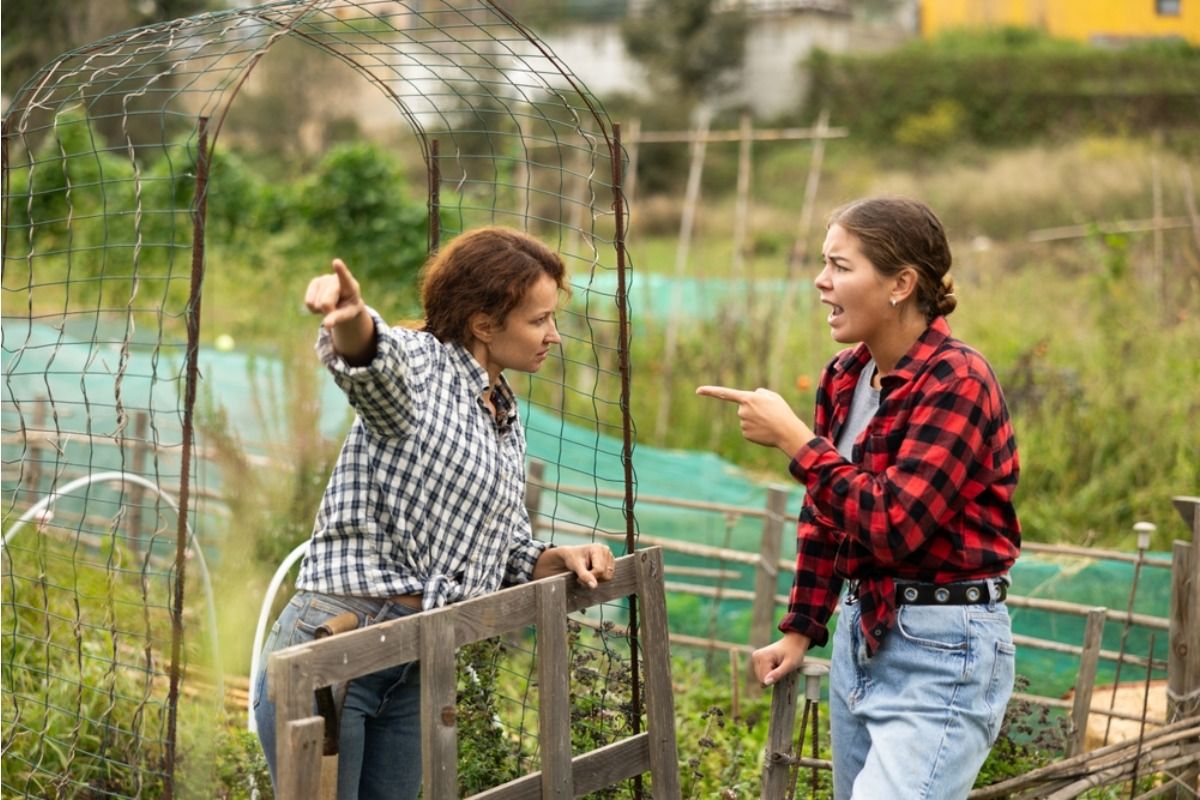
Not long after, the neighbor showed up at his door.
They were upset.
According to the homeowner, the neighbor demanded that he either replace the plants with mature ones or provide them with organic tomatoes for the rest of the season.
That’s when the situation shifted from confusion to conflict.
“Why Were They Even There in the First Place?”
From the homeowner’s perspective, the issue seemed straightforward.
The plants were on his property.
He hadn’t planted them. He hadn’t agreed to them. And he hadn’t even known they belonged to someone else.
So when his landscaper removed them, it didn’t feel like something he should be responsible for.
But the situation raised a bigger question that a lot of homeowners and gardeners can relate to.
Where exactly is the line when it comes to property and planting?
When Garden Space Crosses Property Lines
In many neighborhoods, especially where houses are close together, the edges of yards can feel a little blurred.
Plants spread. Vines grow. Garden beds expand.
But there’s a difference between something naturally crossing a boundary and intentionally planting on someone else’s land.
And that’s where people started to weigh in.
Many pointed out that if the neighbor had wanted to use that space, the first step should have been a conversation.
A simple ask.
Because once something is planted, especially something like tomatoes that require care and time, it creates an expectation that the space will continue to be used.
Why This Situation Feels Bigger Than It Looks
On the surface, it’s just a few tomato plants.
But for people who garden, it’s more than that.
It’s time. Effort. Attention. Weeks or even months of growth.
That’s part of why the neighbor reacted so strongly.
At the same time, homeowners also understand the importance of control over their own space.
What grows there. What gets removed. What gets maintained.
When those two perspectives collide, situations like this happen.
The Question of Responsibility
One of the biggest points of debate in this situation is whether the homeowner should have done anything differently.
Some argue that even if the plants weren’t his, a conversation beforehand could have prevented the issue.
Others say that responsibility starts with the person who planted them in the first place.
If you’re putting something on land that isn’t yours, you’re taking a risk.
And that risk includes the possibility that it could be removed at any time.
The “Keep the Peace” Dilemma
Even though the homeowner felt justified, he admitted there was still a part of him wondering if he should replace the plants just to keep the peace.
It’s a common situation.
Being right doesn’t always mean things will feel resolved.
And when it comes to neighbors, long-term relationships matter.
Some people suggested that offering a small gesture, like replacing a few plants, might go a long way in avoiding ongoing tension.
Others felt that doing so could set the wrong precedent.
Why This Story Resonates With So Many Gardeners
This situation hits on something that comes up more often than people expect.
Gardens don’t always stay neatly within boundaries.
Plants spread. Spaces get shared, sometimes intentionally, sometimes not.
But ownership still matters.
And when those boundaries aren’t clear, even something as simple as a tomato plant can turn into a much bigger issue.
The Bigger Lesson Behind It
For both homeowners and gardeners, this story highlights something important.
Communication matters.
If you’re planning to use space that isn’t clearly yours, it’s worth asking first.
And if something shows up on your property that you didn’t expect, it might be worth checking before removing it.
Because once it’s gone, the conversation becomes a lot more complicated.
The Question People Keep Coming Back To
At the center of this situation is a simple question.
Who is responsible when something is planted in the wrong place?
For some, the answer is obvious.
For others, it depends on how the situation was handled.
But one thing is clear.
In gardening, as in homeownership, even small decisions can have bigger consequences than expected.
And sometimes, all it takes is a few tomato plants to start a much larger debate.