Homeowner Says Three Neighboring Cats Turned Her Vegetable Garden Into Their Private Litter Box, Until One Garden Trick Finally Made Them Choose Another Yard
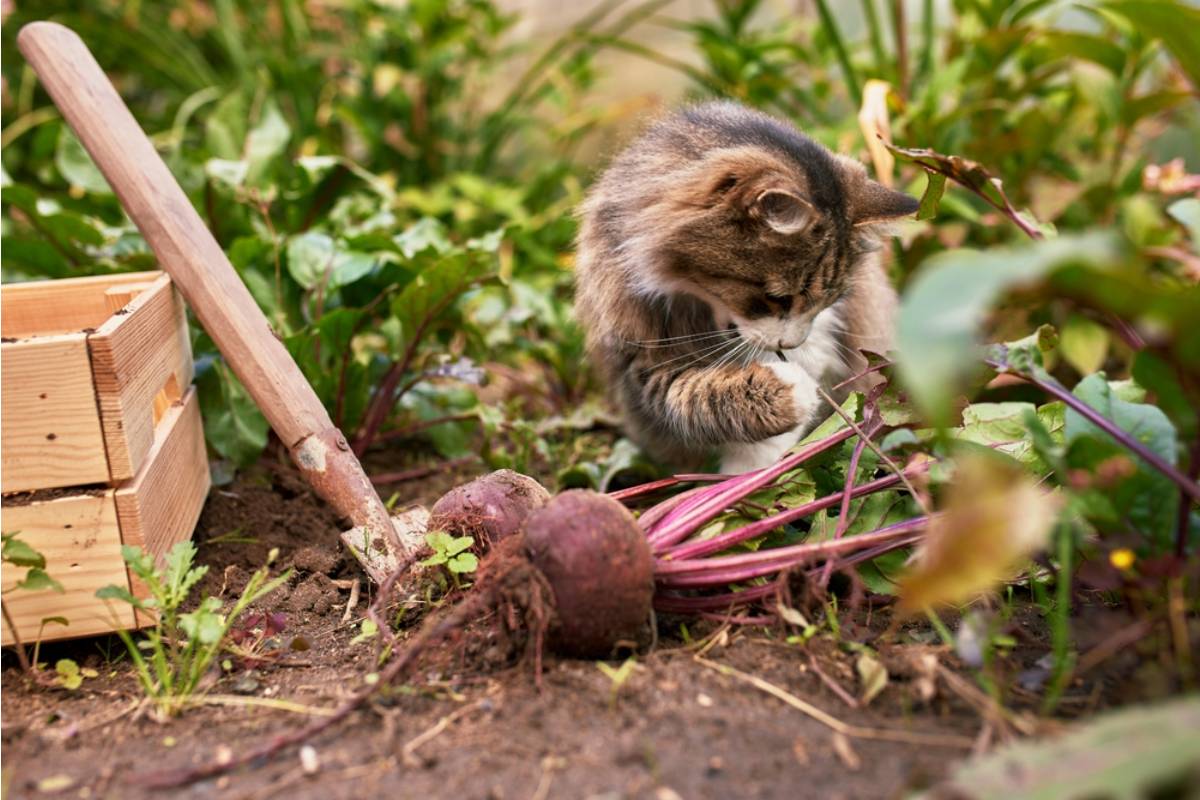
A person shared her story after realizing that three cats from a nearby home had apparently decided her garden was the perfect place to do their business. The cats were allowed to roam freely, and she kept finding fresh little surprises buried among the soil. At first, she tried to laugh it off, but finding cat poop where vegetables were growing quickly became much less amusing.
The strangest part was that she did not even know which neighbor owned the cats. They wandered through the neighborhood as though they had been assigned the entire area as their personal territory. That left her stuck with an unpleasant mystery and no obvious person to confront about it.
The Garden Had Become a Litter Box
The problem was especially frustrating because the garden was supposed to be a peaceful growing space rather than an outdoor bathroom. The cats seemed particularly interested in the loose soil around the plants, where digging was apparently easier than finding somewhere else to go. Every new discovery meant another unpleasant cleanup before she could comfortably work among her plants.
She also worried that the owners might not even realize what was happening. From their perspective, the cats were simply wandering around outside, while she was left dealing with the consequences several properties away. The longer it continued, the more ridiculous the situation felt.
Three Cats Made the Problem Worse
One wandering cat might have been manageable, but there were three of them making regular visits. That meant the gardener could never be certain when another feline visitor would appear among the beds. Just when she thought she had cleaned one area, another patch of disturbed soil would reveal that the garden had received yet another unwanted visit.
The cats also seemed to have developed a preference for the same general areas. Their repeated behavior made it clear that this was not a random accident happening once in a while. The garden had officially become part of their routine.
She Could Not Exactly Knock on Every Door
The biggest obstacle was identifying the actual owners. She knew where the cats seemed to come from, but she had no way of confidently determining which household they belonged to. Walking around asking neighbors whose cats were using her garden as a toilet felt almost as awkward as the original problem.
There was another concern lurking behind that uncertainty. Even after finding the owners, she had no guarantee they would care enough to change anything. A person might simply shrug and say that cats naturally roam, leaving the gardener exactly where she had started.
Then a Simple Idea Appeared
A response from a person suggested installing a motion-activated sprinkler. The idea was surprisingly simple: let the garden itself react whenever an unwelcome furry visitor wandered into the planting area. Instead of chasing the cats around, the gardener could allow a harmless burst of water to do the work.
The suggestion immediately made sense because cats generally dislike unexpected water. The gardener would not need to stand outside constantly watching the beds either. The garden could essentially become its own security guard.
Citrus Peels Entered the Story
Another response from a person suggested using citrus peels around the garden. The strong scent was offered as a possible way to make the area less attractive to wandering cats. It was a much cheaper idea than buying equipment, which made it especially appealing to someone already annoyed at having to deal with the problem.
The suggestion also added an almost comical image to the situation. Instead of building a fence or installing an elaborate barrier, the gardener could end up surrounding her vegetables with the remains of oranges and lemons. The cats might arrive expecting soft soil and instead encounter a garden that smelled completely different.
Then Someone Mentioned Spices
A different response from a person suggested sprinkling cayenne pepper around the affected areas. The person said the method had appeared to discourage cats elsewhere, although there was no guarantee it would work in this garden. Still, the gardener now had another possible line of defense to consider.
At this point, the whole situation was starting to sound like a tiny backyard battle. The gardener had vegetables, herbs, and planting beds, while the cats had persistence and an impressive determination to ignore property boundaries. Every proposed solution seemed to add another chapter to the absurd conflict.
The Cats Had Already Chosen Their Favorite Spot
What made the problem particularly irritating was the cats’ apparent certainty that they had found the ideal location. Loose garden soil was easy to dig, plants created some cover, and the quiet environment probably made the beds feel safe. From the cats’ perspective, they may have thought they had discovered the perfect bathroom.
The gardener naturally saw things rather differently. She had spent time preparing the soil so plants could thrive, only to have neighborhood animals repeatedly disturb it for an entirely different purpose. The same softness that made the earth excellent for gardening had apparently made it irresistible to the cats.
The Garden Needed Protection Without Becoming a Fortress
The gardener did not want to cover every inch of her growing space with ugly barriers. She wanted to protect the plants while still keeping the garden pleasant and accessible. That meant finding a solution that discouraged the cats without turning the entire yard into a construction project.
A motion-activated sprinkler seemed increasingly attractive for exactly that reason. It could protect a particular area without permanently changing the appearance of the garden. More importantly, the cats could learn that entering certain spaces came with an unexpected consequence.
One Response Suggested a Much More Extreme Solution
Then a response from a person described dealing with a particularly persistent cat by trapping it and transporting it far away. The story certainly demonstrated how frustrated a person could become when an animal repeatedly invaded private space. However, it also made the gardener’s original problem seem much larger than it needed to be.
Compared with that dramatic approach, the gardener’s situation still had several gentler options available. Deterrents, barriers, and changes to the garden could potentially solve the problem without escalating the conflict. The goal was to make the garden boring to the cats, not to start a neighborhood war.
The Gardener Realized the Soil Was Part of the Problem
The more she thought about it, the more obvious one detail became: the cats were not necessarily interested in the plants themselves. They were interested in the soil. Once she understood that, the solution could focus on making the soil difficult or unpleasant to dig rather than trying to remove every cat from the neighborhood.
That opened the door to physical changes around the beds. Mulch, densely planted ground cover, or protective materials could make the loose earth less appealing. Suddenly, the problem looked less like an impossible battle with three cats and more like a garden-design puzzle.
The Mystery Became a Neighborhood Story
Before long, the strange behavior had become something that could easily turn into neighborhood gossip. Somewhere nearby were three cats apparently making repeated bathroom trips to one gardener’s property. Meanwhile, the owner might have been completely unaware that their pets were causing trouble.
The funniest part was that the cats themselves probably had no idea they were creating a dispute. They were simply following their instincts and returning to a place they considered convenient. The gardener, however, was slowly becoming determined to convince them that her beds were no longer available.
The Garden Began Fighting Back
Eventually, the gardener began thinking of the entire space differently. Instead of simply cleaning up after the cats every time they appeared, she could create a garden environment that actively discouraged them from digging. Motion, scent, texture, and planting choices could all work together.
That approach also felt more satisfying because it put control back in her hands. She could improve the garden while solving the nuisance at the same time. The cats might still roam around the neighborhood, but they would no longer have to make themselves comfortable among her vegetables.
Then Came the Unexpected Twist
The real twist was that the gardener did not need to identify the cats’ owners before taking action. A response from a person had pointed toward a simple deterrent strategy that could make the garden an unattractive destination without confronting anyone. The cats had chosen the garden because it was convenient, which meant the gardener only had to make somewhere else more appealing.
What began as a frustrating mystery about three wandering cats could therefore end with a surprisingly simple victory. The vegetables could remain protected, the garden could stay beautiful, and the cats could continue their neighborhood adventures somewhere else. For once, the solution to a gardening problem did not require growing anything at all, it required teaching three determined cats that the bathroom had officially closed.