Homeowner Says Years of Battling Fence-Line Overgrowth Led to a 30-Foot Tree Growing Between Two Fences, Then a New Fence Plan Turned the Backyard Into a Property-Line Mystery
A person shared his story about living in one side of a Maryland duplex while dealing with an unusual jungle growing along the fence between the two backyards. The neighboring half is owned by a landlord, and over the years, weeds, vines, and other vegetation began filling the narrow space between an old chain-link fence and a newer wooden fence. What started as a little routine trimming slowly became a much bigger gardening headache.
The homeowner had been doing his best to keep the growth under control, especially since the vegetation seemed determined to return the moment he stopped looking at it. He joked that he wished his actual garden would grow with the same enthusiasm. Then one summer, he was less vigilant than usual, and that was when the plot took a dramatic turn.
The Forgotten Patch Became a Tiny Forest
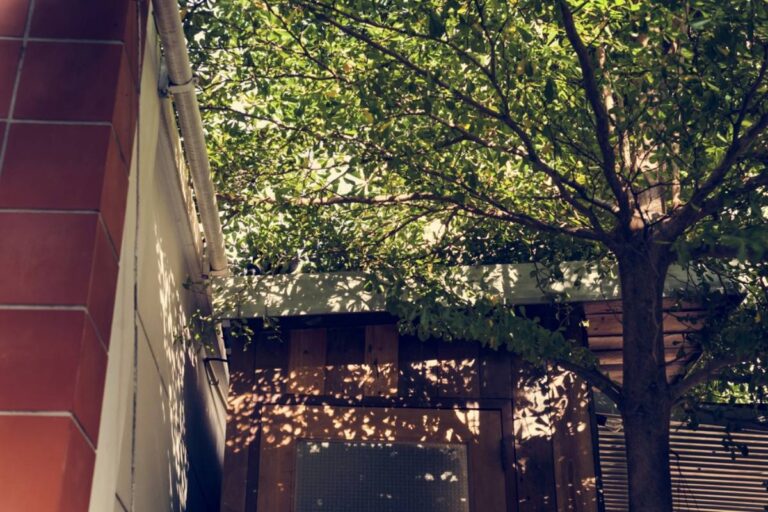
When the homeowner finally realized what had happened, there was no longer just a collection of weeds hiding between the fences. A tree had managed to establish itself in the narrow strip and had reached roughly 30 feet tall, with a trunk about eight inches thick. Somehow, the tiny patch that had once required a quick trim had turned into something resembling a miniature woodland.
The sudden appearance of such a large tree also created a much bigger question about responsibility. The homeowner believed the original chain-link fence marked the actual property boundary, which would mean the strip on the other side belonged to his neighbor. That led him to wonder whether all the overgrowth, including the tree, should really be his neighbor’s responsibility.
Two Fences Made One Small Space Much More Complicated
The property already had an unusual setup because the original chain-link fence remained in place while the neighboring property owner had constructed a six-foot wooden fence alongside it. That left a narrow gap between two separate barriers, creating the perfect little greenhouse for anything determined enough to grow. Unfortunately, neither fence seemed especially interested in making the situation easier.
The homeowner had spent years cutting back the vegetation in that gap as a courtesy. But with the neighbor now considering replacing the wooden fence, the homeowner started wondering whether this might finally be the moment to remove everything and start fresh. That raised a simple question with surprisingly complicated consequences: who should actually pay for clearing the overgrowth?
The Property Line Wasn’t Quite as Obvious as It Looked
The homeowner was about 99 percent certain that the chain-link fence was original to the duplex and sat directly on the property line. However, one response from a person pointed out that being almost certain is not the same thing as having the boundary legally established. The advice was simple: get a professional survey before making major decisions.
That suggestion quickly became the central theme of the discussion. A fence can look perfectly positioned for decades while still being slightly off the legal boundary, and even a small discrepancy can become important once property improvements are involved. Suddenly, the old fence had gone from an annoying eyesore to a potential legal landmark.
The Garden Made Chemical Solutions a Tough Sell
One response from a person suggested using a small amount of weed killer in the narrow space between the fences. On paper, it sounded like an inexpensive way to eliminate years of vines and weeds without spending hours wrestling with them by hand. The homeowner, however, explained that both sides have gardens near the fence, making that approach something he wanted to handle carefully.
He had already dealt with poison ivy in the area and had used weed killer for that particular problem. But the bigger concern was protecting the plants that were actually supposed to be there. Nobody wants to spend Saturday morning nurturing a vegetable bed only to discover that the accidental border jungle has launched a chemical counterattack.
The 30-Foot Tree Became the Real Plot Twist
While the weeds and vines were irritating, the tree was clearly the star of the story. At around 30 feet tall, it was no longer something that could be dismissed as ordinary fence-line overgrowth. The homeowner was especially concerned because the tree’s continued growth could eventually cause trouble for a rusty shed belonging to the neighbor.
One response from a person simply suggested saving the tree, removing the chain-link fence, and enjoying the shade and oxygen. That made the situation sound almost idyllic, at least until the homeowner pointed out the potential danger to the nearby shed. What looked like a charming volunteer tree from one angle suddenly looked like the beginning of another property dispute from another.
Then the Shed Entered the Story
The rusty shed added another layer to an already crowded little backyard drama. The homeowner worried that the growing tree might eventually knock the structure over, turning a gardening problem into something much more expensive. Another response from a person took a completely different view and argued that the shed was not the homeowner’s responsibility.
That may be true from a practical perspective, but it did not make the tree any less interesting. The homeowner was already thinking about removing the fences and cleaning up the area, so the shed would inevitably remain part of the conversation. Sometimes one neglected corner of a garden manages to collect an entire cast of problems.
A New Fence Suddenly Sounded Like the Cleanest Solution
The homeowner was open to removing both existing fences and contributing toward a brand-new fence built directly along the actual property boundary. That idea would eliminate the strange gap and make future maintenance much simpler. Instead of constantly trimming an awkward strip between two structures, each homeowner could maintain the vegetation on their own side.
One response from a person suggested splitting the costs of the survey, fence removal, and new construction. The proposal would effectively turn the current mess into one coordinated project instead of two separate repairs. It also offered the tempting possibility of solving several problems at once.
But Even the Survey Became a Debate
Not everyone agreed about who should pay for the boundary survey. One response from a person argued that each owner should handle the survey of their own property rather than dividing the cost. Another suggested that surveying only the shared boundary could be a more practical and less expensive approach.
The debate highlighted just how much uncertainty was hiding behind that old chain-link fence. The homeowner thought he knew where the property ended, but the entire discussion showed why assumptions can become expensive when new construction is involved. A few inches on paper can mean something very different once a fence is being installed in real life.
The Old Fence Had One More Strange Detail
The homeowner also explained that the chain-link fence appeared to be positioned exactly between the properties and even had a gate in the middle. Although the gate was now useless, its existence made the fence look even more like an original boundary marker. It was the sort of old backyard detail that probably seemed completely ordinary when the duplexes were first built.
But old fences have a habit of carrying stories that nobody remembers. What once looked like a simple dividing line had survived for decades and was now sitting beneath a tree, surrounded by vines and weeds. The longer the homeowner looked at it, the more the fence seemed like the opening clue to a much larger property puzzle.
A Professional Survey Could Settle the Mystery
Several responses from people returned to the same recommendation: have a professional surveyor mark the actual boundary. That would determine where the legal property line sits instead of relying on the location of the existing fence. It would also give both homeowners a much clearer starting point before removing anything or building something new.
For the homeowner, that could settle several questions at once. It could clarify responsibility for the overgrown strip, determine where a replacement fence should go, and prevent a future argument over whether construction had crossed the line. In a garden dispute, sometimes the most important tool is not a saw or pair of pruning shears, but a measuring instrument.
The Overgrowth Might Solve Itself During Construction
One response from a person pointed out that much of the vegetation might disappear naturally once the old fences were removed. Digging out the existing structures and installing a new fence would disturb the roots, clear the narrow strip, and finally open up the entire area. Instead of spending months fighting individual vines and weeds, the homeowners could potentially tackle the whole jungle during one major project.
That idea may have been the most satisfying part of the discussion. Years of trimming had only kept the growth temporarily under control, while the underlying problem continued to regenerate. A complete fence replacement could give both gardens a literal clean slate.
The Narrow Gap Was the Real Villain All Along
Looking at the entire story, the tree may have been dramatic, but the real trouble was the narrow space between two fences. It was difficult to access, easy to neglect, and apparently ideal for anything that wanted to take over. Every time the homeowner stopped paying attention, the plants had more room to make themselves comfortable.
A response from a person even noted that a property line itself has no physical width, while a fence does. That observation explained why the space between the fences could create so much confusion. Once two structures occupy a boundary area, every inch suddenly matters, especially when roots, sheds, gardens, and future construction are involved.
What Looked Like a Gardening Chore Became a Backyard Mystery
The homeowner began with what sounded like an ordinary question about weeds, vines, and maintenance. Instead, the story grew into a curious mix of property boundaries, a towering volunteer tree, two competing fences, a vulnerable shed, and a possible future construction project. What had once been an annoying strip of overgrowth had somehow become the most complicated corner of the entire backyard.
For now, the homeowner appears to have several decisions ahead before the old fences finally come down. The next chapter could involve a survey, a new fence, and a serious cleanup of the overgrowth that started it all. And somewhere in the middle of that tangled space, the 30-foot tree is still standing, quietly reminding everyone how quickly a forgotten patch of garden can turn into a much bigger story.