Homeowner Spent an Entire Summer Transforming a Waterlogged Property Line Into a Garden, Then Her Neighbor Suddenly Objected to a Tiny Decorative Fence
A homeowner moved into a newly built house and quickly discovered that the strip between her property and the neighboring home had an unfortunate habit of collecting water. The city’s layout had left standing water between several properties, turning part of the yard into a soggy, awkward stretch that was difficult to maintain. Instead of giving up on the area, she began looking for ways to turn the problem into something useful for the garden.
She hired three drainage experts to investigate possible solutions and even offered to contribute $15,000 toward a larger drainage project. The plan would have helped several properties, but it required her neighbor’s permission and some contribution toward correcting the neighbor’s grading. The neighbor declined, so the homeowner respected the decision and moved on with her own plans.
Then the Neighbor Suddenly Changed Her Mind
The following year, the neighbor apparently became less enthusiastic about the standing water after discovering that her own side was too wet to mow properly. Her attitude toward the homeowner changed almost overnight, with invitations for drinks and friendly conversations suddenly appearing. Unfortunately, by then the homeowner had already dealt with her portion of the issue and no longer wanted to restart the expensive project.
There was another reason for that decision too. After her husband passed away, the homeowner explained that she needed to be more careful with money and no longer had the appetite for a major landscaping expense. The neighbor’s newfound friendliness disappeared almost as quickly as it had arrived, leaving the homeowner wondering whether the relationship had been based largely on the drainage project.
The Property Line Became the Next Mystery
The homeowner eventually decided to redesign the soggy section on her own side and turn it into a rain garden. There was just one problem: she was not sure exactly where the property line was. One day, she spotted the neighbor outside and walked over to ask where the boundary marker was located.
The neighbor claimed she did not know, but a man who was planting a tree nearby suddenly became interested in the conversation. As he worked, the buried property marker was discovered right where he had been digging. The homeowner became suspicious because several existing landscaping features seemed to line up almost perfectly with the boundary.
The Trellis Was Sitting in a Very Interesting Place
The homeowner noticed that the neighbor already had a large trellis positioned right on the lot line. Two trees were also planted in a line that appeared to follow the same boundary. Given that the marker had somehow ended up buried in nearly the exact same area, the homeowner began wondering how accidental the arrangement really was.
She also remembered that the neighbor had installed a privacy hedge directly along the property line after the homeowner moved in. On top of that, landscaping materials had spread onto the homeowner’s side, including mulch and rubber edging. At one point, the neighbor even acknowledged that she had apparently planted slightly over the line.
The Homeowner Announced Her Landscaping Plans
When the homeowner pointed out the boundary, she remained remarkably calm. She told the neighbor that she was happy to know where the line was because she intended to begin landscaping her own side the following year. The neighbor responded casually and essentially gave her permission to do whatever she wanted.
That conversation became important later. The homeowner would eventually spend months working along the entire property edge, and she believed the neighbor had every opportunity to raise concerns before the project was completed. Instead, the landscaping proceeded quietly while the property line slowly transformed.
One Hundred Feet of Garden Took an Entire Summer
The homeowner’s project was not a tiny flower bed tucked into one corner of the yard. It stretched for more than 100 feet along the edge of the property. She worked with her children throughout the summer, laying down cardboard, covering sections with mulch, and gradually introducing plants to turn the awkward strip into an actual garden.
The homeowner deliberately worked from one end to the other, leaving the neighbor’s section until the final stage. That gave the neighbor plenty of time to see what was happening. According to the homeowner, the neighbor regularly went inside whenever she came outdoors, but never approached her with any concerns.
Even the Rubber Edging Became a Problem
The homeowner eventually noticed that some old rubber edging from the neighbor’s landscaping sat across the property line on her side. It was becoming overgrown with weeds, and she disliked having to maintain plants around it. Instead of simply ripping it out and throwing it away, she removed a small section first and placed it on the neighbor’s side as a signal.
The gesture was intended as a quiet warning rather than a confrontation. The homeowner planned to tell the neighbor that she could move the edging directly onto the property line instead. A month passed without any response, so she eventually removed the remaining edging from her own property and carefully cleaned it so it could potentially be reused.
Then the Neighbor Finally Came Outside
Later that day, the homeowner was relaxing on her patio when the neighbor unexpectedly called her name. The sudden appearance was surprising enough on its own, but the neighbor was not alone. She had an audience and was visibly upset about what had happened to the rubber edging.
The homeowner explained that the landscaping had previously been discussed and that the edging she removed had been sitting on her side of the property line. She also explained that she had intended to offer a solution by moving it to the actual boundary. Instead of continuing the argument, the homeowner eventually smiled, walked away, and decided that further conversations were unlikely to resolve much.
Now the Garden Has a New Problem
After all that landscaping work, the homeowner was left with another gardening question. Some of her taller perennials were growing close to the property line and beginning to flop toward the neighbor’s side. She wanted a decorative metal fence behind the plants to support them and keep the garden looking tidy.
The proposed panels were not giant privacy structures either. They were roughly 40 inches tall and five feet wide, with a decorative style similar to the neighbor’s existing trellis. The homeowner’s concern was not merely whether she could install them, but where she should position them to avoid creating yet another dispute.
The Fence Would Look Almost Like a Garden Border
From a purely gardening perspective, the proposed fence had a simple purpose. Tall perennials can lean, spread, and spill outward, especially after rain or heavy blooms, and a low decorative panel can keep them contained without turning the garden into a rigid hedge. The homeowner also wanted the new panels to visually complement the trellis already standing nearby.
That similarity created an interesting wrinkle. A decorative fence positioned immediately beside the neighbor’s trellis might look intentional and coordinated rather than confrontational. At the same time, placing anything near a property boundary can invite a completely different kind of landscaping headache if the exact placement is misunderstood.
A Tiny Setback Could Prevent a Big Argument
The homeowner considered two obvious options. She could place the panels directly on the property line, or she could move them six to 12 inches onto her own property. The second option would sacrifice a little garden space but might provide a clearer physical separation.
A response from a person suggested checking local rules before making the decision. Fence regulations, permits, setbacks, and height limits can vary depending on the municipality, so the homeowner was encouraged to verify the requirements rather than relying on assumptions. Another response from a person pointed out that the exact nature of the fence could matter too, especially if the panels were temporary rather than permanently installed.
The Property Marker Was Suddenly Very Important
Given everything that had happened with the buried boundary marker, several responses from people stressed the importance of knowing exactly where the property line was. The homeowner had already learned that relying on a neighbor’s recollection could leave too much room for disagreement. A professional survey was suggested as the clearest way to remove uncertainty if the boundary could not otherwise be established confidently.
That advice was especially relevant because the homeowner was no longer dealing with an empty patch of lawn. She had invested an entire summer into transforming the area into a garden, and the new decorative fence would sit right alongside that work. A few inches of uncertainty could therefore create months of frustration if either side later claimed the fence had crossed onto the wrong property.
The HOA Added Another Layer to the Garden Puzzle
There was yet another complication waiting in the background. The homeowner lived under an HOA, meaning even a small decorative garden fence might be subject to community rules. A structure that looked harmless from the patio could still require approval or meet specific height or placement requirements.
The homeowner’s mother had also raised a practical concern about leaving space behind a fence for maintenance. Fortunately, these panels were designed to be easily removed rather than becoming permanent structures buried deep in the ground. That made the project feel more like a flexible garden support system than a fortress, although local rules still mattered.
Then Came the Question of Whether a Fence Was Even Necessary
Some responses from people questioned whether the fence should go up at all. Their concern was not necessarily about the garden design, but about whether adding another structure so close to the property line could give an already tense relationship another reason to flare up. When neighbors have disagreed over drainage, edging, trees, and boundaries, even an innocent garden feature can become strangely symbolic.
Others took the opposite view and suggested that the homeowner simply follow the rules and proceed with her plans. The logic was that a person should be able to landscape their own property as long as the project complied with local requirements and respected the legal boundary. In that sense, the little decorative fence became less about the neighbor and more about making the homeowner’s garden function the way she wanted.
The Strange Part Was How Much This Had All Started With Water
Looking back, the entire conflict seemed to have grown from a puddle. What began as standing water between several houses eventually led to drainage proposals, trees planted to absorb moisture, questions about property markers, a massive landscaping project, arguments over edging, and now a decorative fence.
The garden itself had become a kind of timeline for the relationship. Every new planting and landscaping decision seemed to carry a little history with it, from the original muddy ground to the carefully mulched border. The most surprising twist was that the homeowner was not even trying to build something dramatic, she simply wanted her perennials to stop falling over the boundary.
The Neighbor’s Trellis May Have Created the Oddest Twist
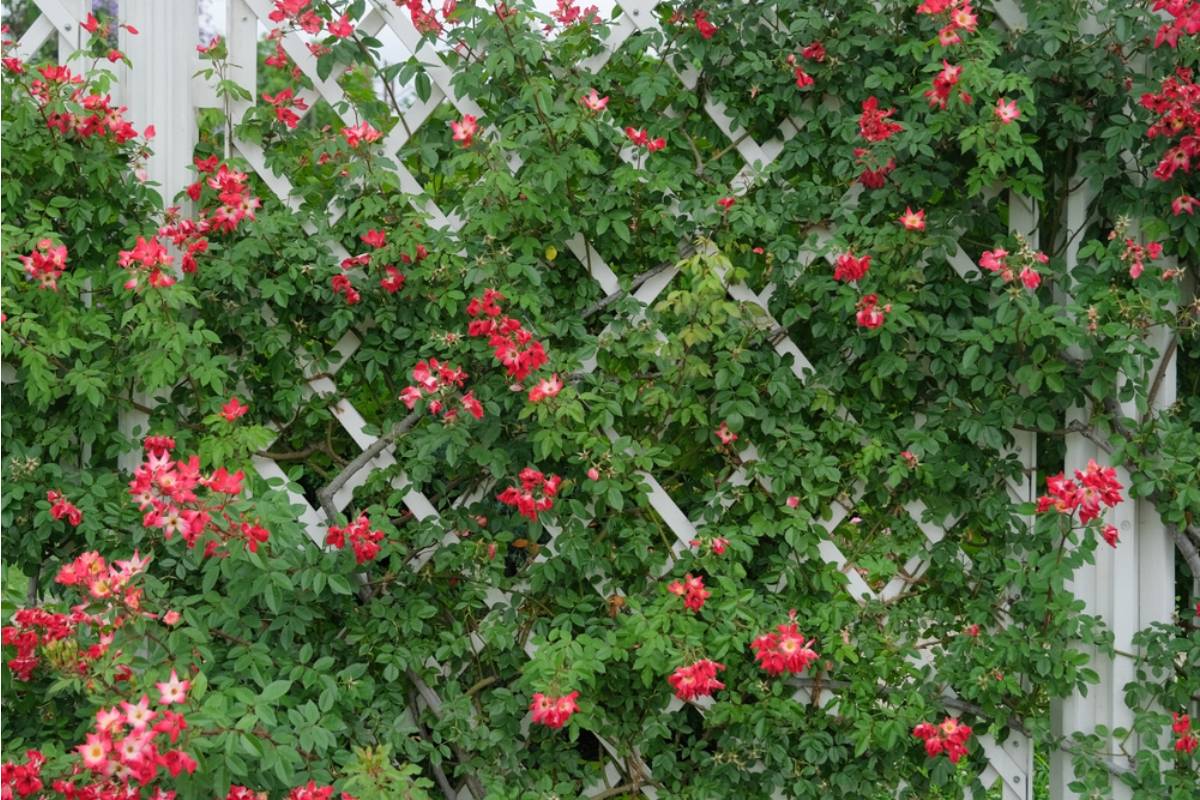
There was something almost ironic about the final problem. The neighbor already had a trellis sitting directly along the lot line, while the homeowner wanted to install similar decorative panels on her own side to support her flowers. In another neighborhood, the two garden features might have looked like they were designed together.
Instead, they became part of a much longer story about boundaries and communication. A garden trellis that might have been nothing more than a support structure suddenly seemed to represent everything the two homeowners had been unable to agree on.
Now the Garden Is Caught Between Flowers and Property Lines
The homeowner’s original goal was remarkably simple. She wanted to keep her tall perennials from flopping across the boundary and make the landscaped strip look finished. After years of drainage problems and months of gardening work, she was hoping a few 40-inch decorative panels could finally provide the neat edge the garden needed.
Yet that tiny project carried the weight of everything that came before it. The buried marker, the privacy hedge, the rubber edging, the drainage dispute, and the tense conversations all made a small garden fence feel much bigger than it actually was.
The Final Decision Comes Down to a Few Inches
In the end, the homeowner was left weighing the practical options. Installing the panels directly on the property line would maximize her garden space, while moving them slightly inward could create a clearer buffer and reduce the chance of another boundary argument. The right choice ultimately depends on the property’s verified boundary and whatever local or HOA rules apply.
What makes the story so engaging is how an ordinary gardening project became the latest chapter in a much larger neighborhood saga. After spending an entire summer turning a soggy, difficult strip of land into a garden, the homeowner now has one last puzzle to solve. This time, it is not about where the water goes, but exactly where the flowers should stop.