Homeowner Tried to Clear an Abandoned Scooter From the Shared Garden, Then Learned His Neighbor Still Considered the Rusty Relic Valuable
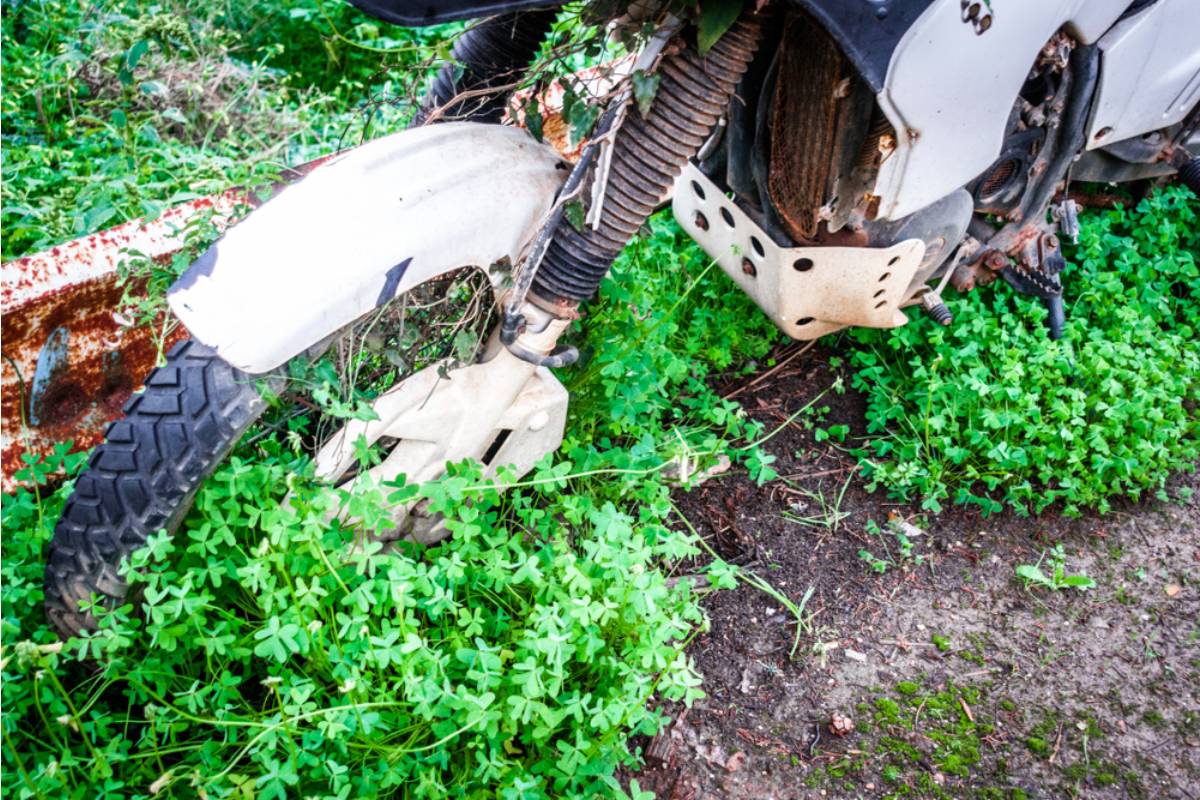
A person shared his story about a shared garden that had slowly become cluttered with an unlikely piece of outdoor furniture: an old Vespa scooter. When he moved into the building three years earlier, the scooter was already sitting there, covered in rust and looking as though it had been forgotten by everyone except the upstairs neighbor who owned it. To him, it looked less like transportation and more like something that had accidentally become part of the garden.
The garden itself was supposed to be a pleasant shared space, but the scooter had been sitting there for so long that it had practically blended into the scenery. The neighbor rarely used the garden, and the old vehicle never seemed to move an inch. After years of staring at it, the homeowner eventually decided that it was time to make the space look more like a garden and less like a scrapyard.
The Cleanup Plan Finally Arrived
The homeowner decided he would tackle the garden properly, starting with the things that seemed obviously out of place. The rusty scooter was at the top of his list because it took up useful space and appeared completely unusable. Rather than simply moving it, he decided to contact the neighbor first and ask whether he could have it removed by a scrap collector.
He sent the neighbor a message through WhatsApp and included a photograph of the scooter so there would be no confusion about which object he meant. In his mind, this was the responsible way to deal with something that did not belong to him. He expected a simple yes or no and assumed the situation would be settled quickly.
Then Came a Very Strange Reply
The neighbor responded to the photograph with a casual message that roughly translated to, “Yeah, nice thing, huh?” The homeowner interpreted that response as though the neighbor had seen the entire conversation and was effectively giving permission to move forward. It was not a direct approval, but because the response appeared immediately after the photograph, he assumed the important part of the exchange had been understood.
That tiny assumption would become the biggest problem in the entire story. The homeowner did not realize that the question about removing the scooter had somehow failed to reach the neighbor. What looked like confirmation from one side was actually a completely different conversation from the other side.
A Scrap Collector Was Called In
Believing everything had been approved, the homeowner contacted a scrap collector and arranged for the scooter to be taken away. The collector apparently traveled from another city with a trailer, making the cleanup feel like an actual operation rather than a casual trip to the dump. The homeowner could finally imagine the garden without the rusty machine occupying valuable space.
When the collector arrived, the scooter was loaded up and disappeared from the garden. For the homeowner, that should have been the satisfying end of the cleanup project. Instead, it turned out to be the moment when the gardening problem transformed into a much bigger property dispute.
The Door Knock Changed Everything
Not long after the scooter left, the upstairs neighbor appeared at the homeowner’s door. He explained that the Vespa was still registered in his name, was insured, and contained valuable parts that he had no intention of giving away. Suddenly, the supposedly abandoned garden ornament had become someone’s protected property.
The homeowner was stunned because he genuinely believed permission had already been given. Then the neighbor showed him a screenshot of the WhatsApp conversation from his own phone, revealing the strange technical problem. The photograph had arrived, but the message asking for permission had apparently never appeared.
The Missing Message Explained the Mystery
That screenshot changed the entire interpretation of the conversation. The homeowner had looked at the neighbor’s response and assumed it was an answer to his question, while the neighbor had only received the photograph and was reacting to the photograph itself. What seemed like a careless approval had actually never happened at all.
The misunderstanding was genuine, but it did not magically undo what had already happened. The scooter was gone, the homeowner had arranged its removal, and the neighbor now wanted his property back. The gardening cleanup had created a problem that could not be solved by simply planting something over the empty patch.
The Homeowner Tried to Undo the Mistake
Once he realized what had happened, the homeowner immediately tried to reverse the removal. He contacted the scrap collector and asked whether the Vespa could be returned. He even offered to drive to collect it himself, showing that he was willing to put effort into fixing the misunderstanding rather than simply ignoring the neighbor.
Unfortunately, the timing was terrible. The collector explained that the scooter had already been partially dismantled for parts. What had once been one rusty vehicle was now becoming a collection of separate pieces, making a simple return much more complicated.
The Collector Became Part of the Problem
The collector eventually told the neighbor about the dismantling, which only increased the pressure on the homeowner. The neighbor reportedly sent a message saying, “It looks like you have a challenge,” followed by an expectation that the scooter should have been returned immediately. To the homeowner, the wording sounded hostile and as though the entire responsibility had suddenly landed on his shoulders.
From the neighbor’s perspective, however, the situation looked very different. His property had been removed without permission, and by the time he objected, parts of it had already been taken apart. The two men were now looking at the same garden but seeing two completely different versions of what had happened.
Everyone Focused on One Suspicious Sentence
A major sticking point was the neighbor’s short response to the photograph. Several people argued that “yeah, nice thing, huh” was nowhere close to an instruction to throw the scooter away. In fact, one could easily read the sentence as evidence that the neighbor still liked the old machine despite its terrible condition.
A response from a person pointed out that the homeowner had essentially heard what he wanted to hear from an ambiguous message. Another response from a person argued that the safest option would have been to knock on the neighbor’s door and have an actual conversation before arranging removal. The more people looked at that single sentence, the harder it became to treat it as permission.
The Garden Was Not Really the Core Issue
Although the whole argument began with garden cleanup, the real issue was ownership. The scooter was not community debris simply because it had been sitting outside for years, and its rusty appearance did not automatically make it worthless. The homeowner had been trying to improve the garden, but he had crossed an important line by deciding what should happen to someone else’s property.
That distinction became even more obvious because the scooter was still registered and insured. It also apparently had parts that the neighbor considered valuable, proving that something can look completely useless to one person while being surprisingly important to another. The garden had only provided the setting for a much bigger lesson about assumptions.
One Question Could Have Prevented Everything
Looking back, the entire chain of events might have been avoided with one simple follow-up question. The homeowner could have asked, “Just to confirm, are you okay with me having the scooter removed?” That sentence would have removed every bit of ambiguity and forced both sides to agree on exactly what was happening.
Instead, the homeowner relied on the timing of a short response and never confirmed the meaning behind it. A response from a person described this as the kind of mistake that happens when someone interprets a vague answer instead of getting explicit permission. Unfortunately, a five-second clarification would have been much cheaper than arranging the return of a dismantled Vespa.
The Rusty Scooter Suddenly Looked Different
Before the dispute, the Vespa seemed like an eyesore taking up space beside the garden. After the neighbor explained its registration, insurance, and valuable components, the homeowner had to look at it differently. It was no longer simply an old vehicle blocking a gardening project, but someone’s property with a history and a value that was not obvious from its appearance.
That was perhaps the biggest twist in the story. The homeowner believed he was removing unwanted junk so the garden could breathe, only to discover that the thing he considered junk was something his neighbor still cared about. A rusty scooter had somehow managed to become the most important object in the entire garden.
The Cost of Cleaning Up Became Much Bigger
The homeowner had originally expected the cleanup to be simple and practical. Instead, he was now facing the possibility of paying for the scooter, finding a replacement, or negotiating with the collector after parts had already been removed. What began as an attempt to create more gardening space had turned into a potentially expensive mistake.
A response from a person suggested that the homeowner should make the situation right rather than focusing on the inconvenience caused by the neighbor’s tone. Another response from a person noted that it was the homeowner’s actions that created the conflict in the first place. The garden cleanup suddenly looked like the cheapest part of the entire adventure.
The Lesson Was Buried Under the Flower Beds
There was an important gardening lesson hidden inside all of this chaos. Shared outdoor spaces require clear boundaries, especially when they contain objects that belong to someone else. Even something that looks abandoned for years should be treated as someone’s property until the owner clearly says otherwise.
The homeowner may have been genuinely confused by the missing WhatsApp message, and that technical glitch certainly explains how he reached his conclusion. But good intentions do not automatically turn assumptions into permission. Sometimes the easiest way to protect a peaceful garden is to pause the cleanup, walk upstairs, and ask one very boring question before moving anything.
The Empty Space Did Not Feel Like a Victory
The scooter was gone, so technically the garden had gained some space. Yet instead of feeling like a successful cleanup, the empty patch became a reminder of how quickly a simple improvement project could spiral out of control. The gardener had wanted room for a better-looking shared space, but now he had a neighbor expecting answers and a scrap collector holding pieces of the missing vehicle.
In the end, the garden’s biggest obstacle was never the rusty Vespa itself. It was the assumption that a vague message meant exactly what the homeowner wanted it to mean. What started with plans for a cleaner garden ended with an uncomfortable realization: when someone else’s property is involved, the safest tool in the shed is sometimes nothing more complicated than asking twice.