Homeowner Watched His Healthy Oak Turn Completely Brown in One Week During a Texas Heat Wave, Then Green Branches Under the Bark Offered One Last Reason to Hope
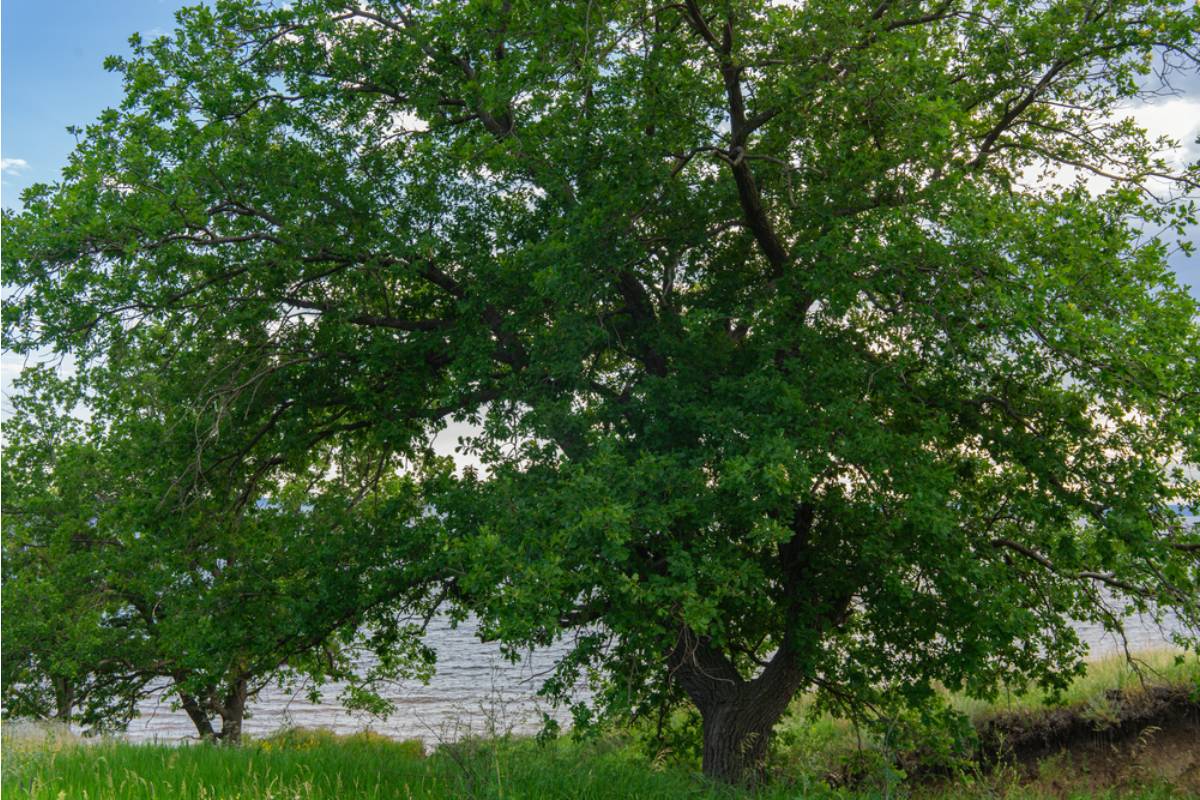
A person shared his story about one of four mature oak trees growing on his property in Texas. The trees had been planted about four years earlier and were believed to be roughly 15 years old, but this particular oak had always looked healthy, full, and dark green. Then temperatures climbed past 100°F, meaningful rain became scarce, and the tree changed so quickly that the homeowner barely had time to figure out what was happening.
About a week before he asked for advice, the oak looked completely normal. A few days later, the upper canopy began looking pale, while some leaves curled and developed brown tips. Before long, nearly every leaf had turned brown and crisp, creating the appearance of a tree that had suddenly died almost overnight.
The Change Happened Almost Too Fast
The speed of the decline was what made the homeowner especially nervous. This wasn’t a tree that had been slowly losing branches or thinning out over several months. Instead, it appeared to go from healthy and vigorous to completely brown within roughly seven days.
That rapid progression created a strange combination of fear and hope. On one hand, the canopy looked so dead that the tree appeared finished. On the other hand, the homeowner began noticing something that didn’t match the dramatic appearance, and that detail would become the biggest clue in the entire story.
Then He Scratched Beneath the Bark
The homeowner took his fingernail and scratched several smaller branches in different parts of the canopy. Each time, the tissue directly beneath the bark appeared green. The branches also didn’t seem brittle or completely dead, which suggested that the tree might still have living tissue even though its leaves looked hopeless.
That discovery changed the question from whether the oak looked dead to whether it was actually dead. Trees can respond to extreme environmental stress by sacrificing foliage, and the green tissue beneath the bark gave the homeowner a reason not to give up immediately. He began wondering whether the tree had simply abandoned its leaves to survive the brutal conditions.
The Texas Heat Was Impossible to Ignore
The timing made heat and drought the obvious suspects. The property had been experiencing temperatures above 100°F with very little meaningful rainfall, creating conditions in which even established landscape trees could become seriously stressed. The homeowner was already aware that watering frequency alone didn’t guarantee the roots were receiving enough moisture.
The oak had its own irrigation zone shared with the other trees, and he had generally been running it about once a month during July through September. After seeing the sudden decline, he began checking soil moisture and how deeply water was actually penetrating the root zone. The fact that the other three oaks remained green made the mystery considerably more complicated.
Three Oaks Stayed Green While One Collapsed
The neighboring oaks were exposed to the same general weather conditions, yet they didn’t suffer the same dramatic decline. That difference made simple heat stress seem less satisfying as an explanation. If the weather was responsible, the homeowner wondered why only one tree had reacted so violently.
A response from a person pointed out that individual trees can behave very differently even when planted nearby. Differences in roots, soil conditions, previous damage, pests, planting problems, or the amount of stress each tree can tolerate may determine which one fails first. In this case, the healthy appearance of the other oaks made the sick tree’s hidden history more important.
One Response Mentioned a Hidden Enemy
A person living in the Dallas-Fort Worth area said he had seen something similar happen to red oaks during hot, dry summers. According to that response, trees that looked fine had sometimes been dealing with borer infestations that became apparent only when extreme heat arrived. The stress of summer appeared to expose a problem that had previously remained hidden.
He suggested inspecting the trunk for small holes and other signs of insect activity. He also emphasized deep watering regardless of the eventual diagnosis because the tree would still need adequate moisture while under severe stress. That advice gave the homeowner a concrete thing to investigate while he waited to see whether the green tissue beneath the bark would lead anywhere.
A Tiny Chemical Detail Suddenly Became Important
Another response from a person raised a completely different possibility involving metsulfuron-methyl. That chemical appears in some weed-control products and can cause serious problems for oaks if it reaches them. The homeowner immediately considered whether a lawn treatment or other product could have caused the sudden decline.
He said he hadn’t applied herbicides or other chemicals near the tree and generally used organic fertilizer. He also mentioned that there had been no recent fertilization, making an accidental chemical application seem less likely based on the information he had. Still, the possibility was useful because it demonstrated how something seemingly unrelated to the tree could potentially explain a sudden collapse.
The Loose Strap Wasn’t Crushing the Trunk
There was also a black strap or line visible near the bottom of the trunk in some of the photographs. One person noticed it and asked what appeared to be a simple question about the mysterious object wrapped around the tree. The homeowner explained that it belonged to a small trail camera and was attached with a soft strap.
He specifically clarified that the strap was extremely loose and could easily be moved around the trunk with one finger. That ruled out the most obvious concern that the device might be constricting the tree. It also provided one more example of how a strange-looking detail in a photograph could initially seem more important than it actually was.
An Experienced Arborist Saw a Bigger Picture
The most detailed response came from a licensed arborist with more than three decades of experience working in the region. That person said he had seen landscape trees appear healthy and vibrant before suddenly dropping their foliage and declining severely. In his view, the tree appeared to have several possible stress-related issues that might have been present long before the leaves turned brown.
Among the possibilities mentioned were planting too deeply, excessive activity beneath the canopy, and a restricted mulch or feeding zone. The arborist also pointed out that the tree had been extremely thick and bushy before the foliage died, which he considered an unusual clue. Rather than focusing on one dramatic symptom, he looked at the oak as a tree that may have been quietly accumulating stress.
The Roots Might Have Been the Real Story
One of the arborist’s leading possibilities involved the tree’s roots. Container-grown trees can sometimes develop knotted or circling root systems that restrict healthy root expansion. A tree can look excellent aboveground for years while its root system struggles below the surface.
Another possibility was that some of the feeder roots had been cut or damaged by landscaping activity or pesticides. A mature-looking canopy can sometimes hide an underground problem until environmental conditions become harsh enough to push the tree beyond its limit. Once the Texas heat arrived, a weakened root system may have been unable to keep up with the tree’s water demands.
Overfertilization Was Another Suspect
The arborist also considered the possibility that the tree had received too much fertilizer in the past. The unusually thick, vigorous canopy before the collapse was one reason he raised the issue. A tree can appear impressively green and bushy while still dealing with an unhealthy balance between top growth and root function.
The homeowner hadn’t fertilized the tree recently, but that didn’t necessarily eliminate the possibility of earlier overfertilization. Stress often develops from a combination of factors rather than a single event. In that sense, the extreme heat may have been less of a cause by itself and more of the final push against a tree that already had underlying weaknesses.
Oak Wilt Entered the Conversation
Because the tree was in Texas, oak wilt was naturally mentioned as another possibility. The disease is a serious concern in parts of the state, and its presence can make sudden oak decline especially frightening for homeowners. However, the experienced arborist said the symptoms shown in this particular case did not look like oak wilt to him.
A response from another person also pushed back against an inaccurate suggestion about wood chips acting as a simple vector for the disease. The discussion eventually turned toward how oak wilt can move between connected oak root systems under certain circumstances. That exchange didn’t solve the homeowner’s mystery, but it reinforced the need for a proper diagnosis instead of assuming every rapidly declining Texas oak has the same problem.
The Green Cambium Became the Best Clue
Despite all the troubling possibilities, the green tissue beneath the bark remained the most encouraging sign. The homeowner had checked multiple smaller branches across different areas and repeatedly found green tissue underneath. That consistency suggested the decline in foliage might not mean every part of the tree had died.
One response from a person simply described the tree as being in shock and predicted that it could recover. Another experienced response offered a more cautious version of the same hope, saying that if the cambium remained alive, there was still a chance the tree could survive. Neither interpretation guaranteed recovery, but both gave the homeowner a reason to protect the tree rather than immediately treat it as a total loss.
The Advice Was Surprisingly Simple
The homeowner’s instinct was to water the root zone appropriately, avoid fertilizer, avoid unnecessary pruning, and give the oak time. That approach received support from the more experienced response, which recommended keeping the tree watered without leaving the soil saturated. The goal was to help the tree through the stressful period rather than piling additional interventions onto an already struggling root system.
The homeowner also considered leaving the brown canopy alone through fall and winter to see whether the tree could produce a new flush of growth in spring. That patience mattered because cutting everything back immediately could make it harder to assess what was still alive. For a tree whose branches remained green beneath the bark, waiting for clearer evidence seemed more sensible than treating the first brown leaves as a final verdict.
Then the Borer Clue Raised the Stakes
The mention of frass, which looks somewhat like sawdust, added another layer of tension to the story. The experienced response warned that frass around the base of the tree or obvious borer holes could indicate a serious infestation. In that person’s view, those signs would dramatically change the outlook and could indicate that the tree was no longer viable.
Suddenly, the homeowner had a list of things to watch while the oak stood there with a completely brown canopy. He needed to check the trunk, monitor the root zone, avoid adding more stress, and continue observing the living tissue beneath the bark. The tree looked finished from a distance, but the evidence underneath suggested the final chapter had not yet been written.
The Tree’s Most Important Test Would Come Later
The strange part of the situation was that there was no immediate visual answer. A brown oak canopy couldn’t tell the homeowner whether the problem was drought stress, root damage, insects, chemical exposure, or another issue. The tree had essentially become a giant question mark, with its living tissue hidden beneath bark and its future tied to what happened next.
The arborist’s advice suggested that the coming months could provide the clearest evidence. If the oak remained alive through the intense summer stress and conditions improved, a new flush of leaves could emerge in spring. That possibility transformed the story from one about a dead-looking tree into one about a tree quietly fighting to survive.
The Responses Turned Panic Into a Waiting Game
The homeowner had started with a frightening observation: a once-healthy oak had become brown and crispy in about a week. Several responses made the situation sound ominous, while others pointed toward pests, chemicals, root problems, or disease. Yet the most experienced explanation kept circling back to a simpler idea: the tree may have been under multiple stresses long before the canopy finally collapsed.
The twist was that the brown leaves might not have been the end of the story. Beneath those leaves, the branches still showed green tissue, the soil could still be managed, and no obvious chemical or disease trigger had been identified from the available evidence. For now, the homeowner’s best move was to protect the surviving root system, avoid making the situation worse, and wait to see whether the seemingly dead oak would surprise him when spring returned.