If You Reuse Last Year’s Potting Soil Without Fixing It, Your Plants May Struggle Before Summer Even Begins
Reusing potting soil feels like the smart thing to do.
At the end of the season, you’re left with containers full of soil that looks perfectly fine. It hasn’t disappeared. It hasn’t turned into anything obviously unusable. So when spring comes around again, it’s tempting to just plant right back into it.
It saves money. It saves time. And on the surface, it seems like nothing should go wrong.
But this is one of those gardening shortcuts that can quietly cause problems before the season even gets started.
Because potting soil doesn’t stay the same from one year to the next.
What Happens to Potting Soil Over Time
Even if it looks unchanged, last year’s potting soil has already been through an entire growing cycle.
Plants have pulled nutrients out of it. Water has moved through it repeatedly. Roots have grown, died, and broken down inside it. And over time, the structure of that soil begins to shift.
It becomes more compact.
It drains differently.
It holds nutrients differently.
And most importantly, it often contains leftover root material and potential pathogens that aren’t visible at first glance.
So when you plant into it again, your new plants aren’t starting fresh. They’re stepping into a space that’s already been used up in ways you can’t easily see.
Why Plants Struggle Early
One of the biggest issues with reused soil is nutrient depletion.
Last season’s plants have already consumed a large portion of what was available. Even if you add a little fertilizer at the start, it may not be enough to restore balance.
That leads to slow early growth.
Plants may sprout normally, but after a short time, they stop gaining momentum. Leaves stay smaller. Growth feels delayed. And everything just seems slightly behind.
At the same time, compacted soil can limit root expansion.
Healthy roots need oxygen and space to spread. When soil becomes dense, it restricts both. Water may sit longer than it should, or drain too quickly depending on how the structure has broken down.
Either way, the plant struggles to establish itself properly.
The Hidden Problem Most Gardeners Miss
One of the more overlooked issues is that reused soil can carry over problems from the previous season.
If any plants struggled with disease, mold, or pests, traces of those issues can remain in the soil.
You might not notice it right away.
But as your new plants grow, those same problems can reappear. Leaves may yellow unexpectedly. Growth may stall. Or plants may fail without a clear explanation.
Because the issue didn’t start this season.
It carried over from the last one.
Why It Feels Like Everything Is “Just Not Working”
This is what makes reused soil so frustrating.
Nothing fails immediately.
Seeds may germinate. Plants may look fine at first. But over time, things don’t progress the way they should.
You water properly. You give enough sunlight. You follow the same routine that worked before.
And yet, the results are different.
That’s because the foundation has changed.
And in gardening, the foundation matters more than anything else.
How to Fix Last Year’s Soil Properly
Reusing soil isn’t the problem on its own.
The problem is reusing it without refreshing it.
If you want to reuse potting soil successfully, you need to rebuild it so it functions like new again.
That means:
- Breaking up compacted sections
- Removing old root material
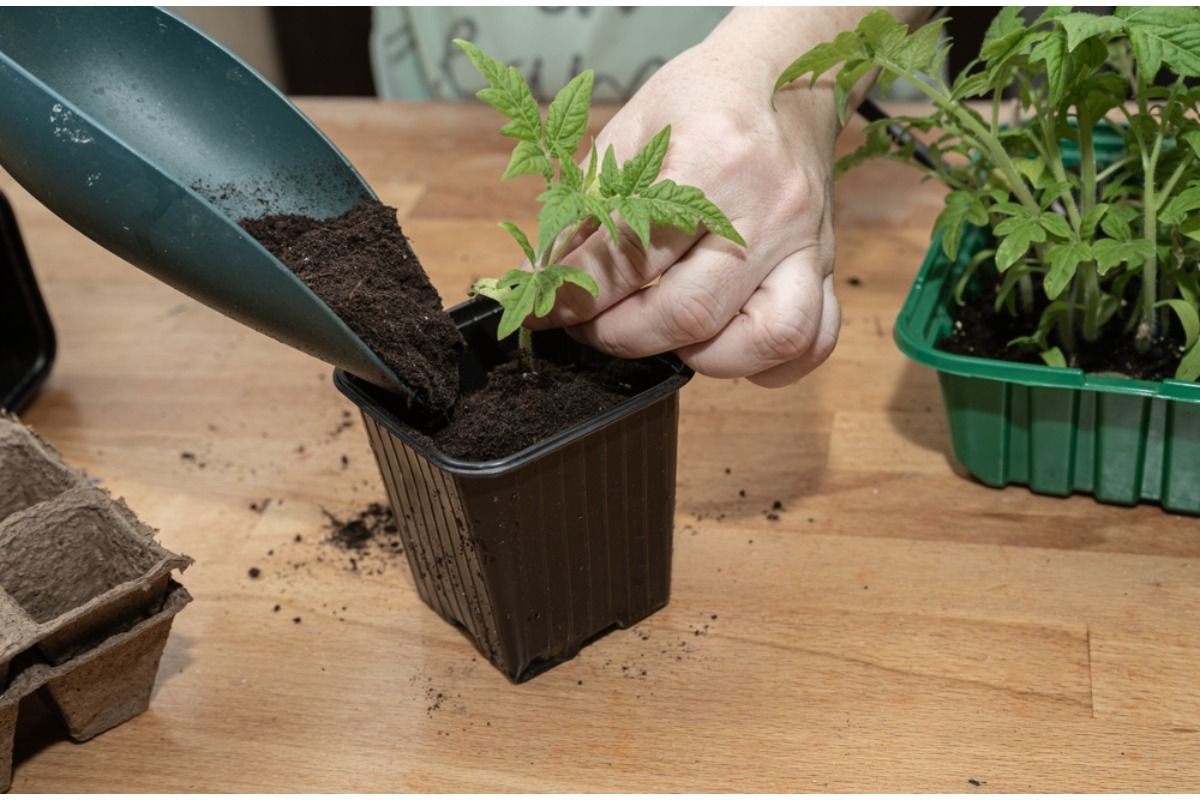
- Mixing in fresh compost or new potting mix
- Restoring nutrients with slow-release fertilizer
This process reintroduces structure, improves drainage, and gives your plants a better starting point.
Some gardeners even replace a portion of the soil entirely to ensure consistency.
Why Starting Fresh Often Works Better
There’s a reason new potting mix produces such reliable results.
It’s balanced. It’s aerated. It holds moisture correctly while still draining well. And it contains nutrients designed to support early growth.
When you skip that reset, you’re asking your plants to perform in less-than-ideal conditions right from the beginning.
And that’s when small issues turn into bigger ones.
The Early Season Sets the Tone
The first few weeks of growth matter more than most people realize.
If plants establish strong roots early, they tend to grow faster, resist stress better, and produce more throughout the season.
But if they struggle early, that delay often carries forward.
Even if conditions improve later, they’re still trying to catch up.
And in a limited growing season, that lost time makes a difference.
Why This Mistake Keeps Happening
Reusing soil feels efficient.
It feels like you’re making the most of what you already have. And visually, there’s nothing obvious telling you not to do it.
But gardening isn’t just about what you can see.
It’s about what’s happening underneath.
And when the soil isn’t properly reset, everything built on top of it becomes less predictable.
Sometimes the best way to move forward is to start fresh.
Or at least give your soil the reset it needs to act like it is.