The Year’s Last Lawn Mowing Should Leave Grass About 2 Inches Tall, and HGTV Says to Keep Mulching Leaves Until About 90% Have Fallen
Soil temperature of 45°F is the signal that ends mowing season for cool-season grasses. At that point the grass goes dormant, according to Julie Martens Forney in an HGTV guide on when to stop mowing, and the lawn no longer needs cutting. Her rule is that the right time to stop is when grass stops growing.
Until that point, the job continues, and the final cut has a target: about 2 inches for many turf grasses. Keep mulching fallen leaves with the mower until roughly 90% of them are down. Extension specialists in Connecticut, Nebraska, Minnesota and Wisconsin add detail on each step.
Forty-Five Degrees in the Soil
Calendar dates are a poor guide because autumn weather varies so much from one year to the next. Forney points to the ground instead. Cool-season grasses go dormant at a soil temperature of 45°F, while warm-season grasses go dormant when soil stays below 55°F.
She also lists signs that growth is slowing. The interval between mowings stretches from two weeks to a month, and growth typically slows once trees are at least 50% bare. Hard frosts send warm-season grass dormant, and she says to never mow a lawn covered in frost, to protect the turf crowns.
The University of Connecticut’s November gardening tips give the same instruction in plainer terms: keep mowing as long as the grass is growing. Long grass left going into winter gives meadow voles and field mice food and cover, which can damage turf and nearby plants.
Two Inches for the Final Cut
Forney’s figure for the last mowing is about 2 inches for many turf grasses, cut without scalping. She says to lower the height gradually through fall, and to never remove more than one-third of the blade length at once. Shorter grass resists snow mold, gives voles less cover, reduces winter kill and greens up faster in spring, she writes.
Not every extension source lands on exactly 2 inches. Backyard Farmer, from the University of Nebraska-Lincoln Institute of Agriculture and Natural Resources, says in its fall turf tips to set the mower to about 2 to 2.5 inches to help the lawn prepare for winter and to prevent snow mold. It also says to keep mowing as needed until the grass stops growing.
Doug Soldat, an extension turfgrass and urban soils specialist at the University of Wisconsin-Madison, cautions against going too short. In a CALS News interview on fall grass care, he advises against cutting very short for the last mow and recommends keeping the mower at its normal height, around three inches. He also says the last mowing should be done with a sharp blade.
The practical reading: 2 inches is the low end of the sourced range and about 3 inches is the high end. A lawn that has been mowed at 3 inches all season can step down in stages toward 2 rather than dropping in one pass.
Ninety Percent of the Leaves Down
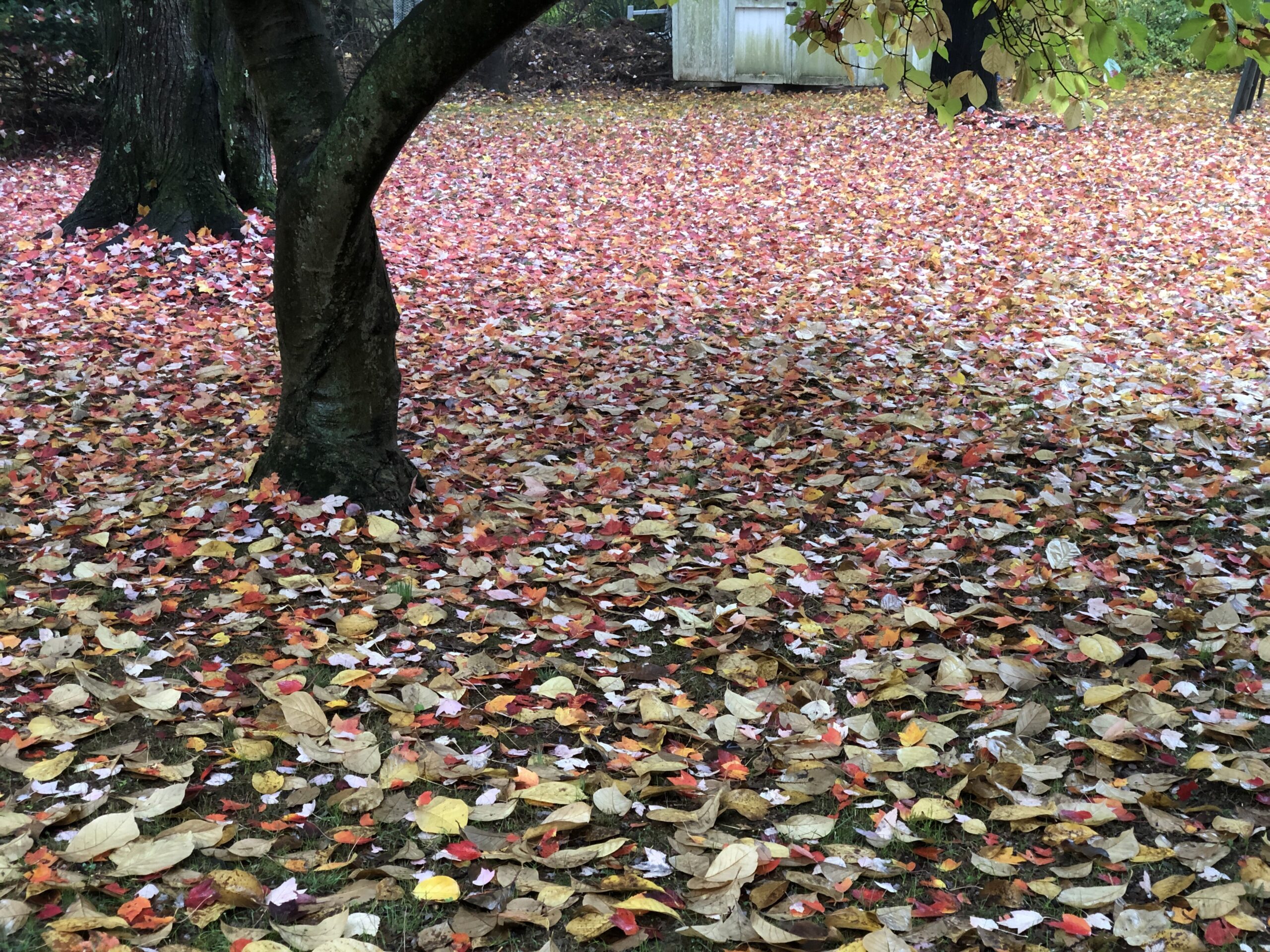
Forney says to keep mowing and mulching leaves until roughly 90% have fallen. A mulching mower chops leaves into small pieces that settle into the grass instead of smothering it.
Soldat explains why the practice is worth the effort. The grass is still green and photosynthesizing in fall, and a layer of whole leaves blocks that process. He says mulching leaves into the canopy has been shown to reduce weed populations the following spring, and that any leftover leaves should be cleared off the surface before winter.
The University of Minnesota Turfgrass Science Home Lawn Care Newsletter says mulched leaves return nutrients to the lawn and save raking, but that too much leaf litter can slow spring green-up and make snow mold worse. If less than 50% turf cover is visible after mowing, it advises bagging or raking the leaves for the rest of the fall.
Connecticut’s extension specialists draw a distinction by leaf size. Smaller leaves from ash, honey locust and birch may be chopped with a mulching mower when dry and left on the lawn, while large leaves from oak and maple should be raked and composted. UConn also advises collecting leaves that fall late in the season to make spring cleanup easier.
One-Third of the Blade at a Time
Lowering the mower from a summer height to the final cut is a gradual process. Forney’s rule is to never remove more than one-third of the blade length in one mowing, so a lawn kept at 3 inches should not be cut below 2 inches in a single pass.
Spread over the last few mowings of fall, that means stepping the deck down a notch at a time. The University of Minnesota newsletter describes the same approach, advising gardeners to gradually lower the mowing height over the course of fall.
Timing matters on the other end, too. Grass that has gone a month between cuts may be well over the one-third limit. In that case, two passes a few days apart is gentler on the lawn than a single scalping cut.
Blades matter as much as height. Soldat’s advice to use a sharp blade for the last mow keeps the cut clean, and a dull blade tears grass tips, leaving ragged edges that dry out over winter.
Fifty-Five Degrees for Warm-Season Grass
The 45°F rule applies to cool-season lawns. Warm-season grasses follow a different threshold. Forney says they go dormant when soil stays below 55°F, and hard frosts send them into dormancy as well.
For homeowners, the type of grass in the yard decides which number to watch.
Either way, the cleanup list is similar once mowing ends. Finish with a sharp blade, clear remaining leaves, and put the mower away with the winterizing steps extension services recommend. Mowing can begin again when soil warms and growth resumes in spring.
Get stories like this by email. Sign up for The Parent Diaries Letter.
This article was produced with AI assistance and edited for accuracy against the sources linked above.
Image: Famartin – CC BY-SA 4.0/Wikimedia Commons