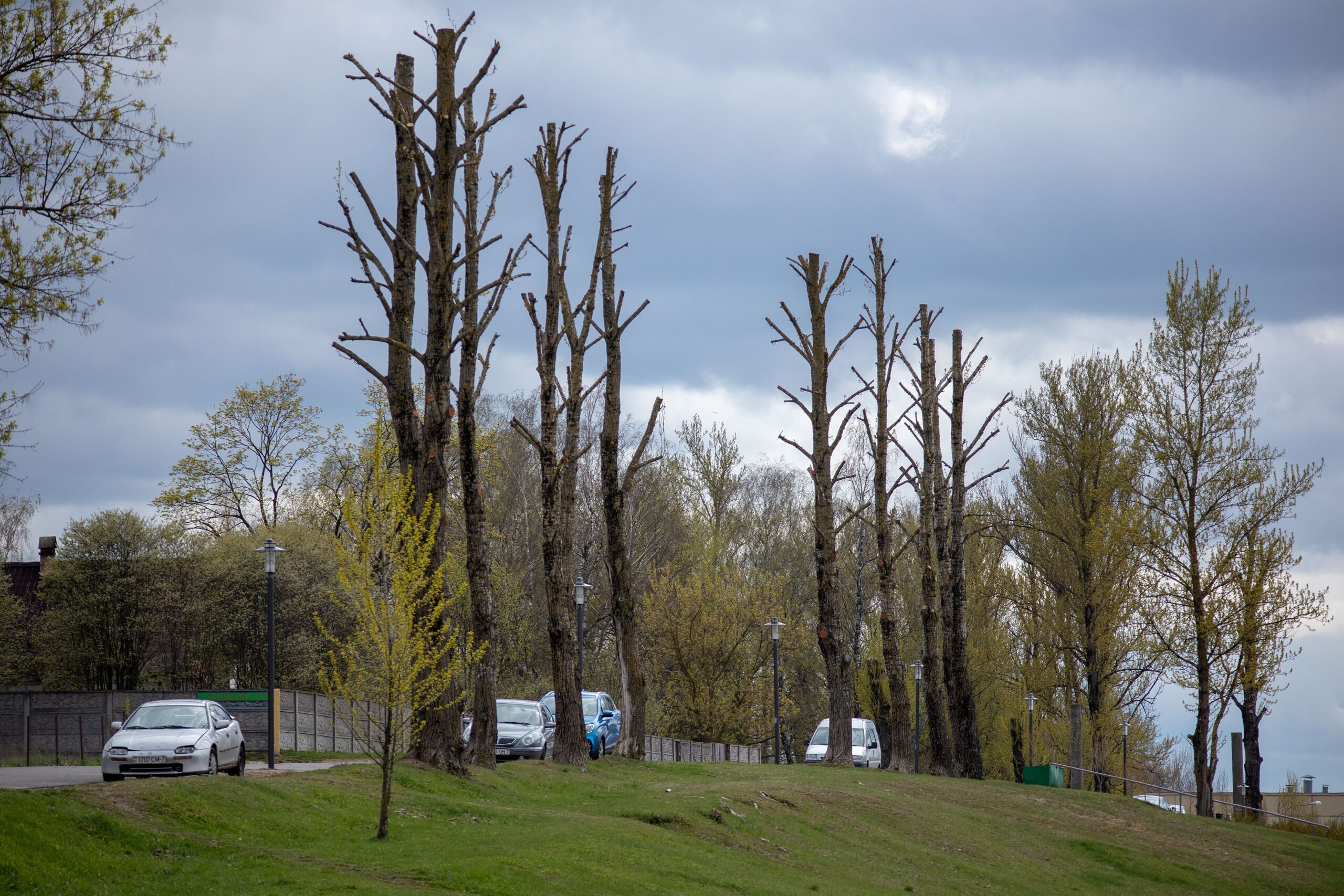
A Neighbor They Had Never Met Climbed Over the Fence and Cut Back Their Trees Without Asking, Then Admitted She ‘Took Too Much’
A neighbor the family had not met until that week was already over the fence and inside the yard, cutting back the family’s trees without saying a word. By the time the parent understood how much had come off, the neighbor had apologized, cleaned up and left. The yard the parent calls once very private now feels, in the parent’s words, “so open and exposed.”
The account comes from a parent of young children, published by Yahoo Life on Nov. 1. The parent is not named and the article does not give a location, but the dispute is one that plays out in a great many back yards: a branch crosses a fence line, and one neighbor decides to deal with it.
A Private Yard Trimmed Without a Word
According to the parent, the neighbor came over the fence and into the family’s yard to trim the trees, with no conversation first. The parent said the neighbor explained that she was trimming branches that were going over the fence and “took too much.”
The parent told the story as one of lost privacy. The parent wrote that the yard had been very private, which the parent cares about the most, and said the sight of the trimmed trees left the parent devastated. The parent said the full extent of the damage was not clear until the neighbor had left.
The parent wrote that the neighbor was someone not met until that week. Photos published with the account show before-and-after views of the trees, and the piece describes the result as an “absolute botch job.” The parent says the yard now feels exposed to the neighbors.
The neighbor, according to the parent, apologized and cleaned up the cuttings before leaving. The Yahoo Life piece does not include a response from her beyond what the parent reports.
Where the Law Usually Draws the Line
The article does not cite a specific tree law, and the rules differ by state and sometimes by town; Angi says the rules “will vary from state to state and possibly even area to area.” Legal and extension sources do agree on a few basics that apply in many places.
A guide on Stimmel Law, edited by attorney Steven R. Roeser of SS&R Law Corporation, says a person can generally trim branches that cross onto their property, but “usually, the trimming may only be up to the property line.” The guide adds that most states require notice to the tree owner before cutting, that entering the neighbor’s land requires consent unless there is immediate danger, and that “one is not allowed to cut the entire tree down.” Under California Civil Code 3346, it says, wrongful removal of trees can bring damages of “three times such sum as would compensate for the actual detriment.”
The Ohio State University Agricultural & Resource Law Program makes the same point for Ohio. Its posts, by Peggy Kirk Hall and law fellow Chris Hogan, explain that a landowner can trim branches hanging over the boundary, but must use “reasonable care,” and that careless trimming that harms or kills a tree can create liability. Ohio’s reckless destruction of vegetation law, Ohio Revised Code 901.51, can bring criminal misdemeanor charges or a civil negligence suit, with damages that can be treble, or three times the value of the damaged tree.
A similar dispute reported earlier on this site involved workers sent by a neighbor who cut nearly half the height off an overhanging tree. In this case, the parent’s account has the reverse arrangement from the textbook one. The neighbor says the branches were hanging over her side of the fence, but the trees stand in the parent’s yard, so, as the parent tells it, the trees are the parent’s. Bob Vila’s guide to trees and property lines says a neighbor may trim overhanging branches only “to where their property line ends and no farther,” and could be legally liable for replacing a tree that excessive trimming kills.
Cost is part of the picture. Angi warns that trimming across the line can bring a fee of $500 to $2,500, and says a neighbor who cuts or damages a tree on someone else’s land will usually owe a penalty, typically the tree’s value or the cost of repair. LegalMatch likewise says harming a tree without the owner’s permission can make a person liable for up to three times its value, and recommends talking with the neighbor first and consulting a local real estate lawyer.
What the Parent Is Weighing Now
The parent said a confrontation with the neighbor is planned for the coming week, and that the family is unsure whether to bring in an arborist first to assess the trees. The parent wrote that the family is at a loss for what to do.
Angi says that when a neighbor refuses to resolve a dispute over a damaged tree, a person may be able to pursue a civil suit or action through the city, and suggests consulting local officials. The Stimmel Law guide advises against trespassing to trim a tree except in a true emergency, and suggests contacting the city if it runs a dangerous-tree program.
The Yahoo Life piece also notes that homeowners can turn to an HOA or local authorities, who may issue citations, when a neighbor alters another person’s property.
For now, according to the parent, the trees will need years to recover, and the privacy they gave the family is gone until they do.
This article was produced with AI assistance and edited for accuracy against the sources linked above.
Image: Homoatrox – CC BY-SA 3.0/Wikimedia Commons