Peony Eyes Buried More Than 2 Inches Deep Often Won’t Bloom, Iowa State and UConn Experts Warn Gardeners Planting or Dividing in Fall
How deep a peony sits in the ground decides whether it flowers. Iowa State University Extension horticulturists Richard Jauron and Aaron Steil say buds should be positioned 1 to 2 inches below the soil surface, and that planting deeper often prevents satisfactory blooming.
The University of Connecticut’s Home and Garden Education Center gives the same limit. Peony eyes buried more than 2 inches deep often leave a gardener with healthy leaves and no flowers, which is why both universities stress depth for anyone planting or dividing in fall.
How Deep Should the Eyes Sit?
The eyes are the small, red buds on a peony tuber. UConn’s peony fact sheet says fall is the best time to plant tubers of the common garden peony, and that the eyes should sit one to two inches below the soil surface. It warns that planting too deeply will prevent the plant from blooming.
Iowa State’s guide to growing peonies in Iowa, written by Steil, gives the same 1-to-2-inch range for bare-root plants. Container-grown peonies go in at about the same depth they were growing in their pots.
The universities differ on the best month. Iowa State says September is the best time to divide and plant peonies in Iowa, while UConn describes fall in general as the planting season. Either way, the depth rule does not change.
What Else Keeps a Peony From Blooming?
Depth is only one cause. Iowa State’s Cynthia Haynes lists several others in her article on why peonies fail to bloom. Buds set too far below the surface may produce foliage but few or no flowers.
Shade is another. Haynes says peonies need at least 4 to 6 hours of direct sun, and that shade from growing trees or shrubs can increase over time. Steil and Jauron recommend at least 6 hours and a site away from large trees and shrubs.
Recent moves also matter. Plants divided or transplanted in late summer often do not bloom the next spring, and re-establishment can take two to three years, according to Haynes. Too much fertilizer favors leaf growth over flowers, and cutting foliage in July or August weakens the plant, so foliage should stay until the first frost.
Patience is part of the job. Steil says a new peony may give few or no blooms the first spring, that removing early flower buds helps roots and leaves grow, and that flowering should increase by years three and four. Plants grown from seed take about four to five years to bloom.
How Should a Fall Planting or Division Go?
For soil, Iowa State asks for well-drained ground and says compost can improve poorly drained soil. Spacing is 3 to 4 feet apart in its guide, while UConn gives at least two feet between dwarf varieties and four feet between standard ones.
UConn recommends digging a generous hole and mixing aged organic matter into the bottom. Fertilizer should stay away from the soil that touches the roots, with any amendments placed a few inches below the tuber. The hole is then backfilled and watered well, and a light layer of mulch conserves moisture and limits weeds.
Dividing follows a short sequence in Iowa State’s guide. Stems are cut near ground level, the plant is dug carefully with as much root as possible, loose soil is shaken off, and the clump is cut into sections with a sharp knife. Each section should carry 3 to 5 buds and a good root system, and divisions with fewer than 3 buds may take several years to flower.
Winter protection comes later. In mid to late November, Iowa State suggests 4 to 6 inches of clean, weed-free straw or pine needles, removed in early spring before growth starts.
Do Tree and Itoh Peonies Follow the Same Depth Rule?
Not exactly. UConn says tree peonies need a different depth: the graft is covered with 4 to 5 inches of soil so the plant can develop its own root system. The 1-to-2-inch limit applies to the common herbaceous type.
Iowa State’s peony types guide explains the difference between the groups. Tree peonies are woody shrubs that keep their stems through winter and reach about 3 to 5 feet in the Midwest. Itoh hybrids, crosses between tree and herbaceous peonies, die back each winter like herbaceous types and bloom as those finish.
For Itoh division, Iowa State says each segment should have roots at least 6 inches long and 3 or more buds. Tree peonies are dug whole and pulled apart with pruners so each piece keeps roots and a few budded stems.
Get stories like this by email. Sign up for The Parent Diaries Letter.
This article was produced with AI assistance and edited for accuracy against the sources linked above.
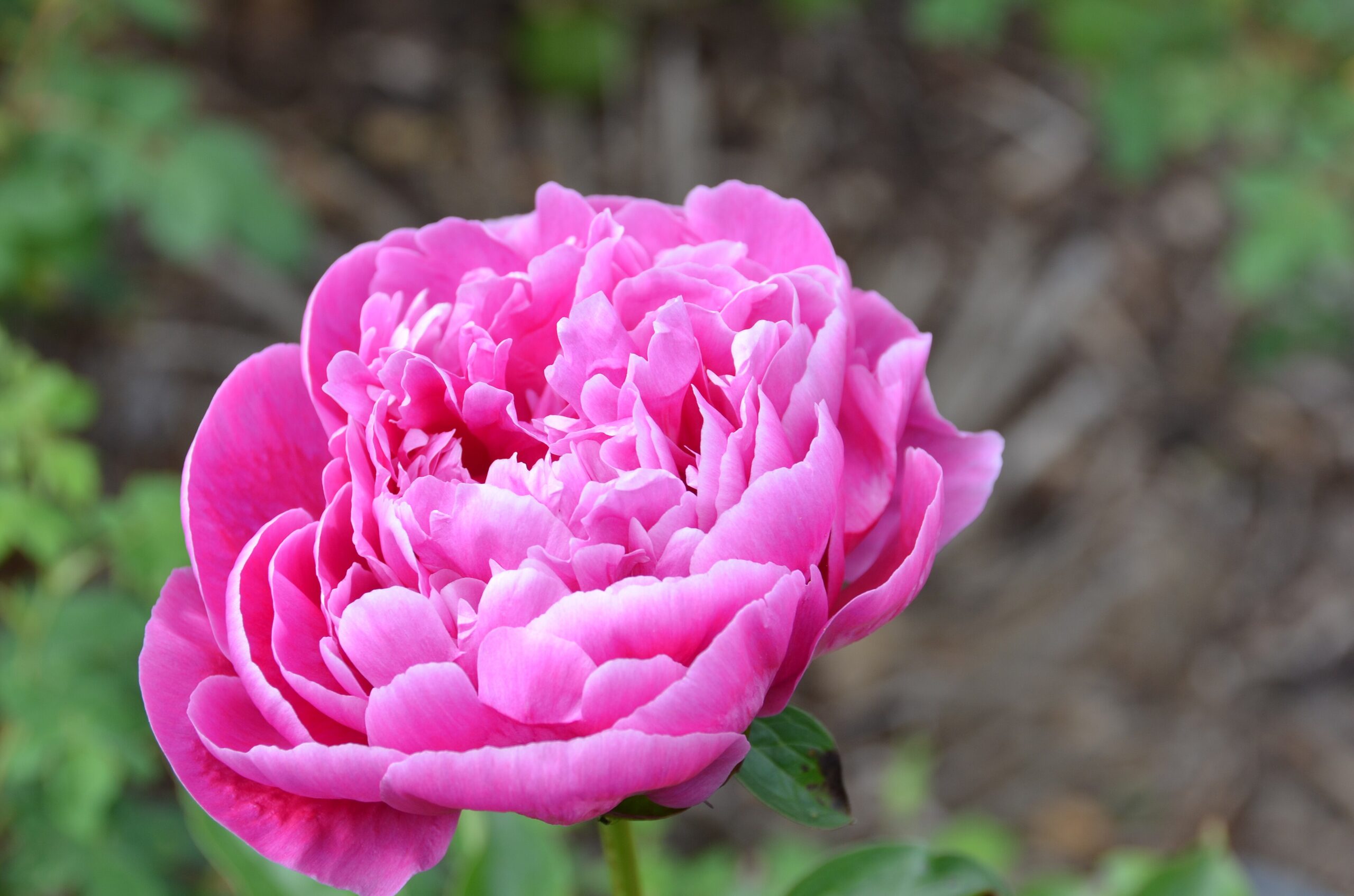
Image: F. D. Richards / Wikimedia Commons (CC BY-SA 2.0)