Rabbit and Vole Guards Need to Be Around Young Trees by Mid-November, With Hardware Cloth Buried 2 to 3 Inches Down, Iowa State Says
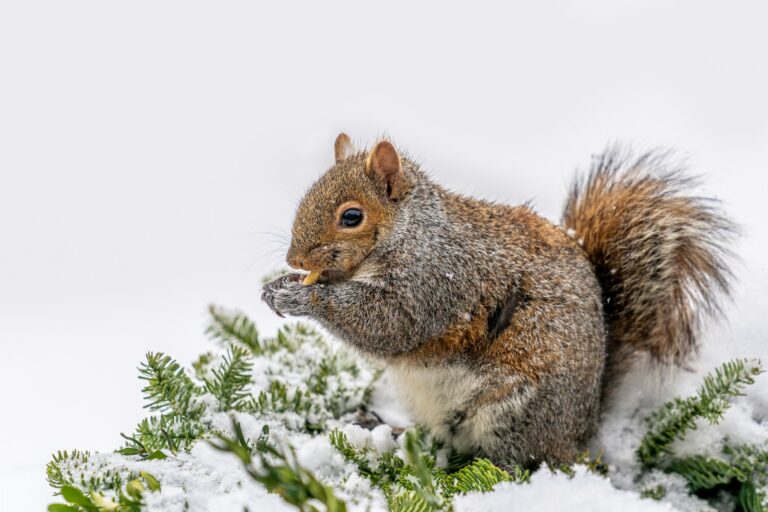
Rabbits and voles do their worst damage to young trees in winter, when they gnaw bark, according to the Chicago Botanic Garden. Iowa State Extension’s Aaron Steil says rabbit fencing and tree guards belong in place by early to mid-November, before winter feeding begins. For voles, the guard is a cylinder of quarter-inch hardware cloth with the bottom 2 to 3 inches buried.
Why Early to Mid-November Is the Target
Steil’s guidance on Iowa State’s Yard and Garden site, reviewed in October 2026, puts the installation window at early to mid-November. Rabbits, voles and mice chew bark through the winter months, the botanic garden notes, so the guards need to be standing before that feeding starts.
A separate Iowa State page on rabbits and winter damage repeats the early to mid-November timing and adds that late-fall weather in Iowa is unpredictable, which makes earlier safer than later.
Nebraska Extension educator Sarah Browning lands in the same place with a looser date. Late fall, she writes, is the time to get protection in place and safeguard the health of plants.
The guards are not permanent. Steil’s page says to take them off in spring, typically in April.
Quarter-Inch Hardware Cloth Is the Material That Stops Voles
Steil’s vole guards are cylinders made from quarter-inch hardware cloth. Extension educators in other states land on the same mesh size, and several of them warn against the cheaper alternative.
Lisa Johnson of University of Wisconsin Extension in Dane County recommends metal hardware cloth in quarter-inch or half-inch mesh. Chicken wire, she writes, has holes large enough for voles and mice to slip through. Voles have chewed bark off the undersides of branches on low-growing forsythia and junipers at the county’s teaching garden, according to Johnson.
Johnson also describes how the material is sold. Quarter-inch mesh usually comes in 24-inch and 36-inch heights, while half-inch mesh is often available in a taller 48-inch roll.
University of Missouri horticulturist Michele Warmund, writing in a Missouri vole-damage column, calls for mesh no larger than a quarter inch and about 18 inches of height. The botanic garden’s guidance asks for openings smaller than a quarter inch, small enough to keep out voles and young rabbits.
Warmund’s column also covers vinyl tree guards. They go on trunks in the fall and come off once growth begins in spring, because left on through the growing season they can harbor insect pests.
How Deep to Bury It and How Tall to Build It
Burial depth is where the advice varies a little. Steil says to bury the bottom 2 to 3 inches, which keeps voles from tunneling underneath. Warmund says at least 3 inches underground. The botanic garden says a couple of inches below the surface. Browning goes deeper: in a Lancaster County article on protecting landscape plants, she writes that the wire should be buried 6 inches to keep voles from tunneling underneath.
Height depends on snow. Rabbits gnaw from snow level, Browning notes, so protection should reach from the soil to 18 to 24 inches above the usual snow depth. Steil says rabbit fencing should be 24 to 36 inches tall, high enough to remain effective after heavy snow. The botanic garden says guards can go as high as 4 feet in winters with deep snow cover.
Johnson makes the same point from the other direction: in snowy years she favors 36-inch or 48-inch mesh, and the taller mesh also protects trunks from buck rub.
For a single young tree, Browning’s cylinder is the simplest version of all of this: a tube of quarter-inch hardware cloth, set into the soil, rising well above the snow line the tree is likely to see.
Anchoring Guards and Wrapping Trunks
A guard that gaps at the bottom invites voles in. Johnson says to splay the mesh flat against the ground at the base of the trunk and pound sod staples through it, which keeps rodents from tunneling under. For extra protection she mounds a couple of inches of bark where the wire meets the soil, or holds the edges down with bricks or rocks.
Browning’s alternative for young trees is plastic. A length of PVC pipe or white plastic drain tile, slit down one side and fitted around the trunk up to the lowest branch, works as a guard and also protects against deer antler rubbing.
The Iowa State rabbit page suggests white spiral tree guards around small trunks and pinning fencing to the soil with U-shaped anchor pins so rabbits cannot crawl underneath. After a heavy snow, the page says, the fence should be checked to make sure rabbits cannot reach or climb over it, and some snow cleared if they can.
Whatever the material, the spring removal step matters as much as the fall installation. Iowa State’s Steil gives April as the typical month, and Warmund warns that guards left on can shelter insects.
Get stories like this by email. Sign up for The Parent Diaries Letter.
This article was produced with AI assistance and edited for accuracy against the sources linked above.
Image: Zabna – CC BY-SA 4.0/Wikimedia Commons