The One Vegetable Experienced Gardeners Say Pays Back the Most Per Square Foot of Garden Space Every Single Season
When Ben expanded his backyard garden, he expected that adding more space would automatically mean bigger harvests. Instead, he found himself running out of room every summer while trying to grow every vegetable his family enjoyed.
Raised beds filled quickly, containers lined the patio, and there never seemed to be enough space for one more crop. During a neighborhood gardening workshop, an experienced grower challenged the way Ben thought about planting. Instead of asking which vegetables tasted best, she asked which one truly earned its place in the garden year after year.
An Unexpected Question Started the Debate
The workshop instructor asked everyone to name the vegetable they believed offered the greatest return for the space it occupied. Answers flew around the room. Some people chose tomatoes, while others argued for zucchini or peppers. Then an older gardener named Harold quietly said, “Pole beans.” Several people looked surprised because they expected a more glamorous answer. Harold smiled and promised to explain why before the afternoon ended.
A Walk Through Harold’s Backyard Changed Everything
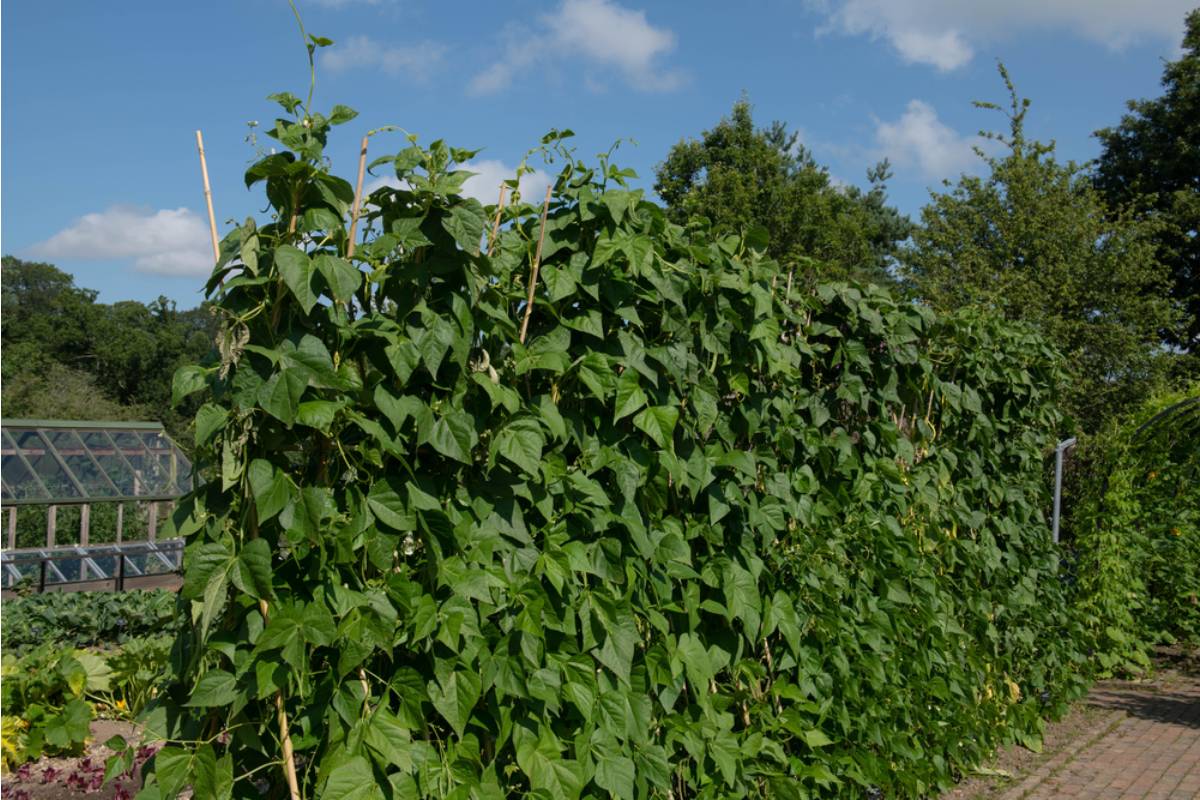
A week later, Harold invited several gardeners to tour his backyard. Instead of wide rows stretching across the lawn, tall trellises supported healthy vines climbing toward the sky. Pole beans covered the structures from top to bottom, creating living walls of green. Harold explained that the plants produced over a long period while taking up very little ground space. Ben had never considered growing upward instead of outward.
Ben Rearranged His Garden
Inspired by what he had seen, Ben removed one oversized bed that had always struggled to stay productive. In its place, he built sturdy trellises along the edge of the garden. His children laughed as the empty frames stood waiting for plants that had not even sprouted yet. The setup looked unusual compared to the rest of the neighborhood gardens. Ben hoped the experiment would justify the effort.
Early Skepticism Came From Next Door
Ben’s neighbor, Carl, leaned over the fence after noticing the tall structures. He joked that the garden looked more like a fence project than a vegetable patch. Carl proudly pointed toward his sprawling squash plants, convinced they would produce far more food. Ben admitted he was taking a chance but wanted to see how the season unfolded. Their friendly rivalry quickly became part of every weekend conversation.
The Garden Began Growing Up Instead of Out
Within a few weeks, the bean vines grabbed the trellises and climbed rapidly. Every visit to the garden revealed another stretch of fresh growth reaching higher into the air. The ground beneath the vines stayed open enough for herbs and leafy greens to grow comfortably below. Ben realized he was harvesting from two levels of the same space. That simple change made the garden feel much larger than before.
Harvest Baskets Filled Faster Than Expected
The first beans appeared sooner than Ben expected, and picking them quickly became part of his daily routine. Every few days, more pods reached the perfect size for harvesting. Instead of one large harvest followed by weeks of waiting, the vines continued producing steadily. Ben’s family ate fresh beans several times each week and still had enough to freeze for later. The constant production surprised even him.
Carl Started Asking Different Questions
As summer progressed, Carl noticed Ben carrying full bowls of beans inside almost every evening. His own squash plants had produced well, but they occupied far more space and finished much earlier. One afternoon, Carl wandered over and asked how many bean plants Ben had actually grown. When Ben pointed toward the narrow trellis line, Carl stood silently for a moment before admitting he had underestimated the idea.
The Community Garden Took Notice
During an open house at the local community garden, visitors stopped to admire Ben’s vertical planting system. Many assumed the trellises were decorative until they noticed beans hanging from nearly every vine. Experienced gardeners nodded with approval, while newer gardeners eagerly took notes. Harold quietly watched from the back of the group with a satisfied smile. His advice was proving itself without much explanation.
A Storm Tested the Experiment
Strong winds arrived late in the season and put every garden to the test. Several sprawling crops suffered broken stems and damaged leaves after being tossed across the ground. Ben worried about his tall trellises, but the sturdy supports held firm. The vines swayed without collapsing, and production resumed shortly afterward. Careful construction had protected months of work.
The Numbers Told Their Own Story
At the end of the season, Ben compared his harvest records with notes from previous years. The pole beans had produced repeatedly while occupying only a narrow strip of garden space. He realized no other crop had given his family so much food from such a small footprint. Even vegetables he loved growing could not match the combination of steady harvests and efficient use of space. The results changed how he planned future gardens.
Carl Tried the Same Approach
The following spring, Carl replaced part of his oversized squash patch with a row of sturdy bean trellises. Ben helped him choose a reliable pole bean variety and showed him how to guide young vines onto the supports. Throughout the season, Carl found himself harvesting fresh beans far more often than he expected. He laughed one afternoon and admitted Harold had been right all along. Sometimes the simplest advice takes the longest to appreciate.
A Garden Planned With Purpose
By the time another growing season arrived, Ben no longer judged crops by popularity or appearance alone. Every plant earned its place based on how well it used the available space and how much food it provided over time. Pole beans became a permanent feature of the garden because they consistently rewarded the small area they occupied. Friends who visited often asked why he dedicated such a prominent spot to them. Ben always smiled before answering that the best use of garden space is the crop that keeps giving long after the first harvest, and year after year, nothing had proven that lesson better.