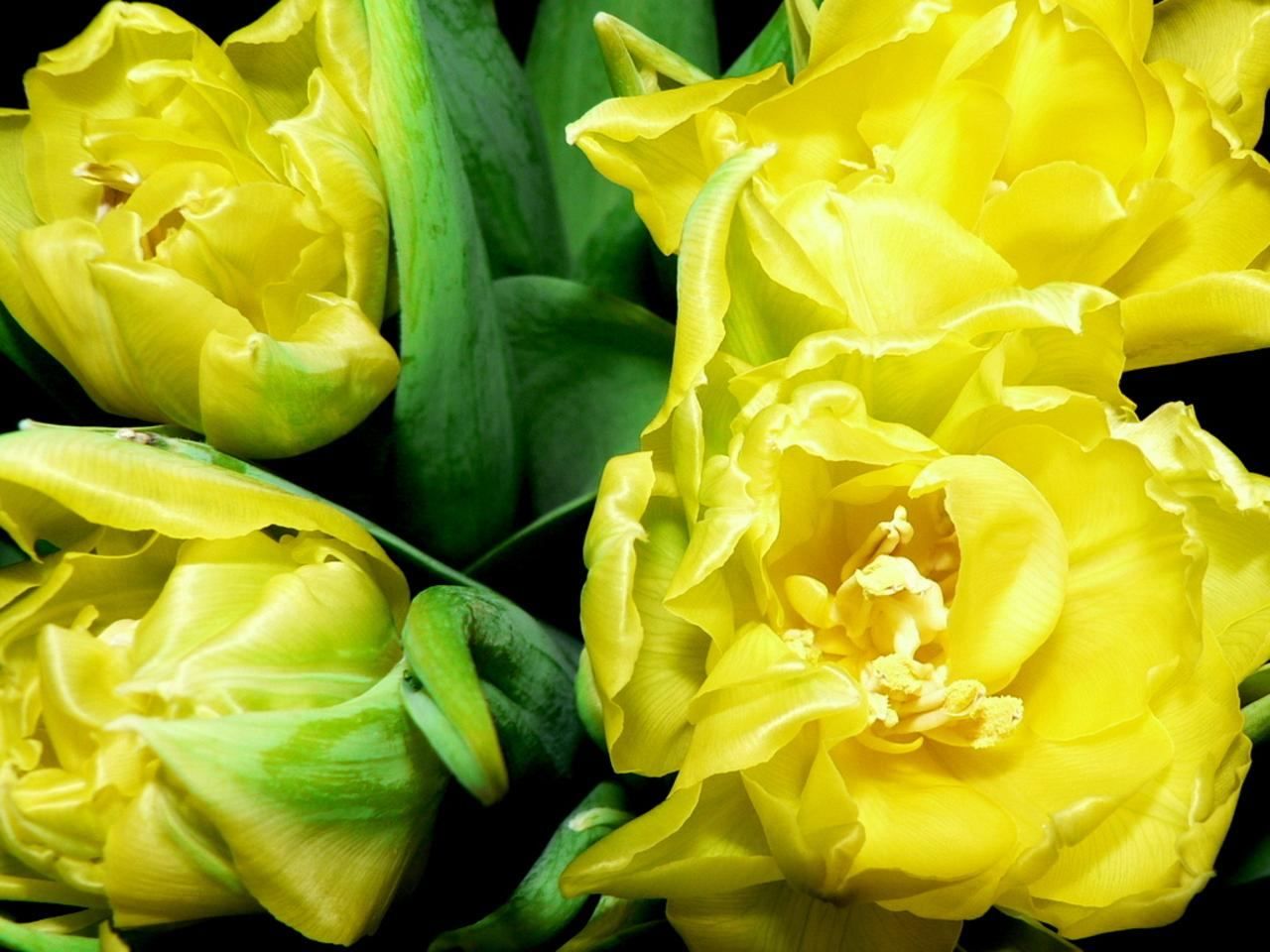
Tulip Bulbs Belong 6 to 8 Inches Deep Once the Soil Drops Below 60 Degrees, and Most Need 12 to 16 Weeks of Cold to Bloom
Sixty degrees is the number that starts tulip season, and it has nothing to do with the air. Spring bulbs go into the ground once the soil has cooled below 60 degrees, and in much of the country that point arrives between October and early December.
Planted 6 to 8 inches deep, a tulip bulb then needs a long, steady cold spell, 12 to 16 weeks for most spring bulbs, before it can bloom. HGTV, Iowa State University Extension and three North Carolina county extension offices lay out how to get both parts right.
Waiting for Soil Below 60 Degrees
Jessica Strickland of the Wayne County Center of N.C. Cooperative Extension writes that spring-flowering bulbs are planted in November, typically when the soil temperature has dropped below 60°F. Mitch Smith, a horticulture agent at the Edgecombe County Center, puts the recommended tulip window in eastern North Carolina at November until early December.
Farther north the calendar shifts earlier. Iowa State’s Yard and Garden team calls October the ideal month in Iowa, because it gives bulbs time to build a good root system before the ground freezes. Late planters there still have a chance: tulips can go in as late as late November or early December if the ground isn’t frozen.
HGTV’s planting guide, by Leanne Potts, gives a rule of thumb of September or October in northern climates and December in warmer ones, or six to eight weeks before the first frost.
Six to Eight Inches Down, Pointy End Up
Depth is where tulips differ from smaller bulbs. HGTV says to plant tulip bulbs deep, around 6 to 8 inches beneath the surface, set pointy end up, then cover and press the soil firm.
Iowa State’s guide to growing tulips works from the bulb’s size: plant at a depth two or three times the bulb’s widest diameter, which puts large varieties 6 to 8 inches down and smaller types 3 to 5 inches. Smith’s figure in Edgecombe County is similar, at 2.5 to 3 times the bulb’s diameter, with larger bulbs at about 8 inches.
Daniel Simpson, director of the Pamlico County Center, uses a slightly deeper rule of three to four times the bulb’s width, measured from the base of the bulb.
Spacing, Sun and Drainage
HGTV spaces tulip bulbs 4 to 6 inches apart, and Iowa State uses the same 4 to 6 inches for larger bulbs and 3 to 4 inches for smaller ones. Strickland’s general rule for spring bulbs is 3 to 6 inches for large bulbs and 1 to 2 inches for small ones.
Iowa State recommends full sun, though tulips tolerate part sun, and says early bloomers can grow under high-branched deciduous trees. Drainage is not optional. Tulips need well-drained soil, and poor drainage leads to rot, so Iowa State amends heavy soil with organic matter before planting.
Fertilizer is a smaller question. Iowa State says it is not typically necessary at planting and mostly benefits next year’s bulb, with bonemeal as an organic option. The North Carolina offices recommend a 10-10-10 fertilizer, and Strickland suggests a soil test first to see whether the bed already has enough phosphorus. Simpson describes two ways to apply it: a slow-release product at planting, or a quick-release soluble product at planting and again when shoots emerge.
Watering is simple. HGTV says weekly fall rain is enough, and in a dry spell the bulbs should be watered weekly until the first frost. Too much water, it warns, is the bulb’s enemy.
Mulch needs a light touch. Simpson reminds gardeners to pull mulch back in spring, because heavy mulch over bulbs can disrupt their growth.
Twelve to 16 Weeks of Cold
The cold is the reason fall planting works. Simpson and Strickland both write that most spring bulbs need a 12- to 16-week chilling period to produce flowers. Simpson adds that bulbs without enough chilling tend to bloom on short stems close to the ground.
That is also why tulips behave differently in the South. In eastern North Carolina, Strickland says, the climate and soil tend to stay too warm for tulips to come back year after year, and Simpson writes that tulips in that part of the state are thought of as annuals that have to be replanted every year.
Gardeners who missed the window entirely can find options in the site’s guide on what to do with bulbs not planted before the first freeze, and its piece on planning a spring garden in fall covers the bigger picture.
Squirrels, Spent Blooms and Next Year’s Show
Freshly planted bulbs attract diggers. HGTV notes that deer, squirrels and other rodents find tulip bulbs tasty, and suggests planting them in sunken baskets made of metal hardware cloth to stop burrowing animals.
After bloom in spring, Iowa State says to remove the flower heads as soon as the petals drop so the plant doesn’t spend energy on seed pods, but to leave the foliage until it has died and turned brown. Cutting it early reduces bulb growth and often means fewer flowers the next spring.
Even with good care, Iowa State says most modern tulip cultivars bloom well for only 3 or 4 years, while some other tulip types bloom well over a longer period. For a bed planted this fall, though, the formula stays the same everywhere: soil below 60 degrees, bulbs 6 to 8 inches down, and a winter’s worth of cold.
Get stories like this by email. Sign up for The Parent Diaries Letter.
This article was produced with AI assistance and edited for accuracy against the sources linked above.
Image: Rosendahl – Public domain/Wikimedia Commons