A Gardener Removed 287 Trees Beside a Sydney Mansion to Open Up the Harbour View, Then Faced a $187,500 Fine and a Very Visible Punishment
A routine gardening job at a Sydney waterfront property took a spectacular turn when a gardener was asked to do far more than trim grass. A person shared his story of how a job that began with ordinary yard work eventually involved hundreds of trees, cash payments, public land, and a court case. By the time the dust settled, 287 native trees had disappeared, wildlife habitat had been damaged, and the gardener was facing a $187,500 fine.
The property beside the affected bushland had already been marketed as a luxury waterfront residence with sweeping water views. But the clearing allegedly made those views even more open by removing vegetation that had been standing for decades. Then the local council came up with an unusually visible response, installing a huge double-sided banner intended to block the very views the clearing had created.
It Started With an Ordinary Gardening Job
The gardener, Yi Wang, was reportedly hired in November 2023 to trim grass at a waterfront property in Longueville, Sydney. The assignment sounded straightforward and had nothing to suggest that a major environmental dispute was about to unfold. But according to the court evidence, the job changed almost immediately after he arrived.
The next day, Wang was allegedly asked to clear trees as well, including vegetation on council-owned foreshore land. The gardener later said the property owner’s stepdaughter, Yao Wu, repeatedly told him that the area was part of the family’s backyard. That simple claim would become one of the most important details in the entire case.
The Job Suddenly Became Much Bigger
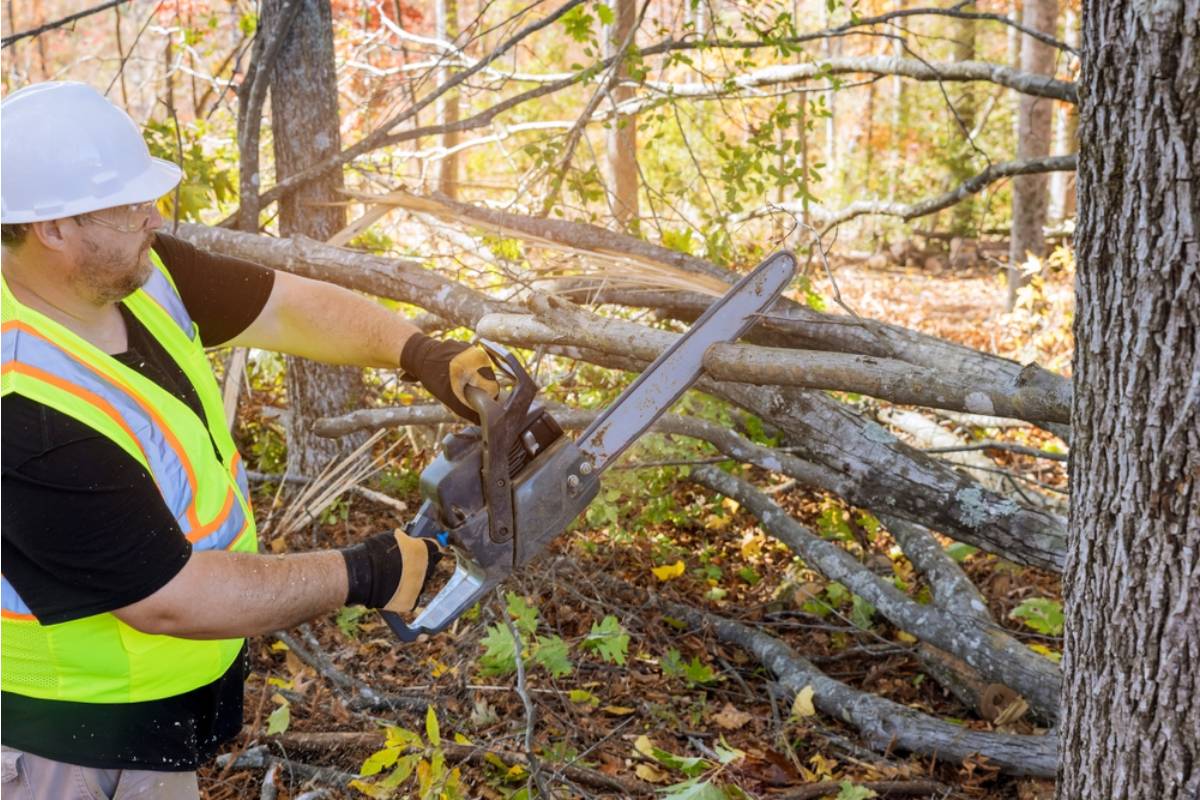
Instead of stopping at routine gardening, Wang brought in additional casual workers to help with the clearing. A chainsaw operator was among those involved, turning what had started as yard maintenance into a large-scale removal operation. The work continued for 12 days.
During that period, trees and vegetation were cut down and removed from roughly 1,210 square metres of land. The scale was far beyond ordinary garden maintenance, with hundreds of trees eventually disappearing from the foreshore. What looked like a private landscaping project from a distance was actually affecting public bushland.
Nearly 300 Trees Were Gone
By the end of the work, 287 trees had been removed. The vegetation was not simply decorative greenery surrounding an expensive home, either, because the area formed part of an established native forest canopy. Court evidence indicated that the canopy had existed since at least 1943.
The clearing also affected an endangered ecological community and potential habitat for protected and threatened animals. Powerful owls and microbats were among the wildlife potentially affected by the destruction. Suddenly, the story was no longer about improving a homeowner’s view but about what had been lost to achieve it.
The Cash Payments Added Another Twist
The way Wang was paid made the situation even more unusual. According to the evidence presented in court, he received cash payments that were sometimes left inside a shoe at the front of the adjacent property. Wang would then collect the money after receiving updates and communicating with his employer.
The gardener also reportedly sent regular progress updates through WeChat while the clearing continued. The arrangement created a detailed trail of communication despite the unusual payment method. What had seemed like a private landscaping project was gradually leaving behind evidence that investigators could follow.
A Member of the Public Raised the Alarm
The destruction eventually came to the attention of authorities through a tip from a member of the public. A council ranger visited the location the day after the final day of clearing and saw the extent of what had happened. The council then began investigating how so much vegetation could have disappeared without approval.
Officials discovered that no permits, approvals, or consents had been issued for the tree removal. Private investigators were subsequently brought in to examine what had happened. The investigation would eventually produce enough evidence to establish a detailed timeline.
The Evidence Started Piling Up
Investigators obtained recorded interviews and reviewed CCTV footage connected to the clearing. Invoices from a nearby waste facility also helped show Wang and the chainsaw operator disposing of loads of branches and vegetation. The evidence gave authorities a way to connect the workers with the physical removal of the trees.
Wang did not dispute the basic timeline presented by the council. Instead, his legal position focused partly on the nature of his conduct and whether it should be considered reckless or negligent. That distinction became important when the court considered the appropriate penalty.
The Environmental Damage Was Far More Serious Than It Looked
Experts were brought in to assess what had actually been destroyed. The council commissioned reports from an arborist, a geologist, and a senior archaeologist to examine the consequences of the clearing. Their findings showed that the damage extended beyond simply losing a collection of trees.
The bushland had also provided natural protection for an Aboriginal midden located nearby. Removing the vegetation therefore reduced protection for both an ecological environment and an important cultural site. The clearing had changed the character of the foreshore in a matter of days.
Some Wildlife Lost Decades of Habitat
The court heard that the cleared forest had provided potential habitat for several protected and threatened species. Powerful owls and microbats were specifically identified among the animals that could have been affected. The loss was especially significant because mature native vegetation cannot simply be replaced overnight.
Experts estimated that returning the area to a comparable ecological condition could take between 20 and 30 years. Even then, young regrowth would remain vulnerable to weeds and pathogens during the recovery period. In other words, twelve days of cutting had potentially created decades of environmental consequences.
The Council Called It an Extreme Act
Lane Cove council described the incident as the worst act of environmental vandalism in its history. The mayor called the clearing outrageous and said the conduct needed to be prosecuted to the fullest extent possible. The strong language reflected how dramatically the council viewed the destruction.
The council also made sure the incident would remain visible long after the chainsaws were gone. Instead of simply removing the vegetation and moving on, officials created a physical reminder of what had happened. That decision would become one of the most talked-about parts of the story.
Then Came the Giant Banner
In September 2024, the council installed a huge double-sided banner across the affected site. The banner was designed to obscure the harbour views that had become more visible after the trees were removed. It was also labeled in a way that publicly identified the destruction as tree vandalism.
The council said the banner demonstrated its commitment to obscuring the views gained through the removal of the habitat. It also promised that the banner would remain until the replacement vegetation grew to a suitable height. For anyone looking at the property from the water, the message was hard to miss.
The Mansion’s View Had Been Valuable Long Before the Trees Disappeared
The waterfront property itself had a substantial history of being marketed around its views. When it sold in 2014 for $7.6 million, real estate descriptions emphasized water views from every room and its position beside lush reserves. It also reportedly featured a private beach, making the setting particularly valuable.
That background gave the tree clearing an uncomfortable context. The vegetation that was removed stood between the residence and the surrounding water and bushland landscape. The court case therefore drew attention to the tension between private views and the protection of public natural areas.
Wang Eventually Faced the Court
Wang pleaded guilty to three offences connected with the unlawful clearing. The New South Wales Land and Environment Court convicted him after considering the evidence surrounding his role in organizing and carrying out the work. He argued that his conduct was not reckless, describing it as negligent at its highest.
Justice Rachel Pepper also considered evidence about Wang’s personal character. References from his wife, mother, and friend described him as someone of otherwise good character who was unlikely to offend again. Those factors formed part of the court’s consideration of the appropriate punishment.
The Fine Reached $187,500
The court ultimately fined Wang $187,500 and ordered him to pay the council’s legal costs. The punishment was substantial, particularly considering that Wang was the person who had physically organized and carried out the clearing rather than the owner of the waterfront property. The judgment also required notices about the case to be published in newspapers.
A response from a person pointed out that the amount works out to a relatively small figure per tree, while another argued that the penalty could be devastating for the gardener compared with the wealth associated with the property. Others focused on the fact that Wang had cooperated with investigators and pleaded guilty. The discussion quickly turned toward whether the person who wanted the trees removed should face greater consequences.
The Property Owner’s Role Remained a Major Question
The court case involving Wang did not end the legal story surrounding the location. The council declined to comment further because another matter concerning the same site was still before the court. That left open the possibility of additional consequences for people connected to the clearing.
A response from a person noted that the gardener’s case may have been resolved more quickly because he pleaded guilty and cooperated, while the other proceedings could take longer. Several responses expressed frustration that a wealthy property owner could potentially afford to fight a case for years. The unresolved proceedings became one of the biggest loose ends in an already complicated story.
People Were Divided Over the Gardener’s Responsibility
Some responses argued that anyone hired to remove hundreds of trees should have recognized that the job required serious checks and approvals. They pointed out that a project involving nearly 300 trees was far beyond ordinary gardening work. From that perspective, the scale alone should have prompted questions before the chainsaws started.
Others felt the gardener had been placed in an especially difficult position after allegedly being told that the land belonged to the property. A response from a person argued that ordinary gardeners should not necessarily be expected to hire surveyors for every job. The debate ultimately came down to where responsibility should fall when a client gives misleading information and a contractor accepts it.
The Number of Trees Made the Mistake Impossible to Ignore
This was not a case involving one disputed tree near a fence line. The workers cleared 287 trees across a sizeable stretch of foreshore bushland, with the work continuing for nearly two weeks. The sheer number made the environmental consequences impossible to dismiss as an accidental landscaping mistake.
The scale also raised questions about how much due diligence should happen before a major clearing project begins. A response from a person suggested that a job involving hundreds of trees should trigger checks for property boundaries, permits, and environmental restrictions. Others countered that the person ordering the work should be responsible for accurately identifying what could legally be removed.
The Banner Became the Final Twist
Perhaps the strangest part of the entire saga was that the owners gained more open water views only to have the council deliberately block them. The banner effectively turned the improved view into a reminder of why the vegetation had disappeared. Instead of enjoying an unobstructed harbour outlook, the property was left facing a conspicuous public statement.
The council’s promise to keep the banner there until the trees reach a suitable height added another layer to the punishment. Since ecological recovery could take decades, the visual reminder could remain for a very long time. The very landscape that had been cleared for a better view became the reason that view was intentionally obstructed.
Nature Will Take Much Longer to Return
The court heard that recovering the vegetation to a comparable ecological condition could take 20 to 30 years. That recovery period is particularly important because newly growing vegetation will not immediately recreate the habitat structure that existed before the clearing. Wildlife that once depended on the mature forest therefore cannot simply return as soon as small trees begin appearing.
The damaged Aboriginal midden also adds another dimension that cannot be measured by the number of replacement trees. The vegetation had provided protection for a cultural site as well as habitat for native wildlife. A response from a person summed up the frustration by arguing that some losses cannot simply be repaired with money.
The View Came at a Much Bigger Cost
What began as an attempt to open up a waterfront view ended with a gardener convicted, a $187,500 fine, legal costs, damaged habitat, and a giant banner facing the property. The case also left an unresolved legal matter surrounding the same location, meaning the full consequences may not yet have played out. For the gardener, a simple grass-trimming job had transformed into one of the most serious legal and financial episodes of his career.
The story ultimately became about much more than 287 trees. It raised questions about responsibility, wealth, environmental protection, cultural heritage, and what should happen when private interests collide with public land. And while the trees may eventually grow back, the banner will remain in place until they reach a suitable height, ensuring that the view gained from the clearing comes with a reminder of exactly how it was created.
Read The Full Story Here , Read The People Reaction On The Incident Here