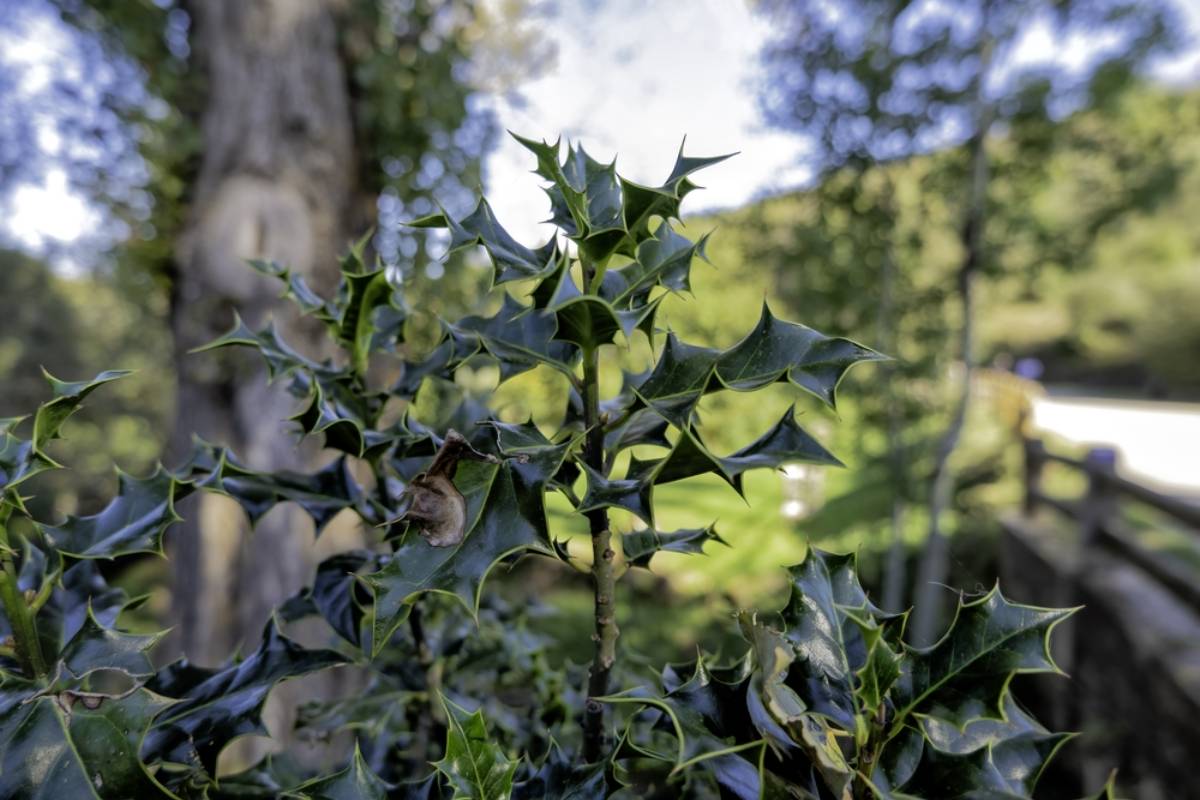
A Homeowner Asked Her HOA to Remove Two Holly Bushes After Discovering a Severe Allergy, Then the Board Told Her to Use the Back Door Just After Hip Surgery
A person shared his story about a frustrating homeowners association dispute that began with something most people barely give a second glance: two ordinary holly bushes. The plants sat directly outside the front door of a Florida townhome, where they were presumably meant to make the entrance look attractive and welcoming. Instead, they became a serious problem for the person living behind that doorway.
At first glance, this sounded like the sort of gardening disagreement that could be settled with a shovel, a replacement shrub, and a quick conversation. But the situation turned out to be considerably more complicated than choosing which plants belonged beside a front walkway. Before long, two bushes had become the center of a battle involving health concerns, HOA rules, and an unexpectedly stubborn board.
The Allergy Nobody Saw Coming
The homeowner explained that they had only recently discovered they had a severe allergy to holly after moving into the property. Unfortunately, the bushes were planted right beside the main entrance, making them difficult to avoid whenever the homeowner needed to leave or return home. What might have looked like attractive landscaping to everyone else had become a source of genuine concern for the person who had to pass it every day.
The homeowner was not demanding that every holly bush in the neighborhood disappear overnight. The request concerned the two plants positioned immediately outside their own front door. From the homeowner’s perspective, replacing those particular shrubs seemed like a reasonable way to make the entrance safer without changing the appearance of the entire community.
The HOA Decided a Little Trimming Was Enough
Rather than agreeing to remove the bushes, the HOA arranged for them to be trimmed. Unfortunately, the homeowner felt that the work barely addressed the problem, and the plants remained where they had always been. The gardening equivalent of giving a leaking roof a quick dusting had apparently become the board’s preferred solution.
The homeowner was understandably frustrated because the underlying health concern had not gone away. Trimming a plant might improve its shape or reduce its size, but it does not automatically eliminate someone’s allergic reaction to it. From the homeowner’s point of view, the association had acknowledged the request just enough to say it had done something, without resolving the reason for the request in the first place.
Then Came the Unbelievable Back-Door Suggestion
The HOA’s proposed alternative was remarkably simple: if the homeowner could not use the front entrance comfortably, they could walk around the back and enter through the rear door. On paper, that might have sounded like an easy workaround to someone sitting in an office reviewing landscaping complaints. In reality, it placed the burden of dealing with the bushes entirely on the person who had raised the concern.
The homeowner was not asking for a luxury landscaping makeover or a collection of expensive new garden features. They wanted two troublesome shrubs removed from a small entrance where they caused a personal health problem. Being told to rearrange an ordinary part of daily life around the HOA’s preferred plants made the dispute feel even more absurd.
A Recent Hip Replacement Made Everything Worse
There was another important detail that made the proposed solution especially difficult to accept: the homeowner had recently undergone hip replacement surgery. Walking around the back of the property was not a simple detour under those circumstances, particularly because the route involved grass and an uneven surface. The HOA’s suggestion suddenly looked much less like a practical solution and much more like an instruction that ignored the homeowner’s physical limitations.
The homeowner also explained that they needed a walker while recovering from surgery. A route across uneven ground can present a very different challenge to someone with limited mobility than it does to a healthy person taking a casual stroll. What the association treated as an alternative entrance had become a potentially difficult obstacle course just to get through the front door of one’s own home.
The Monthly Fee Made the Situation Even More Irritating
The homeowner also revealed that the association fees came to approximately $550 per month. According to the account, the community did not offer a pool or other amenities that might have made the charge feel more worthwhile. Every month, a substantial amount of money was going toward the association, yet a request involving two bushes had turned into an exhausting dispute.
To be clear, those payments were HOA dues rather than the homeowner’s rent or mortgage. Still, the expense added another layer of frustration to a situation that already felt unreasonable. When residents pay hundreds of dollars each month for community management, it is understandable that they expect their concerns to receive more than a brush-off and a suggestion to use another door.
She Even Offered to Pay for the Replacement Plants
One detail made the disagreement particularly difficult to understand: the homeowner said they were willing to pay for the removal and replacement of the two holly bushes. The idea was straightforward, since the HOA could approve a different plant that suited the property’s landscaping rules while addressing the allergy concern. In other words, the homeowner was prepared to shoulder the cost rather than demand that the community fund a major landscaping project.
A response from a person suggested that offering to replace the shrubs with approved plants might be a sensible compromise. That suggestion seemed to fit the situation perfectly because it respected the association’s interest in maintaining a consistent appearance. However, the homeowner later explained that they had already offered this solution and had been told that removing the bushes themselves would result in a violation.
The Threat of a Violation Changed the Whole Story
That response transformed what might have been a routine landscaping disagreement into a much more frustrating standoff. The homeowner could not simply hire someone to remove the two plants and install suitable replacements without risking disciplinary action from the HOA. Even the proposed compromise was effectively blocked by the very organization that controlled the landscaping rules.
This was where the story took an especially ironic turn. Associations often establish rules to keep shared spaces attractive and prevent residents from making unauthorized changes, but those rules can become controversial when applied without flexibility. Here, the homeowner was willing to pay for a solution that preserved the appearance of the property, yet the plants remained in place while the dispute continued.
Moving Out Was Not an Easy Escape Either
Someone reading the story might reasonably wonder why the homeowner did not simply sell the property and leave the headache behind. Unfortunately, the homeowner explained that they had lived there for less than six months and believed the community’s rules required them to stay for a year before selling. Renting the property out was also restricted, with a two-year residency requirement and limits on how many units could be rented.
That meant the homeowner could not easily escape a situation that had become difficult to manage. There was reportedly a waiting list for rental permission, adding another hurdle to an already frustrating set of restrictions. Instead of treating moving as a simple backup plan, the homeowner was left trying to resolve a problem at a property they could not readily sell or rent.
Responses From People Turned Toward Documentation
As the story circulated, a response from a person suggested obtaining a letter from a doctor that documented the severity of the allergy. The advice was to communicate the health concern formally rather than rely on conversations that might later become difficult to prove. Keeping copies of correspondence and records of the HOA’s replies could help establish what the association had been told and how it responded.
Other responses from people recommended sending a written request directly to the board, potentially using certified mail with a record of delivery. That approach could help distinguish between a management company handling routine landscaping matters and the board responsible for making decisions about community rules. Rather than continuing an endless exchange of verbal objections, the homeowner could build a clear record of the problem, the requested accommodation, and the association’s position.
The Health Concern Raised Bigger Questions
Several responses from people argued that the dispute could involve more than a disagreement over garden design. They suggested that the homeowner might benefit from consulting a local attorney familiar with disability-related housing protections and HOA disputes. Others emphasized that the homeowner’s medical circumstances and the association’s governing documents would matter when determining what options were available.
Those suggestions were not the same as a guarantee that the HOA had broken the law or that a lawsuit would automatically succeed. The applicable protections and legal requirements would depend on the specific facts, the nature of the housing arrangement, and the relevant laws. Nevertheless, the homeowner’s recent surgery and reported difficulty using the back entrance made it clear why people were urging the association to take the request seriously.
Not Everyone Thought the HOA Should Remove the Bushes
The discussion was not entirely one-sided, which added another wrinkle to the story. Some people argued that removing established landscaping because of one resident’s allergy might be unreasonable, especially if the plants were part of the community’s chosen appearance. From that perspective, the association was responsible for maintaining shared standards rather than changing every feature whenever an individual resident encountered a problem.
But the homeowner pushed back against that argument with an important distinction. The request was not to eliminate holly throughout the neighborhood, but to remove just two bushes immediately outside one entrance. The homeowner also pointed out that the community’s units did not all have identical landscaping, making the demand for a uniform arrangement seem less persuasive in this particular case.
Two Little Bushes Had Become the Main Characters
Holly is commonly used in landscaping because its foliage can provide year-round greenery, structure, and a traditional ornamental look. Those qualities may explain why someone originally chose the bushes for the entrance, although the account did not establish exactly why the HOA wanted to preserve these particular plants. Whatever their original purpose, they had become much more prominent in the homeowner’s life than two shrubs normally deserve to be.
There was also a practical problem with the idea that the plants could simply be ignored until everyone moved on. The homeowner said the allergy caused a rash whenever they used the front door, while the suggested rear route was difficult because of the recent surgery and uneven ground. The bushes were no longer just part of the garden’s design; their location had become the center of a conflict over how a person could comfortably enter and leave home.
The HOA’s Strong Attachment to Greenery Backfired
The homeowner’s account left readers with an unusual question about the relationship between landscaping rules and the people those rules are supposed to serve. A community can reasonably care about attractive entrances, healthy plants, and consistent garden design. But those goals become harder to defend when a small, localized change could potentially address a serious concern without requiring an overhaul of the surrounding landscape.
The most striking detail was that the homeowner had offered to pay for an alternative plant, yet the association reportedly refused and warned against unauthorized removal. That left the situation stuck between a resident seeking a practical solution and an HOA unwilling to approve the proposed change. For a dispute centered on only two bushes, the amount of frustration involved seemed wildly out of proportion to the size of the garden.
The Real Problem Was Bigger Than Gardening
At its heart, this was a story about what happens when rigid rules collide with an unexpected human need. The homeowner had moved into a property with landscaping they did not realize would cause a severe allergy, then faced an additional challenge after hip replacement surgery limited their mobility. A request to change two plants became tangled in fees, restrictions, and the difficulty of finding another way out.
The situation also offered a useful reminder for anyone involved in gardening committees, neighborhood associations, or shared-property landscaping. A well-designed garden should make a place more pleasant to live in, not leave a resident feeling trapped by the plants beside their own front door. Sometimes the most reasonable landscaping decision is not about protecting the original design at all costs, but about finding an alternative that works for the people who have to live with it.