Homeowner Says Neighbors Claimed They Were Cutting Another Tree, Then Removed a Massive Limb From Her 100-Year-Old Maple
A homeowner was inside feeding her toddler lunch when she noticed her neighbors outside getting ready to cut trees. Since the neighbors had usually been communicative in the past, she did not immediately expect a serious problem. Then she noticed them throwing a line into one of her trees.
She opened a window and asked whether they were cutting her tree. According to the homeowner, they said they were working on another tree, which gave her no reason to believe that one of her oldest and largest garden features was about to become the center of a neighborhood dispute. For the moment, everything still looked harmless.
The Story Changed When She Opened the Door
Later, the homeowner opened her door to let her cat inside, and that was when the explanation suddenly changed. She says the neighbor told her they were actually cutting her tree, but only planned to remove a couple of small branches because of leaves falling over the neighbor’s house. There was one immediate problem with that explanation: the homeowner says the branches were not actually hanging over the house.
Instead, she says the limbs extended over the neighbor’s yard. The homeowner also remembered that the neighbor had complained about the leaves before and had previously tried to remove portions of the tree. What had sounded like a small cleanup was starting to look like something much bigger.
A Few Branches Suddenly Became One Massive Limb
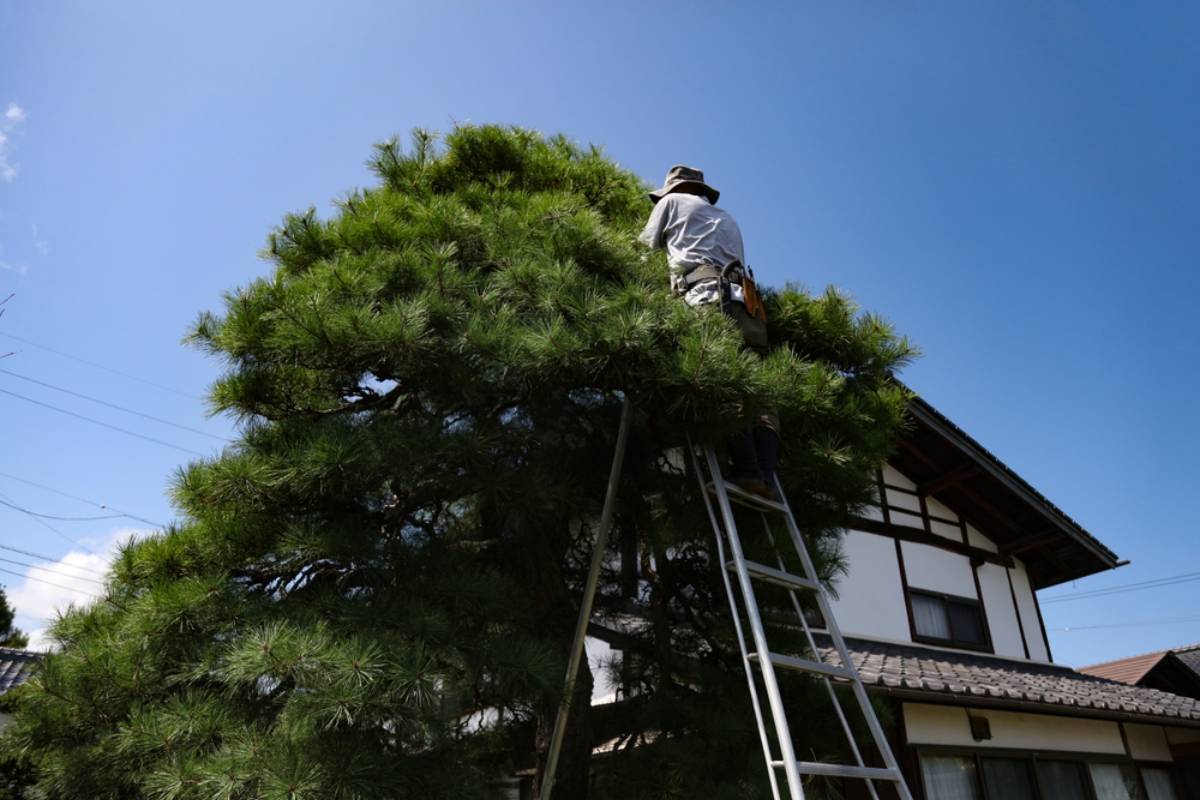
The homeowner says she had to move her outdoor furniture while holding her toddler as the cutting continued. Then she watched as the workers began removing a very large branch and taking it all the way back to the trunk. The branch, she says, was nowhere near the neighbor’s house.
That was the moment the situation changed from an annoying gardening disagreement into something much more alarming. She told them they had never asked permission to remove such a large section of the tree. From her perspective, asking while the cutting was already underway was not really asking at all.
She Felt Trapped Watching Her Tree Disappear
The homeowner says she felt outnumbered while several people were involved in the work. She also had a two-year-old with her, making it even harder to simply run outside and confront the situation. Instead, she yelled that she did not agree with what they were doing.
The cutting stopped partway through, but the damage had already been done. One side of the tree was now dramatically thinner, leaving the homeowner staring at a tree that no longer looked anything like it had earlier that afternoon. What had once been a towering garden landmark suddenly looked strangely unbalanced.
The Old Maple Was Suddenly Bare on One Side
The tree was not a young sapling that had just been planted beside a flower bed. The homeowner described it as roughly 100 years old and later identified it as a silver maple. She said that after the cutting, nearly half of the tree appeared to be gone on one side.
That created a new question that had nothing to do with fallen leaves. The homeowner was now worried about whether the tree could recover and whether the drastic pruning had created a structural problem. A garden argument had turned into a question about the future of a century-old tree.
The Trunk Was Not on the Property Line
The property-line details quickly became one of the most confusing parts of the story. The homeowner clarified that the tree’s trunk was entirely inside her own yard rather than sitting on the boundary. The limbs had extended over the neighbor’s yard, but the trunk itself was not on the property line.
She also explained that her state’s law, as she understood it, allows a property owner to trim overhanging branches in certain circumstances, provided the work does not damage the tree and creates the kind of property risk covered by the law. She maintained that the branches they removed were not hanging over the neighbor’s house. That distinction became central to her concerns about how far the pruning had gone.
Neighbors Had Always Asked Before
There was another detail that made the homeowner especially frustrated. She said pieces of the tree had been trimmed in the past, but the neighbors had discussed those cuts with her beforehand. Even though they had apparently handled earlier pruning without major conflict, this time the conversation never happened before the work began.
To the homeowner, that history made the sudden cutting feel even more surprising. She was not objecting simply because a branch had been removed. She was upset that a major section of an old tree had been cut without the discussion she had come to expect from the people next door.
Then She Noticed the Firewood
As if the damaged tree were not enough, the homeowner says she later noticed a large pile of fresh firewood sitting in the neighbors’ yard. The wood had come from the tree that had just been heavily cut. She described it as a substantial amount of wood and said that seeing it sitting on the other side of the fence made the situation even more disappointing.
The pile also gave the whole episode an almost surreal quality. A branch that had spent decades growing overhead had gone from being part of her landscape to being stacked like ordinary firewood in someone else’s yard. Suddenly, the homeowner was not only wondering about the tree’s survival, but also about what had happened to the wood that had been taken from it.
The City Gave Her a New Problem to Solve
The homeowner says she contacted the city and city forestry officials after the incident. Rather than immediately telling her that the tree was doomed, they advised her to obtain a tree risk assessment from a private licensed arborist. They also suggested getting an appraisal if the tree ultimately needed to be removed.
That advice shifted the homeowner’s attention from the argument next door to documenting the condition of the tree itself. Instead of simply guessing whether the pruning had caused lasting harm, she now had a path toward finding out. The old maple had become something that needed to be professionally evaluated.
People Started Debating Whether the Tree Could Recover
Once others heard how much of the tree had been removed, opinions began going in several directions. One response suggested that losing roughly half of an established tree would not necessarily kill it, especially if the tree had not already been suffering from a serious disease. Another person urged the homeowner to have the tree examined from a structural standpoint.
The silver maple itself also became part of the discussion. One person described silver maples as relatively weak trees, while another shared an experience in which an arborist had recommended cabling major trunks and branches because of structural concerns. The homeowner, meanwhile, remained focused on the question that mattered most to her: whether her particular tree could safely recover.
Its Location Made the Situation Even More Concerning
The tree was not sitting in some distant corner of the property where a damaged branch would be little more than an eyesore. The homeowner said it stood about eight feet from her garage and roughly ten feet from the house. With one side of the canopy suddenly removed, she was worried about whether the remaining structure could become unstable.
That concern is what turned an ugly pruning job into a potential safety issue. A tree that has grown for generations does not simply become a decorative object because someone decides to remove a few branches. Every large cut changes the way the remaining limbs and trunk carry weight, which is why the homeowner wanted a professional assessment rather than relying on guesses.
The Person Doing the Work Was Not Quite Who She Expected
Then came one of the biggest twists in the entire story. The neighbor’s brother had been described as an arborist and had apparently been involved with the cutting. Later, the homeowner said she discovered that he was not licensed and that his business was not licensed either.
That revelation added another layer to an already complicated situation. The homeowner had initially been dealing with what she believed was a neighbor’s trimming decision, but now she was questioning the credentials of the person who carried out the work. What had started with a few unwanted leaves had somehow turned into a tree assessment, a property dispute, a pile of firewood, and questions about professional qualifications.
She Decided to Put Everything in Writing
After hearing different perspectives, the homeowner said she planned to stop relying on informal conversations about future pruning. She intended to draft a letter clearly stating her boundaries and emphasizing that she wanted written consent involved in any future work on the tree. She also planned to seek compensation for the tree risk assessments she now needed to arrange.
She said she was also considering asking for compensation related to the wood that had been removed. Her goal, however, was not simply to demand the highest possible amount. She said she was trying to come up with a reasonable figure and hoped to reach an agreement without having to involve an attorney.
The Tree May Become the Neighborhood’s New Boundary Line
For years, the maple seems to have been part of the ordinary background of the property. Leaves fell, branches crossed the fence line, and the neighbors occasionally had parts of it trimmed after discussing the work. Nobody expected a normal gardening nuisance to become a dispute over a tree that had already been standing for roughly a century.
Now the homeowner is waiting to learn what the professionals say about the damage and the tree’s future. The neighbors may have wanted fewer leaves in their yard, but their decision to remove a massive limb has left behind a much bigger problem. And for the homeowner, the strangest part may be that the argument over one old maple is only just beginning.