A Homeowner Bought a House Hoping to Enjoy His Yard in Peace, Until His Neighbor Started Dumping Snow on His Lawn and Complaining About His Trees
A person shared his story about moving into a new home, expecting to enjoy his outdoor space without getting caught up in neighborhood drama. At first, everything seemed ordinary, but the couple living next door soon began raising complaints about how he used his own property. What started with a few requests gradually developed into a frustrating series of encounters that made enjoying his yard feel like a daily challenge.
The homeowner explained that he worked late and valued the quiet moments he could spend outside after a long day. Instead of settling into a peaceful routine, however, he found himself dealing with neighbors who seemed determined to question his choices. Before long, even the trees, driveway, and winter snow became part of an increasingly strange dispute.
The Garden Bins That Started the First Argument
The trouble began when the neighboring couple asked him to move his garbage bins away from the fence and place them inside his shed. He decided not to follow the request because he did not believe the bins needed to be moved. Although the disagreement might have ended there, it left him with the feeling that his new neighbors would be unusually demanding.
For many homeowners, the space beside a fence is simply a practical place to keep outdoor essentials without interfering with the garden. Unless local rules or property restrictions say otherwise, a neighbor’s personal preference does not automatically determine how someone else must arrange their yard. In this case, the bins became the first sign that the two households might have very different ideas about boundaries.
The Pine Tree That Became the Next Target
Soon after the dispute over the bins, the couple raised another complaint, this time about raccoons living in a nearby pine tree. They wanted the homeowner to cut the tree down, apparently believing that removing it would solve their wildlife problem. The request might have sounded straightforward until he checked the property line and discovered that the tree did not belong to him.
He explained the situation to the couple, but they seemed irritated that he would not take responsibility for removing it. Mature trees can be valuable features in a landscape, providing shade, shelter, and character that would take years to replace. From the homeowner’s perspective, being asked to remove someone else’s tree was an unreasonable demand, especially when he had no authority over the property where it stood.
One Early Morning Exposed a Snowy Surprise
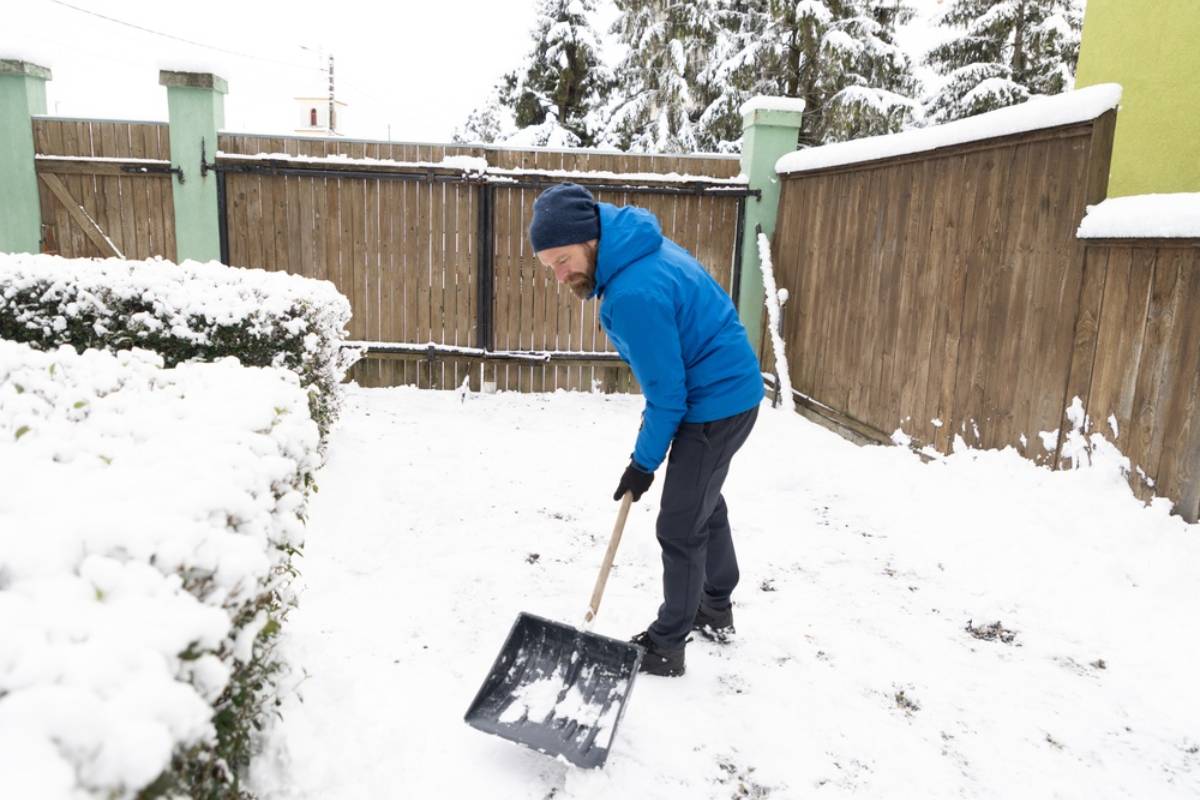
The situation took a stranger turn one morning when the homeowner happened to look outside unusually early. He spotted his neighbor shoveling snow from his own front yard, crossing the sidewalk, and dumping the snow directly onto the homeowner’s lawn. He watched the process happen twice before finally calling out to confront him.
The moment was particularly frustrating because the homeowner had not expected to find someone deliberately relocating winter mess onto his property. Snow piles can damage grass, crush delicate garden borders, and leave soggy patches when they melt, depending on their size and placement. What might have looked like harmless snow removal from the street had become a question of respect for someone else’s yard.
The Neighbor’s Explanation Only Raised More Questions
When the homeowner later confronted the man about the snow, the neighbor reportedly admitted that he might have done it once or twice. That response did little to settle the issue, especially after the homeowner had watched him move snow across the property boundary himself. Instead of receiving a clear explanation, he was left wondering whether this had been happening more often than he realized.
A response from a person suggested that the homeowner should make it a point never to use his snowblower to help the troublesome neighbors. The same person proposed helping older people elsewhere in the neighborhood instead, turning an irritating conflict into an opportunity to be a better neighbor to everyone else. It was a pointed suggestion, but it also highlighted an important lesson: kindness can be directed toward people who appreciate it rather than those who continually create conflict.
The Driveway Mystery That Made Things Even Weirder
The homeowner also noticed that the neighbor and his wife sometimes drove across his driveway instead of simply leaving through their own. The two driveways were positioned side by side, so the homeowner could not understand why they needed to cross onto his paved space. He clarified that the driveways were not shared, making the repeated maneuver even more baffling.
A response from a person suggested placing a physical barrier along the boundary if the neighbors were causing damage. Another person recommended parking a vehicle farther down the driveway to make the unwanted shortcut less convenient. Since the homeowner explained that the area between the driveways was paved, however, creating a neat green divider with plants was not necessarily a simple solution.
When the Backyard Became an Unusual Stage
The homeowner described another odd habit involving his neighbor’s girlfriend, who sometimes visited the couple. According to his account, the neighbor would stand on a picnic table in the backyard while talking to her, turning an ordinary conversation into an unexpected spectacle. Although the behavior was not necessarily a direct threat to anyone’s garden, it added to the homeowner’s growing sense that life next door had become unnecessarily strange.
For someone hoping to enjoy a peaceful backyard, these repeated disturbances can make even familiar outdoor spaces feel uncomfortable. A garden or patio is often where homeowners go to unwind, watch plants grow, and escape the demands of everyday life. When a neighbor’s behavior becomes a constant distraction, the simple pleasure of spending an evening outside can disappear surprisingly quickly.
The Loud Backyard That Could Be Heard Down the Street
Noise was another major part of the dispute, particularly when the couple had their grandchildren over. The homeowner described the wife as extremely loud, saying that her shouting could be heard several houses away. He and his partner liked sitting on their deck in peace, but the noise repeatedly disrupted the atmosphere they wanted to enjoy.
Sound can travel surprisingly far through residential neighborhoods, especially when voices carry across open yards without fences, thick shrubs, or other barriers to soften them. Strategic landscaping can sometimes provide a modest buffer, with dense evergreen plants and layered borders helping create a more secluded outdoor environment. Still, plants cannot solve every noise problem, and the homeowner’s experience showed how difficult it can be to enjoy a yard when a neighbor’s habits repeatedly intrude.
The Snowblower Set Off Another Round of Complaints
Eventually, the homeowner purchased a snowblower, presumably hoping to make winter maintenance easier and avoid the exhausting work of repeatedly shoveling snow. However, the new equipment brought another disagreement when the neighbor contacted the town and alleged that snow was being blown into the road. Officials came to investigate but reportedly found no evidence supporting the complaint.
The failed complaint did not bring the larger dispute to an end, since the homeowner said the two had already argued about snow on multiple occasions. At this stage, what should have been a straightforward chore had become another source of tension between neighboring households. The homeowner finally decided that he had heard enough complaints at his front door and stopped communicating with the couple.
People Suggested Creating a Green Boundary
As the homeowner looked for ideas, several responses focused on discouraging the neighbors from crossing onto his property. One person suggested using planters filled with upright perennials or shrubs, while another recommended adding a sturdy trellis to support climbing plants. In a more spacious garden, these features could create an attractive visual boundary while making it clear where one property ends and another begins.
Clumping ornamental grasses, compact shrubs, and well-maintained containers can all help separate outdoor spaces without necessarily requiring a traditional fence. However, the homeowner’s paved driveway presented a practical limitation because there was little suitable ground available between the two surfaces. Any planter or trellis arrangement would need to stay entirely on his property, avoid obstructing vehicle movement, and comply with relevant local restrictions.
A Camera Seemed More Practical Than Another Argument
Other responses recommended installing cameras aimed at the homeowner’s own property and keeping a record of incidents. The homeowner agreed that a camera might be necessary, particularly because the unwanted driveway crossings and snow disputes had become recurring concerns. Rather than relying entirely on memory, he could document what happened and have a clearer record if another dispute arose.
A well-positioned outdoor camera can provide useful evidence of property activity, although privacy rules and local requirements need to be considered when choosing its angle. A simple written log can also help distinguish recurring behavior from isolated incidents by recording dates, times, and specific details. Together, these steps could give the homeowner a more measured way to respond without having to turn every encounter into another confrontation.
The Temptation to Fight Back With Garden Mischief
Not every response offered serious advice, and some people joked about using plants or other garden-related tricks to get even. Mint came up as a particularly mischievous suggestion because it spreads aggressively and can become difficult to control once established in the ground. Although the idea might sound amusing during a frustrating neighbor dispute, deliberately introducing invasive or unwanted plants would risk creating a completely different problem.
Mint is far easier to manage when grown in a container, where its spreading roots can be contained. Deliberately scattering seeds or otherwise interfering with another person’s garden could escalate the conflict and potentially create legal or financial consequences. The homeowner had already spent considerable energy dealing with complaints, so starting a second round of garden warfare would hardly guarantee the peaceful yard he wanted.
Why a Calm Response Could Protect the Garden Better
One response from a person suggested that the neighbors might simply be looking for reasons to complain, making it unwise to give every incident an emotional reaction. Another person emphasized that the homeowner had a right to enjoy his property without others repeatedly crossing onto it. Those suggestions pointed toward a practical strategy: document what happens, avoid unnecessary arguments, and address concrete damage or boundary violations through appropriate channels.
For a gardener, protecting an outdoor space is about more than keeping plants alive; it also means preserving the time and peace needed to enjoy them. Clear property boundaries, thoughtful landscaping, and reliable records can be more effective than retaliatory gestures that create new disagreements. A calm approach would not guarantee that the neighbors changed their behavior, but it could help prevent the homeowner from being drawn into every new complaint.
The Real Goal Was a Peaceful Yard, Not a Neighborhood Showdown
By the time the homeowner shared his story, he had reached the point where he no longer wanted conversations with the couple to become another round of accusations. The recurring disputes over bins, the pine tree, snow, driveway crossings, and outdoor noise had worn down his patience. He was now looking for a way to protect his space and enjoy his property without constantly anticipating the next problem.
The most sensible path forward was to concentrate on what he could control, from documenting incidents to considering suitable cameras and carefully planned boundary features. A garden should be a place to relax, not the setting for an endless competition over who can irritate whom the most. And while no collection of shrubs or planters can magically transform a difficult neighbor, a well-protected yard and a refusal to escalate petty disputes can make a meaningful difference.