A Teenager Tried to Bring Down the World’s Rubber Supply With a Plant Fungus, Then Discovered His Grand Plan Might Have Been More Reckless Than Revolutionary
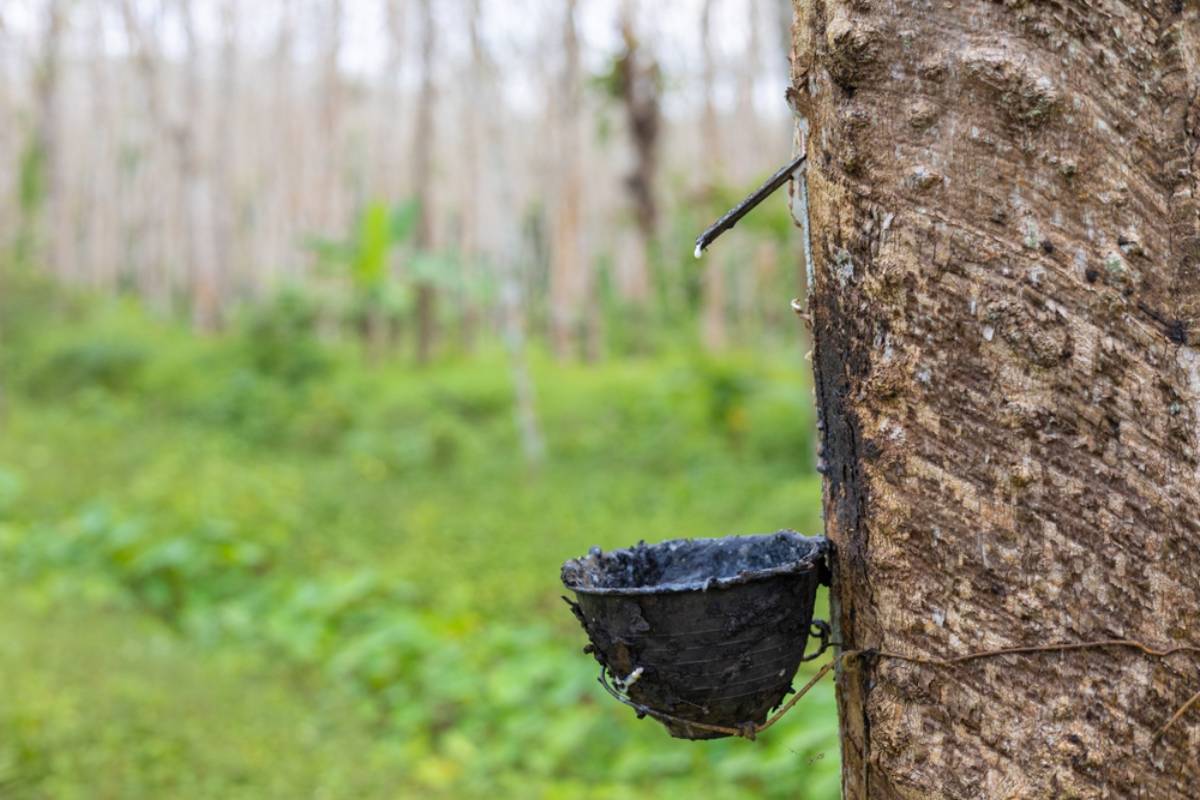
A person shared his story about a plan he developed as an angry teenager in December 2019, when he became fascinated with environmental radicalism and the idea of challenging the global industrial system. Instead of limiting himself to protests or ordinary activism, he began exploring how something growing in nature could potentially disrupt industries around the world. His attention eventually turned to rubber trees, plants that supply a material used in countless everyday products. What started as an extreme idea in his imagination soon became an unsettling real-world adventure.
The teenager believed that attacking a vulnerable part of the natural world could create consequences far beyond a single garden or plantation. He became interested in the relationship between plant diseases and the agricultural systems that support large industries. In his mind, a fungus was no longer just something that damaged leaves or weakened trees. It had become a symbol of how nature might challenge a system he wanted to disrupt.
How Rubber Trees Became the Center of His Plan
The young man researched the rubber industry and learned about the historical vulnerability of rubber plantations to plant diseases. He became particularly interested in a fungus associated with South American leaf blight, which has historically threatened rubber cultivation in the Americas. The possibility that a plant pathogen could affect an economically important crop captured his imagination. He began thinking about what might happen if a similar threat reached major rubber-growing regions elsewhere.
His reasoning was built around a dramatic assumption: if a disease could damage enough rubber trees, the consequences might extend far beyond agriculture. Rubber is important in transportation, manufacturing, and numerous other industries, making the idea of a widespread supply disruption seem enormous. Rather than considering the complicated ecological consequences, the teenager focused on the prospect of causing a major industrial shock. The more he thought about it, the more his plan began to resemble a grand experiment rather than responsible environmental action.
A Journey Across Continents Took an Unexpected Turn
According to his account, the teenager traveled to Central America, where he believed he had found a tree affected by the fungus that fascinated him. He collected several leaves from that tree and later traveled to Thailand, one of the world’s major natural rubber producers. The journey transformed his abstract idea into an attempt to interfere with an agricultural system thousands of miles from home. What he imagined as environmental resistance was now crossing international borders.
The story took an unusual turn because his target was not a factory, a corporate office, or an industrial machine. It was a living landscape made up of trees that supported agricultural workers and an entire supply chain. The teenager saw a possible weakness in the system, but he did not appear to fully appreciate how many people and ecosystems could be affected by his ambition. His adventure was becoming less like a protest and more like an uncontrolled gamble.
Why a Tiny Fungus Seemed Capable of Causing Huge Problems
Plant diseases can have serious consequences for agriculture, especially when a crop is grown extensively in particular regions. Rubber trees are no exception, and the history of rubber cultivation includes significant challenges from pests and pathogens. That reality helped make the teenager’s idea seem plausible to him, even though a complex agricultural system cannot be understood through one dramatic assumption. The difference between recognizing a genuine plant disease and predicting a global economic collapse is enormous.
The story also highlights a basic lesson for anyone who enjoys gardening: plants do not exist in isolation from their surroundings. A disease that affects one species can have consequences for nearby vegetation, farming communities, and local ecosystems. Gardeners generally try to prevent unwanted pathogens from spreading, not introduce them into new environments. The teenager’s ambition turned that ordinary principle upside down.
The Rubber Plantations Became His Unlikely Target
Thailand’s rubber plantations represented the agricultural landscape at the center of his plan. He described traveling through the country for about a month, moving from Bangkok toward the Myanmar border. Rather than pursuing conventional environmental activism, he attempted to interfere with the trees themselves. His account presented the journey as an effort to challenge the industrial system through nature.
Yet a plantation is not simply a collection of plants waiting to be disrupted. It is also a workplace, a source of income, and part of a network connecting growers, processors, manufacturers, and consumers. A serious disease outbreak could place livelihoods at risk while creating environmental problems that extend beyond the intended target. The story’s central contradiction was that someone claiming to oppose industrial harm was willing to contemplate a different kind of widespread damage.
The Plan Was Much Bigger Than a Garden Experiment
A person experimenting with plants in a backyard might expect to encounter familiar problems such as wilting leaves, fungal spots, or disappointing growth. Those challenges usually call for observation, careful diagnosis, and appropriate treatment. The teenager, however, was thinking on a scale that had little in common with ordinary gardening. His goal was not to improve plant health but to exploit a possible weakness in an agricultural system.
That distinction matters because plant pathogens can behave unpredictably outside their familiar environments. A disease may fail to establish itself, affect unexpected species, or create consequences that are difficult to anticipate. No responsible gardener would treat the deliberate movement of a potentially harmful organism across ecosystems as a harmless experiment. The story demonstrates how quickly fascination with plant biology can become dangerous when curiosity is separated from responsibility.
An Ambitious Idea Met the Reality of Nature
The teenager believed he could influence an enormous industry by interfering with its biological foundations. But natural systems rarely respond as neatly as an ambitious person might imagine. A pathogen’s behavior depends on numerous environmental and biological factors, and an individual’s expectations cannot establish whether a disease will spread or cause meaningful damage. The account did not establish that his plan produced the worldwide disruption he hoped to achieve.
That uncertainty is one of the most important parts of the story. A dramatic intention does not automatically translate into a dramatic result, particularly when living organisms and complex ecosystems are involved. Even if an attempt fails, deliberately introducing a plant disease can create risks that deserve serious attention. Nature is not a predictable machine that someone can manipulate simply by identifying a possible weakness.
The First Reactions Were Far From What He Might Have Expected
When the teenager eventually described his actions publicly, the responses were divided between disbelief, criticism, humor, and concern. Some readers questioned whether the account was genuine, while others focused on the potential consequences of deliberately spreading a plant pathogen. The story sounded so extraordinary that it prompted people to debate both its credibility and its implications. Instead of receiving a straightforward reaction to his supposed act of rebellion, he found himself facing a much broader discussion.
A response from a person pointed out the irony of traveling internationally to challenge industrial systems while relying on the very infrastructure those systems support. The observation captured a central weakness in the teenager’s thinking: modern life is interconnected, and disrupting one part of it can affect many others. Even an action intended to oppose industrial dependence may rely on transportation, commerce, and technology. His story had unexpectedly become an argument about the contradictions of trying to escape a system while operating inside it.
Other Readers Questioned the Story Itself
Not everyone accepted the account at face value. Some responses expressed skepticism about whether the events had happened as described, treating the narrative more like an elaborate adventure than a verified confession. Others questioned whether the teenager had fully understood the biological and practical obstacles involved. The debate made it clear that a sensational story can attract attention without establishing that its central claims are true.
That uncertainty should remain part of any retelling. The account describes what the person said he attempted, but it does not independently prove that the fungus established itself in Thailand or damaged the country’s rubber industry. Nor does it establish that a global supply disruption occurred as a result of his actions. Separating a person’s stated intentions from verified outcomes is essential when a story involves agriculture, environmental risks, and international consequences.
The Environmental Irony Was Difficult to Ignore
The teenager reportedly viewed himself as an environmental radical who wanted to challenge the industrial complex. Yet deliberately spreading a potentially harmful plant pathogen could endanger natural environments rather than protect them. Ecosystems contain relationships that are not always visible to someone focused on a single objective. A plan designed around disruption can therefore create the very kind of uncontrolled harm that environmental stewardship seeks to prevent.
For gardeners, the contrast is especially striking. Healthy gardening depends on understanding that plants share space with soil organisms, insects, fungi, wildlife, and neighboring vegetation. Introducing a harmful organism into an unfamiliar environment can upset those relationships in ways that are difficult to reverse. The story serves as a reminder that caring for nature requires more than believing that one’s intentions are justified.
The Rubber Supply Was Only One Part of the Picture
Rubber is used in a wide range of products, including tires, industrial equipment, and many everyday goods. A major disruption to its supply could affect businesses and workers far removed from the plantations where the material originates. The teenager’s account focused on the possibility of challenging global industry, but the people who might bear the consequences would not necessarily be the powerful organizations he imagined targeting. Agricultural workers and ordinary consumers could also face the fallout.
That broader perspective makes the proposed disruption less like a clever attack on a distant system and more like a risk spread across interconnected communities. Agricultural supply chains depend on reliable crops, healthy production environments, and the people who maintain them. When those foundations are threatened, the consequences can travel in unexpected directions. The story’s apparent simplicity concealed a complicated web of potential damage.
The Story Raised Serious Questions About Responsibility
One of the most troubling aspects of the account was the gap between the teenager’s stated environmental concerns and the risks associated with his plan. Wanting to change an industrial system does not automatically make every method of challenging it defensible. Actions involving living organisms can affect people and environments that have no connection to the original disagreement. Responsibility means considering those consequences before acting, not only after an outcome becomes visible.
The same principle applies to gardening and plant care on a much smaller scale. Gardeners are encouraged to identify diseases carefully, avoid spreading contaminated plant material, and follow appropriate plant-health guidance. These precautions help protect neighboring gardens, commercial crops, and natural habitats. What may look like a minor decision involving a plant can matter far beyond the boundaries of a single property.
A Plant Disease Is Not a Reliable Shortcut to Changing the World
The account illustrates how an ambitious plan can become detached from the realities of biology. Plant pathogens do not follow a script, and their effects cannot be reliably predicted from a dramatic theory alone. Even when a disease is known to damage a crop under certain conditions, that does not mean it will produce the same effects in another environment. The teenager’s vision of a sweeping industrial disruption was therefore far more complicated than his account initially suggested.
There is also a difference between studying plant disease and trying to exploit it. Agricultural researchers investigate pathogens to understand risks, protect crops, and develop better management strategies. Gardeners use similar knowledge to keep plants healthy and prevent disease from spreading. The same scientific subject can support responsible environmental protection or reckless behavior, depending on the purpose and methods involved.
The Biggest Twist Was the Uncertainty Surrounding His Impact
The most dramatic part of the story was not a confirmed collapse of the world’s rubber supply. It was the uncertainty surrounding whether the teenager’s actions had achieved anything like what he intended. His account described a serious ambition and an extraordinary journey, but it did not establish that his plan caused a global agricultural crisis. The difference between attempted disruption and demonstrated impact is the detail that keeps the story grounded.
That uncertainty also complicates the idea of a triumphant rebel challenging a powerful system. A person can undertake an extreme act without gaining control over its consequences or producing the result they imagined. In this case, the story attracted attention partly because the intended outcome was so enormous while the evidence of actual impact remained unclear. The grand plan and the unproven result created a far more complicated ending than a simple tale of success or failure.
What Gardeners Can Learn From This Extraordinary Confession
For anyone who grows plants, the practical lesson is straightforward: protect plant health rather than treating disease as a tool for disruption. Avoid moving suspicious plant material between regions, follow applicable plant-health rules, and seek qualified advice when a serious disease is suspected. These precautions are particularly important for crops that support livelihoods and contribute to wider agricultural systems. Responsible gardening begins with recognizing that the effects of our choices can extend beyond our own plots.
Ultimately, the story is a strange reminder that nature is both resilient and vulnerable, and that human interference can have consequences no individual fully controls. The teenager believed he had found a way to challenge the global industrial system through a biological weakness, but his account left important questions unanswered about the actual impact of his attempt. What remains is a cautionary tale about ambition, ecological responsibility, and the difference between imagining a dramatic outcome and proving that it happened. Sometimes the most important lesson in a story about plants is not how to make something spread, but why protecting the balance of the natural world matters in the first place.