A Virginia Homeowner Offered to Pay Thousands to Save Her Neighbor’s Shed From an Overhanging Tree, Then He Refused to Let Anyone Step Onto His Yard
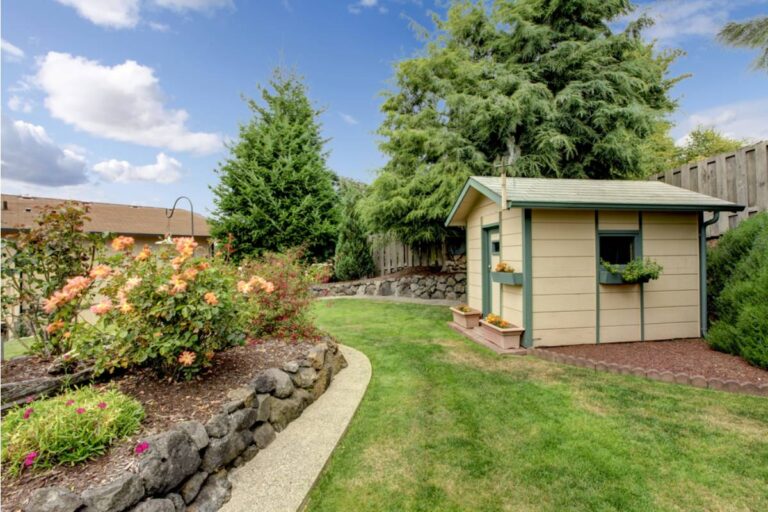
A homeowner in Virginia found herself worrying about a huge tree that stood entirely on her property but stretched its branches deep into her neighbor’s yard. The tree had been there for years, quietly reaching over the fence and toward a shed where the neighbor’s young children often played. What started as an ordinary backyard tree had slowly become a source of tension.
She wasn’t waiting for something to go wrong, either. About four years earlier, she had already called an arborist to find out what it would take to remove the dangerous-looking branches. The quote was steep, but she was prepared to pay it herself.
The First $1,500 Offer
The arborist explained that the safest way to remove the large branches would require equipment to enter the neighbor’s property. Fortunately, the work would cause only minor disruption to the grass, and the homeowner immediately offered to cover the entire $1,500 bill. She even offered to pay for any damage the equipment caused.
Her neighbor refused the arrangement. At the time, there was no fallen branch, damaged shed, or dramatic argument to force the issue, so the tree simply continued growing. The homeowner went back to her routine, hoping the situation would somehow resolve itself.
Then the Storm Arrived
A year later, a powerful storm finally gave everyone a reason to regret the unanswered warning. One enormous branch broke loose and crashed directly onto the neighbor’s shed. Suddenly, the problem that had seemed hypothetical had become a pile of wood, broken boards, and a very unhappy neighbor.
The neighbor asked the homeowner to pay for the shed repairs and remove the fallen branches, but there was a catch. He only wanted the debris removed from the homeowner’s side and still would not agree to allow the equipment needed to reach the branches hanging over his property. The homeowner reminded him that she had already offered to solve the problem before the storm ever happened.
The Insurance Conversation
The neighbor then suggested she contact her home insurance company, apparently expecting the insurer to settle the dispute. She made the call and carefully explained the situation involving the tree, the overhanging branches, and the damaged shed. The response gave her another piece of information to consider.
According to the homeowner, the insurer told her that branches extending over the neighbor’s property were generally the neighbor’s responsibility. Once she relayed that information, the conversation seemed to end. The neighbor removed one smaller branch and paid to fix his own shed.
But the Tree Was Still Standing
That might have been the end of the story if the tree had suddenly become healthy. Unfortunately, it had not. The homeowner continued looking at the enormous branches overhead and wondering how many more storms it would take before another one came crashing down.
Her biggest concern wasn’t actually the money. She was worried about the neighbor’s shed, but she was even more frightened about the children who regularly played outside beneath the branches. Every time the wind picked up, the tree became something she couldn’t stop thinking about.
The Second Arborist
Determined to do something before another accident happened, she called an arborist again. This time, the estimated cost had doubled from the original $1,500 to roughly $3,000. Inflation wasn’t the only problem, because the tree itself had become more difficult to assess.
The arborist couldn’t even determine the tree’s full condition because thick ivy had grown around its base. That detail bothered the homeowner more than the higher price. If she couldn’t even get a clear assessment of the tree’s health, she had no idea how much danger she might actually be looking at.
Memories From the Treehouse
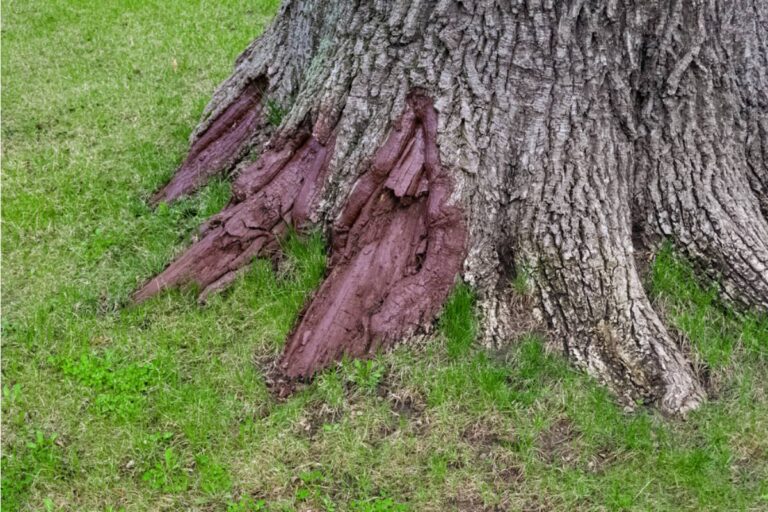
The tree was especially difficult for her to ignore because her children had once built a treehouse in it. Nearly twenty years earlier, the tree had been strong enough to support a childhood project that became part of the family’s memories. Now pieces of bark and branches were regularly dropping from it.
She couldn’t help wondering whether the tree was simply aging or whether something more serious was happening beneath the ivy. The same tree that had once been a place for children to climb had now become a source of anxiety. It felt strange watching something so familiar slowly turn into a potential hazard.
Another Offer Across the Fence
Despite everything that had happened, the homeowner hadn’t given up on being helpful. She was still willing to contribute $1,500 toward the branch-removal work, even though the latest estimate was twice that amount. In her mind, preventing another accident was worth the money.
There was only one problem that money couldn’t solve. The company still needed access to the neighbor’s yard to safely remove the largest branches. Without his permission, the homeowner couldn’t simply send workers across the property line and hope everyone was comfortable with it.
The Neighbor Still Said No
The homeowner feared she had reached an impossible position. She could pay for the work, hire professionals, and make arrangements, but she couldn’t physically make the neighbor open his yard to the tree crew. Every solution seemed to stop at the same locked gate.
Meanwhile, the tree continued standing over the fence as though none of this mattered. The homeowner imagined another branch falling during the next major storm, followed by another argument about who was responsible. Her greatest fear was that the next thing under the branch might not be a shed.
A Response From a Person
A response from a person suggested that the homeowner might be worrying about responsibilities that legally belonged to the neighbor. The person explained that the portion of the tree extending over the property line could potentially be treated differently from the tree trunk itself, especially when it came to maintenance and fallen branches.
That response brought some reassurance, but it didn’t completely solve the homeowner’s problem. She wasn’t trying to win an argument about property lines or hand someone else a bill. She simply wanted the dangerous branches dealt with before another storm made the decision for everyone.
The Ivy Became the Next Clue
Another response from a person focused on something that had been hiding in plain sight. The thick ivy around the tree’s base might have been making it much harder to inspect the trunk properly and determine whether the tree had structural problems.
The suggestion was surprisingly practical: cut the vines around the base and remove them from the tree as much as possible. Once the ivy died, the tree would be easier to inspect and any future tree work could potentially be done more safely. Suddenly, the mystery wasn’t only about the branches hanging over the fence.
Maybe the Branches Could Be Reached Differently
One response from a person raised another possibility that gave the homeowner something new to consider. Specialized tree crews sometimes use ropes, climbing equipment, or compact lifts to remove branches without requiring the same kind of large machinery she had originally been quoted for.
That possibility changed the shape of the problem. Perhaps the homeowner had been thinking in terms of one expensive method when several safer approaches might exist. She still needed a qualified professional to determine what was actually possible, but the locked gate no longer seemed like the only obstacle.
The Dead Branches Keep Falling
The most unsettling part of the advice was also the simplest. If the tree had genuinely unhealthy or dead sections, those branches were unlikely to stop falling simply because everyone stopped arguing about them. Nature was going to keep doing what nature does, regardless of who paid the bill.
The homeowner began to understand that she needed better information rather than more speculation. A proper assessment of the tree could tell her whether she was dealing with ordinary aging, dangerous deadwood, or a much larger structural problem. For the first time, documenting the tree’s condition seemed just as important as trying to remove the branches.
The Fence Line Became the Real Battle
What had started as a gardening and tree-maintenance problem had quietly transformed into a dispute over boundaries, responsibility, and access. The homeowner owned the tree, but much of its canopy occupied the neighbor’s airspace. The neighbor controlled the ground where the safest equipment might need to stand.
Neither side appeared completely satisfied with the situation. The homeowner didn’t want another storm to create a crisis, while the neighbor apparently didn’t want equipment crossing onto his property. Between them stood a tree that seemed perfectly happy to wait for the next strong gust of wind.
Twenty Years of Growth, One Dangerous Decision
The more the homeowner thought about the tree, the more complicated it became. Twenty years ago, her children had treated it like a playground, but decades of growth, falling bark, heavy ivy, and damaged branches had changed its role completely. It was no longer just a beautiful backyard tree with sentimental value.
Now it was a responsibility that demanded careful attention. She had already offered money, contacted an arborist twice, spoken with insurance, and tried to warn her neighbor before a branch landed on his shed. Yet the final decision still seemed to depend on cooperation from both sides of the fence.
The Twist Wasn’t the Storm
The strange twist was that the biggest danger might not have been the branch that had already fallen. It was the possibility that everyone would keep waiting for another branch to fall before taking the tree’s condition seriously. The homeowner had spent years trying to prevent a disaster, while the neighbor’s refusal to allow access had left the problem suspended above both properties.
In the end, the tree didn’t care whose property line was underneath it. It didn’t care who had offered $1,500 or who had paid for the broken shed. It simply kept growing, shedding branches, and waiting for the next storm to test whether the people beneath it had finally figured out what to do.