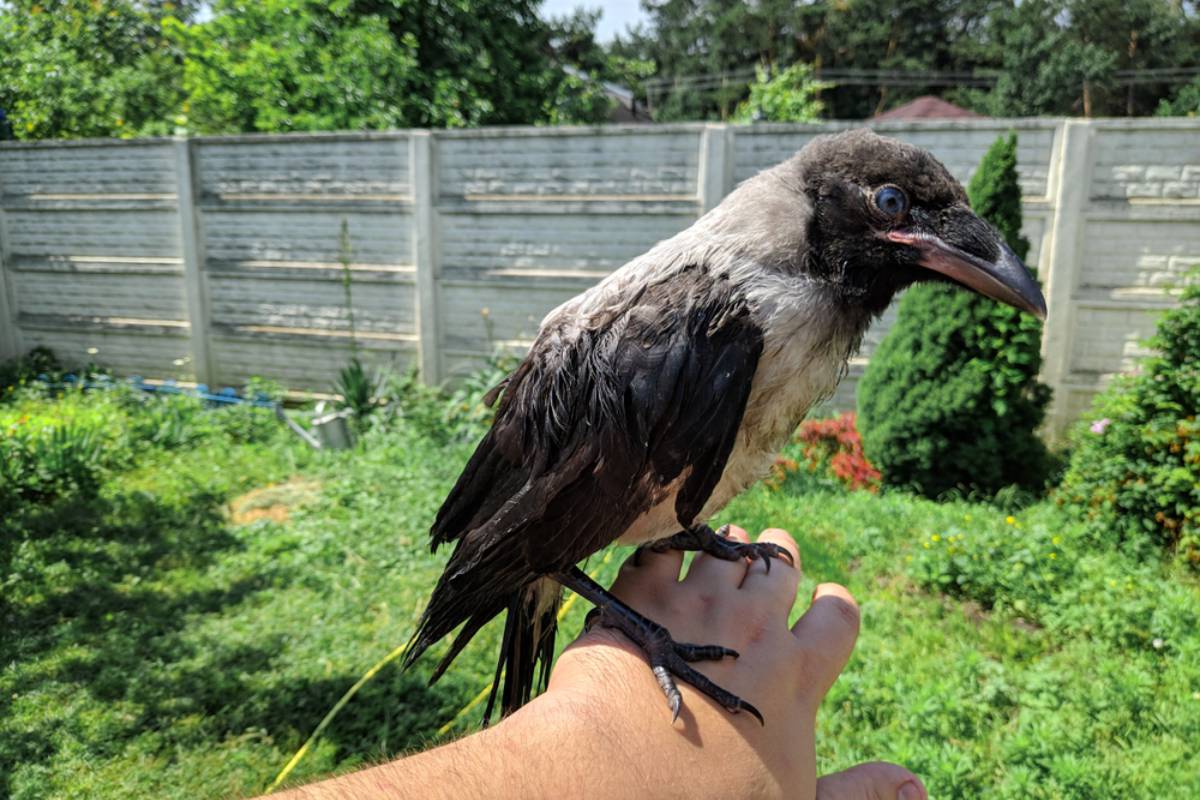
A Widow Finally Cleared Out Her Late Husband’s Favorite Foods, Then a Flock of Crows Turned a Painful Chore Into a Garden Memory She Wasn’t Ready to Face
A person shared his story about a woman who decided to clean out her refrigerator six months after losing her husband, expecting an ordinary household chore to take up part of her day. Instead, every shelf seemed to hold a little reminder of the life they had shared, turning a simple cleanup into an emotional journey she had been putting off. The food was no longer just food, because so many of the items had belonged to their daily routines together. What began as a practical task quickly became something much harder to finish.
For years, her husband had handled the grocery shopping, filling the refrigerator with the things they both enjoyed and the ingredients needed for family meals. Now, she had to take over that responsibility alone, and even deciding what to keep felt different without him. The refrigerator had become an unexpected collection of memories, with familiar packages reminding her of conversations, meals, and ordinary afternoons. She was about to discover that letting go of a few groceries could feel much bigger than it sounded.
The Sausages She Could Barely Bring Herself to Throw Away
The first difficult discovery was a package of sausages her husband liked to cook, which had remained in the refrigerator since his last shopping trip. She had kept them partly because she liked seeing them there, almost as though their presence preserved a small piece of his familiar routine. Throwing them away meant acknowledging that he would not be returning to cook them, something that no amount of ordinary housekeeping could make easier. Even a package of sausages had become a surprisingly powerful reminder of the person she missed.
She eventually decided that the sausages could no longer stay in the refrigerator simply because she could not bear to remove them. The decision was not about wasting food or finally achieving a perfectly organized kitchen, but about facing a change she never wanted. Gardening enthusiasts understand how ordinary objects can carry memories, whether it is a favorite pair of gloves or a tool left beside a garden bed. Sometimes, the hardest things to clear away are the ones that look completely unremarkable to everyone else.
The Blue Cheese That No Longer Tasted the Same
Next came the blue cheese that the couple had enjoyed eating together, even though their children thought it was absolutely disgusting. It was one of those small shared pleasures that made their relationship feel uniquely theirs, a food that did not need anyone else’s approval to become special. With her husband gone, she found that she could no longer bring herself to eat it alone. The cheese had lost its appeal because the experience that made it enjoyable had disappeared.
She finally threw it away, but the decision carried more emotion than the contents of the refrigerator could possibly explain. It was not simply that she had stopped liking a particular food, but that eating it without him made his absence impossible to ignore. A garden can create similar feelings when a favorite plant blooms for the first time after a loved one has passed away. The flowers may be beautiful, yet the person who once admired them alongside you is no longer there to share the moment.
The Tiramisu Ingredients Were the Final Straw
The most difficult items were the ladyfingers and mascarpone she had bought to make tiramisu, her husband’s favorite dessert. Preparing it had been one of her ways of showing affection, turning a few simple ingredients into something he genuinely loved. Those supplies had been waiting in the refrigerator, tied to a familiar ritual that she could no longer complete in the same way. Getting rid of them meant confronting the absence of the person for whom she had planned to make the dessert.
By the time she reached those ingredients, the cleanup had become much more than an attempt to remove old food. Every item seemed to bring another memory into the room, making it difficult to move from one shelf to the next without stopping to think. A gardener might recognize the feeling of standing beside a rosebush planted with someone who is no longer around, wondering whether tending it brings comfort or sadness. Sometimes, even the smallest reminder can open a door to feelings that have been waiting quietly behind it.
Then She Found a Different Destination for the Food
Instead of treating everything she removed as ordinary rubbish, the woman decided to put the food outside for the crows that visited her garden. It was a small choice, but it gave the unwanted groceries somewhere to go that felt more meaningful than simply throwing them into a bin. The birds had been part of the couple’s shared enjoyment of the outdoors, giving the garden a special place in their memories. What looked like the end of a difficult chore became an unexpected opportunity to reconnect with something they had loved together.
Watching the birds also gave her a reason to step away from the refrigerator and spend a little time outdoors. Gardens often provide a welcome change of scenery when the house begins to feel heavy with memories, offering fresh air and familiar natural rhythms. Even a simple moment spent watching wildlife can help someone feel connected to the world beyond their own thoughts. For this woman, the crows offered a small bridge between a painful day and a memory she could still cherish.
The Crows Arrived for Their Unexpected Feast
Once the food was outside, the crows descended into the garden and began enjoying their unexpected feast. Their arrival gave the woman something to watch, shifting her attention away from the empty spaces left behind in the refrigerator. The birds were behaving as birds do, but their presence carried a special meaning because she and her husband had always enjoyed watching them together. For a little while, the garden became a place where a shared memory could still feel alive.
There was something bittersweet about seeing the birds gather around food that had once belonged to their household routine. The sausages, cheese, and dessert ingredients had become reminders of a life that had changed, but they could now serve a different purpose. Gardens often have a way of turning endings into new beginnings, whether through fallen leaves feeding the soil or compost nourishing next season’s flowers. In this case, the woman found a small measure of comfort in watching something continue even while she was struggling with what had ended.
She Sat in His Chair and Watched Them
After the crows arrived, the woman sat in her husband’s chair and watched them feed in the garden. That detail made the moment especially personal, because she was sitting in a place associated with someone who had once shared those ordinary pleasures with her. The birds were outside, the food was gone from the refrigerator, and the familiar chair offered a quiet place to pause. For a moment, the garden held both the comfort of an old routine and the sadness of knowing that it could not be repeated in quite the same way.
She eventually began to cry, and there was no need for a dramatic event to explain why. The day had already brought her face-to-face with several small pieces of her former life, and watching the crows only made the memories more vivid. A garden chair can be more than a place to sit when it is connected to someone who once occupied it regularly. Even the quietest outdoor corner can become emotionally important when it holds years of shared moments.
A Friend Arrived at the Worst Possible Moment
While she was sitting outside crying, a friend came by and found her in the garden. Seeing her upset, the friend asked what was wrong, perhaps expecting a specific problem that could be discussed or solved. The woman answered that she had been cleaning out the refrigerator, a seemingly ordinary explanation for an unexpectedly emotional afternoon. Without knowing the story behind each discarded item, someone else might have struggled to understand why the task had affected her so deeply.
Yet the answer made sense in the context of everything she had just faced. The refrigerator had held familiar objects that made her husband feel close, and removing them forced her to acknowledge how much her daily life had changed. The friend had arrived in the middle of a private moment, when an ordinary chore had uncovered feelings that were difficult to explain. Sometimes, the smallest explanation is the most honest one because the person saying it is still trying to understand the emotions behind it.
A Response From a Person Revealed How Difficult These Tasks Can Be
A response from a person captured the experience simply by pointing out that everyday tasks can suddenly become monumental after losing someone. That observation reflected the reality of the woman’s afternoon, when a routine cleanup had become an emotional challenge with no easy shortcut. Tasks that once required little thought can take on entirely new meanings when they involve a loved one’s belongings or familiar habits. What seems insignificant from the outside may represent a major step for the person going through it.
The response also offered a reminder that there is no universal schedule for working through grief. One person may feel ready to clear out a refrigerator, while another may need much longer before moving a familiar object. Gardening follows its own timetable, too, with some plants recovering quickly while others need a full season to show new growth. Giving both people and gardens the time they need can be more helpful than expecting everything to look normal immediately.
Some People Keep the Smallest Reminders
Other responses described people who had held on to ordinary objects belonging to their late partners, including a final bottle of iced tea or a jar of olives. These items might look insignificant to someone else, but they can become precious because of the moment they represent. A familiar drink or unfinished jar can remind someone of the last shopping trip, a conversation in the kitchen, or a routine that once felt permanent. Throwing such things away may feel like losing another small connection to the person who is gone.
This helps explain why the woman struggled with the sausages and cheese even though they were only groceries. Their importance came from the memories attached to them, not from their practical value. In a garden, an old flowerpot or a slightly weathered plant marker can hold the same kind of significance if it was used by a loved one. The objects themselves may be ordinary, but the stories surrounding them are anything but.
The Garden Became More Than a Place to Watch Birds
The garden provided a setting where the woman could remember her husband without having to look directly at the refrigerator or the food she had removed. Watching the crows gave her something familiar to focus on while she processed the emotions that had surfaced during the cleanup. Their presence connected her to an activity the couple had enjoyed together, allowing the memory to remain part of her present life. It was not a solution to her grief, but it offered a small moment of connection.
For gardeners, these moments can be especially meaningful because outdoor spaces often preserve traces of shared lives. A tree planted together, a bench beside a flowerbed, or a bird feeder filled every morning can become part of a family’s history. Such places continue to change with the seasons, even when the people who once enjoyed them are no longer there. The garden does not erase loss, but it can offer a gentle place to remember.
Clearing the Refrigerator Did Not Mean Forgetting Him
The woman had finally removed the food that had been sitting in her refrigerator, but that did not mean she was ready to leave her memories behind. The sausages, blue cheese, ladyfingers, and mascarpone had all played their part in reminding her of a shared life. Letting go of those items did not erase the grocery trips, family meals, or desserts she had prepared for her husband. It simply meant that those memories no longer had to remain attached to food she could not bring herself to eat.
That distinction matters because people sometimes feel guilty when they begin changing the spaces they once shared with someone they loved. They may worry that donating belongings, clearing shelves, or rearranging a room means moving on too quickly. But a memory can survive without every object that once represented it. Just as a gardener can prune away dead growth without abandoning the plant, a person can clear away painful reminders while continuing to treasure what they meant.
The Crows Offered a Small Twist to a Painful Day
What made the woman’s story especially memorable was the unexpected role played by the crows in her garden. A refrigerator cleanup could easily have ended with a bag of discarded food and a feeling of exhaustion, but the birds gave the day a different conclusion. Their arrival connected the discarded groceries to something she and her husband had enjoyed together, turning a difficult task into a moment of remembrance. The twist was not that the sadness disappeared, but that a little comfort emerged from the same experience that had caused it.
Gardens often contain these small surprises, where an ordinary sight suddenly becomes meaningful because of the memories attached to it. A bird landing on a fence or a familiar flower opening can remind someone of a person they miss. The natural world carries on with its own rhythms, offering moments that can feel both painful and reassuring. For the woman, the crows made the garden feel connected to her husband in a way that the cleared refrigerator could no longer provide.
Sometimes the Hardest Chore Is the One That Changes Everything
By the end of the day, the woman had done something that might have looked unimportant to anyone passing by. She had removed a few groceries, watched some crows, sat in a familiar chair, and cried when the memories became too much. Yet those ordinary actions represented a significant moment in her life, because she had faced reminders she had been holding on to for six months. A simple household task had revealed how much meaning can hide inside the routines people once took for granted.
Her experience also shows why gardening can be such a powerful source of comfort during difficult times. It creates opportunities to sit quietly, notice wildlife, and find meaning in small changes without demanding that sadness disappear. There may be days when a garden feels like a refuge and others when it brings back memories that are difficult to face. But as this woman’s afternoon with the crows showed, even a painful day can contain a moment of connection worth holding on to.