Horticultural Oil Goes on for Lace Bugs Now, and Durham Master Gardener Gary Crispell Then Cleans and Puts Away the Sprayer, While Moving Azaleas Out of Full Sun
Lace bugs prefer stressed plants, and an azalea baking in full sun is a stressed plant. That is the cause-and-effect lesson in the November 2026 to-do list from Gary Crispell, an NC State Extension Master Gardener volunteer of Durham County, posted Nov. 4 on the Durham County Master Gardeners site.
In the spraying section of the list, Crispell said that anyone who has been battling lace bugs all summer should apply horticultural oil, then put the sprayer away, after cleaning it first. A parenthetical follows with the longer-term fix: move the offending azaleas to a less sunny spot in the yard.
The Last Spray of the Year, Then a Clean Sprayer
Crispell’s instruction is short, but extension guidance fills in how horticultural oil works. Clemson’s guide to less toxic insecticides says oil smothers soft-bodied insects. Lighter horticultural oils can go on actively growing plants, while heavier dormant oils are meant for leafless plants and can damage foliage in the growing season. For plants in leaf, such as evergreen azaleas, the guide gives a mix of 1 to 2 percent, which is 2.5 to 5 tablespoons per gallon of water.
Coverage decides whether the spray works. The guide says oils and soaps only kill insects they touch, so spray has to coat the upper and lower leaf surfaces and stems. It advises against applying horticultural oil below 45 degrees Fahrenheit or when rain is forecast within 24 hours, and says to avoid spraying plants that are water-stressed or sitting in direct sun. Products leave little residual control, so a single pass is not a lasting shield, and the label on the particular product always governs.
North Carolina State Extension’s azalea lace bug publication, by emeritus entomology professor James Baker, adds a caution about timing. It says insecticidal soaps and horticultural oils kill nymphs and adults but not eggs, and that the insect usually overwinters as an egg inside the leaf, covered by a hardened, varnish-like drop of excrement that shields it from insecticides, especially in fall and winter. The publication recommends treating in early spring, which may keep later populations low. In practice, that means a November spray catches the bugs still active on the leaves, while the eggs tucked into the leaf tissue are a job for next spring.
Why Full Sun Invites the Bugs
Crispell described azaleas as an understory plant that is stressed in full sun, which invites lace bugs because they prefer stressed plants. Clemson’s azalea factsheet backs up the pattern. It says azaleas prefer light to moderate shade and that those in full sun are more vulnerable to lace bugs than those in partial shade.
The factsheet also explains what the better spot looks like. In spring, filtered sun makes blooms last longer than full sun does, especially on late-flowering types, and in winter partial shade helps protect plants and flowers from cold injury. Pine-shaded areas usually work well because filtered light and acidic soil support vigorous growth. Where no filtered shade is available, the factsheet recommends a site with morning sun and afternoon shade.
The same page warns about the other extreme. Heavy shade weakens growth and reduces flowering, and shallow-rooted trees such as maples, ashes and some oaks compete with azaleas for water and nutrients. A move out of the sun therefore has a target zone rather than a simple rule of as much shade as possible.
North Carolina State’s Plant Toolbox entry for the Indian azalea lands in the same place, listing partial shade with direct sunlight for about 2 to 6 hours a day. It notes that the ‘Formosa’ cultivar is sun tolerant. The entry rates the plant high maintenance and slow growing, and says it does not tolerate heavy or wet soils, drought or excessive fertilizer. It also lists lace bugs among the insect problems and points to a separate page for details, which is the NC State publication above.
What Lace Bug Damage Looks Like
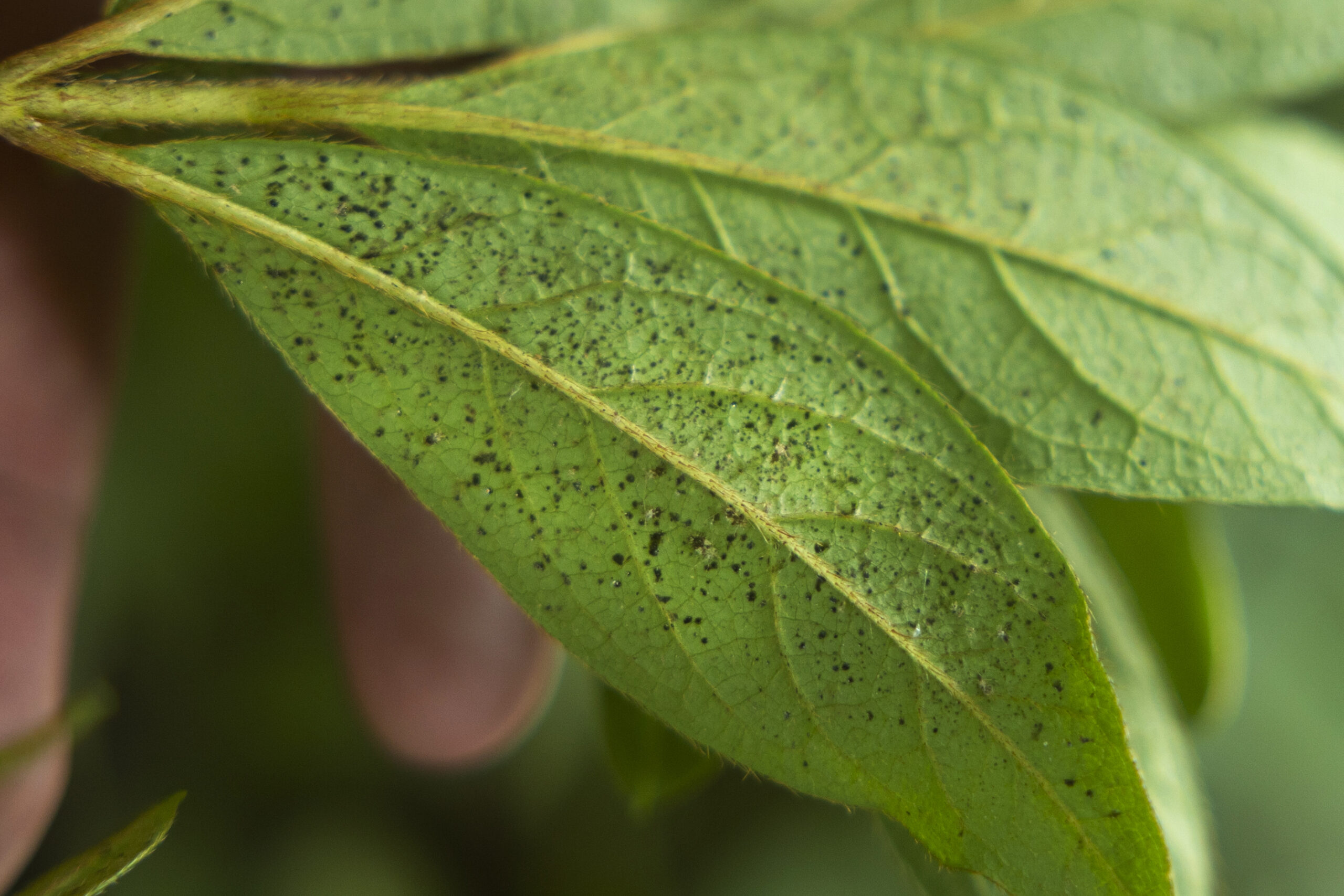
Knowing the damage helps decide whether an azalea is a candidate for the oil, or for a new location. The NC State publication describes the adult as about one-eighth inch long, with mostly transparent, lace-like wings that carry some dark markings. Nymphs are nearly colorless when they hatch and then turn dark and spiny. All life stages live on the undersides of leaves.
Feeding leaves pale spots that spread until the leaves look bleached and bronzed. The bugs also leave dark excrement, called bug specks, on the lower leaf surface, which the publication says helps tell lace bug damage from spider mite damage, because spider mites do not leave those specks. Spring generations usually cause the most damage, so the early part of the season is when new growth deserves a close look.
Mulch also matters for a shrub that is being relocated or replanted. Clemson’s factsheet recommends a 3-inch layer of organic mulch such as compost, pine straw, ground leaves or pine bark around each plant, kept pulled back from the main stem to reduce disease risk, and it suggests raising poorly drained sites so the top of the root ball sits several inches above ground level.
This article was produced with AI assistance and edited for accuracy against the sources linked above.
Image: Alabama Extension – CC0/Wikimedia Commons