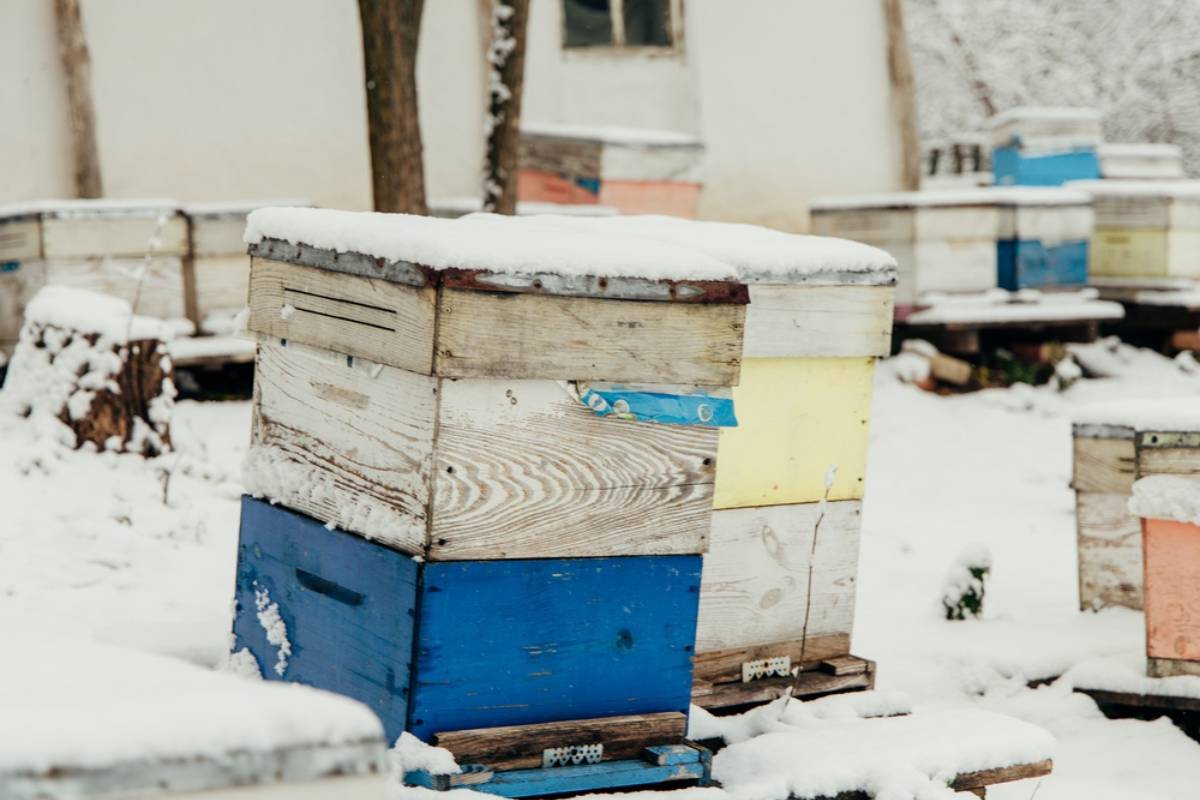
First-Year Beekeeper Fears His Two Hives Could Freeze After Wyoming’s Brutal Winter Arrives, Then Experienced Keepers Reveal Why Closing the Bottom Board Might Not Be the Whole Answer
A person shared his story about preparing two beehives for winter in Wyoming, where temperatures can plunge below zero and icy winds can make even an ordinary day feel brutal. It was his first year keeping bees, and he was discovering that caring for a colony involved far more than setting up a hive and waiting for honey. With winter approaching, he began questioning whether the equipment he had purchased earlier in the year was really suited to the weather ahead. His biggest concern was whether the bees could survive the cold with the bottoms of their homes covered by nothing more than a screen.
The beekeeper had installed screened bottom boards on both hives, a design that allows debris and fallen mites to pass through the mesh. These boards can be useful for monitoring pests and managing hive conditions, but the approaching winter made him reconsider their advantages. What had seemed like a sensible equipment choice during the warmer months suddenly looked like a potential weakness. With freezing temperatures on the horizon, he wanted to make the right decision before the bees were left to face the worst of the season.
Wyoming’s Winter Weather Raises the Stakes
Living in Wyoming meant the beekeeper could not simply assume his hives would experience a mild winter. Temperatures could drop below zero, and strong winds could make an exposed apiary particularly challenging. For someone managing his first colonies, those conditions created an uncomfortable question: how much protection did his bees actually need? He wanted to avoid discovering that his winter preparation had been inadequate only after the cold had arrived.
The situation was especially concerning because honeybees do not survive winter by keeping every corner of their hive warm. Instead, they cluster together and generate heat while relying on their stored food to sustain the colony. Cold weather is only part of the challenge, because moisture and drafts can also affect winter survival. The beekeeper needed to consider how his bottom boards, ventilation, insulation, and food supplies would work together rather than treating the screen as the only problem.
The Screened Bottom Boards Become the Main Suspects
Screened bottom boards are popular among beekeepers because they allow mites and other debris to fall away from the colony. Many designs also include a removable insert that can be slid beneath the mesh when needed. During winter, that insert can help reduce airflow through the bottom of the hive, depending on the equipment and local conditions. For the Wyoming beekeeper, it seemed like a relatively simple solution that might save him from replacing the entire board.
However, the presence of a screen does not automatically mean a colony will freeze, just as closing every opening does not automatically guarantee a healthy winter. Bees naturally regulate their cluster, and the surrounding hive environment affects how much energy they need to maintain it. The challenge is to reduce damaging drafts without trapping excessive moisture inside the hive. That balance turned a seemingly straightforward equipment question into a much bigger discussion about winter hive management.
A Replacement Board Seems Like a Major Job
One option was to remove the screened bottom boards and install solid ones instead. The beekeeper had heard this recommendation from people familiar with traditional hive setups, so replacing the boards seemed like a sensible possibility. Still, he worried that the season had advanced too far to start changing equipment. For a first-time beekeeper, the prospect of disturbing two colonies just before winter was understandably intimidating.
A response from a person challenged the idea that it was necessarily too late to make the switch. The advice suggested that if suitable solid boards were already available, replacing the existing equipment might take only a short time. That perspective offered some reassurance, although the practical difficulty would depend on the hive design, the weight of the boxes, and how much lifting was required. Suddenly, the beekeeper had another decision to weigh: whether to modify the existing setup or make a more substantial change before temperatures fell further.
The Removable Insert Offers a Simpler Alternative
Another response from a person suggested using the insert supplied with the hive kit to cover the screened bottom board. This approach could reduce cold air moving upward through the bottom of the hive without requiring the entire board to be replaced. Some beekeepers use removable plastic sheets or similar panels for this purpose, making seasonal adjustments easier. For someone managing two hives, the convenience of using equipment he already owned was understandably appealing.
The important detail was that the insert needed to fit properly and be used with an understanding of the hive’s ventilation needs. Gaps around the edges could allow wind to enter, reducing the effectiveness of the barrier. One experienced beekeeper described using the insert and sealing exposed areas where wind might blow through. It was a practical suggestion, but it also highlighted that simply sliding a panel into place might not address every problem.
Experienced Beekeepers Disagree About Winter Screens
As the discussion developed, it became clear that there was no universal agreement about screened bottom boards during winter. Some beekeepers preferred to close them during prolonged cold spells, while others continued using them throughout the year. Their approaches reflected different climates, equipment choices, and experiences with overwintering colonies. For the newcomer, the conflicting advice made the decision more complicated than he had probably expected.
One response from a person explained that screened bottom boards were used year-round in parts of the country, with an insert added only when unusually cold weather persisted. Another beekeeper from a colder region reported keeping screened boards for several years and experiencing successful winters. These accounts suggested that the screen alone did not determine whether a colony survived. Instead, the broader setup and the conditions facing the bees played important roles in the outcome.
Some Beekeepers Prefer Closing the Bottom Completely
Not everyone was enthusiastic about keeping screened bottom boards, particularly in places where winter winds could be severe. One response from a person argued that solid bottom boards were preferable and suggested that changing to them could be straightforward if the equipment was already available. From that beekeeper’s perspective, eliminating the open screen was a simple way to avoid an unnecessary source of airflow. The recommendation offered a clear alternative for anyone who preferred a more traditional winter arrangement.
Other beekeepers also favored inserting a panel during colder weather, especially when forecasts called for extended freezing temperatures. Their goal was not necessarily to seal the hive permanently, but to make seasonal adjustments when the conditions justified them. Even so, a closed bottom does not remove the need to manage moisture and ventilation elsewhere in the hive. The apparent simplicity of a solid board therefore came with another responsibility: ensuring that the rest of the winter setup remained suitable.
The Debate Takes an Unexpected Turn Toward Moisture
Just when the conversation seemed focused entirely on preventing cold air from entering, another response from a person introduced a different concern. The beekeeper asked whether the colony would be managed as a condensing hive or whether ventilation would be provided at the top. That question shifted attention from the bottom board to the movement of moisture throughout the hive. It also revealed why experienced beekeepers could recommend different arrangements without necessarily contradicting one another.
Honeybees consume stored food and release moisture as part of their normal activity, so a winter hive must deal with that moisture somehow. If warm, humid air condenses on cold surfaces above the cluster, dripping water can become a problem. Ventilation strategies and insulation choices can affect where that condensation occurs and how it is managed. The discussion had uncovered a more important question than whether the screen should remain open: how could the beekeeper maintain a suitable balance between heat retention and moisture control?
Cold Air Is Not the Only Enemy of a Winter Hive
It is tempting to assume that the coldest possible hive is automatically the most dangerous environment for bees. However, honeybees are adapted to survive cold weather by clustering together and using their stored food to generate heat. Their ability to move around the cluster and reach available honey is also important, especially during prolonged cold spells. A colony that cannot access its food may struggle even when plenty of honey remains elsewhere in the hive.
Moisture can complicate the situation by making the colony’s environment less suitable for winter survival. That is why closing every opening without considering the consequences can be a poor strategy. The beekeeper needed to think about how his colonies would retain warmth while avoiding problematic condensation. In other words, the real challenge was not simply blocking winter out, but preparing the hives to cope with the conditions that could not be avoided.
Wind Protection Becomes Part of the Solution
For a beekeeper in Wyoming, wind deserved special attention alongside temperature. Even when bees cluster effectively, persistent drafts can make the surrounding environment more challenging, particularly if air enters through exposed gaps. One response from a person recommended using the insert and sealing areas where wind could pass through the rear opening. The suggestion focused on reducing unwanted airflow without requiring an elaborate equipment overhaul.
Other forms of protection could also be considered, depending on the apiary’s exposure and the hive design. Appropriate insulation and a sheltered position may help reduce the effects of severe weather, provided that they do not interfere with necessary ventilation. The beekeeper would still need to ensure that the colony had sufficient food and that the hive remained structurally secure. A well-prepared winter setup involves several small decisions working together rather than relying on one piece of equipment to solve everything.
Some Experienced Keepers Leave the Screens in Place
The most surprising part of the discussion was that some beekeepers in cold climates reported leaving their screened bottom boards in place throughout winter. Their experiences challenged the assumption that every hive needed to be converted to a solid-bottom design before the first freeze. One response from a person described years of using screened boards in a snowy northern region, with very few winter losses. That account suggested that successful overwintering was possible without making the same equipment changes the newcomer was considering.
However, an individual beekeeper’s experience does not establish that the same arrangement will work equally well in every location. Hive strength, stored food, mite management, insulation, wind exposure, and moisture control can all influence the outcome. A setup that works well in one apiary might require adjustments in another. For the Wyoming beekeeper, these reports offered useful perspectives but did not eliminate the need to evaluate his own conditions carefully.
The Insert Can Also Help With Monitoring
The removable insert had another advantage beyond limiting airflow: it could help the beekeeper monitor what was happening beneath the colony. Depending on the design, a tray can collect fallen debris and provide information about the hive. Some beekeepers use such inserts when checking mite drop, although a bottom-board count alone should not be treated as a complete assessment of Varroa levels. This made the accessory useful for more than simply covering an opening.
At the same time, leaving an insert in place can change how debris and mites behave around the bottom board. Its effects depend on the specific equipment and how the tray is used. The beekeeper therefore needed to consider both winter protection and his longer-term monitoring routine. What initially looked like a simple piece of plastic or board turned out to be part of a wider system for managing the colony.
The Original Plan Was Not Necessarily a Mistake
The beekeeper’s decision to buy screened bottom boards was not unusual for someone starting out. Such boards are commonly included in beginner hive kits because they can offer practical benefits during the warmer months and make certain monitoring tasks easier. The challenge was that equipment suited to one season might require adjustments in another. His concern reflected the learning curve that comes with moving from setting up a hive to managing it through a full year.
The responses also showed that experienced beekeepers do not always follow one identical winter routine. Some preferred solid bottoms, others used removable inserts, and some left the screens open while concentrating on other aspects of hive preparation. Those differences did not mean every method was equally suitable for every situation. Rather, they highlighted the importance of understanding why a particular setup works and which conditions could make it less effective.
The Biggest Lesson Was to Prepare the Whole Hive
By the end of the discussion, the original question about covering a screened bottom board had grown into a broader lesson about winter beekeeping. A removable insert might reduce drafts, while a solid board could be an option for someone with the appropriate equipment and a suitable opportunity to make the change. Yet neither choice could compensate for a weak colony, inadequate food stores, poor mite management, or an unsuitable moisture-control strategy. The beekeeper had to assess the entire setup rather than expect one adjustment to guarantee success.
That lesson was especially valuable during a first winter, when every equipment decision can feel like a make-or-break moment. The best approach would depend on the local weather, the hive’s construction, the strength of each colony, and the beekeeper’s ability to manage ventilation and moisture. Advice from experienced keepers could help narrow the options, but local conditions still mattered. Preparing for winter was less about finding a magical piece of equipment and more about making several informed decisions before the weather turned severe.
Two Hives, One Winter, and a Much Bigger Learning Curve
The Wyoming beekeeper began with a fairly straightforward concern: would the screened bottom boards on his two hives leave his bees exposed to dangerously cold air? By asking before winter arrived, he received a range of practical ideas, from inserting a removable panel to considering solid boards and paying closer attention to wind protection. He also discovered that moisture management could be just as important as limiting drafts. What looked like a small equipment problem had become a lesson in the many factors that shape a colony’s chances of surviving winter.
The most useful takeaway was that there was no single answer that could be applied blindly to every hive. Some beekeepers successfully overwintered colonies with screened bottoms, while others preferred to close them or use solid boards in colder conditions. For this first-year beekeeper, the next step was to assess his equipment and local winter risks instead of making a rushed decision based on fear alone. After all, the goal was not merely to keep the wind out of the hive, but to give both colonies the best possible chance of emerging healthy when spring finally returned.