Homeowner Hired Workers to Fix a Drainage Problem Beside His Garden, Then His Neighbor Called Code Enforcement and Accidentally Got His Own Fence Ordered Removed
A homeowner who had recently bought a house discovered that his neighbor had been using a narrow strip of his property as if it belonged to him, complete with a fence that blocked access to the land. The situation might have remained an awkward neighborhood arrangement if water had not started seeping into the homeowner’s basement, prompting him to hire workers to improve the drainage. But when the neighbor confronted the crew and called code enforcement, his attempt to stop the work took a surprising turn that left him dismantling his own fence in the summer heat.
A New Home Came With an Unexpected Problem Along the Property Line
When a homeowner bought his house, he expected the usual responsibilities of maintaining a property, from keeping the lawn tidy to handling the occasional repair. What he did not expect was that his neighbor’s fence stretched across the driveway and toward the side of his house, effectively blocking access to a strip of land that belonged to him. The narrow section measured approximately 30 feet long and four feet wide, making it an awkward but potentially useful space for landscaping.
During the home’s showing, inspections, appraisal, and city approval, nobody raised an issue with the fence or explained why it extended across the homeowner’s property. The neighbor had been mowing the grass in that strip, which may have made the arrangement appear ordinary from the street. For the new homeowner, however, the fence eventually became more than an unusual boundary feature when a drainage problem forced him to take a closer look at the neglected side of his house.
Heavy Rain Revealed Why the Side Yard Needed Attention
Later that year, after a series of unusually heavy rainstorms, the homeowner noticed a small amount of water seeping into his basement. The problem seemed to be coming from the same side of the house where the neighbor’s fence prevented him from accessing the narrow strip of land. When he examined the area, he noticed that the ground appeared to slope toward his foundation instead of directing water away from the house.
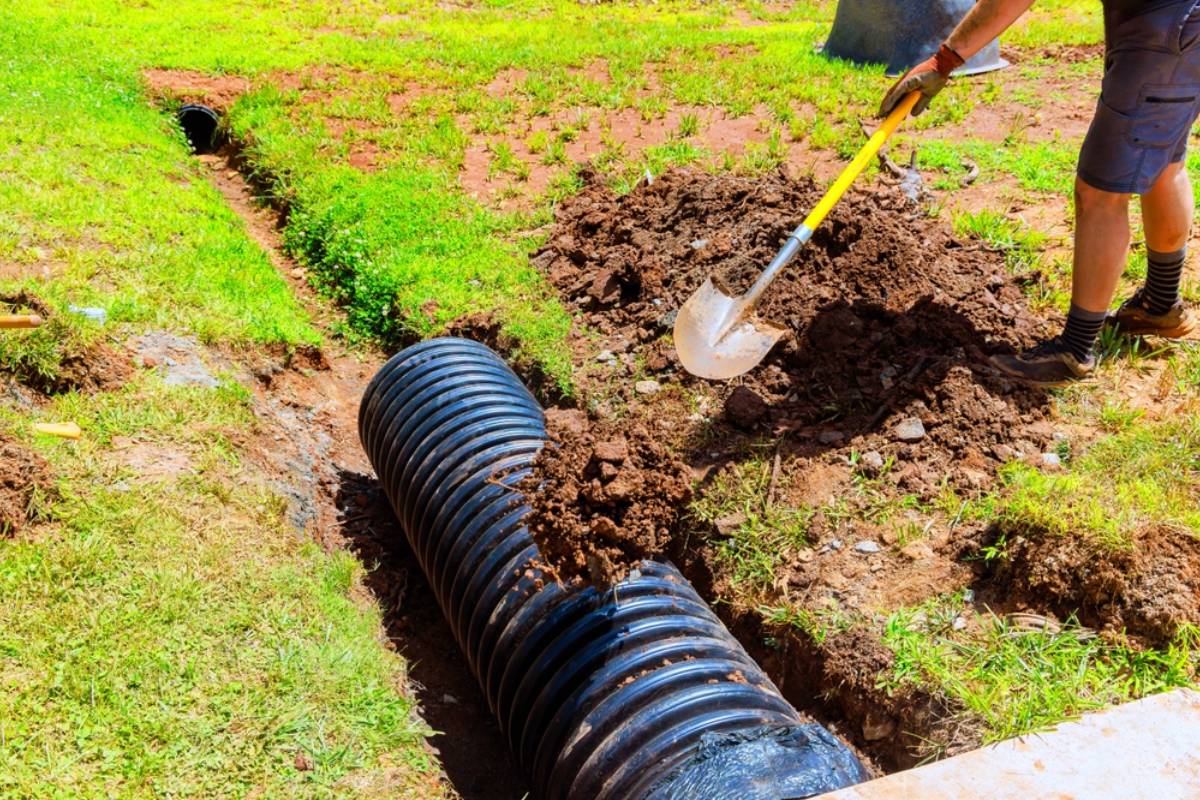
Rather than ignoring the problem until the next major storm, he decided to arrange professional drainage work for the following spring. His plan involved correcting the slope of the soil and installing a French drain to help move water away from the foundation. It was a practical home improvement project, but it also meant that workers would need access to the very strip of land his neighbor had been treating as part of his own yard.
The Homeowner Wanted to Fix the Drainage Without Starting a Feud
The homeowner’s original intention was not to start a battle over property boundaries or destroy his neighbor’s carefully maintained lawn. In fact, he explained that he wanted to correct the slope and install the drainage system without causing water to flow into the neighbor’s driveway. That approach suggested he was trying to solve his own problem while avoiding creating another one next door.
When spring arrived, he hired a crew to handle the work, and the workers began improving the ground beside his house. The project involved changing the soil’s slope and installing a French drain, both intended to help prevent future basement water problems. Everything might have proceeded quietly if the neighbor had simply allowed the workers to finish, but the sight of people working in what he considered his territory apparently sent him into a rage.
The Neighbor Stormed Outside and Challenged the Workers
According to the homeowner’s account, the neighbor, an older man, came outside and began shouting at the workers. He wanted to know what they were doing on his property, despite the homeowner’s understanding that the land being improved belonged to him. Instead of asking questions calmly or discussing the fence, the neighbor immediately turned a drainage project into a confrontation.
The workers were there to perform a specific job, not to get caught in a neighborhood argument over who controlled a strip of grass. Their presence had exposed an uncomfortable disagreement that the fence had apparently concealed for years. The homeowner had hired professionals to protect his basement from water, but his neighbor’s reaction suggested that maintaining control over the disputed strip mattered more to him than letting the repair proceed.
The Next-Day Knock Brought an Unexpected Visitor
The following day, the homeowner received a visit from a code enforcement officer. The neighbor had apparently decided that reporting the homeowner was the best way to stop the work or get him into trouble. For someone who believed the workers had trespassed onto his land, calling the authorities may have seemed like a clever way to regain control of the situation.
However, the officer’s reaction was not what the neighbor had apparently hoped for. After arriving at the house, the officer told the homeowner that he was not sure why he had been sent there because the property looked well maintained and he could not see the weeds described in the complaint. Rather than immediately finding a violation at the homeowner’s house, the officer asked to be shown the specific area that had supposedly caused the problem.
The Inspection Quickly Shifted Attention to the Fence
The homeowner took the officer to the side of the house, where the disputed strip of land and the fence blocking access could be seen. What had begun as a complaint about the homeowner’s property suddenly gave the officer a reason to examine the neighbor’s own arrangements. The fence that had been the source of the confrontation became the most significant discovery during the visit.
The officer explained that the homeowner had ten days to remove the fence because it was obstructing access to the strip of land in question. The neighbor’s attempt to trigger an inspection had therefore produced a consequence he had not anticipated. Instead of watching the homeowner scramble to correct a violation, he now faced the prospect of taking down the very structure he had been defending.
The Complaint Also Exposed Weeds and Untidy Edges
The fence was not the only issue that came to the officer’s attention during the inspection. The officer also told the homeowner that the neighbor needed to address weeds on his patio and edge the sidewalk. Those details added an almost comic twist to the visit because the original complaint had apparently been intended to draw official attention toward someone else.
For gardeners, the situation carries a familiar lesson about maintaining outdoor spaces: the person who complains most loudly about a neighbor’s yard is not necessarily the one whose property will pass every inspection. Weeds between paving stones, grass creeping over sidewalk edges, and neglected patio areas may seem minor, but local rules can sometimes address these issues. In this case, the inspection left the neighbor with several tasks to complete, rather than the simple victory he may have imagined.
The Neighbor’s Wife Arrived With a Request for Help
After the inspection, the neighbor’s wife approached the homeowner with a proposal. She asked whether he would be willing to split the cost of removing the fence, apparently hoping to make the unexpected expense easier for her household to manage. It was a remarkable change in circumstances, considering that the previous day her husband had been shouting at the people hired to work on the property.
The homeowner declined to contribute, making it clear that he did not intend to pay for the removal of a fence that had blocked access to his own land. His response was sharp and sarcastic, reflecting how little sympathy he had left after the confrontation and subsequent complaint. From his perspective, the neighbor had created the problem by insisting on an arrangement that could not withstand official scrutiny.
The Fence Owner Had Ten Days to Undo His Own Decision
With the deadline approaching, the neighbor had little choice but to begin dismantling the fence. The homeowner reported seeing the older man working outside in the heat, taking apart the structure that had separated him from the narrow strip of land. The scene offered a particularly satisfying reversal because the neighbor had tried to use the authorities to pressure someone else, only to receive an order that required him to do the work himself.
At one point, the homeowner could hear the neighbor calling his children and asking them to come help with the removal. The same fence that had seemed worth defending so aggressively had become a burdensome project that needed to be completed quickly. It was an example of how a dispute over a small piece of outdoor space can grow into a much larger headache when one person refuses to approach the situation reasonably.
The Drainage Project Had Already Solved a Bigger Problem
While the fence dispute attracted attention, the original reason for the work remained important. The homeowner had arranged for the ground beside his house to be regraded and a French drain installed to help direct water away from the foundation. The drainage work addressed the source of the basement leak rather than merely treating the symptoms after each storm.
A French drain typically uses a gravel-filled trench and perforated pipe to collect and redirect groundwater away from an area where it could cause trouble. Combined with properly graded soil, the system can help reduce water accumulation near a home’s foundation when designed and installed appropriately. In this case, the homeowner later clarified that the drainage issue was resolved through the soil adjustment and French drain, so the project had achieved its original purpose despite the neighbor’s interruption.
Regaining Access Changed the Future of the Narrow Strip
Once the fence was removed, the homeowner finally had access to the full strip of land beside his house. What had previously been a frustrating patch of grass controlled by a barrier could now be maintained and used according to his own plans. The space was only four feet wide, but even a narrow side yard can offer opportunities for attractive landscaping or a simpler, lower-maintenance design.
The homeowner mentioned that he intended to remove the roses growing in the area and relocate them somewhere he could enjoy them. He also planned to remove the mulch, lay down landscaping fabric, and cover the strip with pea gravel. Rather than preserving a planting area that had become associated with a frustrating dispute, he wanted to turn the space into something practical that would require less ongoing maintenance.
The Roses Were About to Get a New Home
The planned removal of the roses added another gardening twist to the story. Instead of leaving the plants trapped in a narrow strip that had been difficult to access, the homeowner intended to transplant them to a location where he could properly appreciate and maintain them. Depending on the rose varieties and local growing conditions, careful transplanting could give the plants a fresh start in a more convenient part of the garden.
Gardeners considering a similar move should generally avoid treating established roses as disposable simply because their current location has become inconvenient. Selecting an appropriate new site, preparing the soil, protecting the roots, and watering consistently after transplanting can improve their chances of surviving the move. The homeowner’s plan offered a way to preserve the plants while changing the rest of the landscape to suit his needs.
Pea Gravel Offered a Lower-Maintenance Alternative
The homeowner’s proposed pea-gravel finish was a clear departure from the grassy strip the neighbor had been mowing. Gravel can provide a neat appearance and reduce the need for regular mowing, although it still requires occasional maintenance to remove leaves and unwanted weeds. For a narrow side yard, that simplicity may be especially appealing when access has previously been difficult.
There is one important landscaping consideration, however: weed-control fabric beneath gravel does not eliminate weeds permanently, and it can interfere with soil health if used indiscriminately in planting areas. Homeowners should also ensure that any gravel installation preserves the intended drainage pattern instead of directing water toward a foundation or neighboring property. Since the homeowner’s original concern involved basement moisture, maintaining the correct slope and drainage performance would be more important than simply covering the ground.
A Response From a Person Highlighted the Irony of the Situation
A response from a person discussing the story pointed out the irony of a neighbor who tried to use code enforcement against someone else only to find himself dealing with official scrutiny. The exchange reflected a familiar neighborhood dynamic: people sometimes become so focused on proving another person wrong that they forget their own property could be examined as well. In this instance, the fence and the additional maintenance issues made the complaint backfire in a particularly memorable way.
Other reactions focused on the practical side of the dispute, especially the homeowner’s efforts to resolve the drainage problem without deliberately sending water into the neighbor’s driveway. The story also prompted discussion about property boundaries and how easily an informal arrangement can turn contentious when a new owner wants to use their land differently. Ultimately, the inspection did not just settle a dispute over a fence; it helped reveal why clear boundaries and reasonable communication matter in residential landscaping.
One Complaint Turned a Small Patch of Grass Into a Major Headache
The homeowner’s experience began with a small basement leak and a sensible plan to improve drainage beside his house. A neighbor’s confrontation and complaint transformed that routine maintenance project into a dispute over access, a fence removal deadline, and additional yard work. By the time the dust settled, the homeowner had addressed the drainage problem and regained access to his property, while the neighbor was left dismantling the barrier he had fought to preserve.
For gardeners, the story is a reminder that a yard is more than the grass, roses, mulch, and gravel visible from the street. Property lines, drainage patterns, and access can be just as important as the plants themselves, particularly when neighboring homes sit close together. Sometimes the most satisfying ending is not a dramatic garden makeover or an elaborate revenge plan, but simply getting the water flowing in the right direction and finally being able to decide what grows in your own yard.