Homeowner Says a City Water Department Approved Her Rain Garden Design in Writing, Then Billed Her for “Unauthorized Stormwater Modification” a Year Later
When Marissa Cole received a letter from her city water department accusing her of making an unauthorized stormwater modification, she assumed it was a mistake. A year earlier, the same department had reviewed her backyard rain garden design and approved it in writing, including the exact drainage changes now being questioned.
What started as a simple effort to stop flooding around her basement eventually turned into a dispute that forced Marissa to dig through old emails, photographs, permits, and city records.
The Water Kept Collecting Against the House
Marissa first noticed the problem after several heavy storms left a shallow pond beside the back steps of her brick ranch in suburban Pennsylvania. Water would collect along the foundation, seep toward the basement window wells, and remain there long after the rest of the yard had dried.
Her neighbor, Eric Lawson, watched her carry buckets away from the steps one morning and finally asked why she had not considered a rain garden. Marissa admitted she had never built one before, so Eric suggested she contact the city because their neighborhood had recently introduced a stormwater program encouraging homeowners to manage runoff on their own properties.
She Called the City Before Digging
Marissa called the city’s water department and explained exactly what she wanted to do. She described a shallow planted basin, a stone overflow channel, and a small underground drainage connection designed to redirect excess water away from her foundation.
The employee on the phone told her to submit a simple sketch and photographs of the existing yard. “Don’t start digging until someone reviews it,” the employee warned. Marissa took that advice seriously because she had no interest in receiving a violation over something she was trying to do correctly.
The Approval Arrived in Her Inbox
A few weeks later, Marissa received an email from a stormwater coordinator named Daniel Ruiz. Attached was her marked-up drawing with several handwritten-style digital notes showing where the department wanted the basin and overflow area located.
The message stated that the proposed rain garden was approved subject to the conditions listed in the attachment. Marissa printed the email and drawing, placed both in a folder, and hired a local landscaper to do the work according to the approved plan.
The Contractor Followed Every Line
The landscaper, Kevin Brooks, arrived with a small excavator and a crew of two. Marissa stood outside with the city’s approval printed in her hand while Kevin measured the distances between the house, property line, and proposed basin.
“You’re sure they approved this exact layout?” Kevin asked.
Marissa handed him the drawing.
“That’s what they sent me.”
Kevin studied it for a moment, then nodded. “Then we’ll build it exactly this way.”
The Rain Garden Changed the Yard
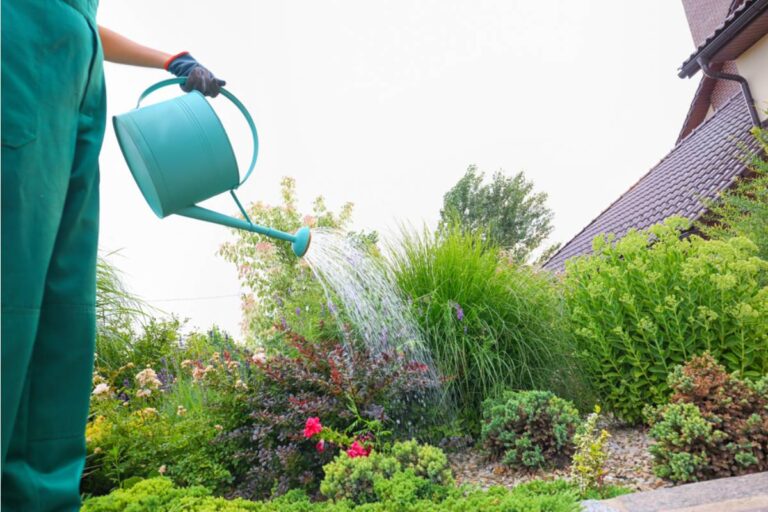
Over the next several days, the crew excavated a shallow depression, installed layers of gravel and soil, and planted native grasses and flowering perennials around the basin. A narrow stone channel led excess water toward a lower section of the property instead of allowing it to pool against the house.
Marissa watched the first test storm run through the new system without touching the foundation. For the first time in years, she could walk through the backyard after a storm without stepping into ankle-deep mud.
She took photographs of the finished project from several angles and saved them with the city’s approval documents.
The City Inspector Came by
About a month later, a city employee stopped outside Marissa’s house while she was bringing groceries inside. He introduced himself as someone from the stormwater division and asked whether she was the homeowner who had installed the rain garden.
Marissa immediately brought out her approval letter.
He looked at the document, walked around the backyard, and measured part of the drainage channel. After several minutes, he said, “Everything appears to be in order.”
Marissa felt relieved.
She put the inspection notes and photographs into the same folder as the original approval.
A Full Year Passed Without Trouble
For the next year, the rain garden became one of the least interesting things in Marissa’s life. The plants grew, the drainage worked, and the basement remained dry during storms that previously caused problems.
She occasionally received compliments from neighbors who liked the way the garden looked. Eric even copied part of the planting design in his own yard after seeing how well it handled runoff.
Marissa never imagined the project would come back into question.
Then an envelope from the city arrived.
The Letter Accused Her of Breaking the Rules
The letter came from the water department and contained language Marissa did not recognize. It stated that an inspection had identified an “unauthorized stormwater modification” on her property.
She read the sentence three times.
Then she noticed the amount the department claimed she owed in penalties and administrative charges.
Marissa immediately called the number listed on the notice.
“I have written approval for this,” she told the representative.
The representative replied, “According to our current records, we don’t have an approved modification for that installation.”
Marissa Opened the Folder
Marissa pulled the folder from a filing cabinet and spread everything across the dining room table. The original email was still there, along with the marked-up plan, photographs of the completed rain garden, contractor invoices, and the inspection notes from the city employee.
She called the water department again and asked to speak with Daniel Ruiz.
After several transfers, someone told her Daniel no longer worked there.
“Can you tell me who approved my project?” Marissa asked.
The representative said the approval system had been reorganized and that older records were being transferred into a new database.
Marissa stared at the papers in front of her.
“Then where did my approval go?”
Nobody had an answer.
The Department Claimed the Design Had Changed
Several days later, Marissa received another message from the city. It suggested that the installation visible in her backyard did not match the design currently associated with her property.
Marissa immediately compared the approved drawing with her photographs.
The layout was nearly identical.
The only difference was that the plants had grown substantially.
She called the department and asked what specifically they believed was unauthorized.
The representative pointed to the underground drainage connection.
Marissa pulled out the original drawing.
“It is right here,” she said. “You approved it.”
The Contractor Had Kept His Copy
Marissa contacted Kevin, the contractor who had built the garden. She expected him to tell her that he had thrown away the paperwork after completing the job.
Instead, Kevin said, “Actually, I still have it.”
He sent her a photograph of the same city-approved plan.
There was one detail Marissa had forgotten.
Kevin had written the date of construction on the bottom of his copy and signed his name beneath a note stating that the installation followed the city’s approved design.
Marissa forwarded the document to the department.
The response was silence.
Her Neighbor Remembered Something Important
Eric became involved after Marissa told him what was happening. He remembered seeing a city truck outside her property during the original inspection and said he had spoken briefly with the inspector.
More importantly, Eric had taken a photograph that day because he was considering installing his own rain garden.
The picture showed Marissa’s backyard in the background.
The city inspector was standing beside the completed drainage channel.
Eric sent the photograph to Marissa.
She enlarged it.
The date was visible in the corner.
The Photograph Contradicted the City’s Timeline
Marissa noticed something else in the photograph. The inspector was holding a clipboard, and beside him was a rolled-up copy of the same plan the city now claimed it could not verify.
She sent the photograph to the water department with a short message asking them to explain the discrepancy.
This time, a supervisor called her.
“I’ve reviewed the file,” he said. “There appears to be a records issue.”
Marissa almost laughed.
“A records issue caused you to bill me?”
The supervisor paused.
“That’s not how we intended it.”
Marissa replied, “It is exactly how it happened.”
An Old Employee Was Asked to Look
The supervisor reopened the department’s older digital archive and contacted Daniel Ruiz, who was still reachable through his former municipal email account. Daniel remembered Marissa’s application immediately.
“I approved that one,” he told the supervisor.
Daniel still had a copy of his original approval message.
He forwarded it to the department.
The attachment matched Marissa’s copy exactly.
The supervisor called Marissa again.
“We found the approval.”
Marissa leaned back in her chair.
“So the modification wasn’t unauthorized?”
“No,” he said. “It was approved.”
The Bill Was Not the Only Problem
Marissa expected the city to simply cancel the charges. Instead, the supervisor explained that the department needed to determine why the old approval had disappeared from the current system before formally closing the case.
That meant the notice remained active for several more days.
Marissa became increasingly frustrated.
“I did everything you told me to do,” she said. “I asked before digging, submitted your form, followed your plan, let your inspector check it, and kept your paperwork.”
The supervisor agreed.
“You did.”
“Then why am I the one proving it?”
He had no good answer.
The Missing Record Was Finally Found
The investigation eventually revealed that the city’s stormwater department had migrated older permit and approval records into a new software system. Several records had been incorrectly categorized during the transfer.
Marissa’s approval had been placed under an archived drainage inquiry rather than an active stormwater modification record.
The department’s later inspection system therefore flagged her property as having an unapproved installation.
Nobody had noticed the error until Marissa challenged the notice.
The supervisor admitted that the mistake had originated inside the department.
The City Cancelled the Charges
A revised letter arrived several days later stating that the alleged violation had been closed. All penalties and administrative charges were removed.
The letter also confirmed that Marissa’s rain garden was considered an approved stormwater improvement.
Marissa framed the original violation notice and placed it beside the approval letter.
Eric came over that evening and asked whether the city had finally admitted its mistake.
“They did,” Marissa said.
He smiled.
“Are you going to keep the garden?”
Marissa looked through the kitchen window toward the plants.
“Absolutely.”
The Supervisor Asked for One More Favor
A week later, the supervisor contacted Marissa again. He asked whether she would allow the department to use her paperwork as an example during staff training.
Marissa agreed, but only after asking what they planned to teach.
The supervisor laughed.
“Basically, how not to lose an approved project in a database.”
Marissa thought about it.
“Add one more lesson.”
“What’s that?”
“Tell homeowners to keep their own copies.”
The supervisor agreed.
Her Folder Became the Most Important Part of the Garden
Marissa kept the physical folder in a fire-resistant box from then on. She added photographs, the contractor’s signed copy, the inspection photograph from Eric, and the city’s final confirmation that the project had been approved.
She also saved every document electronically in two separate locations.
The garden itself continued doing exactly what it had been designed to do.
When heavy rain came, water flowed toward the basin, soaked into the soil, and moved safely away from the house.
Nothing about the garden looked unusual.
But Marissa knew better.
The Neighbor Started His Own Application
Months later, Eric decided to build a rain garden of his own. Before he put a shovel into the ground, he came to Marissa’s house carrying a folder.
“Would you look over this?” he asked.
Marissa opened it and saw his city application.
“Did you get approval?”
“Not yet.”
She handed the folder back.
“Then don’t start.”
Eric laughed.
“Trust me, I learned from you.”
Marissa smiled and looked across the yard at her rain garden.
The plants were taller now, the stone channel was partly hidden beneath them, and nothing about the finished project suggested there had ever been a dispute.
But she still remembered the day that envelope arrived.
The Garden Stayed, But the Lesson Did Too
The city eventually added a new digital confirmation system that allowed homeowners to download permanent copies of stormwater approvals. Marissa never knew whether her case directly caused the change, but she suspected it had something to do with the uncomfortable questions her supervisor had been forced to answer.
Whenever someone in the neighborhood asked about building a rain garden, Marissa encouraged them to contact the city first.
“Get everything in writing,” she always said.
Then she would add, “And save the writing somewhere the city can’t accidentally lose it.”
Her garden had started as a way to protect her house from rainwater.
In the end, it taught her something else entirely: an approval is only as useful as the record proving you received it.