Homeowner Says a Neighbor Drew a Rope Border Across the Lawn to Control Her Grass, Then One Bad Mowing Pass Put the Property Line Feud in Plain Sight
A person shared his story about a long-running disagreement with the neighbor next door, and somehow the whole thing managed to turn into a battle over two inches of grass. The homeowner explained that his fence sits about two inches inside his own property line, a detail that had apparently never mattered much until the neighbor started paying extremely close attention to the lawn. What had once been an ordinary suburban yard was slowly becoming a surprisingly complicated gardening boundary.
The homeowner said his family had been there since the subdivision was first built and that they had purchased and paid for the fence themselves. The neighborhood had originally come without fences, so he believed there was little room for confusion about who owned what. Still, his neighbor repeatedly insisted that the fence belonged to him and acted as though every blade of grass near it was part of a personal jurisdiction.
The Neighbor Had Opinions About Everything
According to the homeowner, the complaints were not limited to the fence. The neighbor had found reasons to comment on the height of the grass, the way the swimming pool was covered, and even whether a car happened to cross part of the sidewalk. None of these incidents seemed large enough to become neighborhood history on their own, but together they created a steady stream of tension.
The family said they had tried to remain polite despite all the little disputes. They ignored plenty of irritating behavior and apparently decided it was easier to keep the peace than to fight over every minor inconvenience. That strategy worked for a while, but the situation changed when the neighbor decided the lawn needed its own physical dividing line.
Then a Rope Appeared in the Yard
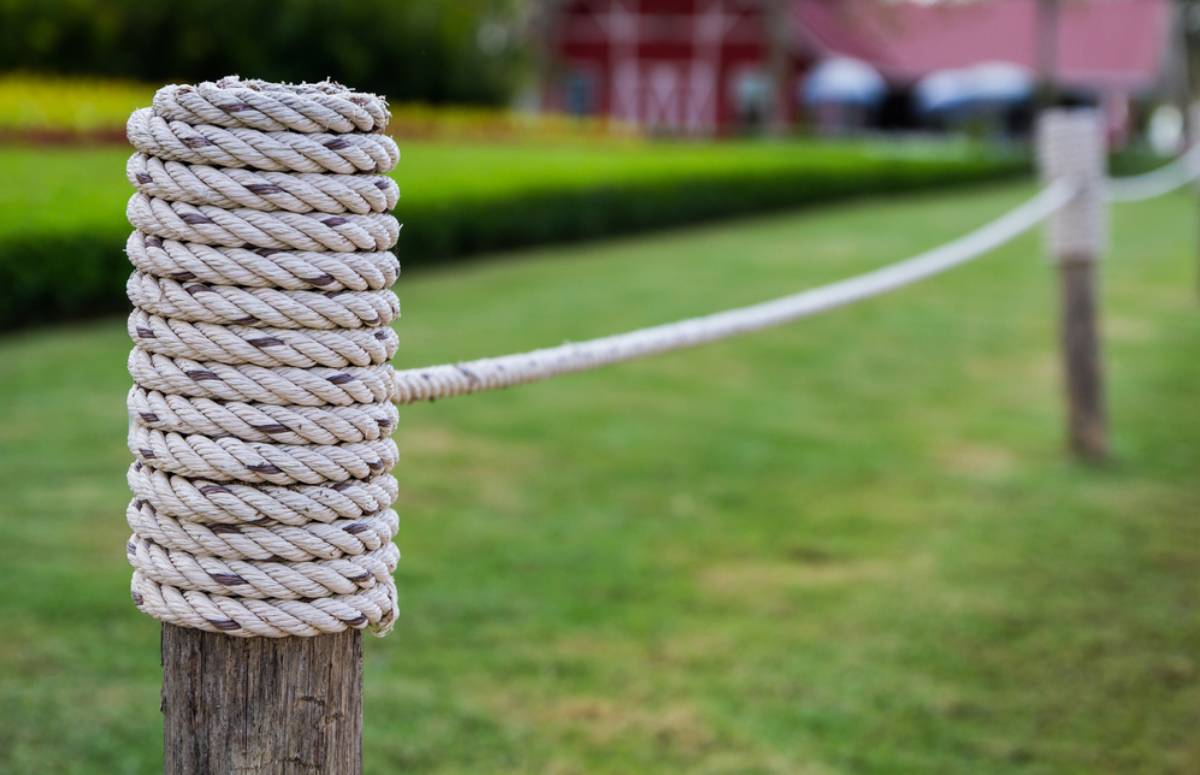
One day, the homeowner discovered that the neighbor had added a rope running from the fence toward the sidewalk. The rope was apparently meant to create a very obvious visual boundary between the two lawns, even though the fence was already sitting along the property area. It was such an oddly specific solution that it almost sounded like someone had drawn a line on a map and then brought it to life with garden rope.
From the homeowner’s perspective, the new line created another obstacle to deal with every time he needed to maintain his grass. Instead of simply guiding a mower along the edge of the yard, he now had to worry about accidentally catching the rope with the machine. The garden had officially become a miniature border dispute, complete with its own version of a frontier fence.
Two Inches Became the Center of the Drama
The homeowner said those two inches of property on the far side of the fence legally belonged to him. That tiny strip had never seemed important enough to fight over, especially since everyone could simply mow and move on with life. But once the neighbor began drawing boundaries and claiming ownership of the fence, those two inches suddenly became the most valuable grass in the neighborhood.
The strange part was that the fence itself had been there for years without causing this level of concern. The homeowner knew exactly where it had been installed and said his family had the paperwork to support their understanding of the property line. What had once been an invisible technicality was now sitting at the center of a very visible neighborhood feud.
The Mower Finally Entered the Story
The latest argument started when the homeowner needed to cut his grass. He did not want the mower blade to catch the neighbor’s newly installed rope, so he pulled the little line out of the ground to get it out of the way. During the mowing, the machine apparently swerved slightly near the boundary.
That tiny movement resulted in a fresh cut appearing in the neighbor’s taller grass. Nobody lost a flower bed, a hedge, or a prized vegetable patch, but the neighbor reportedly reacted as though a major landscaping disaster had struck. The homeowner was left wondering how a simple mowing job had somehow become the latest chapter in their ongoing feud.
Suddenly, the Grass Was a Crisis
The neighbor came over to complain about the cut in his grass, which added another layer to an already ridiculous situation. From the homeowner’s point of view, he had been trying to mow his own lawn without damaging the rope that had been placed directly in his way. Somehow, that attempt at ordinary yard maintenance had still managed to produce an argument.
A person responding to the story pointed out that the situation seemed to be about far more than lawn care. The ongoing complaints, the rope boundary, and the disagreement over the fence all suggested that the grass was merely the latest thing to attract the neighbor’s attention. The more ordinary the issue seemed, the stranger it was that it kept becoming a confrontation.
The Gate Created an Even Bigger Problem
There was another detail that made the homeowner’s frustration much easier to understand. The neighbor’s gate was attached to the homeowner’s fence, along with a few other things in the backyard. The homeowner said the family had tolerated these arrangements for a long time and had not made an issue of them, even though they believed the fence was entirely theirs.
Now that the neighbor was becoming increasingly aggressive about the property boundary, the homeowner no longer felt like continuing that unofficial arrangement. He began wondering whether he could force the gate and the other attachments to be removed. Suddenly, the argument about grass had opened the door to a much larger property dispute.
The Survey Became the Most Important Piece of Paper
Several people responding to the story focused on one thing above everything else: the property survey. Their advice was to make absolutely certain that the exact boundary was documented before anyone removed a gate, moved a fence, or took any other dramatic step. In a dispute involving inches of land, a clear survey could matter far more than anyone’s memory of where a fence was supposed to be.
Another response suggested getting an updated survey if the homeowner no longer had the original. The reasoning was simple enough: once the conflict moves beyond lawn complaints and into questions of ownership, assumptions become much less useful. A piece of paper showing the actual boundary could settle what years of arguments could not.
People Suggested Keeping a Record of Everything
One person advised the homeowner to start documenting every part of the dispute. That included photographs of the fence, the rope, the gate, and anything else connected to the property boundary. Dates, conversations, and changes to the yard could also become useful later if the disagreement escalated.
The advice made particular sense because the conflict appeared to be growing rather than shrinking. A person responding to the story noted that evidence could help establish what happened without relying on competing memories. In a neighborhood dispute, today’s annoying rope might seem trivial, but tomorrow it could become one more detail in a much larger record.
Cameras Were Also Suggested
Several responses recommended using cameras around the property. Front, side, and backyard coverage could show when someone entered the property or changed something near the fence. That would also give the homeowner a record of any future incidents instead of leaving every disagreement to a verbal argument.
The suggestion was less about turning the garden into a fortress and more about creating a reliable record. The homeowner had already described a pattern of repeated complaints, so additional documentation could help separate what actually happened from what each neighbor believed happened. Once a dispute reaches that stage, a camera can sometimes become more useful than another conversation over the fence.
Some People Said It Was Time for a Lawyer
A number of responses advised involving an attorney familiar with property law. Rather than repeatedly arguing face to face, the homeowner could potentially communicate through a formal written process. One person suggested having a lawyer send a letter requesting that the gate and other items attached to the homeowner’s property be removed.
That advice also came with a warning not to act too quickly. Before removing anything personally, the homeowner was encouraged to make sure the property boundary was confirmed and that the proper legal steps were understood. In other words, the smartest move might be the least dramatic one, even if the rope was practically begging for a more entertaining solution.
Not Everyone Thought the Grass Was Worth Fighting Over
Some responses took a completely different approach and suggested simply ignoring the disputed strip of grass. One person argued that mowing those two inches was not worth the trouble and that the neighbor could maintain that tiny area himself. In a conflict this petty, doing less could sometimes be more effective than trying to win every microscopic battle.
Another response jokingly suggested dealing with the strip in a way that would make mowing unnecessary. Others proposed landscaping materials that could create a clearer boundary without turning the situation into another argument. The ideas ranged from practical to mischievous, but the common theme was obvious: two inches of lawn should not require a full neighborhood campaign.
The Fence Itself Became a Point of Confusion
Some people were confused about exactly where the rope was positioned and how the fence sat in relation to the property line. The homeowner’s explanation was straightforward to him, but the geometry was apparently difficult to visualize from a description alone. That uncertainty only reinforced why several people wanted a survey before anything else happened.
There was also another possibility raised in the responses: moving the fence farther onto the homeowner’s own side of the line. That could potentially eliminate the disputed strip, although it would also create its own costs and complications. More importantly, moving the fence could force the neighboring gate and attachments to be dealt with, which might solve one problem while creating several others.
The Neighbor May Have Picked the Worst Possible Thing to Complain About
Ironically, the two inches of grass that caused so much trouble might have been the least important part of the whole story. The homeowner had been maintaining the lawn normally, but the neighbor’s rope turned a routine mowing job into a precision operation. Then one small mower movement created a visible mark that immediately became another complaint.
A person responding to the story observed that the rope may have created more trouble for the neighbor than for anyone else. By trying to physically define such a tiny boundary, he had made everyone far more aware of it. What was once just a strip of grass had become a stage for the entire argument.
Some Responses Suggested Stopping All the Friendly Favors
Another theme in the responses was that the homeowner did not necessarily need to keep accommodating his neighbor. For years, the family had apparently tolerated the attached gate and other backyard items despite believing they were on their property. Several people suggested that this arrangement could now be reconsidered.
The basic idea was to establish clearer boundaries and stop making informal exceptions. One response even suggested putting the request in writing rather than continuing a cycle of doorstep arguments. Once everything was clearly documented, there would be less room for each side to claim that something had been agreed to verbally.
The Garden Boundary Had Officially Become a Legal Boundary
The homeowner’s biggest question was no longer about grass at all. He wanted to know how to get the neighbor’s gate and other property removed from his land in Michigan. That moved the situation firmly beyond ordinary gardening etiquette and into the world of property rights, where surveys, records, and legal procedures become much more important than who was angrier during the last lawn argument.
Several people ultimately returned to the same advice: document the situation, confirm the boundary, and get professional legal guidance before taking action. Whether the dispute could be settled quietly remained uncertain, but the homeowner appeared to be finished pretending everything was fine. The rope may have looked like a silly little garden boundary, but it had managed to uncover a much bigger disagreement that had been hiding behind the fence all along.
What Started as Lawn Care Could End With a Property Cleanup
The most amusing part of the entire saga may be how small the original issue was. A person was simply trying to mow his lawn when a rope, a tiny strip of grass, and a neighbor’s long list of complaints collided at exactly the wrong moment. Suddenly, questions about a fence, a gate, property lines, and legal boundaries were all wrapped around what was essentially a lawn-mowing problem.
For now, the homeowner’s next steps appear to be less about cutting grass and more about figuring out exactly where the property ends and where the neighbor’s obligations begin. The garden will probably survive another week, but the neighborhood’s strange little boundary dispute may be much harder to trim back.
Sometimes the most dramatic conflicts in a backyard do not start with a tree falling or a flower bed being destroyed. Sometimes they start with a rope lying in the grass and someone deciding that two inches suddenly matter.