Homeowner Says a Neighbor Entered Her Garden to “Clean Up,” Then Destroyed Mature Plants That Had Been Growing There for Years
A person shared his story about moving into a nearly 100-year-old house and slowly bringing its tired exterior back to life. Instead of stripping away the older features and replacing everything with something modern, he wanted the property to keep the character that made it special. The mature landscaping was part of that character, so he planned to improve the garden without erasing what was already there.
The work was never supposed to become an overnight makeover. He worked long hours and tackled the property in small stages whenever he had the time and energy. A retaining wall appeared first, followed by a decorative stone area, and little by little the landscaping began stretching toward the backyard.
The Garden Was a Work in Progress
The homeowner admitted that the garden was not always neat while he worked on it. Some areas looked unfinished because he was still deciding where paths, beds, stones, and plants should eventually go. Rather than rushing the process, he was trying to make thoughtful changes that fit the old house and the surrounding neighborhood.
There was another reason he was moving carefully. The property sloped downward and could collect water near the rear patio, so he was thinking about drainage before making major changes. He did not want a beautiful new flower bed to solve one problem while accidentally sending rainwater toward the neighboring home.
The Property Line Was Surprisingly Tight
The two homes were extremely close together, with a property survey showing only about 1.9 feet between the homeowner’s property line and the neighbor’s house. That narrow space made the situation complicated, especially because plants grew throughout the area between the buildings. Still, the homeowner believed the landscaping being changed was overwhelmingly located on his side of the line.
Earlier in the season, he had actually tried to make things easier for everyone. He trimmed anything growing toward the neighboring property or touching the other house, even though nobody had demanded that he do it. He saw the trimming as a simple gesture of courtesy rather than an invitation for anyone else to start gardening on his behalf.
Then the Mature Plants Disappeared
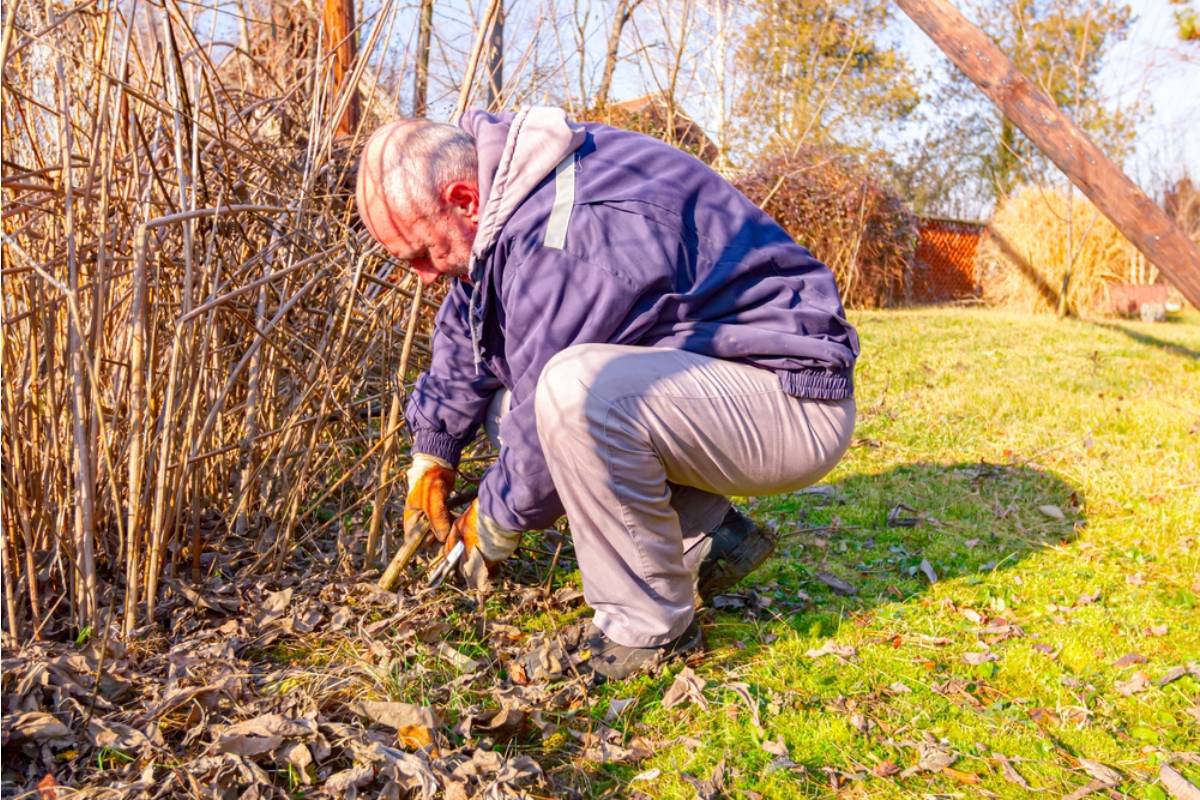
The real shock came when the homeowner discovered that several established plants had been cut down. One was a large hydrangea estimated to be about 12 feet wide and 10 feet tall, making it impossible to mistake for a small weed or neglected shrub. It had already spent years growing into a major part of the landscape.
Two white Rose of Sharon bushes were also cut completely to the ground. A third was left badly damaged, turning what had been a lush grouping of plants into a collection of battered stems and empty space. After spending months carefully improving the property, the homeowner suddenly found himself staring at a garden that looked as though someone had taken a chainsaw to years of growth.
These Were Not Just Random Shrubs
For the homeowner, the plants represented much more than decoration. They were mature pieces of the landscape that had probably survived through several seasons and possibly several owners of the house. He had planned to incorporate them into the garden improvements rather than tear them out.
That was what made the damage especially upsetting. The plants were living pieces of the property’s history, and he believed someone else had made the decision to erase them without even asking. The landscaping may not have been finished, but unfinished did not mean unwanted.
The Daughter Had an Explanation
The homeowner confronted the neighbor’s daughter through her doorbell camera and demanded to know why she had entered the property and cut the plants. According to his account, she responded by saying that the previous homeowner had given her mother permission to plant in the area. Her mother had since passed away, leaving the homeowner wondering exactly what this supposed old agreement was meant to cover.
There was no written agreement presented to him, and nobody had told him about it when he purchased the house. He also said that another daughter who had spoken with him previously had never suggested that the family considered the planting area theirs. Suddenly, a decade-old gardening story had become a dispute over who had the right to decide what remained in his yard.
“My Mother Planted Them” Became the Argument
The dispute became even more complicated when the homeowner learned that the daughter claimed her mother had planted Emerald Green arborvitaes on his property years earlier. According to the homeowner, she believed that meant the family still had the right to remove them. To him, that sounded less like maintaining a garden and more like claiming control over a piece of land that was now his.
A response from a person pointed out that planting something on another person’s property does not automatically make the planter the owner of the land. Another response from a person suggested that the trees may originally have been intended as a privacy border, but that intention did not necessarily settle the ownership dispute. The more the homeowner looked into the situation, the more he realized that the plants had become part of a much bigger boundary problem.
The Homeowner Had Been Helping Next Door
Ironically, the homeowner had been doing quite a bit to make life easier for the elderly man living next door. When branches from the neighbor’s trees landed in his yard, he cleaned them up rather than making a fuss about them. When he mowed his own lawn, he made sure grass clippings were blown away from the neighboring property.
At one point, he even cut the elderly neighbor’s grass because it had become badly overgrown. He knew the man’s daughters were supposed to be helping with the property, but he still stepped in because he wanted to be considerate. After making those efforts, discovering that someone from the same household had entered his yard and destroyed mature plants felt like a particularly harsh betrayal.
The Missing Photos Became Its Own Problem
There was another frustrating detail that only became obvious after the damage. The homeowner had been steadily working on the landscaping, but he had not taken many photographs documenting every stage. He wished he had photographed the garden more thoroughly before the plants were destroyed.
Fortunately, a person suggested checking older real-estate listings for photographs from before the house was purchased. Property listings could potentially show how the landscaping looked when the homeowner bought the house. Those older images might not prove every detail of what happened, but they could help establish that the mature plants were already there.
Then the Property Line Became More Important
The homeowner had originally been budgeting for a fence the following year. He had not been in a rush because he did not want to create unnecessary tension with the people living next door. But once the plants were destroyed, the idea of a clear physical boundary suddenly became much more appealing.
He also noticed that the neighbor’s air-conditioning unit appeared to extend onto his property. Before the gardening incident, he had been willing to overlook the possible encroachment rather than become overly strict about every inch of the boundary. After the plants were cut, however, his patience with blurry property lines disappeared almost completely.
One Recording Changed the Situation
The homeowner did not have video showing the actual cutting because the area was apparently outside the camera’s view. That could have made the incident much harder to document. However, there was one important piece of evidence he did have.
During the conversation through the doorbell camera, the daughter allegedly admitted that she had done the cutting. A response from a person immediately advised him to protect and back up the recording, especially because the disagreement already involved conflicting stories about permission. Suddenly, what had looked like a frustrating gardening dispute had the potential to become a documented property dispute.
The Hydrangea Became the Biggest Mystery
The Rose of Sharon bushes might still have a fighting chance, which gave the homeowner at least a little hope. Several people pointed out that these plants can be remarkably vigorous and may send up new growth after severe pruning. The hydrangea was another matter, especially because nobody knew exactly how old it was or what variety it might have been.
A response from a person said the hydrangea could potentially recover, although its future was less certain. The uncertainty made the damage even harder to swallow because a mature hydrangea of that size is not something that can simply be replaced with a trip to a garden center. Even if a replacement were purchased, the homeowner would still be losing years of growth that could not be recreated overnight.
The Garden Started Looking Like a Boundary Marker
Before the conflict, the plants had helped soften the narrow space between the two houses. Afterward, that same area became a visual reminder of where one property ended and the other began. The homeowner began thinking less about decorative landscaping and more about physical barriers that would make the boundary impossible to misunderstand.
A response from a person joked that a fence was becoming less of a landscaping decision and more of a sanity investment. Another person suggested using hedges or fencing designed to make the narrow passage difficult to cross. What had started as a plan to create a beautiful garden was slowly turning into a plan to create a garden that nobody could casually enter.
The Old Verbal Agreement Raised Bigger Questions
One of the strangest parts of the dispute was the alleged verbal permission given by a previous homeowner. Even assuming such a conversation had actually happened, the current homeowner said he had never agreed to it and had not been informed about it when buying the property. That left him wondering how much an old handshake arrangement should matter years later.
A response from a person described the situation as an arrangement that was simply too vague to rely on once ownership changed. Another response from a person believed the daughter might have been using an old story to justify what she had already decided to do. Whatever the truth was, nobody seemed to have put the gardening arrangement into writing, and that missing paperwork suddenly mattered a great deal.
The Final Twist Was Sitting in the Garden All Along
The homeowner had spent months trying to improve the property without upsetting anyone around him. He trimmed his own plants, cleaned up fallen branches, cut the neighbor’s grass, and even delayed plans for a fence because he wanted to remain a good neighbor. Then the very plants he had been trying to preserve became the reason he finally decided to enforce every boundary he could.
The twist was that the garden itself had been quietly documenting the history of the property long before the dispute began. The mature hydrangea, Rose of Sharon bushes, and arborvitaes had survived years of ownership changes, while old photographs and a property survey could now tell a different story about where everything actually belonged. Instead of simply planting a few replacements and moving on, the homeowner was now preparing to rebuild the garden with something he had not originally intended to need: a very clear line between being neighborly and protecting his own yard.