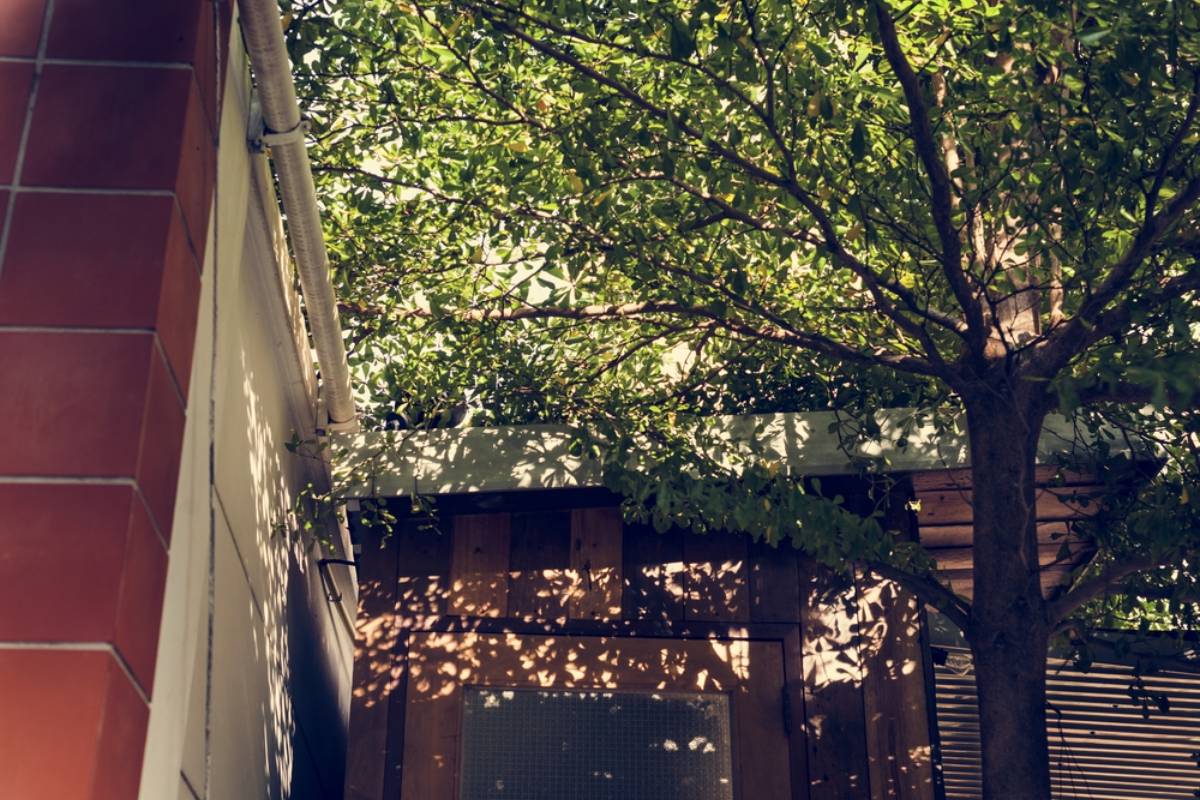
Homeowner Says a Neighbor Kept Complaining About Tree Branches Crossing the Fence, Then Left a Letter Demanding Action After Years of Arguments Over the Garden
A person shared a story about a long-standing neighborhood dispute that started with something incredibly ordinary: tree branches reaching over a property line. The trees had already been planted decades before the homeowner moved in, so the situation was hardly the result of a new landscaping project gone wrong. Still, the neighbors had become increasingly unhappy about the branches extending into their yard.
At first, the complaints seemed like the usual backyard annoyance that comes with mature trees. The neighbors apparently disliked how the trees affected their view and also objected to branches growing across the boundary. What began as a disagreement about greenery slowly turned into a much bigger problem involving a fence, written warnings, and questions about who was actually responsible.
Then the Fence Suddenly Became Part of the Drama
The tree was not the only thing causing tension. According to the homeowner, the neighbors had previously reported that the fence between the properties was falling down and asked for help with the repair costs. The homeowner found the situation suspicious because one of the fence posts appeared to be broken at roughly bumper height.
The neighbors denied hitting the fence with a car, leaving the homeowner with more questions than answers. Rather than settling the issue, the disagreement added another layer of distrust between the two households. Suddenly, every branch, fence post, and conversation seemed to carry a little more weight.
The Branches Kept Crossing the Line
As the seasons changed, the branches continued growing over the neighboring property. The homeowner said they had always trimmed the trees on the side extending toward the other yard, apparently believing that keeping the branches managed would prevent trouble. Unfortunately, the complaints did not stop.
The neighbors reportedly continued to object to the branches and the way the trees affected their view. The homeowner seemed to feel that the trees were being treated like an unwanted nuisance despite having been part of the landscape for years. What looked like routine tree maintenance was now becoming a recurring neighborhood argument.
Then a Letter Appeared
Eventually, the neighbors escalated the situation by leaving a letter attached to the homeowner’s door. Instead of another casual complaint, this message appeared to demand that something be done about the overhanging branch. Its arrival changed the tone of the dispute almost immediately.
The homeowner wanted to know whether simply having a branch extend over another person’s property could make the tree owner responsible for any resulting damage. That question became the heart of the entire story. The answer, however, was far less straightforward than either side seemed to expect.
A Piece of Paper Created a Much Bigger Question
The strange letter quickly became a topic of discussion because people disagreed about what it actually meant. Some viewed it as a clear notice that the neighbor was aware of a potential problem, while others questioned whether leaving a note at the door had any meaningful legal effect. The disagreement revealed just how quickly a simple gardening dispute can turn into a legal puzzle.
One response from a person pointed out that a written notice does not automatically settle who is responsible for a future accident. Laws concerning trees and property damage can differ depending on the state and local rules. That meant the homeowner could not safely rely on a general rule heard from someone living somewhere else.
The Property Line Suddenly Mattered More Than the Fence
A major point in the discussion was where the branch actually extended. Several people explained that property owners often have rights concerning branches that cross onto their land, although the exact rules can vary by jurisdiction. In many places, a neighbor may be able to trim vegetation that crosses the property line, subject to limits on damaging the tree.
That distinction made the disagreement much more complicated. The tree trunk could be entirely on one side of the fence while the branch reached far into the other yard. For the homeowners, that invisible line through the middle of the tree had suddenly become one of the most important features in the entire garden.
Then the Insurance Angle Entered the Story
Another response from a person focused on the fact that the neighbors had apparently documented their complaint. The idea was that putting concerns in writing could become important later if the branch caused damage. This shifted the story away from backyard irritation and toward the possibility of an insurance dispute.
That does not automatically determine what an insurer would cover, since insurance policies and local law can differ. Still, the written warning gave the situation an unexpected paper trail. A tree that had quietly grown over the fence for years had now become part of a documented disagreement.
Some People Thought the Neighbor Should Just Trim It
A different group of responses took a much simpler approach. They argued that when branches extend over another person’s property, the neighbor may have the option to trim the portion that crosses the boundary, provided the work does not unlawfully damage the tree. Under that view, hiring a tree service could resolve the problem without turning the homeowner into the person doing all the work.
But that solution came with its own risks. The homeowner was already worried about the tense relationship with the neighbors and did not appear eager to let someone start cutting near the fence. Once trust disappears between neighbors, even an ordinary pruning job can feel like a high-stakes operation.
The Fence Made Everyone More Nervous
The earlier fence incident made the situation even more uncomfortable. One response from a person suggested installing cameras around the fence line because of the possibility of another dispute during future trimming. The reasoning was simple: if damage happened again, having a record could help establish what occurred.
For a gardener, that is a remarkably dramatic place for a mature tree to lead. Instead of debating fertilizer, pruning schedules, or how much shade the canopy provides, the homeowner was thinking about documenting activity around the yard. The peaceful backyard had slowly started to resemble a neighborhood detective story.
There Was Also a Fear of Bad Pruning
Several people raised another gardening concern that had nothing to do with fences or paperwork. Improperly cutting a tree can create long-term problems, especially when someone removes too much growth or makes poor cuts. That meant the homeowner had a reason to care about not just whether the branch was removed, but how it was removed.
One response from a person suggested having a certified arborist evaluate the tree’s condition. A professional assessment could potentially establish whether the tree appeared healthy and whether any particular branch posed an obvious hazard. Suddenly, the argument involved tree health as well as property rights.
The Biggest Twist Was That the Law Wasn’t the Same Everywhere
Just when the story seemed to have a simple answer, another response from a person pointed out the biggest twist of all. Tree liability rules are not identical across the country, and different states can apply different standards to fallen trees, damaged branches, notice, and negligence. What sounds like an absolute rule in one location can be completely wrong somewhere else.
That disagreement changed the entire shape of the discussion. Some people spoke confidently about who should pay, while others immediately asked where the homeowner lived. Without knowing the applicable local law, even a convincing-sounding answer could turn out to be irrelevant.
Some Neighbors Saw a Boundary, Not a Shared Problem
There was also an interesting disagreement about what being a good neighbor actually meant. Some responses suggested cooperating, helping with trimming costs, or finding a professional who could safely handle the branch. Others believed the homeowner should simply follow the applicable property rules and avoid accepting responsibility for something that might legally belong to the neighbor.
That difference is familiar to anyone who has ever maintained a garden near a property line. One person sees a branch as a small landscaping chore, while another sees it as an unwanted invasion of their space. Once both sides feel they are being reasonable, even a single limb can become the center of a much bigger feud.
The Homeowner Was Left With an Awkward Choice
By this point, the homeowner appeared to be caught between two unpleasant possibilities. Taking care of the branch could cost money and potentially encourage more demands, while refusing to act could allow the dispute to continue or create complications if something eventually went wrong. Neither option felt particularly satisfying.
The story also showed why mature trees can be surprisingly complicated features of a garden. Their roots may stay in one yard while their shade, leaves, and branches cross into another. What looks beautiful from one kitchen window can look like an obstruction from the neighbor’s side of the fence.
A Simple Branch Had Become a Full-Blown Neighborhood Story
What made the situation memorable was how quickly it grew beyond ordinary gardening. The original problem was a branch crossing a property line, but the argument eventually involved an old fence, complaints about the view, a written warning, insurance concerns, cameras, arborists, and state-specific laws. The tree itself remained rooted in place while everything around it became increasingly complicated.
The final lesson from the story was not that every overhanging branch is automatically the responsibility of one particular homeowner. It was that property-line tree disputes can depend heavily on local rules, the condition of the tree, the actions of each neighbor, and what has been documented. What looked like one annoying branch turned out to be a reminder that sometimes the most troublesome thing growing in a garden is not a weed at all, but a disagreement.