Homeowner Says a Neighbor Planted a Trumpet Vine Along Their Shared Fence, Then Watched It Push Through the Boards in Just 25 Days
A homeowner in Aurora, Colorado, thought the new vine along the backyard fence would be nothing more than a splash of greenery. Then, just 25 days after the neighbor planted it, the fence started telling a very different story, with boards being pushed outward and stems appearing on the other side. What looked like an ordinary gardening project was quickly turning into a daily battle over where the plant was allowed to grow.
It Started With One Innocent-Looking Vine
A person shared his story after his neighbor planted a trumpet vine directly against the fence separating their properties. At first, there was little reason to believe the plant would become a major problem, especially with its bright flowers and vigorous growth. But the homeowner quickly noticed the vine was spreading far faster than expected.
Within less than a month, the plant had grown enough to begin reaching through the fence. Some of its growth was appearing on the homeowner’s side, while the fence boards were already being pushed out of place. Suddenly, this was no longer just a question of keeping the garden tidy.
The Fence Started Losing the Battle
The homeowner said the vine seemed to grow nearly a foot a day, which made the situation feel almost comically relentless. Every time new growth appeared, it seemed to find another gap, board, or opening to squeeze through. The fence was becoming less of a barrier and more of a trellis the plant had decided to conquer.
The biggest concern was not simply having to trim a few stray leaves. The homeowner worried that continued growth would cause more serious damage to the shared fence. What began as a gardening nuisance was starting to look like a much bigger maintenance problem.
The Neighbor Had a Surprisingly Simple Solution
The homeowner tried to have a calm conversation with the neighbor and hoped they could figure out a compromise. Instead, the neighbor reportedly offered a remarkably simple answer: just cut back whatever crossed onto the homeowner’s side. That suggestion sounded easy until the homeowner considered how quickly the trumpet vine was growing.
A response from a person pointed out that cutting back the growth might become an almost daily chore. The problem was not one branch getting out of hand once a season. The plant seemed determined to keep sending new shoots toward every available opening.
Then the Fence Ownership Question Appeared
The situation became more complicated when people started asking a question that had nothing to do with gardening at all. Who actually owned the fence? The homeowner referred to it as a shared fence because it divided the two properties, but that did not automatically settle the ownership issue.
One response from a person explained that the location of the fence could matter. If it sat on one owner’s land, the ownership and responsibilities could be different than if it actually sat directly on the property line. Suddenly, the vine was tangled up in a question about property boundaries.
A Property Line Can Change the Story
Another response suggested that figuring out exactly where the fence sits could be important before making any decisions. A property survey was mentioned as one way to determine whether the fence was entirely on one property or positioned along the boundary. That detail could potentially change how the situation should be handled.
For the homeowner, that meant the problem could not necessarily be solved with a pair of pruning shears. Before the next step, there was another layer to investigate. The little vine had somehow turned a backyard gardening issue into a property puzzle.
Aurora Added Another Twist
A person responding to the story noted that fences in Aurora are often placed along property lines and may be treated as shared responsibilities. That sounds simple enough until the exact location of the fence becomes important. General expectations about fences do not necessarily answer the question for one specific property.
The discussion therefore kept circling back to the same point: verify where the fence actually stands. The homeowner was no longer just watching vines creep through the boards. They were also being told to pay attention to the invisible line beneath the entire situation.
The Previous Vine Was Part of the Mystery
Then came one of the more surprising details in the story. The homeowner had apparently dealt with a previous vine situation that resulted in police being called after the plant was cut down. That meant the current disagreement was not happening in a vacuum.
The history made the homeowner even more cautious about simply grabbing the pruning shears and removing everything in reach. What might look like an ordinary gardening task could carry consequences when neighbors were already upset with each other. The fence had become the stage for a disagreement that was apparently much older than the newest vine.
A Certified Letter Entered the Garden Drama
One response from a person suggested documenting the damage and sending a certified letter to the homeowners. The same response also mentioned notifying the homeowner’s insurance company if the plant was knowingly causing damage to property. The suggestion reflected how quickly the dispute had moved beyond ordinary backyard maintenance.
That advice also emphasized the importance of keeping records. Photographs of the fence, dates showing how quickly the vine grew, and evidence of any changes could help create a clear timeline. For a gardener, it is a strange feeling when the most important gardening tool suddenly becomes a camera.
Small Claims Court Was Mentioned
Another person responding to the story brought up the possibility of small claims court if actual damage to the fence occurred. The response also noted that the homeowner might have difficulty proving damages if the fence was already in poor condition. In other words, the vine was not necessarily going to be blamed for every flaw already hiding in the wood.
That distinction mattered because an old fence can tell a complicated story of its own. Cracked boards, leaning posts, and worn sections may have existed long before a new plant arrived. The homeowner now had to figure out which problems were caused by the vine and which ones were simply signs of an aging fence.
The Trumpet Vine Had One Thing Going for It
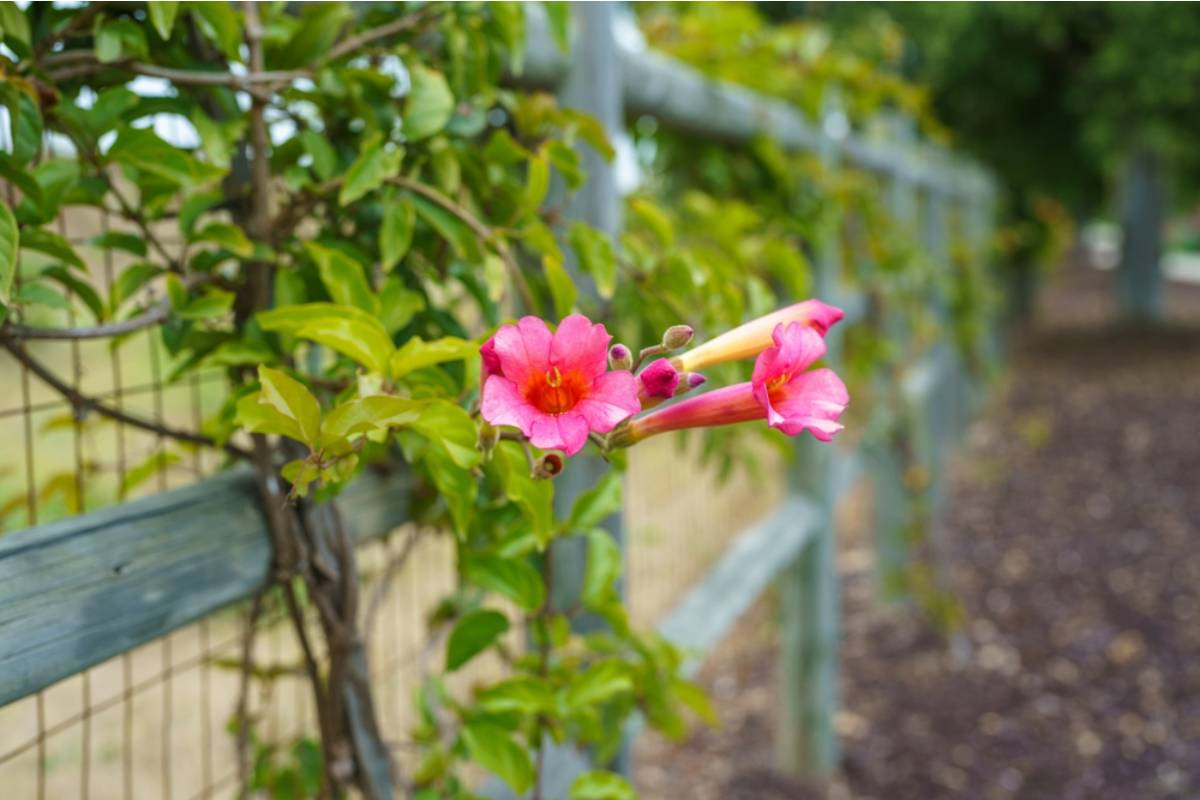
Despite all the frustration, people responding to the story did point out something beautiful about the plant itself. Trumpet vine is known for its dramatic flowers and can attract pollinators such as hummingbirds. From a garden design perspective, that makes it easy to understand why someone would want one growing in the backyard.
The trouble was not necessarily the vine itself. The trouble was where it had been planted and how aggressively it was spreading. A plant can be gorgeous in the right location and become a headache when it decides that the neighbor’s side looks even better.
The Plant Was Not Planning to Stay Put
The homeowner’s biggest fear was that the vine would keep returning even after being cut back. Vigorous climbing plants have a remarkable talent for finding new routes, especially when they have a fence offering plenty of places to grab onto. One response specifically warned that trumpet vine can be difficult to eradicate once established.
That made the neighbor’s suggestion of simply cutting back anything that crossed the fence sound less straightforward. Trimming might deal with today’s growth while leaving tomorrow’s growth already forming somewhere else. The homeowner seemed to be looking at a long-running cycle rather than a one-time cleanup.
A Beautiful Garden Plant Became the Main Character
There was something almost ironic about the whole situation. The trumpet vine was doing exactly what a vigorous climbing plant is supposed to do: grow, climb, spread, and take advantage of available support. Unfortunately, its favorite support happened to be a fence dividing two properties.
That turned the plant into the unexpected main character of the neighborhood dispute. Instead of admiring flowers from across the yard, both homeowners were now watching stems and boards with equal suspicion. Every new tendril had the potential to restart the argument.
The Real Battle Was Happening Behind the Leaves
From the street, none of this would have looked dramatic. Someone had planted a flowering vine, a fence stood between two yards, and everything probably appeared perfectly ordinary. Behind the greenery, however, one homeowner was counting new growth while worrying about the condition of the fence.
The story also showed how quickly gardening choices can become neighbor issues. A plant does not understand property lines, shared ownership, or polite conversations. It simply keeps growing toward the light, leaving the humans to decide what happens next.
And the Vine Was Only Getting Started
After just 25 days, the homeowner was already seeing the effects of the trumpet vine pushing through the fence. That raised an obvious question: what would the backyard look like after another month, or another growing season? The homeowner was left wondering whether regular trimming would be enough to keep the plant from becoming a permanent fence problem.
For now, the gardening drama appears to have no simple ending. The homeowner may need to determine exactly where the fence sits, document any damage, and keep a close eye on new growth while the disagreement continues. Meanwhile, the trumpet vine is doing what it does best, growing as though the property line does not exist.