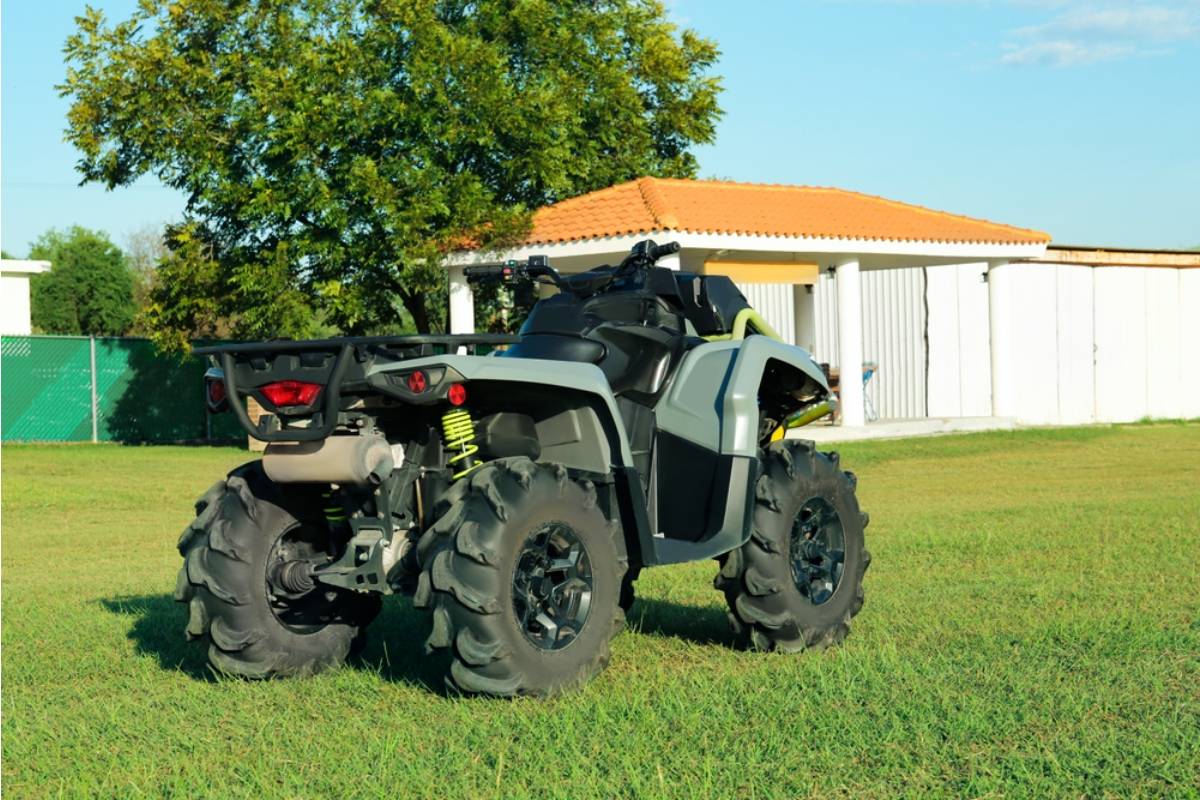
Homeowner Says a Neighbor’s Family Turned His Yard Into a Shortcut, Then ATVs Started Racing Through the Grass Toward His House
A person shared his story about buying a house with his wife and gradually discovering that their property had become a convenient shortcut for people connected to the neighboring land. The neighboring family owned several houses and operated a greenhouse and flower shop nearby, creating an unusual arrangement of residential properties and open fields. Because the homeowner’s house sat near the end of a dead-end street, walking through his yard provided an easy route to the public road.
At first, the problem barely seemed worth mentioning. Someone might occasionally walk or ride a bicycle across the property, perhaps once a week, and the homeowner mostly ignored it. There had been no serious conflict with the neighboring property owner, who had always seemed friendly and generous.
The Traffic Slowly Became More Frequent
Over time, the occasional shortcut became a regular habit. People connected to the neighboring property began appearing several times a week, with groups of children sometimes walking directly up the homeowner’s driveway and continuing through the front or side yard. It increasingly looked as though people had decided the private property was simply part of the neighborhood’s unofficial pathway.
The homeowner found the change especially strange because none of this had happened during the previous summer. The neighboring field had been quiet and largely unused, so there had been little reason to worry about traffic. Now the same area had become a gathering spot for teenagers, workers, family members, friends, and strangers.
The Neighbor’s Field Had Become a Playground
The neighboring family apparently used several lots for a greenhouse and flower shop operation, while the particular field beside the homeowner’s property was mostly open land. The owner was described as a nice man, and the homeowner didn’t want to create unnecessary hostility with someone who had previously been friendly toward him.
The problem was that the field had started attracting young people who treated it like a recreational area. Teenagers gathered near the dead end, rode e-bikes along the street, and sometimes spent hours in the area. What had once been an empty patch of land was becoming an active hangout directly beside someone’s home.
Then the ATVs Appeared
The situation changed dramatically when ATVs and dirt bikes entered the picture. The riders began traveling around the field at what the homeowner estimated were speeds of roughly 30 to 40 mph. They sometimes approached surprisingly close to the house before turning and continuing their loops.
The homeowner wasn’t even primarily worried about what happened on the neighbor’s land. The real concern was how close the speeding vehicles came to his property and how unpredictable the riders could be. A small mistake, mechanical failure, or loss of control could potentially send someone into the yard or toward the house.
The Riders Started Crossing the Property
Then one weekend, the vehicles crossed a line that was much harder to ignore. ATVs and dirt bikes began using the homeowner’s actual yard to reach the public street. Their tires left visible tracks in the grass, turning an annoying shortcut into unmistakable trespassing.
The homeowner already had concerns about teenagers riding without helmets on the residential street. He had reportedly seen as many as three children riding together on one ATV. Once those vehicles started crossing private property, however, the issue became about much more than neighborhood annoyance.
The Driveway Became a Gathering Spot
The ATV traffic wasn’t the only problem. Groups of teenagers were also reportedly gathering near the end of the lot and around the homeowner’s driveway. On one occasion, six to eight young people were sitting in or around the driveway while riding e-bikes up and down the street.
The homeowner estimated that some of the riders were traveling at roughly 30 to 40 mph. The combination of speed, groups of teenagers, and the proximity to his house made the property feel less private. Instead of being able to treat the backyard and driveway as part of his home, he increasingly had to wonder who might suddenly appear there.
Fireworks Added Another Layer
The teenagers weren’t simply passing through. They had apparently started treating the neighboring field as a place to spend time, and fireworks were reportedly being set off approximately 40 to 50 feet from the homeowner’s house. That raised another obvious concern because the surrounding area was residential.
The homeowner began imagining how different the situation would feel with a small child playing outside. A teenager racing an ATV near an empty yard was already uncomfortable, but the prospect of a child being outside while dirt bikes and ATVs were moving nearby made the problem much more serious.
The Property Line Wasn’t Even Clear
There was one awkward complication that made confrontation harder. The homeowner wasn’t completely certain where the property line actually ran, partly because a garden bed from the previous owners appeared to sit directly on or very close to the boundary.
When the homeowner first met the neighboring owner, he mentioned that he wasn’t sure exactly where the line was. The neighbor casually told him to cut as much as he wanted and that he would take care of the rest. The homeowner had a riding mower, so he continued mowing the area and appreciated that the neighbor didn’t seem concerned.
The Previous Owners Had Left a Strange Clue
The previous owners had apparently liked the neighboring family and told the new homeowner that the neighbor was even willing to let them put tents in the field for parties as long as they asked first. That history made the homeowner reluctant to assume the neighbor was deliberately allowing people to invade his property.
There was a significant difference between an invited party and strangers using someone’s yard as a shortcut, though. The homeowner wasn’t opposed to having a friendly relationship with the neighbor. He simply wanted his property to remain private and safe.
A Fence Seemed Like the Obvious Answer
The homeowner considered installing a fence to prevent people from crossing the property. Unfortunately, local fencing rules prevented a simple solution because the fence couldn’t extend all the way toward the front of the house.
Even if a fence were installed, an opening of roughly 25 to 30 feet would apparently remain. That meant people could potentially continue walking or riding through the gap. The homeowner realized that solving the problem would require something more creative than simply putting up a standard backyard fence.
The Cameras Became Important Evidence
Fortunately, the homeowner already had security cameras installed. Once the traffic became more serious, he began saving footage showing people using the property as a shortcut. That included footage of the ATVs actually crossing through the yard.
The cameras changed the situation because the homeowner no longer had to rely entirely on memory or descriptions. He could show exactly what had been happening. In a dispute where someone might insist that a few teenagers had merely wandered across the property once, video evidence could make the situation much harder to dismiss.
Then the Homeowner Considered the Random Strangers
The homeowner initially focused on people connected to the neighboring property, but his later update revealed another complication. He estimated that perhaps 10 to 20 percent of the foot and bicycle traffic appeared to involve people who weren’t connected to the neighboring family at all.
That meant asking the neighbor to control his family and workers would only solve part of the problem. Even if every employee and relative stopped crossing the property, random people might still see the convenient route and continue using it. The homeowner needed a physical solution that worked regardless of who was walking or riding.
The Survey Became the First Serious Step
Responses from people strongly encouraged the homeowner to get the property professionally surveyed before building anything. With uncertainty about the boundary and existing landscaping near the suspected property line, guessing would have been a terrible way to start a fence project.
The homeowner agreed that the survey needed to come first. Once the exact boundary was established, he would know where he could legally place fencing, barriers, signs, landscaping, or other deterrents. It would also prevent a completely different dispute from appearing later if someone claimed the homeowner had accidentally built onto the neighboring property.
Boulders Could Stop the Vehicles
One of the more practical ideas involved using large landscaping boulders. A properly positioned line of substantial rocks could make the shortcut much harder for ATVs and dirt bikes to use without necessarily creating an enormous structure.
Boulders wouldn’t stop someone determined to walk through, but they could solve the most dangerous part of the problem. If vehicles could no longer cross the opening, the risk of someone speeding across the grass toward the house would be dramatically reduced.
Signs Could Make the Message Clear
Another simple suggestion was to install clearly visible no-trespassing signs. The homeowner wasn’t convinced that teenagers who already treated the property like a shortcut would suddenly respect a sign, but the signs could still establish that the land was private.
That distinction could matter later, especially if the problem continued. A person casually wandering through might claim they thought the route was public, but a clearly marked private-property boundary would make that explanation much harder to maintain. Combined with cameras, signs could also make it obvious that the homeowner had taken reasonable steps to discourage trespassing.
A Chain Could Close the Gap
A more immediate solution involved placing a visible chain or similar barrier between two posts. Unlike a sign standing beside an open pathway, a physical obstruction would force people to stop and make a conscious decision about whether to cross.
The homeowner considered the idea seriously because it could potentially block bikes and ATVs without requiring the expensive landscaping project that a thirty-foot hedge would demand. It also offered a temporary approach while he figured out the long-term fencing situation. The challenge, as always, would be making sure the barrier complied with local rules and didn’t create a hazard itself.
Shrubs Offered a More Permanent Solution
Dense shrubs were another possibility. A properly planned line of landscaping could eventually close the opening and make the shortcut unattractive without making the property look like a fortress.
There were drawbacks, however. The homeowner estimated that around thirty feet of shrubs would be necessary, making the project expensive. Deer could also interfere with the landscaping, and there was always the possibility that someone determined to preserve the shortcut might damage or remove the plants.
The Homeowner Considered Buying the Land
The most ambitious idea involved asking the neighbor whether he would sell a narrow strip of the adjoining property. If the homeowner could acquire the right piece of land, the fence could potentially be positioned in a way that closed the shortcut more effectively.
That idea came with plenty of complications. A survey, zoning requirements, parcel adjustments, legal fees, and the neighbor’s willingness to sell would all have to be considered. Still, the possibility showed just how much the homeowner wanted to solve the problem without turning the neighboring relationship into a permanent feud.
He Decided to Talk Before Escalating
Despite everything that had happened, the homeowner’s first choice remained surprisingly diplomatic. He planned to speak with the neighboring owner the next time they crossed paths and explain that ATVs and dirt bikes were entering his property.
Rather than immediately accusing the neighbor’s family of wrongdoing, he wanted to show the footage and explain what had been happening. He also planned to mention the repeated foot traffic, people gathering around the driveway, and his concerns about eventually having young children playing outside.
The Reaction Would Decide What Happened Next
The homeowner deliberately planned to leave fences, boulders, signs, cameras, and other measures out of the opening conversation. He wanted to see whether the neighbor would respond reasonably once he understood what was happening.
That approach preserved the possibility of solving the problem without a feud. If the neighbor was unaware that his relatives, workers, or visitors were crossing the property, he might simply tell them to stop. If he dismissed the footage or refused to address the issue, the homeowner would have a much clearer reason to move toward physical barriers and other measures.
The Final Plan Was More Organized Than It First Appeared
By the end of the update, the homeowner had developed a clear sequence of steps. First, he would speak with the neighbor and show the footage. Next, he would have the property surveyed, continue documenting incidents, and install visible signs.
After that, he could consider a temporary barrier, fencing, boulders, shrubs, or potentially purchasing a narrow piece of the neighboring property. Instead of launching immediately into a confrontation, he was giving the neighbor one opportunity to fix the problem while quietly preparing several backup plans.
The Shortcut Had Become Something Much Bigger
What began as an occasional person walking across a lawn had turned into a complicated property and safety issue. The traffic increased, teenagers began gathering nearby, fireworks appeared in the field, and eventually ATVs and dirt bikes started crossing the actual yard.
The homeowner’s biggest concern wasn’t winning a neighborhood argument. It was being able to look outside his house and know that his property was safe, private, and under his control. With a family potentially growing in the future, the idea of children playing outside while vehicles raced nearby had finally made the old shortcut impossible to ignore.
The Twist Was That the Neighbor Might Not Know
The homeowner had spent much of the story worrying about how to confront a neighbor he actually liked. Yet there was a possibility that the man who owned the neighboring property didn’t realize how his relatives, workers, friends, and other visitors were using the surrounding yards.
That made the upcoming conversation unusually important. If the neighbor took the footage seriously and stopped the traffic, years of friendship could survive and the physical barriers might become unnecessary. But if he shrugged it off, the homeowner would finally know that protecting his property wasn’t about creating a feud at all, it was about drawing a boundary that everyone could understand.