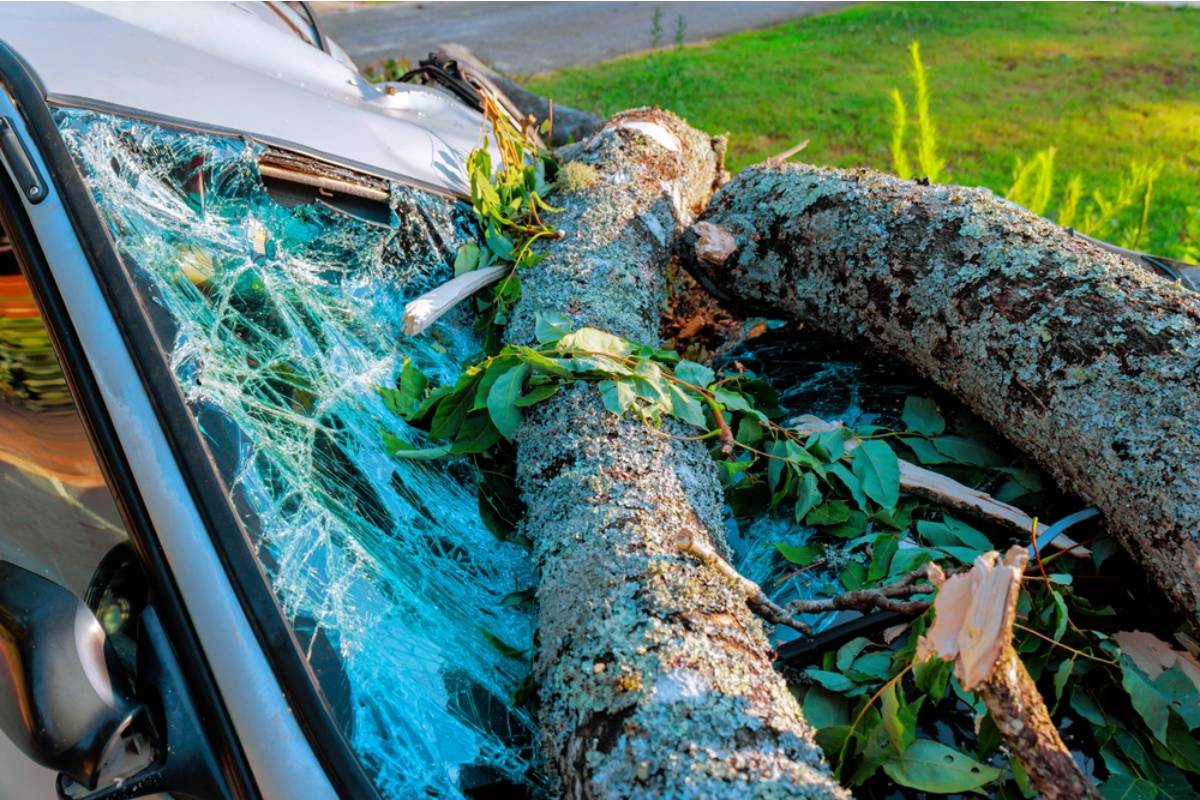
Homeowner Says a Tree Fell on His New Car the Night Before Pickup, Then Faced a Decision That Could Have Cost Him Thousands
A person shared his story after finding himself in an unusually frustrating situation involving a nearly new Tesla Model 3 he had already committed to buying. The 2023 rear-wheel-drive model had 26,000 miles, a single previous owner, and a clean history from California. At an out-the-door price of $28,937, it appeared to be the kind of used-car purchase that could be completed without much drama.
The buyer had chosen a blue-on-black Model 3 and was preparing to collect it from a Carvana vending location. Everything about the vehicle seemed promising before the handover, including straight body panels and a generally clean interior and exterior. Even the original Michelin tires were still fitted, although the buyer estimated they had roughly another 10,000 miles left before replacement.
Then the Weather Turned
The problem arrived before the buyer ever had a chance to sit in the driver’s seat. Overnight, a dust storm moved through the area with enough force to bring down a tree, and the tree landed directly on the Tesla. Suddenly, the car that had been carefully selected as a clean used vehicle had become a damaged vehicle sitting at the very place where its new owner expected to collect it.
The timing made the situation even stranger because the buyer said the incident happened the night before his scheduled pickup. He had not yet accepted delivery, meaning the damage occurred while the vehicle was still under Carvana’s ownership. Instead of driving away excited about his new Tesla, he was left staring at photographs of a car that had been crushed by nature before the transaction was even completed.
The Pictures Told a Different Story
The photographs showed visible damage across several areas of the vehicle, immediately raising questions about how much was cosmetic and how much might be hidden underneath. At first glance, some of the marks appeared less catastrophic than the phrase “tree fell on it” might suggest. But the denting and impact around the damaged sections made it difficult to know what had happened beneath the visible surfaces.
The buyer wanted to know whether the Tesla could still be restored to an acceptable condition. More importantly, he wondered whether accepting it after repairs would create problems later, especially if the incident ended up appearing on the vehicle’s history report. What had started as a straightforward used-car purchase suddenly became a decision about repair quality, resale value, and an accident history that had not existed when he originally chose the car.
The First Responses Were Brutally Simple
A response from a person offered perhaps the shortest possible recommendation: walk away. Several others quickly reached the same conclusion, arguing that there was little reason to accept a damaged vehicle when plenty of comparable 2023 Model 3s existed elsewhere. Their argument was simple, because the buyer had not taken possession yet, he still had the luxury of saying no.
Another response from a person suggested that the buyer should only consider keeping it if the price dropped dramatically. One person threw out a potential $10,000 reduction, reasoning that the discount could make the inconvenience worthwhile. Suddenly, the conversation shifted from whether the car could be repaired to whether any discount could possibly make the headache attractive.
The Seven-Day Safety Net Came Up
One response from a person pointed toward Carvana’s seven-day return policy as a reason not to get trapped in a complicated repair situation. The suggestion was essentially to avoid taking responsibility for a damaged vehicle if an easier escape route was available. Since the buyer clarified that delivery had not yet occurred, that distinction became especially important.
Another response warned that accepting the car and driving away could change the situation considerably. Even without knowing exactly how the transaction would ultimately be handled, the general advice was to avoid creating unnecessary complications. The buyer had stumbled into a rare position where he could potentially reject the problem before it became his problem.
Then Someone Saw a Different Possibility
Not everyone thought the Tesla should automatically be abandoned. A response from a person pointed out that the damage did not appear to have destroyed every part of the vehicle, and some of the visible marks might have been removable with cleaning or polishing. The larger concern was the dent itself and whether there was additional damage that the photographs could not reveal.
That person suggested the situation could become interesting if the price were reduced enough. A $5,000 discount was described as potentially worthwhile after a careful inspection, while an even larger discount could make the decision more tempting. For someone who did not mind living with a small cosmetic imperfection, keeping the car could theoretically turn the accident into an unexpected bargain.
The Dent Was Only Part of the Problem
The more cautious responses focused on everything the photographs could not show. A tree striking a vehicle can potentially affect more than paint and sheet metal, and one person specifically raised concerns about the suspension components. That possibility made the damage harder to judge simply by looking at the exterior.
Glass and structural areas also entered the discussion. One response from a person wondered whether the glass had been compromised and whether the impact could have created problems that would only become obvious later. The buyer therefore faced a familiar used-car dilemma, except this time the mystery had been created overnight by a falling tree rather than a previous owner.
The Car Wasn’t Exactly Rare
Another major point worked against keeping the damaged Tesla. The buyer had found a 2023 rear-wheel-drive Model 3, but similar vehicles were not impossible to locate. A response from a person emphasized that there were plenty of comparable examples available, meaning there was little reason to become emotionally attached to this particular one.
That changed the calculation considerably. If the vehicle had been a rare specification or unusually difficult model to replace, taking a calculated risk might have made more sense. But when another clean example could potentially be found, accepting a questionable repair history became much harder to justify.
The Original Tires Suddenly Didn’t Matter
Before the tree arrived, the buyer had already been thinking about the Tesla’s original Michelin tires. He estimated they had approximately 10,000 miles remaining, which seemed like a minor ownership expense compared with the overall purchase price. After the accident, however, tire life became almost irrelevant.
The entire equation had changed overnight. Instead of calculating future maintenance costs, the buyer now had to think about body repairs, hidden damage, insurance records, and resale value. The tire question that had seemed important during the original purchase suddenly looked like the easiest decision on the entire list.
One Person Thought the Damage Was Manageable
There was still a small group of people who believed the situation deserved closer inspection rather than an immediate rejection. A response from a person argued that much of the visible damage might not have penetrated the paint and could potentially be corrected without replacing every component. Paintless dent repair was even mentioned as a possible solution for at least part of the damage.
But even that more optimistic view came with conditions. The person suggested inspecting the vehicle carefully before agreeing to anything and only considering it if the discount was substantial enough. In other words, the argument was not that the Tesla was fine, but that the damaged Tesla might become worthwhile at the right price.
Then the History Report Became the Bigger Concern
The buyer’s concern about a future Carfax record was one of the most important parts of the decision. Even if a professional repair could make the Tesla look nearly perfect again, the history of the incident could remain attached to the vehicle. That could matter years later when the buyer wanted to sell or trade it.
The irony was hard to miss. The buyer had originally selected the Tesla partly because it had no accidents and appeared clean. Now, before he had even taken delivery, the vehicle had experienced an incident serious enough to make him wonder whether its clean history would survive. A perfect used-car candidate had suddenly become a potential history-report headache without the buyer ever driving it.
The Buyer Hadn’t Even Taken Delivery
One detail changed the story more than almost anything else. The buyer clarified that the tree fell the night before the scheduled pickup, so the Tesla was still technically in Carvana’s possession. He had not driven it away, signed off on the condition, or started ownership by the time the damage occurred.
That meant the buyer was not standing beside a damaged car he had already purchased and wondering what to do next. He was standing at the doorway of the transaction, deciding whether to enter at all. That distinction gave him a powerful advantage because he could demand clarity before accepting the vehicle rather than discovering problems after bringing it home.
Some People Blamed the Timing
Several responses from people treated the timing itself as almost comical. The buyer had apparently made it all the way through the process of selecting a car, arranging delivery, and preparing for pickup, only for a tree to intervene at the last possible moment. One person even described the situation as if the universe were sending a message about the purchase.
Whether that interpretation was fair or not, the timing certainly made the story memorable. Had the tree fallen one day earlier, the buyer might have never known the vehicle had been damaged. Had it fallen one day later, he might have been dealing with the damage as the owner. Instead, the accident landed in the narrow window where someone else still had to deal with the consequences.
The $10,000 Question Changed Everything
The suggestion of a $10,000 discount was where the story became genuinely interesting. A discount that large would completely change the financial calculation, especially if an inspection showed the damage was limited and the vehicle could be repaired properly. The buyer could potentially end up with a significantly cheaper Tesla, although he would also inherit the history and uncertainty attached to the incident.
But the responses made it clear that not everyone would accept even a huge discount. Some people valued the peace of mind of buying a clean, undamaged example more than the savings. The buyer therefore faced two competing ideas, turn the damaged Tesla into a bargain or walk away and find another car without the baggage.
The Safest Answer Was Also the Simplest
As the responses continued, the safest recommendation kept returning to the same basic idea. Since the buyer had not taken delivery, there was little reason to volunteer for a repair story involving a vehicle that was not particularly rare. Several people essentially told him to let Carvana keep the damaged Tesla and find another example.
That advice was not necessarily based on the belief that the Tesla could never be repaired. Instead, it recognized that a repairable vehicle is not automatically a desirable vehicle, especially when an undamaged alternative may be available. The buyer had the unusual opportunity to reject the uncertainty before it followed him home.
The Twist Was That the Buyer Hadn’t Lost Anything Yet
At the beginning, the story looked like a disaster for someone who had finally found the Tesla he wanted. By the end, the biggest twist was that he had not actually lost the car, the money, or even the opportunity to buy another one. The tree had damaged the vehicle, but because the accident happened before delivery, it had not necessarily damaged the buyer’s financial future along with it.
The real decision was therefore less dramatic than the photographs made it appear. He could either negotiate an enormous discount after a thorough inspection or simply walk away and continue searching for another 2023 Model 3. Sometimes the best outcome in a used-car purchase is not getting the bargain, but realizing the bargain is no longer the car you originally agreed to buy.
In the End, the Tree May Have Saved the Buyer
A person shared his story expecting opinions about whether the damaged Tesla could be restored, but the responses gradually pushed the discussion toward a different question. The vehicle might have been repairable, yet repairability was only one piece of the puzzle. The more important issue was whether taking on the uncertainty made sense when clean alternatives existed.
The strange part is that the fallen tree may ultimately have done the buyer a favor. Had the accident happened after he drove away, the decision could have been much more complicated and expensive. Instead, the damage appeared before the keys ever changed hands, leaving him with something far more valuable than a damaged Tesla: the freedom to simply say no.