Homeowner Says a Tree on Her Property Slowly Fell Into Her Neighbor’s Yard, Then She Agreed to Pay for Removal Before Discovering the Branches Might Have Been Their Problem
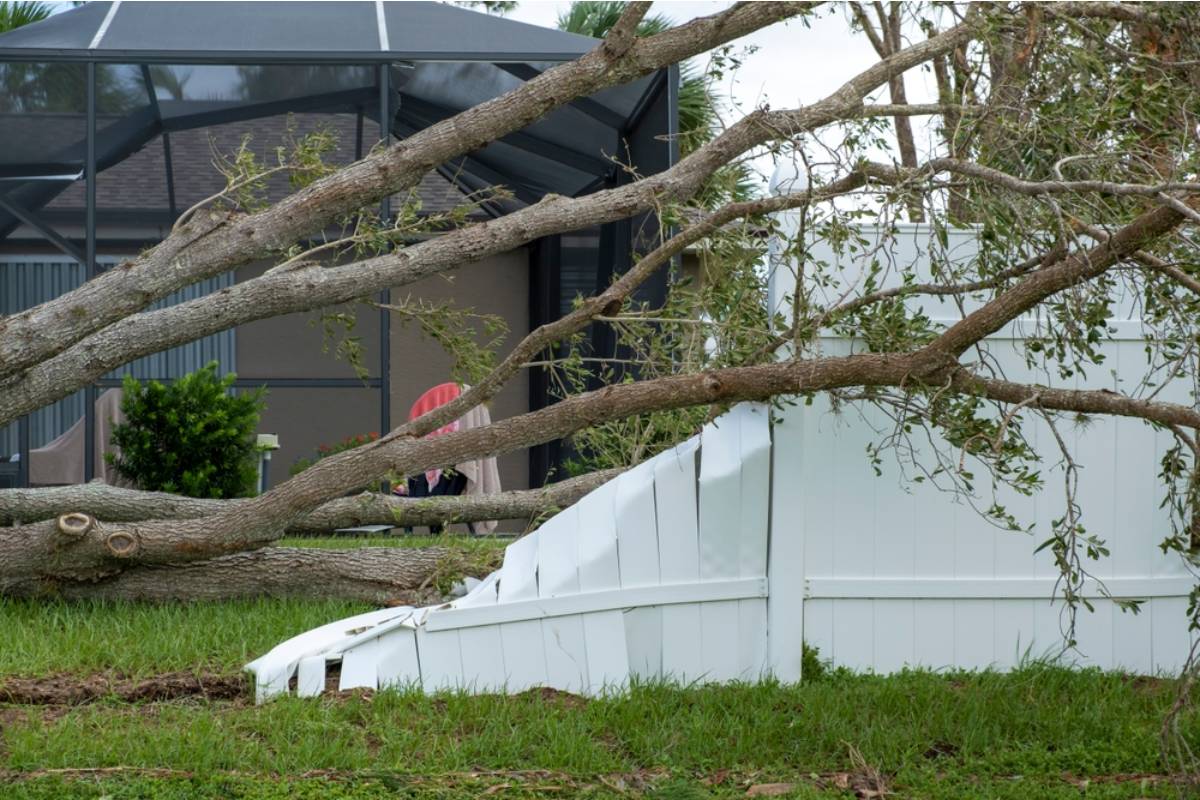
A person shared his story about his mother’s property in Middle Tennessee, where a long line of trees marked the boundary between her yard and the neighbor’s. One particular tree had grown large branches over the neighboring property, reaching toward the house and garage. Then one day, the tree began cracking and slowly bent downward into the neighbor’s backyard in what was almost a comically slow-motion collapse.
Fortunately, nothing was damaged when the tree finally came down. The problem, however, was far from over because the fallen branches were interfering with the neighbor’s home-based dog kennel business. The neighbor obtained a quote from a tree company, and the homeowner decided to agree to the bill rather than risk turning the situation into a long-running dispute.
The Tree Line Was Always There
The trees had been standing along the property line for years, creating a natural boundary between the two homes. Their trunks remained firmly on the mother’s side of the line, but some branches had gradually stretched across into the neighbor’s yard. Nobody seemed particularly bothered by the arrangement while the trees were healthy and the branches stayed in the background.
Over time, however, the overhanging limbs became increasingly noticeable. They reached toward the neighboring house and garage, creating exactly the kind of situation that can turn into a headache when one branch finally gives way. The mother had a tree problem, but it was also very much a property-line problem.
Then the Tree Started Bending
One of the trees finally developed a crack and began bending toward the neighbor’s yard. According to the person sharing the story, it fell so slowly that the whole thing almost seemed ridiculous. There was plenty of time to watch it happen, but apparently not enough reason to panic.
The biggest piece of good news was that the tree caused no property damage when it came down. No garage roof was crushed, no windows were broken, and nobody was injured. The only immediate casualty was the neighbor’s patience, because the fallen tree was now sitting exactly where they did not want it.
The Dog Kennel Business Creates Pressure
The fallen branches became more than an eyesore because the neighbor ran a dog kennel business from the property. Space in the backyard was part of the business operation, so a large fallen tree was not something they could simply ignore. What might have been a minor cleanup for another homeowner was now interfering with their livelihood.
That gave the problem an extra sense of urgency. The neighbor contacted a tree company and requested an estimate for removing the troublesome branches. The quote seemed expensive to the family, but the person sharing the story decided that paying it might be easier than turning the whole situation into a legal battle.
The Price Tag Raises Questions
The quote was admittedly high, partly because the tree company needed to drive equipment across the neighbor’s yard to safely perform the work. The family trusted the company, which made the decision a little easier. Still, paying someone else’s tree-removal bill naturally raised a bigger question about responsibility.
The homeowner began wondering whether agreeing to pay was simply generous or whether it could somehow create a legal obligation that did not previously exist. He was especially concerned about what might happen if the neighbor later claimed additional damage or maintenance costs. A simple payment intended to preserve peace could potentially become evidence in a future disagreement.
The Trunk Was on the Mother’s Side
One fact seemed extremely important: the trunk itself was entirely on the mother’s property. The branches, however, extended over the property line and into the neighbor’s yard. That distinction immediately became the center of the family’s question about liability.
The person sharing the story wanted to know whether ownership of the trunk automatically meant responsibility for everything attached to it. It seemed intuitive that the mother owned the tree, but property-line disputes often become much less intuitive once branches cross boundaries. The family wanted to know where ownership ended and responsibility began.
A Response From a Person Gives a Confident Answer
A response from a person argued that the mother might not have been responsible for paying for the removal at all. The reasoning was that overhanging branches can often be dealt with by the property owner whose land they extend into, provided the work does not unlawfully damage the tree. That would mean the neighbor could potentially have addressed the overhanging branches on their side before they became a larger problem.
The response also suggested that voluntarily paying could complicate the situation. Once the mother became directly involved in arranging and funding the removal, someone might later argue that she had accepted responsibility for the condition. Whether that would actually matter legally would depend on the applicable law and circumstances, but the possibility made the payment less straightforward.
Another Person Points to Tree Health
Another response from a person focused on the tree’s condition before it failed. The key question, according to that perspective, was whether the tree or branch had been healthy or obviously hazardous before it fell. If a healthy branch unexpectedly failed without warning, the owner’s responsibility could be very different from a situation where the owner knew the tree was dangerously unstable.
That distinction made the mother’s observations about the tree particularly important. If the cracking and bending happened suddenly, there may not have been an obvious warning that the tree was about to collapse. But if the tree had been visibly declining for months, the story could look very different.
Could the Neighbor Have Trimmed It?
Another response from a person suggested that the neighbor generally could have dealt with branches extending onto their property, assuming the work did not seriously harm the tree. That idea introduced an awkward possibility: perhaps the neighbor had a way to prevent the problem before the tree eventually dropped.
The family had not originally thought about the branches that way. They had simply viewed the tree as something belonging to the mother because its trunk stood on her land. Now they were being told that the neighbor might have had rights over the portions physically hanging above their property.
The $Quote Becomes a Peace Offering
Despite the uncertainty, the mother agreed to pay for the removal. Her son explained that she considered the payment cheaper than hiring a lawyer and potentially destroying an otherwise workable relationship with the neighbor. In that sense, the check was less about admitting fault and more about buying peace.
That choice is easy to understand in a small neighborhood where everyone eventually runs into one another. Legal rights might matter, but so does being able to live next door to someone without constant hostility. The family simply wanted the branches gone and the relationship intact.
But Paying Changes the Conversation
Once money enters a dispute, however, the tone can change surprisingly quickly. What looked like a friendly gesture could potentially be interpreted as an acknowledgment that the mother was responsible for the cleanup. The person sharing the story began wondering whether she had accidentally weakened her position by trying to be helpful.
That was especially concerning because the family had not yet determined exactly what the mother’s legal responsibility was. They had acted first and researched later. Now they were trying to figure out whether the generous decision could somehow create consequences that would not have existed otherwise.
The Neighbor Had a Practical Problem
From the neighbor’s perspective, though, the situation was not simply about legal principles. Their backyard was being disrupted by a fallen tree, and their dog kennel business depended on having usable space. Waiting for lawyers to argue about responsibility would not make the branches disappear.
The neighbor’s decision to call a tree company therefore made practical sense. They needed the obstruction removed, equipment needed access, and someone had to arrange the job. The disagreement was not necessarily personal until questions about the bill and responsibility entered the picture.
A Lawyer Might Cost More Than the Tree
The family’s reasoning was remarkably simple. Even if the mother had a strong argument that she was not responsible for the removal, proving that point could cost more than simply paying the tree company. Legal consultations, letters, negotiations, and potential court proceedings could quickly exceed the price of a single cleanup.
That calculation is common in property disputes because being technically correct does not always mean fighting is financially sensible. A homeowner can be right and still decide that peace is worth more than reimbursement. The mother appeared to be making exactly that trade.
Then the Family Starts Looking at the Branches Differently
After hearing all the different perspectives, the family began reconsidering the entire tree line. The branches that once seemed like an ordinary part of a mature landscape now looked like potential sources of future disputes. Every limb extending over the neighbor’s yard represented another opportunity for property lines and tree ownership to collide.
The mother could now see why preventive pruning might have been valuable. Regularly assessing mature trees near property boundaries could potentially reduce the chance of another sudden failure. The garden lesson was becoming clear: trees may grow wherever they please, but their branches do not care where the survey markers are.
The Real Risk Was Never the Fallen Branch
Interestingly, the actual fall caused no damage. The larger problem came afterward, when everyone had to decide who should clean it up and who should pay. The physical tree was easy to understand, while the legal and neighborly questions surrounding it were much harder.
That meant the mother had avoided the worst possible outcome while still landing in a complicated situation. Nobody had to repair a destroyed roof or replace a damaged vehicle. Instead, the family was left debating a tree-service invoice and the meaning of responsibility.
The Twist Nobody Expected
The story began with a simple question about liability, but the strangest part was that the mother had already chosen her answer before she knew what the law might say. She agreed to pay because preserving the relationship felt more valuable than proving a legal point. What looked like an obligation may actually have been a voluntary peace offering.
And that became the twist hidden inside the fallen tree: the branches may have crossed the property line long before the tree itself finally did. The mother owned the trunk, the neighbor controlled the yard where the branches landed, and both sides had reasons to believe they were being reasonable. In the end, the hardest part of the tree problem was not getting it off the lawn, it was figuring out whose problem it had been all along.