
Homeowner Says He Lit a Small Fire Pit in His Garden on a Hot Summer Evening, Then His Neighbor Stormed Over to Complain About Laundry Hanging Outside
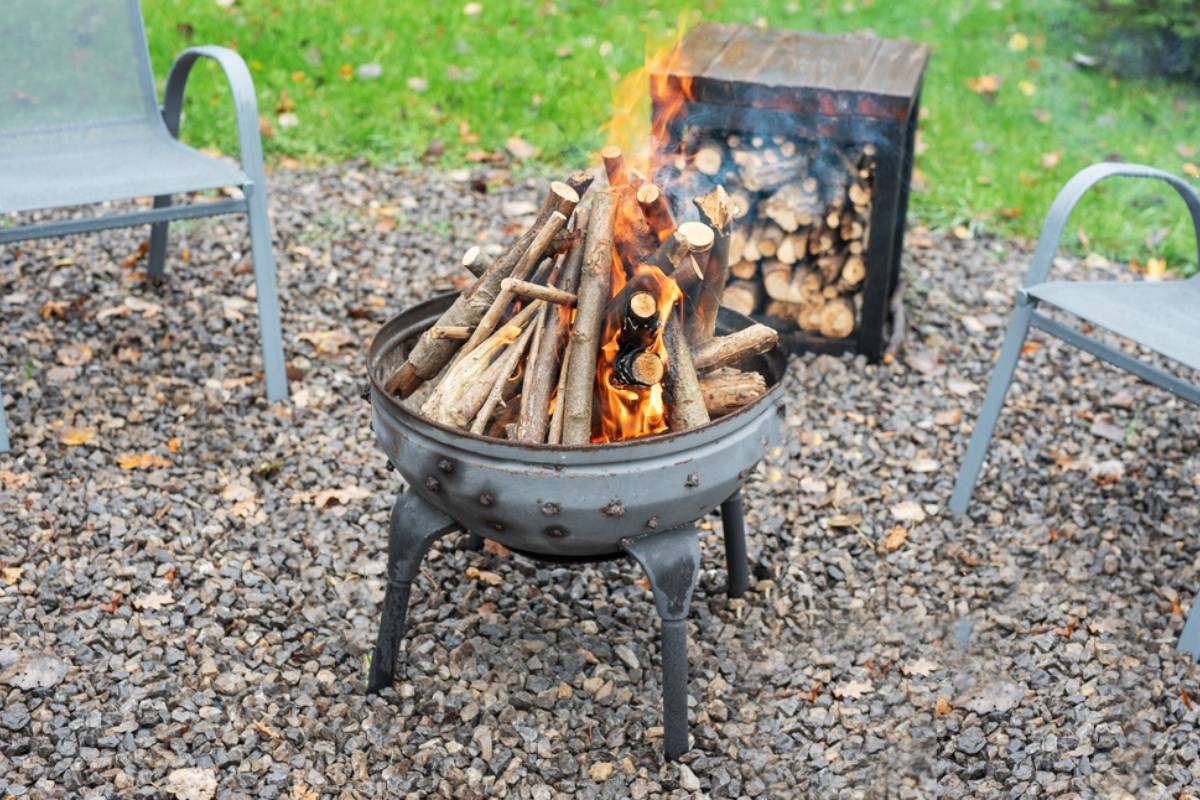
A person shared his story about what began as an ordinary evening in the garden but quickly turned into an uncomfortable neighborhood dispute. Around 8:30 p.m., he decided to light a small fire pit in his backyard, using hardwood and keeping the smoke to a minimum. With the weather still warm and the evening stretching ahead, the little fire seemed like a perfectly reasonable way to enjoy his outdoor space. He had no idea that a few flames would soon bring an angry neighbor straight to his door.
The homeowner was not trying to disturb anyone or turn his garden into a smoky bonfire party. He simply wanted to relax outside and enjoy his own backyard, where trees blocked his view of the neighboring garden. That detail would become surprisingly important once the complaints began. What he considered a peaceful evening was apparently about to become somebody else’s laundry emergency.
The Fire Pit Was Small, but the Argument Was Not
According to the homeowner, the fire was modest, with hardwood producing relatively little smoke compared with damp leaves or garden waste. He had not deliberately created a smoky atmosphere or tried to send clouds drifting over the fence. From his perspective, the situation was straightforward: he was enjoying a small fire on his property without intending to bother anyone. Unfortunately, his neighbor saw things very differently.
The neighbor reportedly approached him in a confrontational manner, shouting and calling him rude and inconsiderate. Rather than beginning with a polite request or asking about the fire, the interaction quickly became an argument about whether the homeowner should have lit it at all. The sudden confrontation left him wondering whether a harmless backyard activity had crossed an unwritten neighborhood boundary. It also raised a familiar question for anyone with a garden: how much consideration do neighbors owe one another when their outdoor activities overlap?
The Neighbor Had One Very Specific Complaint
The reason for the neighbor’s anger was not difficult to identify once he explained himself. He had washing hanging outside, and he was concerned that smoke from the fire would get into the laundry. On a hot day, when people might have their windows open and clothes drying outdoors, even a small amount of smoke can be unwelcome. To the neighbor, the timing of the fire was apparently enough to turn an otherwise ordinary evening into a problem.
The homeowner, however, said he had no way of knowing that washing was hanging in the neighboring garden. Trees between the properties blocked his view, making it impossible for him to see what his neighbor was doing outside. He had not knowingly ignored a clothesline or deliberately chosen the moment when freshly washed clothes were most vulnerable. That left the two men looking at the same situation from very different angles, with one focused on enjoying his garden and the other worried about his laundry.
The Weather Made the Situation Even More Awkward
The temperature that evening was reportedly around 30 degrees Celsius, making it a particularly hot summer day. Such weather can make outdoor spaces feel inviting well into the evening, especially when the sun begins to lose its intensity. It can also mean that neighbors are relying on open windows, outdoor drying racks, and whatever breeze they can get. In other words, the same warm weather that made sitting outside appealing may also have made smoke more irritating to someone nearby.
Still, the homeowner did not believe the temperature automatically made a small fire unreasonable. He had chosen to use a fire pit rather than start a large bonfire, and he said the smoke was minimal. The neighbor’s objection suggested that even a small fire could interfere with someone else’s plans, regardless of how carefully it was managed. Suddenly, a summer evening had become a debate about whether personal enjoyment should take priority over a neighbor’s comfort.
The Trees Between the Gardens Complicated Everything
One of the most revealing details in the story was the landscaping between the two properties. Trees blocked the homeowner’s view of the neighboring garden, meaning he could not check whether the washing was out before lighting the fire. Those trees may have offered privacy and helped create a pleasant garden atmosphere, but they also removed the visual clues that might have warned him about the potential conflict. What seemed like an ordinary feature of the backyard had unexpectedly become part of the explanation.
Of course, a blocked view does not necessarily mean smoke cannot reach a neighboring property. Smoke can travel over fences and through gaps between trees, depending on the wind and the layout of the gardens. That is why some people argued that the distance between the fire pit and the neighboring property mattered just as much as the amount of smoke. Without knowing the precise layout, it was difficult to decide whether the fire was genuinely inconsiderate or simply an unfortunate coincidence.
A Response From a Person Defended the Homeowner
A response from a person argued that the homeowner was not necessarily in the wrong, provided there was no local fire ban and the fire was being handled safely. From this perspective, a small, controlled fire pit was a normal way to enjoy a private garden, and the neighbor’s angry reaction seemed excessive. The homeowner had not described deliberately smoking out the neighboring property or burning piles of damp garden clippings. Instead, he had described a modest fire that unexpectedly became the center of a confrontation.
Other responses made a similar distinction between the activity itself and the way the neighbor handled the complaint. Someone can be genuinely bothered by smoke without needing to shout at the person responsible. A calm conversation might have allowed both neighbors to explain their concerns and find a workable compromise. Instead, the confrontation left the homeowner questioning his behavior rather than simply discussing a practical solution.
Other People Pointed Out That Smoke Can Travel
Not everyone viewed the situation as entirely one-sided. Some people pointed out that smoke from a backyard fire can affect neighboring homes, even when the fire seems small to the person tending it. Smoke may drift toward washing, enter open windows, or reach outdoor seating areas where other people are trying to relax. For someone who has experienced this problem repeatedly, another garden fire can feel far more intrusive than the person lighting it realizes.
One response emphasized that the impact of a fire depends on the circumstances, including how close the properties are and where the smoke travels. A fire pit positioned far from the boundary is different from one placed just a few feet from a neighbor’s fence. Wind direction, fuel quality, and local restrictions can also change the situation considerably. The disagreement therefore involved more than deciding who owned the garden; it involved recognizing that smoke does not always respect property lines.
The Laundry Problem Was More Complicated Than It First Appeared
The neighbor’s washing was the immediate reason for the complaint, but the situation was not as simple as saying that clothes had definitely been ruined. The homeowner’s account described the neighbor’s concern about the laundry rather than establishing that every item had become smoky or unusable. There was also no indication that the homeowner had seen the washing and deliberately ignored it. That distinction mattered because an unexpected inconvenience is not necessarily the same thing as intentional inconsideration.
At the same time, freshly washed clothes can absorb smoke odors, making a nearby fire frustrating even when it produces relatively little visible smoke. Someone who has spent time washing and drying a full load may reasonably want to protect that effort. The challenge is balancing that concern against another person’s ability to use their own outdoor space. A conversation about timing, wind direction, or bringing washing inside on certain evenings might have resolved the disagreement before it became personal.
Some People Wondered Whether the Neighbor Would Complain About a Barbecue
A few responses raised an interesting comparison: would the neighbor have reacted the same way if the homeowner had been cooking on a barbecue? Outdoor cooking also produces smoke, and many people consider grilling a perfectly ordinary part of summer life. If every source of smoke were treated as unacceptable, even a simple backyard meal could become a neighborhood controversy. The comparison highlighted how difficult it can be to draw a clear line between normal garden activities and genuine nuisance.
However, a barbecue and a fire pit are not always identical in their effects. The amount of smoke depends on the equipment, the fuel, the food being cooked, and how the fire is managed. Some people might tolerate occasional cooking smoke but dislike a fire that burns for a longer period. The comparison was useful for illustrating the homeowner’s frustration, but it did not automatically settle whether this particular fire was reasonable.
The Time of Evening Became Another Point of Debate
The fire began at approximately 8:30 p.m., a time that many people would consider reasonable for sitting outdoors during summer. In some places, the sun may still be shining at that hour, while in others, neighbors may already be settling down for the night. The weather, local customs, and layout of the homes can all influence how people experience an evening fire. What seems perfectly normal to one household can feel disruptive to another.
Some responses suggested that the neighbor could have approached the homeowner more politely, regardless of whether the timing was inconvenient. A simple request to avoid lighting the fire while washing was outside might have led to a much better outcome. Instead, the reported shouting made it harder for the homeowner to interpret the complaint as a reasonable attempt to solve a problem. The disagreement became less about the laundry itself and more about how neighbors should communicate when something bothers them.
Garden Privacy Does Not Eliminate Shared Responsibilities
A backyard is often treated as a private retreat, whether someone uses it to grow vegetables, tend flower beds, or sit beside a fire pit. Trees, hedges, and fences help create a sense of separation from the people living next door. Yet gardens remain connected through the movement of smoke, noise, odors, and sometimes even water runoff. That means enjoying a private outdoor space can occasionally require thinking about effects beyond the property boundary.
The homeowner’s blocked view explained why he did not know about the washing, but it could not establish that the fire had no impact on the neighboring garden. Likewise, the neighbor’s concern about smoke did not automatically give him the right to dictate every activity happening next door. A fair assessment would depend on practical details such as safety, distance, local rules, and the actual effect on surrounding properties. The most useful lesson was that privacy and consideration can coexist without either neighbor having complete control over the other.
Fire Safety Matters More Than Winning an Argument
Regardless of who was being unreasonable, a garden fire should always be handled carefully. Dry weather can increase the risk of accidental fires, and a small fire pit can still pose a danger if it is placed too close to fences, sheds, trees, or other combustible materials. Homeowners should check local rules and temporary fire restrictions before lighting outdoor fires. Keeping the fire controlled and having a safe way to extinguish it are essential, even when the flames appear harmless.
Smoke is another practical consideration, particularly in tightly packed residential areas. Burning dry, suitable fuel and avoiding damp leaves, grass clippings, or household rubbish can help reduce excessive smoke, although it cannot eliminate it completely. Wind direction may also make it sensible to postpone a fire if smoke is drifting directly toward nearby homes. These precautions are not about surrendering control of a garden but about making outdoor enjoyment safer and less likely to cause conflict.
A Polite Conversation Could Have Changed the Outcome
The confrontation might have ended very differently if the neighbor had started by explaining the problem rather than shouting. He could have mentioned the washing and asked whether the homeowner would be willing to consider the wind direction or timing on future occasions. The homeowner, in turn, could have explained that the trees prevented him from seeing the neighboring garden and that he had not intended to inconvenience anyone. Even if they disagreed about the fire, a respectful conversation could have prevented the dispute from becoming unnecessarily hostile.
Neither person would have needed to surrender all their preferences to reach a compromise. The homeowner might have agreed to take extra care when smoke was blowing toward the neighboring property, while the neighbor might have accepted that occasional outdoor fires were part of ordinary garden life. Any arrangement would still need to respect local fire rules and avoid creating a genuine nuisance. The important difference would have been approaching the issue as a shared problem rather than a contest over who was entitled to be outdoors.
The Real Question Was Whether a Small Fire Went Too Far
By the end of the story, the homeowner was left wondering whether lighting a small fire at that hour had made him inconsiderate. His account included several details in his favor: he used hardwood, described the smoke as minimal, and could not see the washing because of the trees between the gardens. Those facts suggested that he had not knowingly set out to interfere with his neighbor’s evening. However, the exact distance between the fire and the neighboring property, the wind direction, and the applicable local rules remained important unknowns.
A response from a person summed up the view that a small, safe fire should generally be acceptable when local rules allow it, while other responses highlighted how frustrating smoke can be for nearby households. Both perspectives recognized a genuine tension between personal freedom and neighborhood consideration. The homeowner did not appear to have deliberately targeted his neighbor, but that alone could not prove the fire had no unreasonable effects. Ultimately, the fairest judgment depended on the circumstances rather than the mere existence of flames.
One Small Garden Fire Revealed a Much Bigger Neighborhood Problem
The story began with a simple backyard activity and ended with a question that many homeowners eventually face: how much should you adjust your habits for the people living around you? A garden is a place to relax, grow plants, entertain guests, and enjoy the outdoors, but those pleasures can occasionally affect neighboring properties. The homeowner’s experience showed how quickly a minor inconvenience can turn into a heated dispute when people approach it with anger instead of curiosity. It also demonstrated why clear communication can matter just as much as fences and hedges.
For gardeners, the practical takeaway is not that every fire pit should be abandoned whenever someone nearby hangs out washing. Nor is it that anything happening inside a property boundary is automatically beyond criticism. Checking local fire restrictions, managing smoke, considering wind direction, and speaking politely when problems arise can help keep ordinary garden activities from becoming major neighborhood dramas. In this case, the flames were small, but the disagreement they sparked proved much harder to contain.