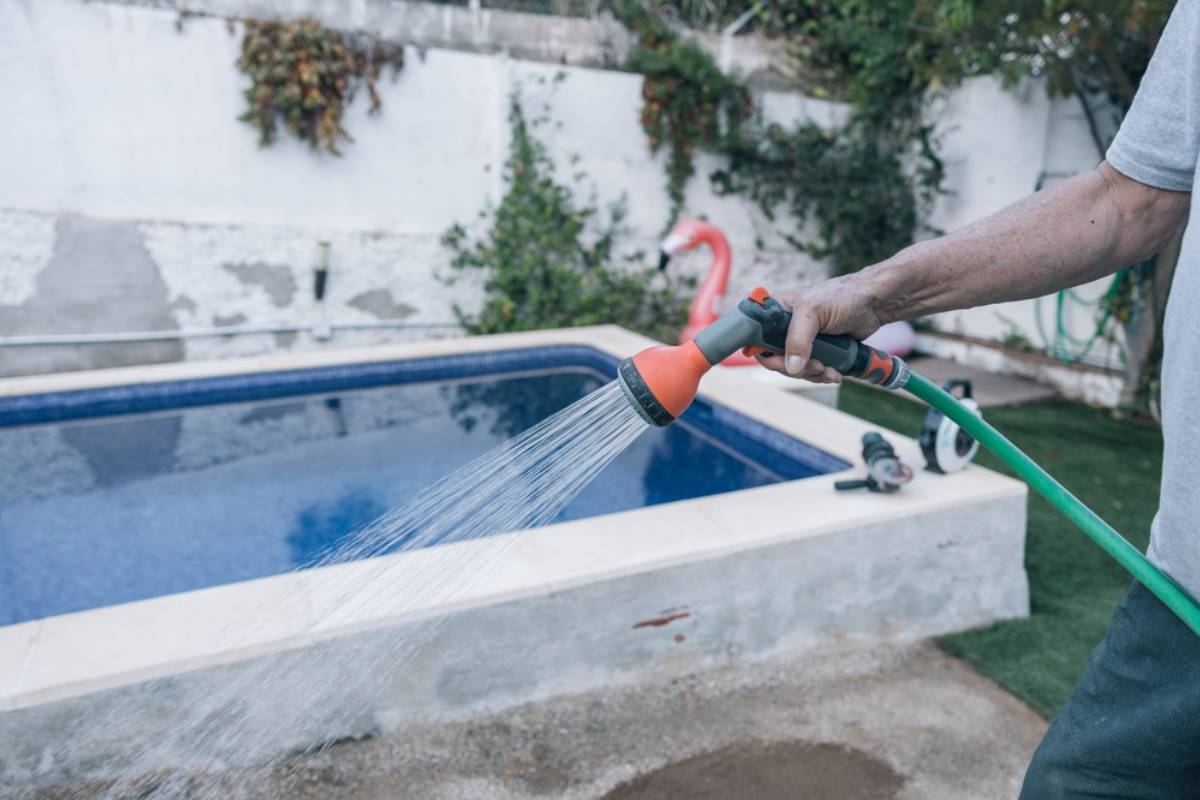
Homeowner Says Her Kids’ Pool Became the Latest Neighborhood Dispute After Years of Complaints, Then a Simple Garden Hose Offered a Way to Drain the Water Without Another Backyard Battle
A person shared her story after nearly five years of dealing with a difficult neighbor who seemed to find something wrong with almost everything happening around her home. The woman, who lives with her husband and children, explained that the man living next door had repeatedly complained about issues that were not always within her control. What began as ordinary neighborhood friction gradually became an exhausting cycle of disagreements. Eventually, even something as innocent as letting the children cool off in their outdoor pool became another reason for an argument.
The situation was especially frustrating because the family was not describing a major renovation, a noisy construction project, or a garden that had swallowed half the sidewalk. Instead, they were trying to enjoy their home during warm weather without feeling as though every ordinary activity required their neighbor’s approval. The woman felt she had already made considerable efforts to keep the peace. However, the latest complaint suggested that their attempts to get along had not brought the calm they hoped for.
The Garden Slope Was Already Causing Trouble
One of the recurring problems involved water flowing from the woman’s backyard into the neighbor’s property whenever it rained. She explained that the road and surrounding properties naturally sloped downhill, meaning water followed the landscape rather than politely stopping at the property line. From her perspective, this was a feature of the terrain, not something she deliberately caused. Unfortunately, the runoff had become another source of tension between the households.
For gardeners, drainage can be a surprisingly complicated subject because water rarely respects the boundaries people draw on their property maps. A sloping lawn, compacted soil, paved surfaces, and poorly positioned drainage channels can all influence where rainwater eventually travels. Although the woman believed the situation was outside her control, the repeated complaints suggested that the underlying drainage problem had become a sensitive issue. What should have been a routine part of living with the landscape was now contributing to an ongoing neighborhood dispute.
Even the Family Dogs Became Part of the Problem
The water complaints were not the only source of friction between the neighbors. The woman also explained that her neighbor had objected to her dogs looking into his garden, adding another unusual issue to an already lengthy list of disagreements. From her perspective, the dogs were simply behaving like dogs, and their curiosity did not amount to a deliberate invasion of anyone’s space. Nevertheless, even this ordinary behavior had apparently become something that could trigger another complaint.
The situation became more confusing because the woman recalled that the neighbor had previously given the dogs treats when he encountered them outside. That earlier friendliness made his later objections feel particularly difficult for her to understand. She was left wondering how a relationship that had once included seemingly pleasant interactions had developed into such persistent friction. For anyone who enjoys gardening alongside family pets, it is easy to see how frustrating it would be to feel that even a dog’s glance over a fence could become a neighborhood controversy.
A Simple Summer Activity Sparks Another Argument
The latest disagreement began with the family’s outdoor pool, which the children were using during the warm weather. When the time came to change the water, some of it flowed down the sloping front driveway and into the neighbor’s driveway. The woman emphasized that both driveways were concrete, and she argued that the water would eventually dry rather than damage a lawn or flower bed. Her neighbor, however, was unhappy enough about the situation that the dispute escalated into threats toward her husband.
For the family, the complaint seemed like another example of an ordinary household activity turning into a confrontation. They were not intentionally directing water toward the neighbor’s garden, and the sloping ground made it difficult to prevent every drop from moving downhill. Still, the disagreement raised a practical question that many homeowners encounter when dealing with outdoor water use. Even when runoff seems harmless, how much effort should someone make to prevent it from crossing onto a neighboring property?
The Neighbor Wanted Them to Carry Buckets Down the Street
According to the woman, her neighbor expected the family to carry buckets of pool water all the way to the main road to empty them near the drain. That suggestion struck her as an unreasonable demand, especially when gravity was already directing the water downhill. Instead of repeatedly hauling buckets, she believed the small amount of water reaching the neighboring concrete driveway should be allowed to dry naturally. The disagreement had now moved beyond the water itself and into a broader argument about what one household could reasonably expect from another.
Anyone who has emptied a garden container, cleaned outdoor equipment, or drained a small pool knows that moving water can become surprisingly labor-intensive. Carrying bucket after bucket might technically prevent runoff, but it is hardly the most convenient method available to every household. At the same time, the most practical solution depends on the amount of water involved, the drainage arrangements, and local rules. The real challenge was finding a way to manage the water without turning another ordinary chore into a fresh confrontation.
She Believed the Water Would Simply Dry Up
The woman repeatedly returned to one central point: the water was running across concrete rather than soaking into the neighbor’s flower beds or vegetable garden. In her view, the warm weather meant the surface would eventually dry, making the complaint seem disproportionate to the inconvenience. She also explained that the water followed the natural downhill slope, which made the situation feel different from deliberately pouring water onto someone else’s property. However, her confidence that the water was harmless did not automatically settle the disagreement.
From a gardening perspective, the distinction between a small puddle and sustained runoff can matter considerably. A little water on a concrete driveway may evaporate without causing any obvious trouble, while repeated or heavy flows can carry sediment, create slippery surfaces, or affect nearby soil. Pool water also deserves special consideration if it contains chlorine or other treatment chemicals, since that water should not automatically be redirected into garden beds. The best solution therefore involves understanding both the amount of water and where it can safely go.
Years of Friction Made the Latest Complaint Feel Bigger
The woman described the pool dispute as the newest chapter in a relationship that had been difficult for almost five years. Earlier disagreements about the dogs and rainwater had already left her feeling that she could not easily satisfy her neighbor. She also explained that the family had tried various ways to accommodate the situation rather than simply ignoring every complaint. By the time the pool became an issue, she felt worn down by the continuing pattern.
Long-running disputes can make even minor practical problems feel much larger than they would between people who generally get along. A puddle that might otherwise lead to a quick conversation can become a symbol of every previous disagreement, with each side interpreting the latest incident through the history of the relationship. This is particularly unfortunate when the issue involves outdoor spaces, because gardens, driveways, and yards are used every day. What should be a place to relax can begin to feel like a stage for the next argument.
She Said the Family Had Already Tried to Compromise
The woman maintained that she and her family had made efforts to minimize the water flowing onto the neighboring driveway. She explained that they did not simply release all the water at once, instead letting it out gradually and using buckets to reduce the amount where possible. She also said they had tried other measures to limit the flow, including placing cinder blocks in gaps where water could pass through. Despite those efforts, she felt that some runoff remained unavoidable because of the layout of the properties.
Her account highlighted the frustrating gap that can develop between making a genuine effort and achieving a perfect result. In a garden, for example, a homeowner might install edging, adjust a downspout, or add plants to slow rainwater, only to discover that heavy rainfall still finds another route. Practical improvements can reduce a problem without eliminating it completely. The woman’s frustration came from feeling that her attempts to accommodate the neighbor had not prevented the next complaint from appearing.
A Response From a Person Suggested a Garden Hose
A response from a person offered a straightforward alternative that quickly became one of the most discussed suggestions. Rather than carrying buckets or allowing the water to spread freely across the driveway, the person suggested using a garden hose to create a siphon and direct the water toward a suitable drainage point. The idea was to let gravity do most of the work instead of requiring the family to transport the water manually. It was a practical suggestion that could potentially reduce the inconvenience for everyone involved.
The technique works by filling a hose with water and placing one end in the pool while positioning the other end at a lower elevation. Once the siphon is established, gravity can keep the water flowing through the hose without requiring someone to carry each bucket. The receiving location still matters, however, and the water must be directed somewhere that can legally and safely accept it. A garden hose may offer a convenient fix, but it should not become a way to transfer a drainage problem onto another property or an unsuitable drain.
Other People Pointed Out That Pool Water Is Different From Rain
Not everyone agreed that the neighbor was simply making a fuss over nothing. Some responses pointed out that rainwater naturally flowing downhill is not necessarily the same as deliberately emptying a pool and allowing its contents to cross a property boundary. The amount of water could also change the situation considerably, particularly if the pool was larger than readers initially imagined. Without knowing the volume and local drainage requirements, it was difficult to determine whether the homeowner’s approach was entirely reasonable.
This distinction matters to anyone who maintains a garden or uses a pool during summer. Rainwater is generally part of the natural drainage pattern, whereas pool water may contain chemicals that can damage sensitive plants or affect waterways. Even untreated water can cause problems if a large volume rushes across a small area and washes away soil. A solution that seems harmless at first glance should therefore be assessed according to the actual conditions rather than assumptions about how quickly the water will disappear.
Gardeners Know That Drainage Problems Rarely Stay Simple
The dispute also highlighted how easily water management can become a source of tension between neighboring properties. A sloping driveway, a concrete surface, and an inconveniently placed drain may seem like minor details, but together they can determine where every bucket of water eventually ends up. Gardeners frequently encounter similar challenges when choosing where to place raised beds, directing downspouts, or trying to prevent runoff from damaging paths. The challenge is not always stopping water completely, but guiding it somewhere appropriate.
There are several ways homeowners can manage routine outdoor drainage, depending on the site and local regulations. A properly positioned hose or suitable pump may help direct pool water toward an approved discharge point, while landscaping improvements can sometimes slow rainwater and reduce erosion. However, treated pool water should not simply be used to irrigate plants, and local restrictions on storm drains or public drainage channels must be checked before disposal. The goal is to prevent avoidable damage without creating a different problem further down the slope.
The Neighboring Relationship Was About More Than a Wet Driveway
By this stage, the argument appeared to involve much more than the inconvenience of water crossing a concrete surface. The woman described a series of complaints over the years, from the dogs to rainwater and now the children’s pool. She felt that the family had already tried to be considerate, while the latest threats toward her husband made the disagreement even more upsetting. It was difficult for her to understand why an ordinary summer activity had become another confrontation.
A response from a person suggested that finding a low-effort practical solution might be more worthwhile than continuing to debate who was right. That advice reflected a familiar reality of neighborhood disputes: sometimes a small adjustment can prevent a much larger headache, even when someone feels the original complaint was unfair. Other responses emphasized that the homeowner should not automatically dismiss the neighbor’s concerns about water entering his property. The discussion showed how a disagreement can have more than one reasonable consideration, even when the people involved see the situation very differently.
The Simplest Fix Might Be the One Nobody Wanted to Try
The garden hose suggestion offered a possible way to reduce the tension without requiring the family to carry endless buckets down the street. If the layout and local rules permitted it, a hose or suitable pump could direct the water toward an approved discharge point while avoiding unnecessary runoff across the neighboring driveway. The woman had already described efforts to release the water gradually, so a more controlled drainage method could be a logical next step. It would not necessarily repair the relationship, but it might remove one recurring reason for arguments.
Still, a practical solution should not require anyone to accept an unsafe or unlawful drainage arrangement simply to appease a difficult neighbor. The family would need to consider the volume of water, whether it contained pool chemicals, and which discharge locations were permitted. For gardeners, the broader lesson is that water management is as much about planning as it is about convenience. Sometimes a little equipment and a better drainage route can save far more time than another round of arguing.
The Bigger Lesson Is Knowing When to Solve the Problem and When to Set Boundaries
The woman’s story left a familiar question hanging in the air: how much should someone be expected to accommodate a neighbor before the requests become unreasonable? Her frustration was understandable after years of complaints, especially when she believed she had already taken steps to reduce the inconvenience. At the same time, the discussion showed why water crossing onto another person’s property should not automatically be dismissed, even if the surface is concrete. The fairest answer depends on the actual impact, the available alternatives, and the rules governing drainage in that area.
For anyone dealing with a similar problem around a home or garden, a calm, documented approach is likely to be more useful than allowing each disagreement to escalate. Checking local drainage requirements, using an appropriate method to empty a pool, and addressing persistent runoff can help establish what is practical and reasonable. Clear boundaries also matter, particularly when conversations turn into threats rather than constructive discussions. In the end, the most satisfying outcome would be a solution that lets the children enjoy their summer, keeps the driveway manageable, and gives everyone a little more peace at home.