Homeowner Says Her New Neighbors Threatened Legal Action Over Mature Trees, Then Refused the One Chance to Prevent a Dangerous Branch From Falling
A person shared his story about living in a neighborhood where enormous mature trees had become part of the area’s identity. Nearly every few houses had towering branches stretching across lawns, gardens, and fences, including several trees growing on his own property. Some of those branches naturally extended over the neighboring lot, creating shade and a canopy that had been there long before the newest residents arrived.
The family had never considered the trees controversial because they were one of the reasons they loved the neighborhood. They regularly brought in professionals to handle pruning and maintenance, and previous tree workers had never caused problems with anyone nearby. Then a newer couple moved in and seemed to develop an immediate dislike for the trees.
A Very Strange First Impression
The first real interaction between the families happened after the homeowners hired their usual tree company for routine maintenance. Something apparently upset the new neighbors during the work, although the homeowners were not initially sure what had happened. Instead of knocking on the door or having a normal conversation, the neighbors left a note threatening legal action unless the issue was resolved.
The homeowners were stunned because they had barely spoken to these people before. They eventually went over, discussed the problem, and discovered that the situation was nowhere near as serious as the threatening note had suggested. The tree company agreed to address the concern, and everyone went back to their homes, although the homeowners quietly wondered whether this was going to become a pattern.
The Complaints Kept Growing
Unfortunately, the strange complaints did not stop with the trees. The neighbors later contacted the homeowners about their gardener, claiming that he had repeatedly behaved disrespectfully toward them. The homeowners were surprised because the gardener insisted he had never even spoken to the neighbors before that confrontation.
Once again, the issue turned out to be far less dramatic than the accusation suggested. The gardener denied having any previous interaction with them, leaving the homeowners wondering how ordinary events around their property kept turning into neighborhood disputes. It began to feel as though almost anything connected to their yard could somehow become the next complaint.
The Dead Branch Problem
Eventually, there was a legitimate reason to worry about one of the trees. Several branches had died, and the homeowners knew that leaving them untreated was not a sensible option. They contacted their trusted tree company, which explained that specialized equipment would need to be positioned behind the neighboring property because of the limited space.
The solution seemed straightforward, but there was one major obstacle. The neighbors’ permission was needed before the equipment could be brought across their property. The homeowners decided to approach the matter carefully, knowing from experience that even a simple request could become surprisingly complicated.
The Note on the Door
The homeowners left a polite note explaining that the tree needed maintenance and asked the neighbors to contact them so they could discuss a suitable date and time. They made it clear that the workers needed temporary access and wanted to coordinate everything properly. Then they waited for a response.
Days passed without a message, phone call, or knock at the door. The homeowners knew the neighbors were home because they could hear them outside and occasionally saw them entering or leaving. The silence was beginning to feel less like an oversight and more like a deliberate refusal to communicate.
The Forgotten Phone Number
The homeowners eventually remembered that they still had the neighbors’ phone number from one of the previous disputes. They sent a message explaining the tree problem and again offered to coordinate a convenient time. The message disappeared into silence just like the note on the door.
At this point, frustration began replacing patience. The family had gone out of its way to communicate, explain the situation, and avoid any possibility of surprise. Yet the people most likely to complain if something went wrong were refusing to participate in the one conversation that could prevent the problem in the first place.
The Branch Hanging Over the Fence
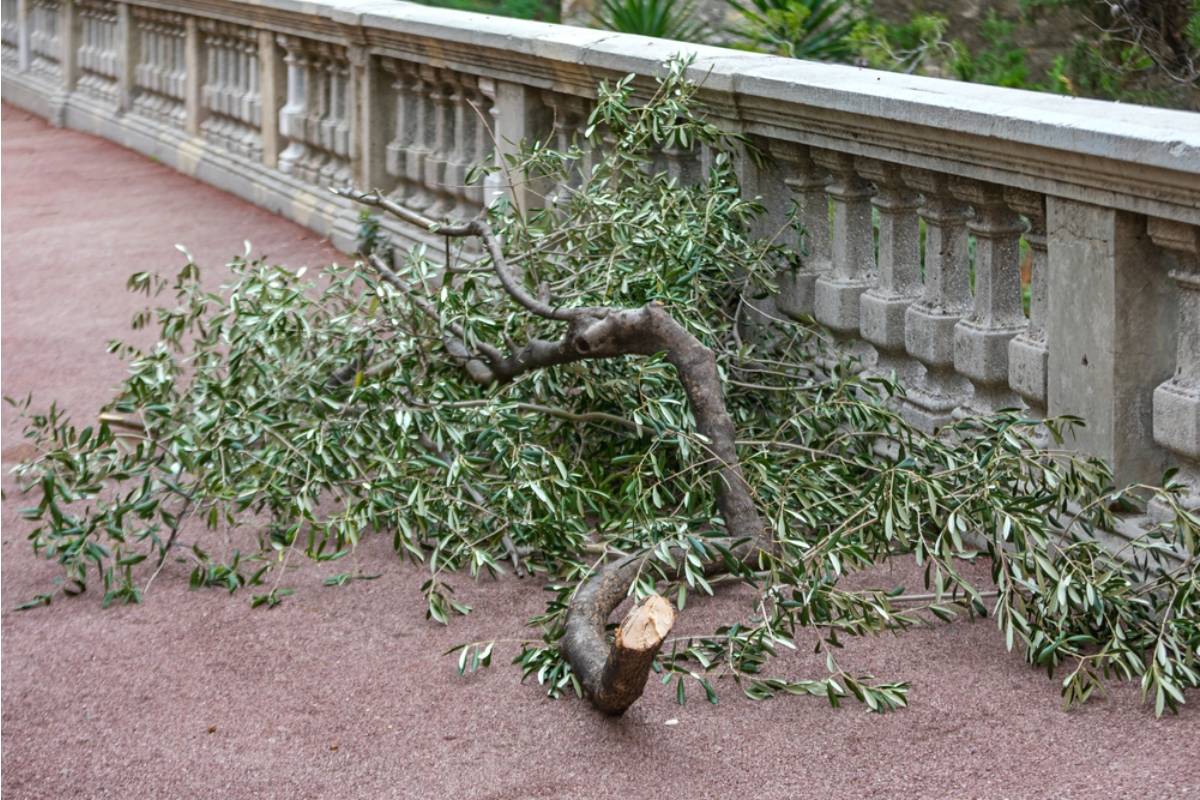
The dead branches became impossible to ignore. Some extended toward the neighboring property, which meant that a storm, heavy wind, or simple decay could eventually send one crashing across the boundary. The homeowners worried that if that happened, the same neighbors who had threatened legal action before might suddenly claim that the family had failed to maintain the tree.
The irony was almost comical. They were trying to fix a hazard before it became a problem, yet the people who might be affected by the falling branch were refusing to allow the equipment necessary to fix it. It was like watching someone complain about a leaking roof while refusing to let the roofer through the front door.
The Certified Letter Idea
A response from a person suggested sending a formal letter by certified mail with a return receipt. That way, the homeowners could prove that they had notified the neighbors about the dangerous branches and requested access. The suggestion immediately appealed to them because it transformed an emotional neighborhood dispute into a simple paper trail.
Another response from a person agreed that everything should now be documented in writing. Dates, requests, messages, and explanations could all be kept together instead of relying on memories after the fact. The more unreasonable the neighbors became, the more useful a boring folder of paperwork seemed.
Finding Another Route Into the Garden
A different response from a person suggested something even more practical: ask the arborist whether the work could be completed without entering the neighbors’ property. Professional tree crews deal with awkward access problems all the time, and ropes, climbing equipment, and specialized techniques might provide another solution. It could cost more, but it might eliminate the entire dispute.
The homeowners began wondering whether they had focused too much on getting permission because the first plan was convenient. Perhaps the answer was not convincing the neighbors to cooperate at all, but finding a method that did not require cooperation. Sometimes the easiest way to win a neighborhood argument is to quietly remove the argument from the equation.
The Garden Became a Paperwork Problem
A response from a person pointed out that the homeowners should stop treating the neighbors like people with whom they had a normal relationship. Instead, they should treat every interaction like formal communication between two parties with competing interests. That meant clear notices, specific dates, written requests, and no unnecessary conversations.
It sounded cold, but the homeowners realized it might actually make life easier. They no longer had to wonder whether the next conversation would be friendly or hostile because there would be fewer conversations altogether. The garden could remain beautiful, while the paperwork quietly handled everything unpleasant.
Why Peaceful Neighbors Are Sometimes the Best Neighbors
Another response from a person argued that the healthiest choice could be simply keeping their distance. Not every neighbor needs to become a friend, and certainly not every disagreement deserves hours of emotional energy. A fence, a few mature trees, and polite silence can sometimes create a perfectly workable neighborhood relationship.
The homeowners began to accept that idea. They did not need the couple next door to approve of their trees, compliment their landscaping, or invite them over for dinner. All they really needed was for everyone to stay on their own side of the property line and communicate when genuine issues required attention.
The Arborist Had Another Trick
When the homeowners explained the entire situation to another tree professional, they received an unexpected suggestion. The arborist said there might be a way to remove the dead branches using ropes and climbing techniques rather than placing heavy equipment behind the neighboring property. It would require more careful work, but it could be done without turning the access problem into another neighborhood battle.
The homeowners felt an enormous weight lift from their shoulders. For weeks, they had been thinking their only choice was to persuade difficult neighbors to grant permission. Suddenly, there was a third option: document their efforts, hire professionals, and complete the maintenance entirely from their own property.
The Neighbors Finally Respond
Ironically, the silence ended shortly after the homeowners began arranging an alternative plan. The neighbors finally responded to the earlier communication, but instead of offering a convenient time for access, they questioned why the equipment needed to come onto their property at all. They seemed suspicious of the very arrangement they had previously ignored.
The homeowners could hardly believe the timing. After days of unanswered notes and messages, the neighbors had suddenly become interested once the family no longer needed their cooperation. The situation had taken on the strange rhythm of a garden quarrel where everyone seemed eager to discuss the problem only after the solution had changed.
The Twist Nobody Saw Coming
The homeowners eventually realized that the dead branches had unintentionally exposed the real issue between the two households. This was never simply about trees, gardeners, or equipment. The deeper problem was that one family wanted every possible dispute to happen on its own terms, while the other wanted ordinary communication and reasonable solutions.
In the end, the trees stayed, the dangerous branches were addressed, and the neighbors’ approval became far less important than everyone had initially assumed. The homeowners learned to document everything, avoid unnecessary arguments, and let professionals solve problems wherever possible. The mature trees that had supposedly caused all the trouble remained standing tall, almost amused by the entire feud.
The Garden Kept Growing
Life eventually returned to its usual rhythm, with leaves blowing across the lawn and birds nesting among the branches. The homeowners still maintained their trees and continued caring for their garden just as they had before the new neighbors arrived. The major difference was that they no longer expected every interaction across the fence to be reasonable.
A response from a person had perhaps summed it up best: sometimes the secret to living peacefully beside difficult people is to stop trying to have a relationship with them. The homeowners did not need an apology, a friendship, or even an explanation. They simply needed healthy trees, clear boundaries, written records, and enough patience to let their garden keep growing.