Homeowner Says Her Relative Kept Mowing Her Private Hillside, Then She Planted Something He Couldn’t Ignore
A person shared his story about a strange property dispute involving a hillside that should have been left alone. She and her husband owned a stretch of land between their home and another neighbor’s property, and they wanted to let it grow into a small stand of trees. The natural growth would give their family privacy and soften the sound coming from the neighboring driveway.
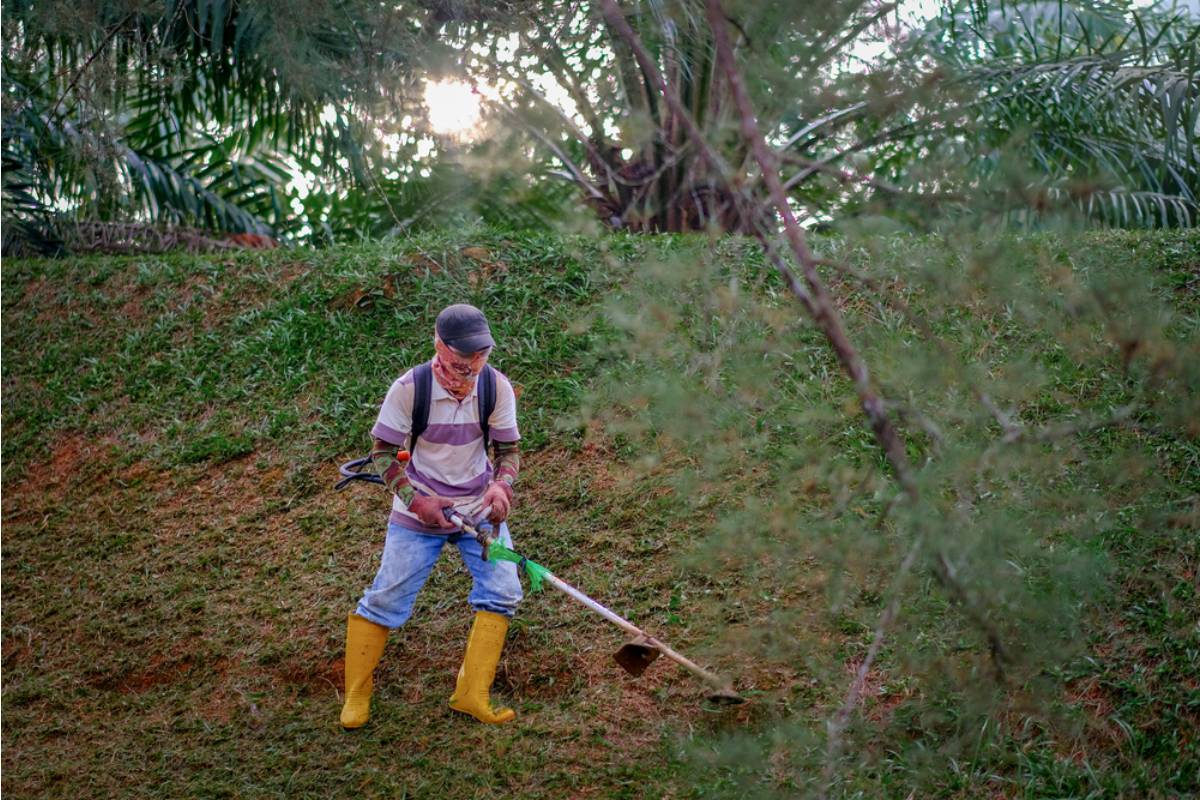
There was just one problem: a man who lived farther down the road kept showing up with his lawnmower. Every time the grass began growing, he would cut the hillside back as though it were part of his own yard. The homeowner had repeatedly asked him to stop, but somehow the mower always returned.
The Privacy Problem
The property was positioned on a slope, which made the situation especially frustrating. Because the neighboring house sat uphill, the owners could see directly down toward the homeowner’s property whenever the hillside was freshly mowed. Even ordinary conversations and driveway noises carried surprisingly well downhill.
The homeowner didn’t want an enormous fence or an elaborate landscaping project. She simply wanted trees and natural vegetation to grow on the land she owned. To her, the hillside could become a quiet green barrier, but the repeated mowing kept resetting the entire project back to bare grass.
The First Trees Never Got a Chance
The couple eventually planted trees on the hillside, hoping they would gradually turn the empty bank into a private woodland. It seemed like a simple gardening project that would improve the property for years to come. Unfortunately, the mysterious mowing continued.
The trees were cut down along with the surrounding grass. Instead of giving up, the homeowner became even more determined to protect the land. She now had living proof that the mowing wasn’t merely changing the appearance of the property; it was destroying plants she had intentionally planted.
A Police Call Changes Nothing
After another incident, the homeowner’s husband contacted the police to ask what could be done. The response was frustrating because there were no clear signs posted on the property warning people not to enter. Without those signs, the officer apparently wasn’t prepared to take action over the mowing.
The couple took that information seriously and decided they needed to make the boundary unmistakable. They put up a prominent “No Trespassing” sign in the center of the property. For a moment, they hoped that would finally settle the matter.
The Mower Comes Back Anyway
Instead, the man returned and mowed a corner of the property again. His likely defense, according to the homeowner, would be that he simply didn’t see the sign because it wasn’t positioned directly where he was mowing. The homeowner found that explanation difficult to accept because the sign was clearly visible from the road.
There was another reason she found the situation particularly suspicious. The mower operator was not some stranger who had accidentally mistaken the property line. He had grown up nearby and was related to the family through the property history, meaning he was familiar with the unusual boundaries.
The Property Lines Were Anything but Simple
The land itself had a complicated shape, with several properties meeting at angles that resembled slices of a pie. The homeowner’s portion was the widest because a county road passed through it, while the other properties connected to their driveways around it. Anyone unfamiliar with the arrangement might easily become confused.
But the homeowner insisted that the people involved knew exactly where the boundaries were. The man doing the mowing had a family connection to the property and had known the area for years. The actual uphill neighbor had also lived there for decades, so the homeowner didn’t believe this was an innocent misunderstanding about where one yard ended and another began.
A Family Home With Generations of History
The land was far more than an ordinary parcel to the homeowner. Her grandmother had left the property to her in a will, and the house had been part of the family’s life for generations. She had grown up there and had spent much of her life caring for the property.
That history made the repeated mowing even more upsetting. This wasn’t a random patch of grass she had recently purchased and forgotten about. She had inherited a place tied closely to her family, and she wanted to shape the land according to her own vision rather than preserve someone else’s idea of a perfectly trimmed lawn.
The Question of Why
The homeowner couldn’t understand why someone would repeatedly enter another person’s property and mow it after being directly told to stop. Most people would assume that one polite conversation would settle something so simple. Instead, every conversation seemed to produce another trip from the mower.
She began wondering whether the mowing neighbor was acting independently. He was friends with the uphill neighbor, who benefited from having the hillside kept short because it provided a clearer view toward the homeowner’s house. The possibility that the mowing was helping someone else made the situation feel less like an annoying habit and more like a deliberate attempt to control the land.
The Signs Multiply
Once the first sign failed to stop the mower, the homeowner began considering additional ways to make the boundary impossible to miss. Responses from people suggested placing multiple signs along the property line instead of relying on one marker. They also recommended photographing the signs after installation so there would be a record showing exactly when the warnings went up.
The idea was simple: make the property boundary visually obvious and create documentation at the same time. If the mower returned afterward, the homeowner would have stronger evidence that the entry was intentional. Suddenly, the hillside gardening project was becoming part landscaping project and part evidence-collection exercise.
A Garden Barrier Takes Shape
Other suggestions focused on physically changing the appearance of the hillside. People proposed stakes, brightly colored boundary tape, inexpensive fencing, and other visible markers that would make it difficult for anyone to mistake the land for an ordinary lawn. The homeowner admitted that fencing was expensive, but she began considering cheaper alternatives.
The gardening possibilities were even more appealing. Instead of maintaining a smooth lawn, she could fill the hillside with trees, wildflowers, native grasses, and other plants that would naturally make mowing impractical. What had started as an attempt to create privacy was beginning to look like a complete transformation of the landscape.
The Trees Get a Second Chance
The homeowner became excited about replanting the trees, this time giving the young plants more protection. Suggestions included visible supports and sturdy markers around the saplings so they would be difficult to mow accidentally. The goal wasn’t simply to make the hillside look attractive but to make it unmistakably clear that the grass was no longer meant to be a lawn.
She also considered planting wildflowers and ground cover throughout the open areas. That would create a much more natural garden while giving the hillside a purpose beyond being neatly trimmed. With enough growth, the land could finally become the green privacy screen she had imagined.
The Rock Garden Idea
Then came an idea that particularly appealed to the homeowner: turning part of the hillside into a rock garden. Decorative stones could add structure to the landscape while creating a visual boundary between the road and the growing plants. Instead of fighting the mower with more grass, she could redesign the area so it no longer looked like something that needed mowing.
The concept also fit the property’s natural slope. Rocks, flowering plants, young trees, and native grasses could turn the once-bare bank into a layered garden. What had once been an irritating strip of grass might eventually become the most distinctive part of the property.
The Advice Becomes More Serious
Some responses encouraged the homeowner to keep receipts, photographs, planting dates, and records of every incident. That way, if the plants were destroyed again, she could demonstrate that the vegetation had been intentionally planted and maintained. Another response from a person suggested seeking professional legal advice rather than relying entirely on informal conversations.
Other responses recommended contacting authorities whenever another unauthorized mowing occurred, particularly after the property had been clearly marked. The important theme was consistency: document, communicate calmly, and avoid turning the dispute into a personal battle. The more organized the homeowner became, the harder it would be to dismiss the problem as a simple misunderstanding.
The Hillside Becomes a Statement
For years, the land had apparently been treated like an ordinary grassy bank, even though it belonged to the homeowner. The repeated mowing reinforced that appearance, making it easy for someone passing by to assume the area was simply part of the roadside landscape. The homeowner realized that changing the physical appearance might be the strongest way to reclaim the space.
So instead of imagining another perfectly trimmed lawn, she started imagining layers of green growth. Trees would rise above wildflowers, stones would break up the grass, and visible boundary markers would announce exactly where the private property began. The garden would no longer quietly wait for someone else to respect it.
The Twist Was in What She Planned to Grow
The most satisfying part of the story wasn’t the argument about the property line. It was the homeowner’s decision to stop treating the hillside as a lawn that needed protection and start treating it as a garden that deserved to grow. Every tree, flower, stone, and marker would make the land more unmistakably intentional.
The mower had once been the symbol of the problem, but it accidentally inspired the solution. The more the neighbor insisted on keeping the hillside short, the more determined the homeowner became to turn it into something completely different. Eventually, the strip of grass he kept trying to control might become a dense little woodland and rock garden that no ordinary mower could ever mistake for a vacant lawn.
A Lawn Mowing Dispute Turns Into a Garden Transformation
The homeowner originally wanted only privacy and a little peace from the uphill neighbor. Instead, she found herself planning a much larger landscape project while documenting every step along the way. What began with a mower crossing a property line ended with visions of trees, wildflowers, rocks, and a hillside full of life.
The real twist was that the repeated mowing may have delayed the garden, but it couldn’t stop the homeowner from changing the land entirely. She wasn’t trying to win a fight by making the hillside ugly or hostile; she wanted to make it beautiful enough that everyone would finally understand it was intentional. And the next time someone looked down from the road, they might see something very different from the perfectly mowed strip they had become accustomed to.