Homeowner Says Neighbor’s New Pool Has Turned Their Peaceful Backyard Garden Into a Noisy Retreat
For more than a decade, one homeowner had everything they wanted from their house. The neighborhood was peaceful, the neighbors were friendly, and their backyard had become their favorite place to unwind.
Then the house next door got an inground pool.
The neighbors weren’t doing anything particularly wrong. They were described as nice people, and they had even installed a hard safety cover. But suddenly, the quiet backyard the homeowners had loved for years was filled with children screaming, music playing, and people constantly gathering next door.
The hardest part was that their HOA didn’t allow fences.
The Backyard Had Always Been Their Escape
The couple had built their house more than ten years earlier and had loved living there ever since.
Their neighborhood was pleasant, and they had generally gotten along with everyone around them. Their backyard patio was especially important because it gave them somewhere peaceful to sit after a long day.
They weren’t looking for complete silence or isolation. They simply enjoyed having a quiet place to relax.
For years, they had exactly that.
Then the Neighbors Built an Inground Pool
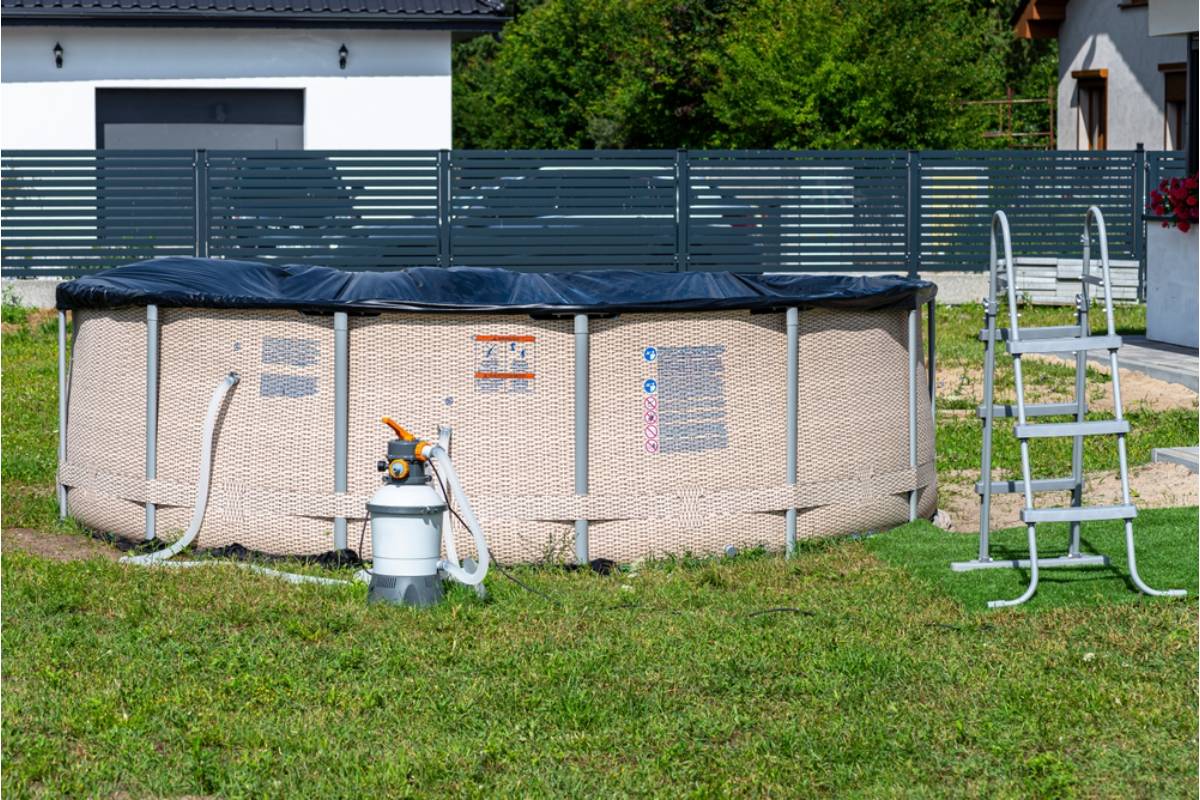
This year, the neighbors next door decided to install an inground pool.
The homeowners emphasized that their neighbors were nice people and that they weren’t trying to portray them as terrible neighbors. The pool owners weren’t deliberately causing problems or trying to annoy anyone.
The problem was simply what came with owning a pool.
Suddenly, there were people in the neighboring backyard much more frequently, particularly children who were understandably excited about having somewhere to swim.
The Noise Changed Everything
The homeowner said the biggest change was the noise.
Their previously peaceful patio was now surrounded by the sounds of loud music, children screaming, and people spending hours outside.
What had once been a place where they could sit quietly had become a place they avoided.
It was especially frustrating because their own backyard hadn’t changed at all. Their neighbors had simply changed how they used their property, and the consequences spilled over into the experience of living next door.
Their Dog Wasn’t Handling the Change
The family also had a large dog and an invisible fence.
The dog had lived there for years without causing problems. But the constant activity next door was something the animal had never experienced.
Every time people appeared in the neighboring yard, the dog became agitated and started barking.
That created another problem for the homeowners. They didn’t want their dog barking at the neighbors all day, but they also didn’t want to spend every afternoon keeping their dog inside.
The HOA Had an Unfortunate Rule
The homeowners’ biggest obstacle was their HOA.
Fences weren’t allowed.
That meant they couldn’t simply put up a privacy fence to create some separation between the two properties.
The homeowner found that particularly frustrating because the HOA had apparently approved an inground pool while continuing to prohibit the one thing that could have provided neighboring homeowners with some privacy.
They wished the HOA had at least surveyed residents before allowing pools.
They Weren’t Blaming the Pool Owners
One important detail came through repeatedly in the discussion.
The homeowner wasn’t claiming that the neighbors were doing something malicious.
They weren’t saying the neighbors should stop using their pool.
They understood that the neighbors had every right to enjoy their own backyard.
The frustration came from the fact that their own enjoyment of their property had changed dramatically as a result.
Redditors Suggested Looking at the Pool Rules
Several commenters immediately wondered whether local regulations might require some kind of pool barrier.
In many places, residential pools are subject to safety requirements that can involve fencing, alarms, covers, or other protections.
The original poster clarified that in their area, a compliant hard safety cover meant a fence wasn’t required.
That effectively removed the easiest argument commenters had initially considered.
Still, some people encouraged the homeowner to double-check the exact local regulations and whether state or county requirements superseded HOA rules.
Others Suggested Creating a Natural Privacy Wall
Once it became clear that a traditional fence wasn’t an option, commenters began suggesting landscaping.
Arborvitae, cypress trees, hedges, and other dense plants could eventually create a natural barrier between the yards.
The homeowner already had a few arborvitae and acknowledged that adding more might be possible.
A natural screen wouldn’t eliminate the noise completely, but it could at least reduce the constant visual exposure to the pool.
The HOA Might Be Worth Challenging
Another popular suggestion was to approach the HOA itself.
Instead of confronting the neighbors, the homeowner could ask whether the HOA would consider an exception for privacy screening or whether residents could petition to change the fence rule.
One commenter suggested getting involved with the HOA board and gradually building support for allowing fences.
It wouldn’t be an immediate solution, but it could address the larger problem affecting everyone in the neighborhood.
One Commenter Had Experienced the Same Thing
Another homeowner described a similar situation involving an HOA that allowed pools but restricted fencing.
Their solution was to install tall privacy screens after discovering that the HOA rules didn’t specifically prohibit them.
That gave the original poster another possibility to investigate.
The key would be finding something that complied with the HOA’s rules while still providing some visual separation.
Some People Blamed the Dog
Not everyone sympathized completely.
Several commenters argued that the neighbors were entitled to use their own backyard and that the homeowners should work on training their dog not to bark at people.
The original poster explained that the dog was a 12-year-old Labrador who had lived there for roughly 11 years without bothering anyone.
The dog simply wasn’t accustomed to children screaming and playing for hours next door.
The homeowners had already started walking the dog in the backyard on a leash so it wouldn’t react to the pool activity.
The Dog Was Also Getting Old
That detail made the situation more emotional.
The homeowner explained that the dog’s hips were failing and that they weren’t even sure how much longer they would have with him.
They weren’t expecting a miracle behavioral transformation from an elderly dog.
They also weren’t interested in picking a fight with their neighbors over something the neighbors were legally entitled to do.
They simply missed the peaceful backyard they had enjoyed for so many years.
Some Commenters Said the Pool Would Eventually Lose Its Novelty
A few people offered a more optimistic prediction.
The pool was new, and new pools tend to attract plenty of attention.
The neighbors’ children and their friends were probably excited about having access to it, which could explain why the backyard suddenly seemed constantly occupied.
But children grow up, summer eventually ends, and maintaining a pool isn’t exactly effortless.
Some commenters believed the constant activity would eventually decrease.
For the homeowners, that possibility was probably the most comforting one.
The Homeowner Admitted Moving Wasn’t an Option
The homeowner confessed that the thought of moving had crossed their mind.
They felt almost ridiculous admitting it because they loved the house and had lived there happily for more than ten years.
But their backyard had been one of the things they valued most about the property.
Now they felt like they couldn’t enjoy it.
Unfortunately, moving wasn’t financially or practically possible at the moment.
The Most Reasonable Solution Wasn’t Revenge
Some commenters jokingly suggested fighting noise with noise, playing obnoxious music, or inviting over a crowd of their own.
Others suggested letting the dog bark.
But those ideas would turn a frustrating situation into an actual neighbor dispute.
The homeowner had already made it clear that they weren’t confrontational people and didn’t want drama.
That made landscaping, privacy screens, and working through the HOA much more sensible options.
The Neighbors Weren’t Actually the Villains
That’s what made this situation different from many neighborhood horror stories.
There was no evil neighbor deliberately ruining someone’s life.
There were no property-line disputes, trespassing accusations, or screaming matches.
There was simply a family enjoying a new pool and another family discovering that their once-quiet backyard wasn’t so quiet anymore.
Sometimes nobody has to be wrong for a neighborhood change to make someone miserable.
They Were Hoping the Newness Would Wear Off
For now, the homeowner seemed to be hoping that the pool’s novelty would eventually fade.
Maybe the neighbors would use it less frequently.
Maybe the children would lose interest.
Maybe the constant gatherings would become occasional gatherings.
Or perhaps a few strategically planted trees would eventually restore some sense of privacy.
Until then, the homeowners were stuck watching a place they had loved for more than ten years change around them.
And that’s what made the situation so frustrating.
They hadn’t done anything wrong.
Their neighbors hadn’t necessarily done anything wrong either.
But somehow, the backyard that had once felt like their private little escape no longer felt like theirs.