Homeowner Says Neighbors Started Cutting a Tree Near the Garden, Then Left a Massive Trunk Crushed Across the Fence
A person shared his story about what seemed like a routine tree-trimming project next door. The neighbors had noticed several branches reaching over the fence and hovering above their backyard, so they explained what they planned to do. Since everyone appeared to understand the situation, permission was given without expecting anything more complicated than a little pruning.
The property was quiet, the garden was still intact, and there was no reason to think the afternoon would end in chaos. The neighbors had apparently already received approval from the landlord, making the conversation feel more like a courtesy notice than a major decision. Nobody expected the next sound from the backyard to be followed by the sight of an entire tree coming down.
The Tree on Their Side Was the One That Caused the Trouble
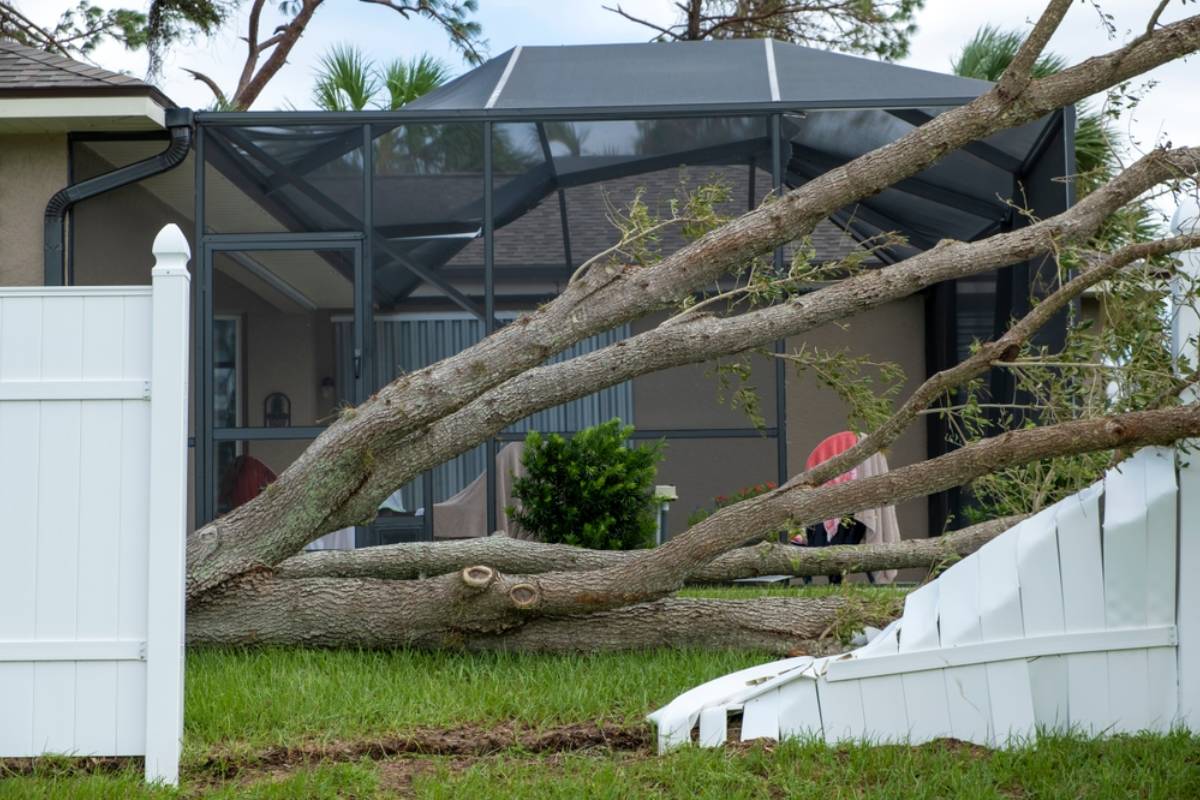
Instead of simply trimming the branches that stretched toward their yard, the neighbors began cutting down a tree that stood on their side of the fence. That might not have sounded alarming at first, but the direction of the falling tree quickly became the problem. The massive trunk came crashing toward the boundary and landed directly on the fence.
What had started as a landscaping project suddenly looked like the aftermath of a storm. The fence was completely destroyed beneath the weight of the tree, leaving a huge opening between the properties. For the homeowners looking out at their garden, the peaceful backyard had turned into a tangled mess of timber, broken fencing, and disbelief.
The Fence Never Had a Chance Against That Trunk
The fallen tree was not some small branch that could be dragged away by hand. It was large enough to crush the fence beneath it and ended up dangerously close to the house. Seeing a tree that heavy resting where a fence had stood made the entire situation feel much more serious than an ordinary gardening accident.
The homeowners immediately realized that cleaning it up would not be a simple weekend chore. The trunk would need to be removed carefully, and the destroyed fence would eventually have to be rebuilt. Until then, the boundary between the two yards looked as though someone had simply ripped a giant section out of the landscape.
The Neighbors Apparently Stopped Trying to Remove It
Perhaps the strangest part of the story was what happened afterward. According to the person who shared the story, the neighbors eventually gave up on trying to get the tree off the fence. That left the enormous trunk sitting exactly where it had fallen, creating an awkward monument to a project that had gone badly.
From the garden side, there was little choice but to stare at the damage and wait for help. The fallen tree was too large to treat like ordinary yard waste, and the broken fence could not simply be patched around it. What should have been a finished landscaping job had effectively become someone else’s cleanup project.
The Landlord Was Called Almost Immediately
The homeowners wasted little time before contacting their landlord about the destruction. Since the property was rented, the fence belonged to the owner rather than the tenants, which made bringing the landlord into the situation especially important. Instead of arguing with the neighbors for hours, they documented the damage and reported what had happened.
That decision also brought an unexpected detail to light. The landlord apparently said this was not the first problem he had experienced with the same neighbors involving a damaged fence. Suddenly, the fallen tree did not feel quite like an isolated gardening mishap anymore.
This Was Apparently Not Their First Fence Problem
Hearing that the landlord had dealt with similar issues before changed the mood considerably. According to the story, previous incidents had reportedly ended without the neighbors taking responsibility for repairs or cleanup. That history made the current situation seem much more frustrating for everyone involved.
A response from a person pointed out that the landlord owned the fence and would ultimately have to decide how the repairs were handled. Another response suggested documenting everything carefully because the homeowners were renters. Either way, the broken fence had become more than an ugly sight in the backyard, especially with a history attached to it.
The Garden Suddenly Had a Giant New Feature
A garden can change dramatically when a mature tree comes down, even when the tree was never supposed to be part of the garden at all. In this case, the fallen trunk became the biggest feature in the yard overnight. Instead of seeing a clean fence line and open planting space, the homeowners were looking at a giant mass of wood stretching across the boundary.
For a gardener, fallen branches can sometimes become useful mulch, firewood, habitat, or even rustic landscaping material. This tree was in an entirely different category. Before anyone could think about reusing it, the immediate concern was getting the dangerous weight removed without causing even more damage.
The House Was Uncomfortably Close to the Impact
The story became even more unsettling when the homeowner mentioned how close the tree had fallen to the house. A tree coming down in the wrong direction can turn a simple yard project into a serious property problem in seconds. Even without additional damage to the building, the near miss was enough to make the scene feel far more alarming.
The fence may have taken the direct hit, but the location of the trunk showed how little room for error there had been. One slightly different angle could have produced a much bigger disaster. The homeowners were left dealing with the wreckage while also thinking about how close they had come to having an even more expensive problem.
Questions About Responsibility Started Piling Up
Once the dust settled, attention naturally turned to who would handle the cost of the damage. A response from a person suggested that the neighbors or a company performing the work might have insurance that could cover the fence. The person who shared the story also hoped the neighbors would take responsibility, although the landlord’s previous experiences did not inspire much confidence.
Another response questioned why the renters had given permission for work involving the landlord’s property. That prompted an important clarification from the person who shared the story. The neighbors had apparently already spoken with the landlord and received approval, while their request to the renters was simply meant as a courtesy and a way of explaining what work was planned.
The Original Permission Was Not Quite What It Seemed
That clarification changed one important detail in the story. The homeowners were not secretly making a major decision about the property without the owner’s knowledge, as some responses initially assumed. The landlord had already approved the work, and the neighbors had approached the renters afterward.
What made the situation frustrating was that the permission had been given with an entirely different task in mind. Nobody was expecting the project to end with a huge tree smashing through the boundary fence. A simple courtesy conversation had somehow become the opening chapter of a much bigger property dispute.
The Broken Fence Left the Backyard Wide Open
With the fence flattened, the yard no longer had the separation it once did. A private garden suddenly sat beside a large opening where the boundary used to be, while the fallen tree remained tangled across the wreckage. For anyone who enjoys spending time outdoors, losing that sense of enclosure can make an otherwise familiar garden feel completely different.
Privacy was only one issue. A damaged fence can also affect pets, children, plants, climbing structures, storage areas, and the general layout of a backyard. What looked like one broken feature from a distance could easily become a much longer list of practical headaches once the cleanup began.
The Cleanup Could Be Bigger Than the Original Job
Cutting down a tree and removing a tree are two very different tasks. Once a large trunk is lying across a fence, someone still has to cut it into manageable sections, move the pieces safely, and clear away the debris. The landlord reportedly expected to hire a company, which made sense considering the size of the mess.
Until professional help arrived, however, the backyard was effectively frozen in place. Nobody could simply pull the trunk away without risking further damage. The garden had become a temporary work zone, all because a tree that was supposed to be handled next door ended up becoming the star attraction on the other side of the fence.
Some Responses Focused on the Lesson for Renters
Several responses turned their attention away from the tree itself and toward the renters’ position in the situation. One person argued that tenants should avoid giving permission for work involving property owned by their landlord. Another emphasized the importance of keeping records and photographs of the damage.
Those responses added another layer to the story because the homeowners had believed they were simply being cooperative neighbors. A quick conversation intended to keep the peace had suddenly raised questions about permissions, responsibilities, and documentation. In a garden setting, even a friendly favor can become complicated when property lines and large trees are involved.
The Fallen Tree Turned a Routine Project Into a Neighborhood Mystery
What makes this story memorable is how ordinary it sounded at the beginning. Neighbors wanted to handle overhanging branches, the homeowners knew about the work, and the landlord had apparently approved it. Then a tree came down, a fence disappeared underneath it, and the people responsible for the work walked away from the mess.
By the end, the garden had a giant tree where a boundary fence used to be, the landlord was investigating the damage, and everyone was waiting to see who would actually deal with the aftermath. The biggest twist was not that the tree fell, but that the cleanup apparently became someone else’s problem. Sometimes the most dramatic gardening stories begin with nothing more than a neighbor saying, “We’re just trimming a few branches.”